Iranian Tech Workers in Silicon Valley Urge Global Action Over Repression and Internet Blackout in Iran
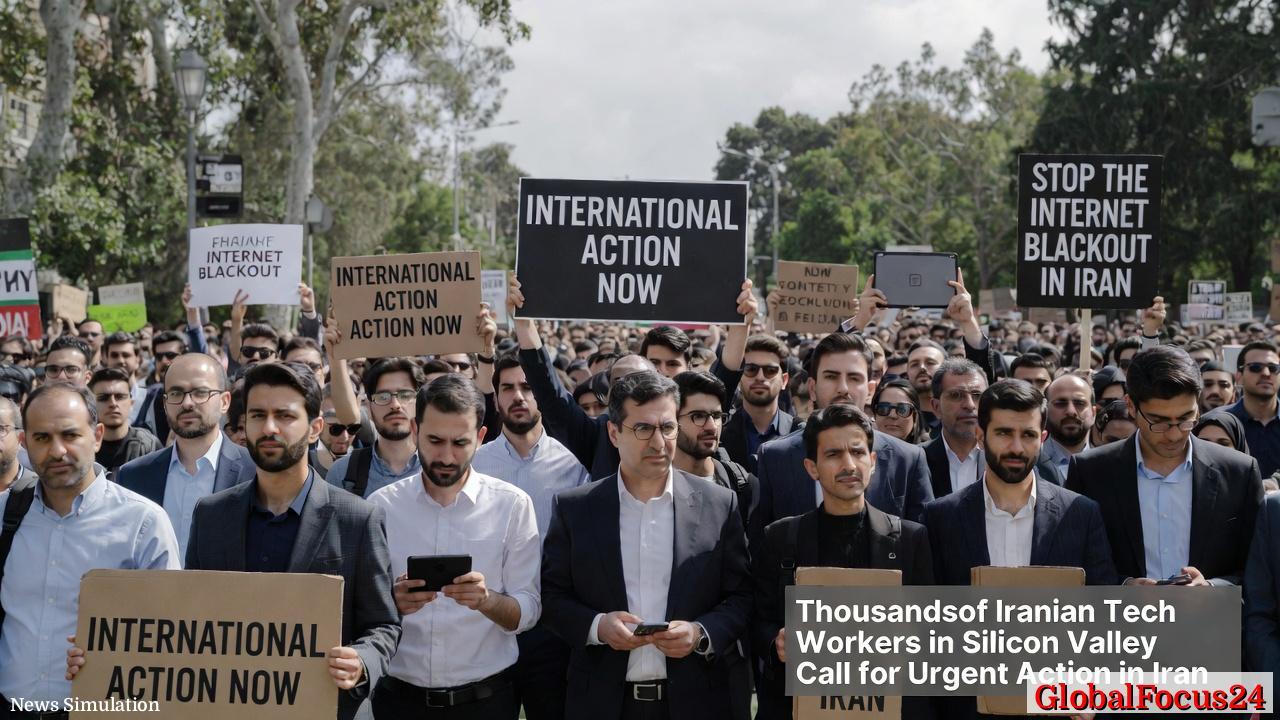
Thousands of Iranian tech professionals in Silicon Valley are mobilizing a high-profile campaign demanding urgent international intervention as Iran faces one of its most severe waves of repression and digital censorship in recent years. The movement, uniting engineers, data scientists, startup founders, and software developers, has brought renewed global attention to the humanitarian and technological dimensions of Iran’s growing crisis.
The campaign, launched in late December 2025, follows violent crackdowns on nationwide protests and what observers describe as a “near-total” internet blackout orchestrated by the Iranian government. With communication lines severed and images of unrest suppressed, the Iranian diaspora in the United States—particularly in California’s tech hub—has taken up the mantle of advocacy, leveraging both their professional reach and technological expertise to amplify the call for transparency, connectivity, and international accountability.
A Wave of Digital Resistance
More than 5,000 Iranian expatriates working in the U.S. technology industry have signed an open petition urging world governments and tech corporations to enact measures against Iranian state censorship. Their demands include sanctions on regime-linked telecommunications firms, emergency funding for secure communication tools, and expanded infrastructural support to help Iranians bypass internet shutdowns.
The organizers argue that internet access is not merely a convenience but a lifeline—vital for safety, information flow, and documentation of human rights abuses. Silicon Valley engineers have begun collaborating on encrypted communication platforms that can operate under heavy censorship, reflecting a broader trend of diaspora-driven innovation in the face of state-imposed digital repression.
“In Iran, when the internet goes dark, violence escalates unseen,” said one software developer involved in the campaign. “We are using our skills not to build the next app but to restore voices that have been forcibly silenced.”
Historical Context of Digital Crackdowns
Iran’s use of internet controls as a political weapon has deep roots. Following mass demonstrations in 2009 after disputed presidential elections, authorities introduced sweeping regulations and monitoring systems designed to suppress online dissent. Those measures intensified across subsequent cycles of unrest, including the 2019 protests over fuel prices, during which the government imposed a week-long blackout that disconnected tens of millions of users from the global internet.
What distinguishes the current crisis, however, is its scale and precision. Reports suggest that Tehran’s upgraded digital surveillance infrastructure—often described as part of a “national internet”—allows central control over both domestic and international data routes. This centralized network, combined with deep packet inspection technologies, enables authorities to selectively throttle or cut access across entire provinces with surgical accuracy.
Experts note that the latest disruptions since December 2025 are not isolated episodes but rather part of a broader digital containment strategy designed to preempt large-scale mobilization. In parallel, security forces have intensified physical crackdowns, resulting in hundreds of deaths and thousands of arrests.
Economic and Humanitarian Costs
The human cost of repression is mirrored by significant economic fallout. Iran’s reliance on online trade, remote work, and financial technologies means that blackout measures disrupt livelihoods across all sectors. Small businesses, freelance workers, and developers who depend on cloud-based platforms face immediate paralysis as connectivity vanishes. The World Bank estimates that each week of nationwide internet disruption costs Iran hundreds of millions of dollars in lost productivity and trade.
Diaspora economists warn that such shocks deepen Iran’s existing financial instability, already burdened by sanctions, inflation, and currency depreciation. The tech sector—once viewed as a bright spot for young talent and innovation—has seen mass emigration, further draining the country’s skilled workforce. Many who left after earlier crackdowns are now leading advocacy efforts abroad, channeling both professional credibility and emotional urgency into organized resistance from afar.
The Power of the Iranian Diaspora in Tech
Iranians constitute one of Silicon Valley’s most influential diaspora groups. From cybersecurity firms to artificial intelligence research, Iranian-born professionals hold key roles in shaping global technological infrastructure. Their collective voice carries exceptional weight in policy and industry circles.
Tech workers involved in the campaign have organized under a loosely coordinated network, connecting through encrypted forums, professional Slack communities, and advocacy events in San Francisco and Palo Alto. This ecosystem has enabled rapid mobilization, mirroring the efficiency of open-source collaboration. Within days, the petition gathered thousands of signatures, supported by prominent venture capitalists and founders of major startups.
Some within the movement are also working with digital rights organizations to provide secure access kits—combinations of VPNs, encryption protocols, and mesh network tools—to users still in Iran. These technological lifelines, though modest in reach, have proven critical during blackouts, allowing messages, images, and testimonies to escape the country’s digital barricades.
Calls for International Response
The petition urges democratic governments to take concrete steps, including punitive measures against Iranian officials and corporations responsible for censorship. Advocates are also calling for international support in strengthening circumvention technologies similar to those once deployed in Syria and Myanmar during crises of connectivity and repression.
Analysts draw parallels between Iran’s digital tactics and authoritarian playbooks elsewhere. Many argue that complacency in addressing Iran’s censorship infrastructure could embolden other regimes to follow suit. Accordingly, Silicon Valley’s Iranian community sees its campaign not merely as national advocacy but as a global defense of internet freedom.
While policymakers debate potential sanctions, several tech firms have privately begun reviewing their compliance frameworks to ensure that their services don’t inadvertently aid Iranian surveillance networks. Developers are also exploring responsible ways to direct open-source resources toward users in high-risk regions without exposing them to legal or physical danger.
Regional Comparisons and Global Context
Iran's digital blackout comes amid a broader wave of state-imposed internet restrictions across the Middle East and Central Asia. Authorities in neighboring countries, including Iraq and Afghanistan, have intermittently throttled connections during protests or elections. Yet none have achieved the level of systematic control seen in Iran, where the integration of government, telecom, and security interests has created what analysts term a “sovereign intranet.”
Experts suggest that Iran’s experience underscores the potential of authoritarian regimes to weaponize technology developed under legitimate administrative aims. Comparative studies show that while economic costs deter some governments from such actions, regimes prioritizing control over growth often pursue suppression regardless of financial consequences.
By contrast, countries with more liberal governance frameworks—such as Jordan or the United Arab Emirates—have sought to regulate online spaces through licensing and monitoring rather than full shutdowns, balancing state oversight with economic pragmatism. This distinction highlights the unique severity of Iran’s approach and the challenge it poses to global digital governance.
Growing Public Outcry and Technology’s Moral Dilemma
Public reaction across the Iranian diaspora has been marked by both grief and defiance. In San Jose and Los Angeles, candlelight vigils and solidarity marches have drawn large crowds of tech workers holding banners that blend corporate imagery with human rights slogans: “Code for Freedom,” “Signal Not Silence.” These events capture a rare intersection of technological identity and political conscience.
The movement’s momentum has revived debate within Silicon Valley over the ethical responsibilities of technologists whose innovations can either empower users or serve as instruments of control. Some executives have renewed calls for the industry to adopt clearer human rights standards, while advocacy groups push for export restrictions on technologies that could enable surveillance.
The Road Ahead
As repression in Iran intensifies, the diaspora’s digital campaign has become one of the few remaining channels connecting the country’s silenced citizens to the outside world. Activists continue to develop tools for decentralized communication, while lobbying efforts expand beyond California to include European and Canadian allies.
Though their work faces obstacles—including international trade restrictions and cybersecurity risks—the Iranian tech community in Silicon Valley maintains a sense of urgency rooted in both identity and shared purpose. Their message is unambiguous: technological expertise must serve the preservation of freedom, not its suppression.
As one organizer summarized during a recent panel discussion, “We build systems that connect the world. Now our task is to reconnect our own people.”
In a moment defined by both digital innovation and digital oppression, their movement illustrates an enduring truth: when networks go dark, those who understand them best often become the most powerful defenders of light.