Private Equity Slows: A Historic Downdraft in U.S. Private-Equity Exits and Its Broader Economic Reverberations
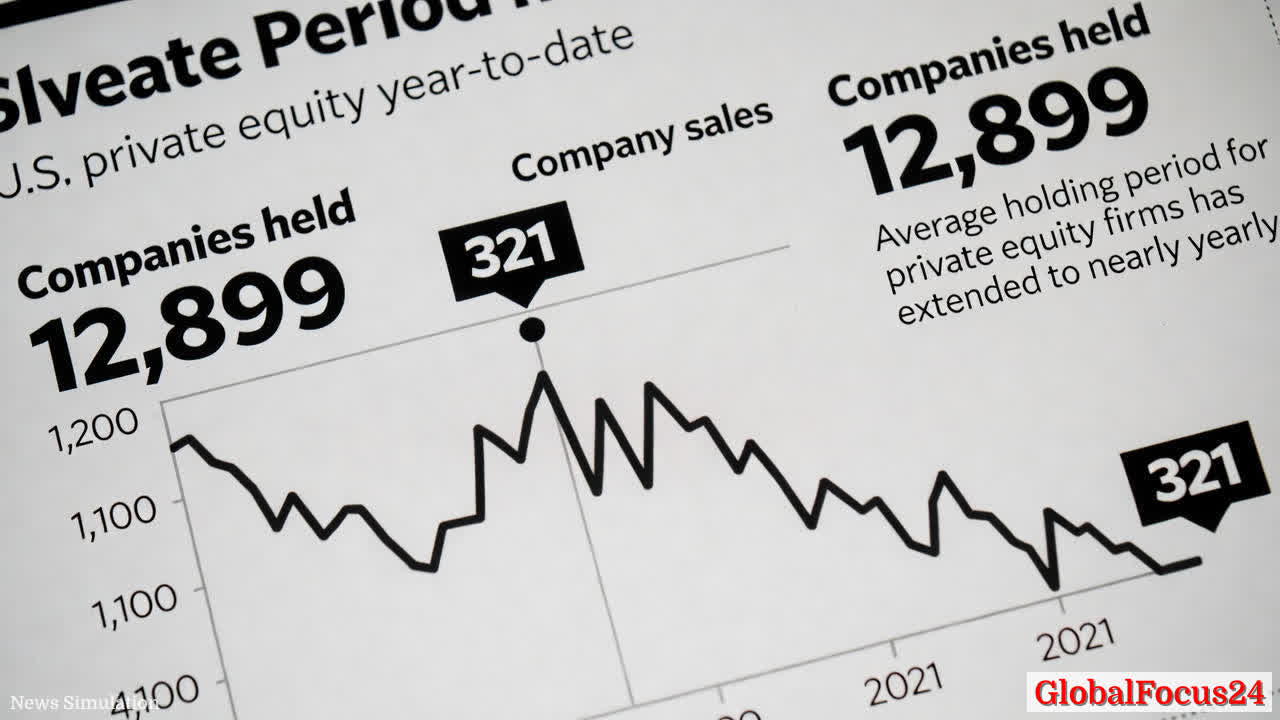
The U.S. private equity market is undergoing a pronounced cooling period, as private-equity-backed company sales lag far behind the frenetic pace that defined the 2020s’ earlier years. Through December 22, year-to-date sales totaled 321 exits, the sluggishest annual tally since 2009, when the industry was weathering the aftereffects of the Great Financial Crisis. By comparison, peak activity reached roughly 1,200 exits in 2021, a year characterized by brisk liquidity and strong debt markets. The current pace underscores a structural shift in exit dynamics and reflects escalating macroeconomic uncertainty, shifting debt costs, and a recalibration of portfolio strategies after a prolonged stretch of elevated valuations.
Historical context and drivers of the slowdown
To understand the present deceleration, it helps to recall the arc of private equity through the past decade. The mid-to-late 2010s benefited from abundant capital, low interest rates, and robust stock markets that buoyed portfolio valuations and exit opportunities. The onset of the COVID-19 pandemic intensified strategic portfolio reshaping as managers maneuvered through accelerated digital adoption, supply chain realignments, and sectoral volatility. 2021 and 2022 delivered a surge of deal activity and record-high fundraising, accompanied by a feverish appetite for exits as managers sought to realize returns while conditions remained favorable for leverage and public markets offered high marks for listed equity. However, as interest rates rose aggressively in 2022 and 2023, financing costs climbed, valuations corrected, and liquidity tightened. The result has been a shift toward longer holding periods, selective dispositions, and a measured approach to capital deployment.
The industry’s current restraint on exits sits alongside a notable overhang of capital. Firms collectively hold a record number of portfolio companies—nearly 12,899—creating a powerful incentive to wait for more attractive exit conditions or price discovery that aligns with risk-adjusted return targets. In practice, this means many private equity managers are choosing to delay divestitures rather than accept lower multiples. The calculus is further complicated by debt markets that remain uneven—some credit channels have reopened, while others remain constrained for riskier or highly leveraged assets. As a result, the market’s exit velocity has slowed even as capital remains available for new investments and add-on acquisitions, producing a bifurcation in activity: deals pursued selectively, with emphasis on fundamental improvements and strategic add-ons, while full exits are postponed.
Regional and sectoral variations
Exits have not declined uniformly across all geographies and industries. Regions with diversified economies and stable regulatory frameworks have shown relatively stronger continuity in dealflow, though exit multiples and timing can still be sensitive to macroeconomics and sector-specific dynamics. Certain sectors—such as technology-enabled services, healthcare, and consumer brands with durable demand—continue to attract attention for potential performance-driven exits, but buyers have grown more selective in pricing risk and in the horizons over which returns are anticipated. Conversely, segments historically associated with cyclical demand or high elasticity to credit conditions have experienced more pronounced caution, reflecting lenders’ risk tolerance and investors’ emphasis on downside protection.
The broader economy’s health and the private equity outlook
The slowdown in exits reverberates through several layers of the economy. For portfolio companies, extended holding periods can influence strategic decisions, including capital expenditure plans, workforce considerations, and initiatives around operational efficiency and digital transformation. Management teams may intensify optimization programs to bolster cash flow, improve margins, and bolster balance sheets as a hedge against tighter exit windows. For private equity sponsors, prolonged hold times can affect performance metrics, fee structures, and the timing of incentive realizations, prompting a recalibration of fundraising and investor communications. The delayed realization of gains can also affect public market perceptions of private markets’ contribution to broader economic dynamism, even as private investments underpin valuable improvements in productivity, governance, and resilience across portfolio companies.
From a macroeconomic standpoint, the private equity slowdown coincides with ongoing shifts in capital markets, inflation trajectories, and monetary policy. Higher interest rates raise the hurdle for leveraged buyouts, alter the risk–return calculus for potential exits, and influence the pricing of portfolio companies. Yet the stagnant exit environment does not imply a collapse in dealmaking. Rather, it points to a nuanced phase in which new investments, platform-building strategies, and bolt-on acquisitions remain active, while full ex post exits await more favorable conditions. In this sense, capital continues to be deployed—just differently, with a focus on value creation within existing holdings and on strategic consolidation that can unlock operational efficiencies without triggering immediate liquidity events.
Regional comparisons illuminate a complex landscape
Compared with international peers, the U.S. private equity cycle exhibits both resilience and vulnerability. Global markets have faced similar pressure on exit timing, but regulatory environments, tax considerations, and cross-border capital flows shape the pace and structure of exits differently across regions. In several European markets, for example, private equity activity has likewise shifted toward extended holding horizons and opportunistic acquisitions, with a growing emphasis on corporate carve-outs, distressed assets, and strategic realignments as macro conditions evolve. In Asia-Pacific, credit conditions and the pace of IPOs influence exit strategies, with some markets leveraging public listings as a route to liquidity while others prioritize private sale processes or secondary sales to nearby private capital bases.
The enduring value proposition of private equity
Even amid a cooling exit environment, private equity maintains a compelling value proposition for investors and portfolio companies. The ability to actively manage portfolio companies, implement governance improvements, catalyze digitization, optimize capital structure, and pursue strategic add-ons can deliver durable, multi-year value creation. Importantly, the current landscape amplifies the importance of disciplined capital allocation and transparent performance measurement. Firms that maintain rigorous diligence, prioritize operational enhancements, and align incentives with long-horizon outcomes are positioned to weather volatility and position themselves for a strategic re-entry into more favorable exit markets when conditions improve.
Public reaction and market sentiment
Public sentiment toward private equity often toggles withs about deal counts and valuations. In markets where exits have slowed, observers may question the broader impact of private equity on employment and innovation. However, seasoned managers emphasize that much of the value lies not merely in one-time exits but in ongoing governance improvements, strategic repositioning, and the executive leadership cultivated within portfolio companies. Employees, customers, and communities may experience both the short-term disruption associated with portfolio-company transformations and the longer-term benefits derived from stronger, more competitive businesses.
Historical analogies and forward-looking scenarios
Historically, private equity cycles have shown periodic cooling and re-acceleration. After periods of stretch—such as the immediate post-crisis era or periods of rapid credit tightening—markets often recalibrate, find new price discovery paths, and re-enter growth trajectories as conditions stabilize. Analysts suggest a few plausible pathways forward: a gradual normalization of exit timing as interest rates stabilize and credit markets regain full functionality; a shift toward more selective but higher-quality exits with returns driven by operational improvements; or a surge in secondary market activity as investors reposition portfolios and realize liquidity through alternative channels. The timing and magnitude of any rebound will depend on macroeconomic stability, inflation trajectories, policy signals, and the pace at which debt financing becomes more accessible and predictable.
Implications for policymakers, investors, and the broader economy
Policymakers watching the private equity cycle may focus on the sector’s role in financing growth and the potential implications for employment and productivity. While private equity-backed companies can accelerate modernization and market competitiveness, concerns about leverage, job displacement, and market concentration persist in certain circles. Balancing the need for transparent reporting, prudent risk management, and fair competition helps ensure that private markets contribute constructively to the economy without amplifying systemic vulnerabilities. For investors, the current environment underscores the importance of diversification, due diligence, and a clear articulation of risk tolerance and time horizons. It also highlights the value of strategic portfolio construction that emphasizes resilience, governance, and sustainable growth drivers beyond short-term exit horizons.
Conclusion
The ongoing slowdown in U.S. private equity exits marks a significant inflection rather than a terminal downturn. With a historically high stock of portfolio companies and a cautious exit market, managers are recalibrating strategies to prioritize value creation and governance improvements within existing holdings. While exit velocity has decelerated, activity in related areas—such as bolt-on acquisitions, operational optimization, and strategic partnerships—remains robust, signaling that capital continues to flow into productive, value-driven initiatives. The next chapter for private equity will hinge on the evolution of macroeconomic conditions, debt availability, and the emergence of clearer price discovery as market sentiment stabilizes. Investors, policymakers, and corporate leadership alike will be watching closely as the market seeks a path back toward sustainable liquidity and lasting economic impact.