Louisiana Factory Boss Awards $240 Million in Bonuses Following $1.7 Billion Sale
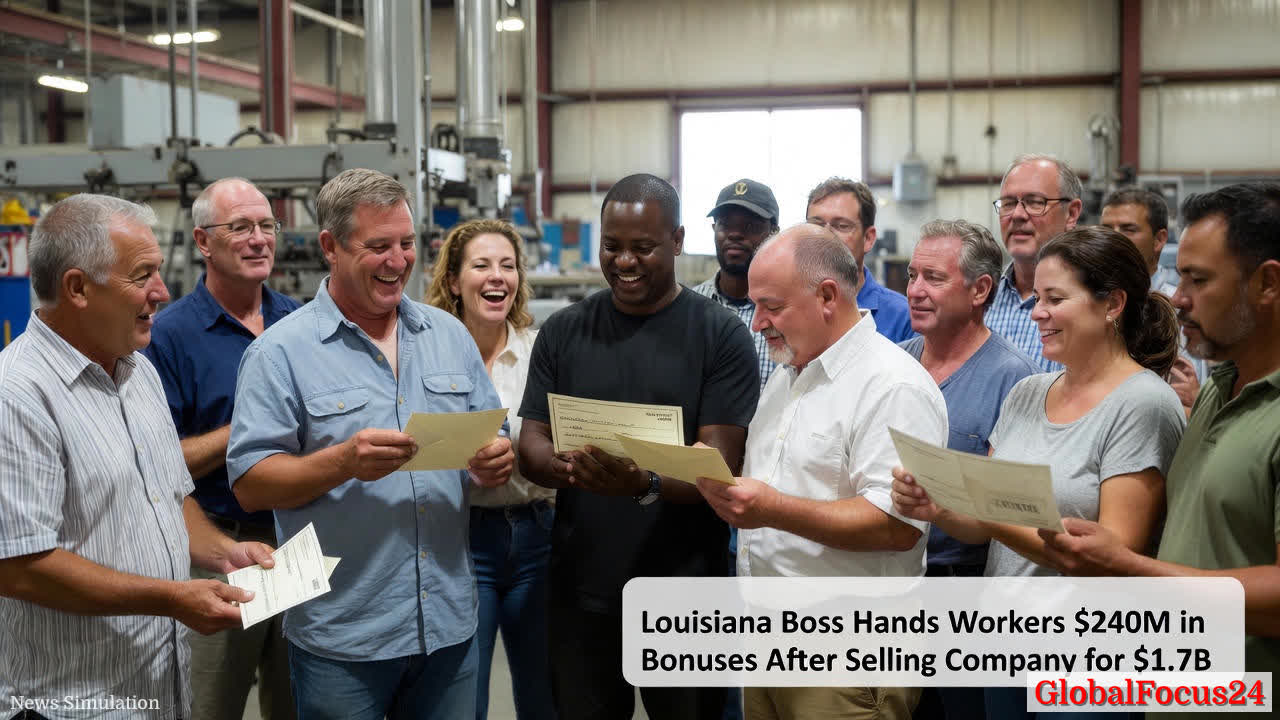
A Louisiana factory chief has delivered a landmark example of executive philanthropy and employee loyalty by issuing six-figure bonuses totaling $240 million to 540 full-time workers after selling the company for $1.7 billion. The complex, multi-year payout is structured as retention bonuses to be paid over five years, with the genesis of the plan rooted in founder Claud Walker’s vision and a unilateral decision by Graham Walker, the current CEO, to safeguard the workforce that helped the company navigate decades of upheaval and change.
Historical Context and Company Evolution
Fibrebond’s journey began in 1982 in Minden, a small city with roughly 12,000 residents, when founder Claud Walker started a business constructing shelters for electrical and telecom infrastructure. The company’s early years were defined by steady, if modest, growth. The 1990s cellular boom buoyed demand for robust, prefabricated structures, enabling Fibrebond to expand its footprint and capacities. The company’s resilience was tested in 1998 when a devastating factory fire nearly brought production to a halt. Rather than shutter operations, Fibrebond continued paying employees, building a culture of loyalty that would become a defining facet of its identity.
The 2000s brought further challenges and opportunities. The dot-com bust in the early 2000s slashed the customer base from roughly 900 workers to about 320, forcing layoffs that reshaped the workforce. Leadership changes within the Walker family led to new strategic thinking, including asset sales and debt reduction to stabilize the business. A pivotal shift came with a bold $150 million pivot into modular power enclosures designed for data centers, aligning with the rapid expansion of cloud compute and digital infrastructure through the late 2010s and into the pandemic era. The strategic pivot paid off as demand for modular, scalable data center components surged, driving sales growth and attracting interest from larger industrial players.
Economic Impact and Regional Implications
The $1.7 billion sale price and the $240 million in retention bonuses have broad economic implications for Minden and the surrounding region. Local officials report a tangible boost to the economy as workers across Fibrebond’s 254-acre campus receive substantial bonuses and, in some cases, deploy those funds to pay down debt, purchase homes, or invest in local businesses. The local economy experiences a ripple effect:
- Consumer spending: Retired mortgage payments, new vehicles, home renovations, and discretionary purchases stimulate retailers, service providers, and contractors.
- Housing markets: A noticeable uptick in home purchases and renovations boosts demand in a market that can benefit from wage-driven demand.
- Regional labor market: The retention structure incentivizes experienced workers to remain with the company during the transition, helping maintain stability in a region sensitive to manufacturing cycles.
- Tax implications: Bonuses carry tax obligations that affect take-home pay, though the net impact remains substantial due to the scale of the payouts.
Industry comparison and broader context
Fibrebond’s story intersects with broader trends in manufacturing and corporate governance. Across the United States, large-scale buyouts and private equity transactions frequently raise questions about worker equity, retention, and long-term company culture. Fibrebond’s approach—designating a fixed portion of the sale proceeds for employees and tying the majority of the bonuses to continued employment—echoes a growing emphasis on workforce continuity as a strategic asset during mergers and acquisitions.
In comparison to typical post-sale scenarios, Fibrebond’s 15% employee allocation stands out for its decisiveness and scale. While some buyers incorporate broader employee stock-ownership plans or earn-outs to align incentives, Fibrebond’s model channels nearly a fifth of the sale’s value directly to employees who did not own stock, elevating the practical impact of ownership when financial windfalls arise from corporate transactions. This approach contributes to a nuanced discussion about how companies can recognize the contributions of frontline workers in major corporate milestones without relying on stock-based compensation.
Economic Significance for the Workforce
The distribution of bonuses—averaging approximately $443,000 per employee over five years—reflects the long-term value the sale represents for Fibrebond’s workforce. Among long-tenured staff, the total awards can be substantially higher, underscoring a leadership decision that recognizes decades of labor and loyalty. The practical effects extend beyond personal wealth creation; they include potential shifts in retirement planning, debt reduction, and opportunities for entrepreneurship or investment in local ventures.
Employees’ responses underscore the human dimension of such corporate milestones. Some workers used the windfall to pay off mortgages, invest in small businesses, or fund education. Others set aside funds for retirement, purchased vehicles, or contributed to family stability. While tax obligations reduce the gross bonuses, the net benefits still represent a meaningful and lasting impact on the lives of employees and their families.
Management Philosophy and Leadership
Graham Walker, who led Fibrebond through a critical transition period, framed the 15% allocation as non-negotiable. In his view, distributing proceeds to employees was a moral and strategic imperative, ensuring that those who sustained the company through booms, busts, and near-collapse would share in the fruits of a successful sale. This stance reflects a broader leadership philosophy that values employee retention and morale as essential to stabilizing operations during ownership transitions.
The retention-based payout structure—where most employees must remain with the company to receive the full award—was designed to preserve operational continuity during the post-acquisition phase. Advisers warned that a condition of this magnitude could provoke legal challenges or strained negotiations, but Walker’s commitment to a people-first approach prevailed. The result is a landmark example of partnership between management and labor in the context of a transformative corporate event.
Public Reaction and Community Perspectives
News of the bonuses resonated beyond Fibrebond’s gates. In Minden and the surrounding region, residents spoke of a rare alignment between corporate success and worker welfare. Local business leaders highlighted the multiplier effect of employee bonuses and the potential for long-run regional prosperity tied to a thriving manufacturing sector. Public sentiment broadly favored a model that rewards frontline workers for their role in sustaining a business through difficult periods.
There is interest from researchers and policymakers in how such programs could inform broader labor and economic development strategies. The Fibrebond case provides a data point on how retention incentives and profit-sharing elements might influence regional labor markets, productivity, and consumer demand after a major corporate event.
Historical Observations and Lessons
Fibrebond’s arc—from a small shelter-maker to a major modular power enclosure producer for data centers—offers a narrative about resilience, reinvention, and the social consequences of corporate growth. The pivotal 1998 fire threatened the company’s existence, yet the leadership chose to preserve the payroll, reinforcing a culture of loyalty that became a competitive differentiator. The decision to pivot toward data-center infrastructure, backed by substantial investment during a period of radical digital expansion, demonstrates how strategic risk-taking can unlock new value streams.
The 15% employee allocation, in particular, raises questions for industry observers and scholars about how best to recognize and preserve institutional knowledge embedded in the workforce. In markets where labor is a company’s most significant asset, such gestures may strengthen employer-employee relationships and stabilize the enterprise during transitions that could otherwise disrupt operations.
Regional and National Implications
Fibrebond’s success story sits alongside regional manufacturing clusters across the United States, where smaller towns often rely on a handful of large employers for economic vitality. The company’s positive news cycle brings attention to the role of family-owned and long-standing private manufacturers in contributing to regional prosperity. Nationally, the case adds to ongoing discussions about corporate responsibility, wage equity, and the balance between shareholder value and employee welfare.
Operational Impacts and the Path Forward
From an operational standpoint, maintaining continuity during the post-sale period is critical. The retention-based payout is designed to minimize disruption, align incentives with organizational stability, and ensure that experienced personnel remain engaged as the company integrates with its new ownership structure. The outcome will likely influence the new owner’s workforce planning and investment strategy, including how to attract and retain specialized talent in a competitive manufacturing landscape.
Public-interest considerations also include how such large, front-loaded retention bonuses might influence future corporate transaction structures. Observers may study whether this model becomes a template for future deals, particularly in industries where skilled labor and specialized expertise drive competitive advantage.
Sustainability and Corporate Citizenship
Beyond immediate economic effects, Fibrebond’s example prompts reflection on corporate citizenship within the manufacturing sector. Investments in workforce stability during transformative events can contribute to long-term community resilience, improve job satisfaction, and support sustainable business practices. By prioritizing employees in the sale, Fibrebond demonstrates a broader ethos that values social responsibility as part of strategic growth.
Conclusion
The Fibrebond case stands as a remarkable convergence of business strategy, employee recognition, and regional economic impact. In recognizing workers as pivotal stakeholders and ensuring their benefit from a major sale, the company’s leadership has crafted a blueprint for how to balance aggressive growth with thoughtful, people-centered governance. As the region processes the implications of this landmark payout and the company continues its evolution under new ownership, the story offers a timely lens on how modern manufacturing firms can navigate growth, protect livelihoods, and contribute to vibrant local economies without compromising on core principles of loyalty, stability, and shared success.