Gold and Silver Selloff Triggers Broad Reassessment in Metals Markets
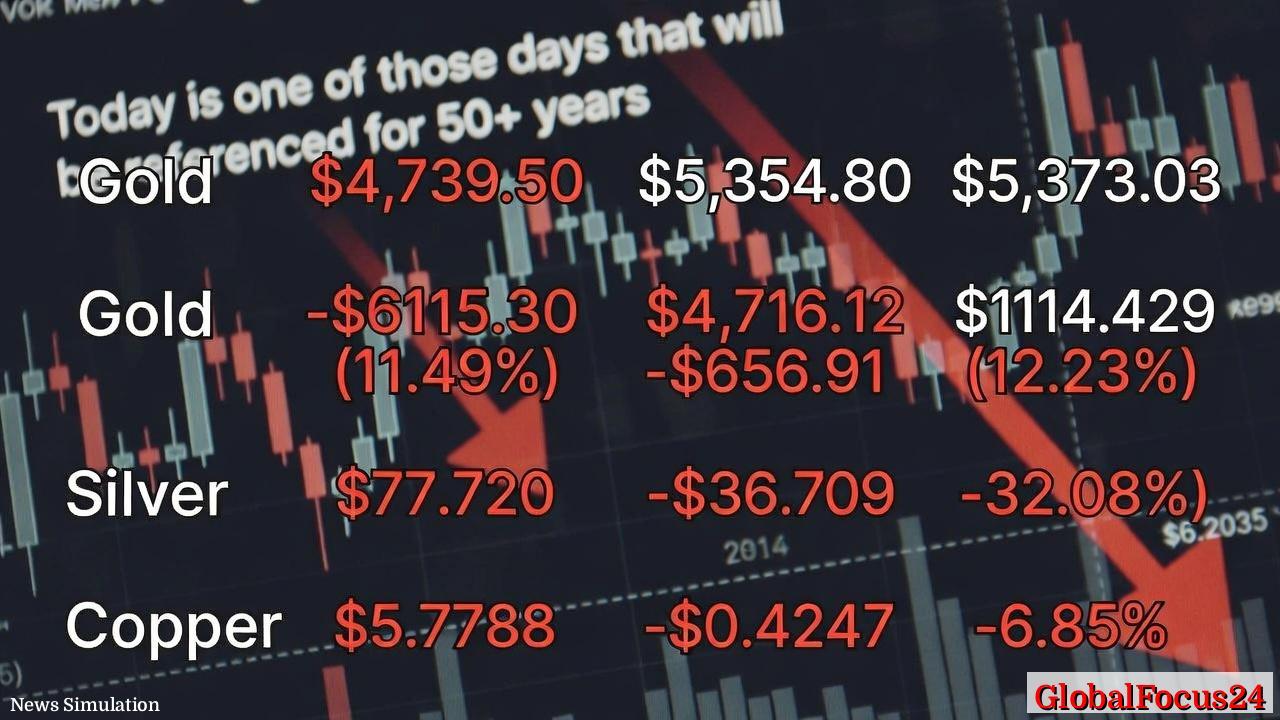
A dramatic repricing in precious metals markets unfolded in a single trading session, sending gold, silver, and copper into sharp declines after recent record highs. Traders, investors, and regional manufacturers watched as prices rebounded and then collapsed, underscoring the delicate balance between safe-haven demand, macroeconomic signals, and speculative liquidity. The session’s moves, while extreme, follow a longer arc of volatility that has characterized the metals complex in the last year, as markets weighed inflation trends, real yields, and central bank policy expectations.
Historical Context: A Century of Volatility in Precious Metals
The history of gold, silver, and copper has long been defined by cycles of fear and opportunity. Gold has often acted as a hedge against uncertainty, rising when real interest rates are negative or geopolitical tensions flare. Silver, with its dual role as a precious metal and an industrial input, tends to be more sensitive to broad economic cycles and industrial demand. Copper, widely considered a barometer for global economic health, frequently tracks manufacturing activity and construction cycles. The most recent episode sits within a longer pattern of shifting fundamentals: demand for safer assets when markets wobble, followed by sell-offs as growth signals improve or financial conditions tighten.
In the past decade, gold and silver have demonstrated both breakout rallies and sudden retracements. The current session’s declines come on the heels of earlier peaks that reflected a combination of safe-haven flows and speculative positioning. Market participants note that such volatility is not unusual in times of rapid reassessment of inflation trajectories, interest rate expectations, and currency strength. Yet the speed and magnitude of the declines in this session mark a historic swing that will likely influence sentiment and hedging strategies for months to come.
Market Dynamics: What Fueled the Declines
Several strands converged to drive the latest price deterioration in precious metals:
- Inflation and real interest rates: As macroeconomic data evolved, investors recalibrated expectations for central bank policy. When real yields rise, non-yielding assets like gold lose some appeal, while higher discount rates reduce the present value of future cash flows — a concept that often pressures precious metals with no inherent income stream.
- Liquidity and risk sentiment: A shift in risk appetite can trigger rapid repositioning among speculative traders and institutional funds. In sessions of heightened liquidity, crowded positions can unwind abruptly, amplifying price moves across the spectrum of metals.
- Industrial demand versus investment demand: Silver’s role as an industrial input means its price can be more vulnerable to shifts in manufacturing activity and inventory cycles. Copper’s sensitivity to construction and consumer electronics demand makes it a useful proxy for global economic momentum. When investment demand absorbs a large portion of liquidity, industrial use dynamics may lag, contributing to sharper retracements in spot prices.
- Currency effects: Metal prices are often inversely correlated with the strength of the U.S. dollar. A rally in the dollar can contribute to a pullback in metallic prices, given the global demand base and the cost of dollar-denominated assets for buyers using other currencies.
Note on market capitalization: The session produced a massive swing in precious metals market capitalization over 24 hours, reflecting both valuation declines and recall of speculative leverage. For investors, this underscores the importance of risk controls and diversification across asset classes, particularly in markets with outsized exposure to macroeconomic surprises.
Regional Impacts: What It Means for the Americas, Europe, and Asia
- Americas: In North America, the price moves reverberate through mining- and refining-intensive regions where procurement and hedging costs are significant. Gold and silver are central to jewelry manufacturing, electronics, and medical applications, while copper remains a backbone for infrastructure projects and renewable-energy supply chains. The sudden price adjustments can affect cash flows for producers and retailers, prompting recalibration of inventories and forward contracts.
- Europe: European markets watch global metal prices closely due to their industrial base and energy dynamics. A sharp correction can influence pricing for metal-intensive sectors such as automotive manufacturing, renewable energy installations, and construction. In addition to direct price risk, European buyers may reassess hedging strategies and procurement timing in response to volatility.
- Asia: Asia’s role as a dominant consumer and producer adds layers of complexity. In regions with large-scale jewelry markets and manufacturing ecosystems, sudden price shifts can alter consumer sentiment and wholesale pricing. Meanwhile, copper’s industrial demand in Asia remains a critical driver of global supply chains, linking commodity markets with manufacturing indicators in major economies like China and Japan.
Economic Implications: Supply Chains, Investment, and Inflation Links
The present volatility has several potential macroeconomic repercussions:
- Investment channels: Sharp declines in precious metals often prompt reassessments of risk premiums across portfolios. Some investors shift toward cash, bonds, or currency hedges while others view the selloff as an opportunity to rebuild positions at lower price points. The net effect on capital allocation can influence market liquidity and volatility in related assets.
- Inflation expectations: Gold and silver are sometimes used as hedges against inflation, though the relationship is not always straightforward. A rapid price drop could shift perceptions about inflation risk and the durability of monetary policy commitments, prompting recalculation of hedges and risk management strategies.
- Industrial supply and pricing: Copper’s price movements can cascade through manufacturing costs, affecting anything from electronics to housing markets. If copper prices stay under pressure for an extended period, producers may adjust capex plans or pass costs through to consumers, influencing inflationary dynamics in the broader economy.
- Mining and refining economics: Price swings affect the profitability of mining operations and refining facilities. A sustained downturn can lead to tighter capital expenditure, delayed projects, or workforce adjustments, with regional employment implications in mining regions.
Public Reaction and Market Sentiment: The Human Dimension
In markets, rapid price shifts are not only numbers on a screen; they translate into real-world decisions. Traders watching price ladders in real time react with a mix of caution and opportunism. Jewelers and industrial buyers may adjust orders, while small-scale miners and regional refiners reassess their hedging strategies in light of margin pressure. Public sentiment often mirrors the broader macro narrative: a quick retreat can be interpreted as a temporary pullback within a longer-term recovery, or as a sign that sentiment has shifted toward caution. Financial education and risk awareness rise as participants review stop-loss levels, position sizing, and the risk-reward profile of metals holdings.
Comparison with Historical Episodes: Learning from the Past
To place the current event in context, compare it with notable past episodes:
- Past volatility spikes: During historical episodes of elevated volatility, metals have displayed a pattern of swift declines followed by consolidation before resuming a longer-term trend. While each episode has its unique drivers, the underlying mechanics — shifts in yields, liquidity, and demand — recur across cycles.
- Recovery patterns: After sharp selloffs, metals often find a base as market participants reassess fundamentals, including inflation expectations, real rates, and demand signals. The duration of a recovery can vary, sometimes stretching across weeks or months, depending on macroeconomic guidance and geopolitical developments.
- Regional price behavior: In prior cycles, regional price behavior has shown resilience in markets with strong industrial demand or solid central bank policy frameworks. Conversely, regions with higher sensitivity to currency fluctuations or energy costs may experience amplified price movements, amplifying the importance of hedging strategies and supply chain diversification.
Operationalizing Risk Management: What Practitioners Are Doing Now
- Hedging and diversification: Financial professionals emphasize diversified portfolios that blend precious metals with other safe-haven assets, equities, and fixed income to mitigate single-asset risk. Derivative hedges, such as futures and options, are used to manage exposure during episodes of heightened volatility.
- Inventory and procurement planning: Industrial users of silver and copper, such as electronics manufacturers and construction firms, are reviewing their purchasing schedules and supplier contracts to navigate price uncertainty. Inventory management and long-term procurement strategies can provide a cushion against sudden price swings.
- Producer strategies: Mining and refining firms may adjust exploration timelines, capex budgets, and debt management plans in response to price environments. Maintaining balance sheet discipline becomes essential when commodity prices swing sharply in short windows.
Looking Ahead: The Path for Precious Metals in 2026
Analysts anticipate a cautious, data-driven approach to metals markets moving forward. Several factors will likely shape subsequent price action:
- Central bank policy signals: Clarity on interest rate trajectories and inflation outcomes will influence real yields and, by extension, the attractiveness of non-yielding assets like gold and, to a lesser extent, silver.
- Global growth indicators: Manufacturing PMIs, construction data, and energy consumption trends provide forward-looking signals for copper and silver demand. A continued expansion in infrastructure and technology investments could support a stabilization or rebound in copper and silver prices even amid broader volatility.
- Geopolitical and financial stability: Unforeseen events can reintroduce risk-off dynamics that favor precious metals as safe-haven assets. Conversely, an environment of confidence in economic normalization could dampen safe-haven demand, pressuring prices further.
- Market structure and liquidity: As markets evolve, changes in liquidity conditions, leverage, and exchange-traded product dynamics can modulate the pace and magnitude of future moves. Investors and institutions will watch these structural factors closely to gauge potential episodes of volatility.
Regional Case Studies: Infrastructure, Jewelry, and Technology Links
- Infrastructure-driven copper exposure: Regions with aggressive infrastructure pipelines continue to face copper price sensitivity given the metal’s role in wiring, motors, and renewable energy components. In markets prioritizing electrification and grid modernization, copper demand remains a central component of policy and planning.
- Jewelry markets and consumer spending: Gold and silver jewelry demand often reflects broader consumer confidence and discretionary income trends. In areas with strong cultural affinity for precious metals, price volatility can translate into shorter-term fluctuation in demand, even as long-term investment themes remain intact.
- Technology manufacturing: Silver’s role in electronics and photovoltaic applications means that semiconductor production cycles and solar deployment tempo feed into price dynamics. Regions with large electronics manufacturing ecosystems may experience more pronounced responses to metal price shifts.
Conclusion: A Moment of Reassessment for a Global, Interconnected Market
The latest session’s extreme movements in gold, silver, and copper highlight the ongoing complexity of global commodity markets. These prices are not merely numbers on a screen; they reflect a tapestry of inflation expectations, policy signals, industrial demand, currency dynamics, and investor sentiment. As markets digest the information from this volatile period, participants will be recalibrating risk, hedging strategies, and supply-chain plans for the months ahead. While the immediate path remains uncertain, the metals complex has historically shown resiliency—often finding a footing after rapid corrections and then tracing a new course as fundamental drivers come back into focus. For regions and industries tied to metals, the current episode serves as a reminder to balance opportunity with prudence, maintaining flexibility in procurement, investment, and risk management strategies to navigate the evolving landscape.