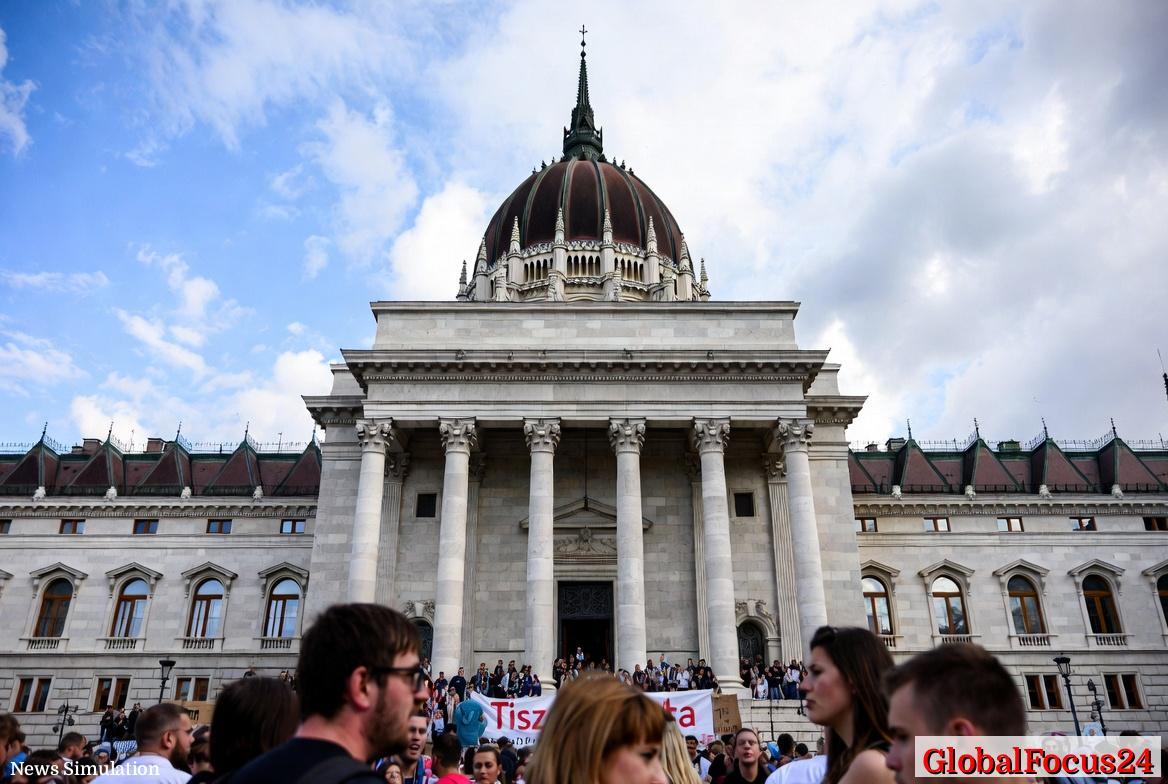
Hungary’s Historic Power Shift Opens a New Chapter for Europe’s Economy and Institutions
Hungary’s political landscape has undergone a decisive transformation after a parliamentary election delivered a crushing defeat to Viktor Orbán’s long-dominant Fidesz party. With most votes counted from the April 12 ballot, Peter Magyar’s Tisza party secured 54 percent of the vote against Fidesz’s 38 percent, positioning the opposition to gain well over two-thirds of seats in parliament. That threshold matters: in Hungary’s system, a supermajority can reshape the constitutional framework, redrawing the rules for governance, checks and balances, and the pace and direction of major policy shifts.
The election’s impact has already rippled beyond campaign slogans. In households and workplaces across the country, the message has been immediate—voters used their ballots not only to change parties, but to signal frustration with the conduct of institutions and the credibility of the state. For business leaders, public services, and foreign investors, the change raises both opportunities and risks, as markets typically respond sharply to the first phase of political transitions: negotiations over government formation, decisions about regulatory continuity, and the first wave of reforms—or reversals—after years of political consolidation.
From Consolidation to Contest
To understand how radical the moment is, it helps to trace Hungary’s recent political timeline. Since 2010, Fidesz and its allies have held a durable political grip on power. Orbán’s administration built a governing model that combined central authority with extensive legislative control, including a period in which Fidesz maintained the kind of parliamentary leverage that allowed far-reaching constitutional and institutional changes. Over time, Hungary developed a reputation in parts of the European policy world for policy predictability in some sectors—but also for concerns about governance standards, transparency, and the independence of key watchdog institutions.
The 2026 election breaks that long arc. The size of Tisza’s victory is not merely a routine change of governing parties; it signals that a broad coalition of voters decided that the existing political formula had reached a limit. Orbán, who had been prime minister for 16 years and presided over the supermajority era since 2010, conceded defeat. In a public statement, he described the result as “painful but clear,” adding that he congratulated the winning party.
This concession, and the numerical reality behind it, sets off a familiar sequence in modern democracies: the transition from campaign politics to negotiations over governing strategy. But Hungary’s context makes that process particularly consequential because the opposition’s projected seat share provides the legal leverage to rewrite constitutional rules. Such changes can be implemented quickly if political alignment holds—yet rushed transitions can also provoke uncertainty, especially when economic policy, regulatory frameworks, and investor confidence are at stake.
Why Corruption Became the Decisive Issue
Across the country, voters repeatedly pointed to corruption as the decisive factor shaping their vote. While electoral campaigns often contain overlapping themes—cost of living, public services, immigration, national identity—corruption concerns have a distinct economic texture. They touch procurement, licensing, the enforcement of contracts, the fairness of access to markets, and the reliability of the legal system. Even when ordinary citizens cannot name specific cases, corruption can be felt in everyday outcomes: delays, favoritism, and the sense that opportunities do not rise on merit alone.
Several voters described the problem in strikingly blunt terms. A former backer of Fidesz called it “unbearable,” while another characterized it as “open and brazen.” Such language reflects a deep shift from tolerance to rejection. For a political movement that once relied on the idea of stability and strong governance, allegations of pervasive misconduct can erode trust even among those who once supported the incumbent.
The business dimension has been particularly important. Reports from voters and civic observers pointed to Hungarian firms losing international contracts due to reputational damage associated with corruption allegations. In practical terms, procurement controversies can lead multinational partners to require extra compliance safeguards, shift contracts to competitors perceived as lower-risk, or demand costly auditing and oversight. Over time, this affects not only individual companies, but the broader investment ecosystem—where credibility can function like currency.
For Tisza and for Hungary’s institutions, the question now becomes how corruption is addressed in concrete policy terms. In many countries, anti-corruption efforts falter when they remain abstract or purely symbolic. The next phase will likely hinge on whether reforms target enforcement mechanisms—investigative capacity, judicial processes, beneficial ownership transparency, procurement integrity, and the insulation of oversight bodies from political interference.
The Constitutional Leap and Its Institutional Stakes
A projected two-thirds-plus seat share gives Hungary’s opposition the ability to rewrite the constitution. Historically, constitutional redesign is one of the most consequential tools in any parliamentary system. It can alter the structure of courts, the appointment and terms of oversight officials, the balance between branches of government, and the legal architecture governing elections, public administration, and emergency powers.
Such power does not automatically translate into stable outcomes. Constitution-writing can unify a coalition during the election period, but it also introduces complexities once the urgency of victory turns into the mechanics of governance. Opposition parties must decide how far to go—how much to change, how quickly, and how to build durable consensus to prevent future legal disputes.
In Hungary’s case, the constitutional stakes are magnified by the broader European context. Many European Union member states operate with shared expectations about rule of law, institutional independence, and the fairness of administrative and judicial processes. A constitutional overhaul can either align Hungary more closely with those expectations—potentially reducing legal and regulatory friction—or create new uncertainties if changes are perceived as inconsistent or overly abrupt.
For investors, the immediate concern is not only the content of reforms, but the predictability of implementation. When businesses plan expansions, they rely on stable contracting frameworks, consistent enforcement of regulations, and a sense that rules will not swing dramatically within short time horizons. Constitutional change can be an opportunity if it strengthens trust; it can also be a risk if the transition generates uncertainty about regulatory continuity.
Economic Impact: Confidence, Credit, and the Real Economy
Hungary’s economy has experienced years of adjustment under shifting political priorities, with periods of strong alignment to European funding and reform agendas, alongside episodes of friction tied to rule-of-law concerns. Economic impact in such contexts often operates through three channels: investor confidence, access to financing, and policy planning for households and firms.
The political shift toward Tisza is likely to trigger a reassessment by market participants and lenders. When a long-ruling party is displaced, markets typically watch for signs of institutional stability—whether reforms are credible, whether governance transitions are orderly, and whether economic policy will remain consistent enough for long-term planning. If the new leadership combines constitutional change with operational continuity in areas like energy policy, industrial strategy, and budget discipline, Hungary could see an improved risk perception and potentially better financing conditions.
At the same time, investors may price in transitional costs. Constitutional rewrites can take time to implement, and early reform waves often come with operational disruption. Government agencies may adjust staffing, procurement systems may be audited, and regulatory processes can slow while new rules are drafted and interpreted. Even where reforms are beneficial, delays can affect logistics, construction timelines, and the ability of businesses to secure permits and approvals.
For households, economic effects tend to arrive later than financial-market reactions, but they are no less significant. Corruption scandals can contribute to higher costs, reduced competition, and inefficient public spending—pressures that eventually show up in taxation, service quality, and infrastructure delivery. If a new government reduces corruption effectively, citizens may experience gradual improvements: faster project delivery, more transparent spending, and procurement systems that reward performance rather than connections.
Yet the public will likely demand results quickly. In societies where corruption becomes a widely shared concern, tolerance for slow reform is limited. The first year following an election can set the tone—whether reforms are designed to be measurable, whether agencies have the authority and resources to act, and whether legal accountability is pursued consistently.
Regional Comparisons in Central and Eastern Europe
Hungary’s election outcome also invites comparison with other political transitions across Central and Eastern Europe, where voters have alternated between incumbent parties and oppositions in response to economic grievances and institutional distrust. In several countries, electoral change has often been driven by a mix of cost-of-living pressures and concerns about the fairness of the state. However, corruption has emerged as a particularly potent factor in modern campaigns because it connects daily frustration to structural outcomes.
Poland, for example, has seen prolonged political polarization tied to the independence of institutions, alongside significant economic and business effects when legal and governance norms appear contested. In the Czech Republic, governance controversies have played a role in elections as voters weigh institutional credibility against policy continuity. In Romania and Bulgaria, anti-corruption enforcement—often supported by regional mechanisms and international scrutiny—has influenced political agendas and, in turn, corporate perceptions of risk.
Hungary’s situation differs in one key respect: the combination of opposition victory and the projected ability to rewrite constitutional rules. In many regional transitions, incumbents or oppositions seek legal adjustments through ordinary legislation or by gradually reforming institutions. Constitutional change can move faster, but it also increases the potential for institutional conflict if stakeholders believe reforms are designed to entrench power rather than strengthen checks and balances.
A meaningful comparison, therefore, is not simply who won the election, but what the victory enables. In Hungary, the opposition’s parliamentary leverage can be used either to rebuild trust through robust institutional design or to replace one dominant configuration with another. The difference will likely be visible in the early appointments to oversight bodies, the transparency of the reform agenda, and the commitment to due process and judicial independence.
Europe Watches Closely
Europe-wide attention on Hungary is not new. Member states and European institutions have long followed Hungarian developments because Hungary sits at the center of continental discussions about rule-of-law standards, public procurement integrity, and the use of public authority. European partnerships in energy, infrastructure, and cross-border investment depend on predictable regulatory frameworks and credible enforcement.
The prospect of a constitutional reset may be interpreted by European stakeholders in two ways. On one hand, it could reduce long-standing friction if reforms are aimed at strengthening institutional checks and accountability. On the other hand, it could increase uncertainty if changes are perceived as destabilizing or if transition politics create legal ambiguity for ongoing cases and future regulations.
For neighboring economies, the implications extend to supply chains and investment planning. Hungary hosts major industrial activity, including automotive supply networks and manufacturing tied to European markets. When policy credibility improves, supply chain partners are more likely to expand; when uncertainty rises, companies may delay capital expenditure and shift intermediate orders to other locations.
Political Change Without a Blank Check
Even as a historic shift is celebrated by voters tired of perceived corruption, governance realities remain. Parliamentary transitions involve coalition-building, legal drafting, and negotiation over budget priorities. The new leadership must also contend with Hungary’s social needs—healthcare capacity, education modernization, regional development, and support for households under inflationary pressures that continue to shape Europe broadly.
Moreover, the country’s institutional memory matters. Years of concentrated power can leave administrative systems shaped by previous practices—both in staffing culture and in procedures for procurement and oversight. Changing corruption patterns is not only about writing new rules; it requires changing how agencies operate day to day and ensuring accountability mechanisms function without political interference.
The public mood, as reflected by voters’ descriptions of corruption as “unbearable” and “open and brazen,” suggests demand for decisive action. Yet reforms that rely solely on investigations without procedural fairness can backfire by damaging legitimacy. Conversely, reforms that focus exclusively on regulatory changes without enforcement may fail to alter the underlying incentives that allow corruption to persist.
A Wider Shockwave Beyond Hungary
The election has also been described as a blow to Donald Trump’s influence, reflecting how political narratives travel across borders. Even when an election’s causes are rooted in domestic governance, external political dynamics can amplify attention, particularly when international figures attempt to frame European elections in ideological terms. For Hungary’s immediate future, the most important variable is likely not foreign endorsement, but the credibility of domestic reforms.
If Hungary’s transition strengthens institutional integrity and restores trust in public procurement and judicial independence, it could improve economic outcomes through lower perceived risk, smoother access to regional financing, and renewed confidence among international partners. If reforms stall, politicized enforcement emerges, or constitutional changes are perceived as consolidating power rather than balancing it, the economic effects could turn negative—worsening reputational risk and delaying investment decisions.
What Happens Next
Hungary now stands at a crossroads. The projected seat outcome grants the opposition the opportunity to rewrite constitutional rules and restructure the institutional environment that shapes economic life. But opportunity is not automatic progress. The next phase will likely be defined by three practical questions.
- Can the new government deliver a corruption reduction agenda that changes incentives, not just slogans?
- Will constitutional rewriting strengthen rule-of-law safeguards and institutional independence in ways that reduce legal uncertainty for businesses and citizens?
- Can the transition maintain policy continuity in areas essential for employment, investment, and public services while reforms take effect?
Across Europe, observers will watch Hungary not just for whether the party in power changes, but for whether trust follows. In political systems, legitimacy is built slowly and can be lost quickly. Hungary’s election has provided a rare moment in which legitimacy can be rebuilt—or irreparably damaged. The choices made in the first months after the vote will likely determine whether this historic turning point becomes an economic reset and institutional renewal, or a new chapter that fails to meet the public’s expectations.