France’s 2027 Presidential Race Takes Shape as Fragmented Field Raises Stakes
A Pivotal Election Without an Incumbent
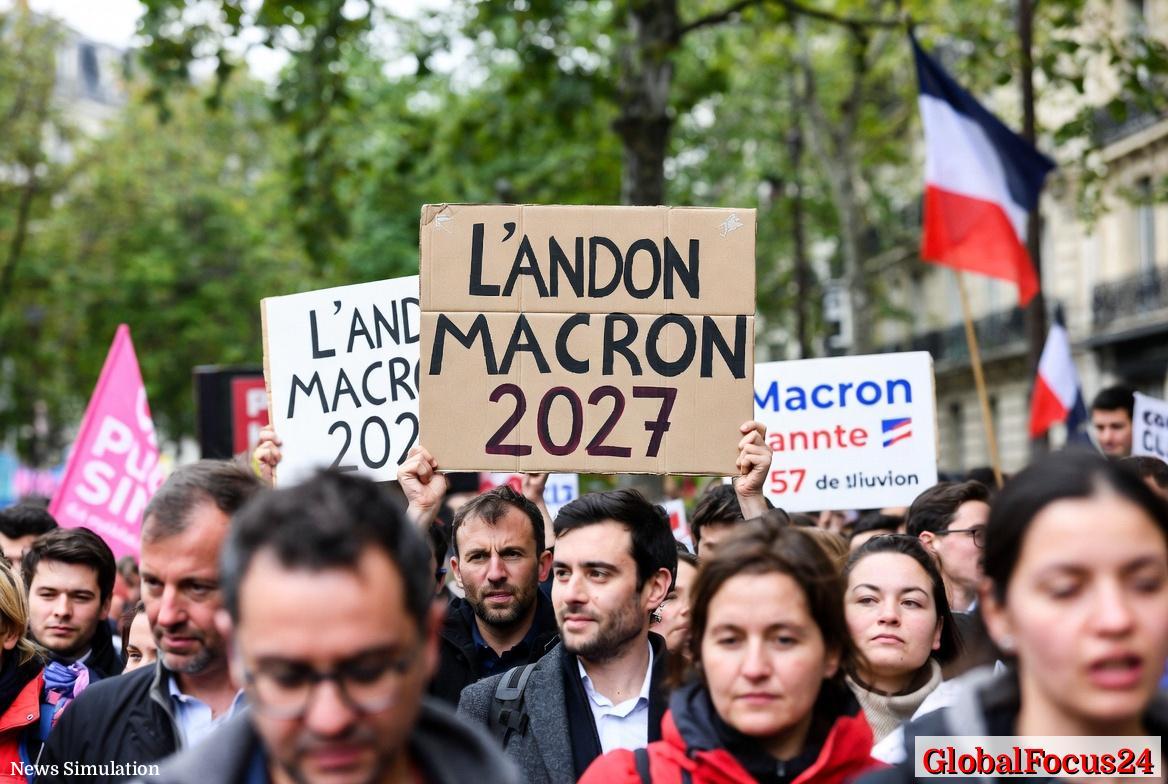
France is entering an unusually fluid presidential contest as the country prepares to elect a successor to Emmanuel Macron in 2027. Barred by the constitution from seeking a third consecutive term, Macron leaves behind a political landscape defined less by clear succession than by fragmentation, uncertainty, and rising voter volatility. With just over a year until the first round of voting, the absence of a dominant centrist figure has opened the field to a wide range of contenders across the political spectrum.
Early polling consistently indicates that a candidate from the populist-right National Rally is highly likely to secure a place in the decisive second round. Whether that candidate will be Marine Le Pen, the party’s long-standing figurehead, or its younger president, Jordan Bardella, remains unresolved. Beyond that, however, the race remains strikingly open, with multiple candidates competing for position in both the center and on the left.
The Two-Round System and Its Consequences
France’s presidential elections are conducted in a two-round system that tends to reward broad coalitions in the second round while encouraging diversity in the first. Candidates who fail to consolidate support early risk elimination before the final runoff, even if their ideological bloc commands significant overall backing.
Historically, this structure has produced dramatic shifts between rounds. In 2017, Macron himself capitalized on the collapse of traditional parties to emerge as a centrist alternative to both the far-right and far-left. In 2022, he again prevailed against Marine Le Pen, though with a narrower margin, reflecting growing polarization and voter fatigue.
The 2027 race may push this dynamic further. With no incumbent and no obvious unifying candidate among mainstream parties, the first round could feature an unusually fragmented vote, increasing the likelihood that a candidate with a disciplined base—such as National Rally—advances comfortably.
National Rally’s Strategic Position
The populist-right National Rally enters the race in its strongest position in decades. Marine Le Pen has steadily increased her vote share in successive presidential elections, while the party has worked to soften its image and broaden its appeal among working-class and rural voters.
Jordan Bardella, widely seen as Le Pen’s protégé, represents a generational shift within the party. His leadership has helped attract younger voters and expand National Rally’s presence on social media and in urban areas. Whether the party ultimately fields Le Pen, a familiar but polarizing figure, or Bardella, a newer face with growing popularity, it is expected to maintain a strong base heading into the first round.
Economic concerns have played a significant role in the party’s rise. Persistent inflation, concerns over purchasing power, and regional disparities have fueled dissatisfaction with mainstream parties. In industrial regions and smaller towns, where economic restructuring has left lasting scars, National Rally has positioned itself as a defender of domestic industries and national sovereignty.
A Fragmented Left Struggles to Unite
While the populist right appears relatively cohesive, the French left faces a more complex challenge: an abundance of potential candidates coupled with deep strategic disagreements. This “curse of plenty” has made it difficult to coalesce around a single figure capable of reaching the second round.
Olivier Faure, leader of the Socialist Party, has advocated for a primary election to select a unified left-wing candidate. His proposal aims to avoid the vote-splitting that has weakened the left in previous elections. However, not all potential contenders support this approach.
Raphaël Glucksmann, a center-left figure who has gained traction in opinion polls with support ranging between 10 and 14 percent, has rejected the idea of participating in a primary. His relatively strong polling position reflects a broader appetite among some voters for a moderate alternative, but his refusal to join a collective process risks further dividing the electorate.
Complicating matters further is the presence of Jean-Luc Mélenchon, a veteran of French politics and leader of a hard-left movement. Mélenchon retains a loyal base and has previously come close to reaching the second round. However, his polarizing style and uncompromising positions have led some on the left to view him as a liability in a broader coalition.
Adding another layer of intrigue is the potential return of François Hollande, who served as president from 2012 to 2017. Hollande’s possible comeback underscores both the lack of a clear successor within traditional parties and the enduring influence of established political figures in French politics.
The Center’s Uncertain Future
Macron’s centrist movement, which reshaped French politics in 2017, now faces the challenge of maintaining relevance without its founding leader. While several figures within the current government and allied parties are considered potential candidates, none has yet emerged as a clear frontrunner.
The centrist bloc’s success has depended heavily on Macron’s personal appeal and his ability to position himself as a pragmatic alternative to ideological extremes. Replicating that formula without him will be difficult, particularly in a political environment that appears increasingly polarized.
Economic performance will play a critical role in shaping the center’s prospects. France’s economy has shown resilience in recent years, but structural challenges remain, including public debt, labor market reforms, and the transition to a greener economy. Voters’ perceptions of these issues could influence whether they seek continuity or change.
Economic Pressures and Voter Sentiment
Economic concerns are expected to dominate the campaign. Rising living costs, housing affordability, and wage stagnation have become central issues for many households. While France has avoided some of the more severe economic disruptions seen elsewhere in Europe, the cumulative impact of inflation and global uncertainty has eroded purchasing power.
In comparison with neighboring countries, France occupies a middle ground. Germany has faced industrial slowdown linked to energy costs and global trade shifts, while southern European economies have grappled with high unemployment and debt levels. France’s relative stability has not insulated it from voter frustration, however, particularly in regions that feel left behind by globalization.
Rural areas and smaller cities, in particular, have become key battlegrounds. These regions have experienced declining public services and limited economic opportunities, contributing to a sense of disconnection from national decision-making. Candidates who can address these concerns effectively may gain a decisive advantage.
Historical Patterns and Shifting Alignments
The fragmentation visible today reflects a broader transformation of French politics over the past decade. The traditional dominance of center-left and center-right parties has given way to a more fluid system characterized by new movements and shifting alliances.
This realignment began in earnest with Macron’s rise, which disrupted established party structures and created space for alternative voices. Since then, voter loyalties have become less predictable, with many individuals switching allegiances between elections.
Turnout will also be a critical factor. In recent elections, abstention rates have been relatively high, particularly among younger voters and those disillusioned with the political system. Mobilizing these groups could prove decisive, especially in a fragmented field where small margins can determine who advances to the second round.
Scenarios for the Runoff
Given current trends, several scenarios appear plausible. The most widely anticipated outcome is a second-round contest between a National Rally candidate and a challenger from either the center or the left. However, the identity of that challenger remains uncertain.
If the left fails to unite, its vote could be divided among multiple candidates, reducing the chances of any one of them reaching the runoff. In that case, a centrist candidate might emerge as the primary opponent to National Rally. Conversely, a successful effort to consolidate the left could produce a competitive alternative, reshaping the dynamics of the race.
The possibility of an upset cannot be ruled out. French presidential elections have a history of surprises, particularly in the first round. Shifts in public opinion, campaign dynamics, and external events could all influence the outcome in unpredictable ways.
A Defining Moment for France
As the campaign begins to take shape, the 2027 presidential election is poised to become a defining moment for France. The combination of an open field, economic uncertainty, and evolving political identities has created a highly competitive environment.
While a populist-right victory remains a distinct possibility, it is far from guaranteed. The outcome will depend on whether mainstream parties can overcome internal divisions and present a compelling alternative to voters seeking stability and direction.
Over the coming months, alliances will be tested, candidates will emerge or withdraw, and the contours of the race will become clearer. For now, one certainty stands out: France is heading toward one of its most unpredictable presidential elections in recent history.