PayPal Shares Slide Intraday as Volatility Returns to Digital Payments Leader
PayPal Stock Sees Sharp Midday Reversal
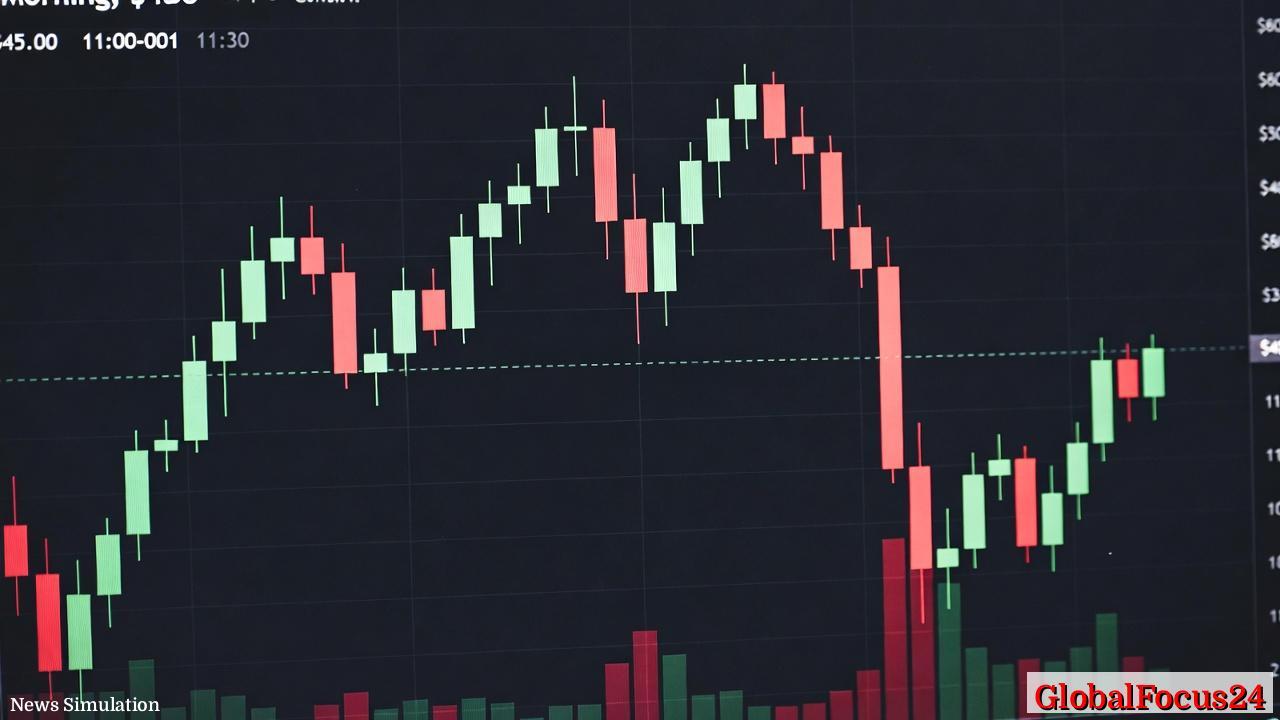
PayPal Holdings, Inc. shares endured a sharp intraday reversal on February 26, 2026, underscoring the fragile sentiment surrounding one of the world’s best‑known digital payments companies. The stock opened near 47.80 dollars, briefly holding in the 47.60–47.80 dollar range during the early part of the session, before a sudden selloff around late morning pushed prices down toward the 45.00 dollar level and left the stock closing at 45.19 dollars, a decline of 0.46 dollars, or about 1.01% on the day.
The trading pattern was marked by early green candles on the intraday chart—indicating buying interest at the open—followed by a steep red downdraft as sellers overwhelmed bids, breaking the 45.00 dollar support zone that had been watched by short‑term traders. Elevated volume during the descent highlighted how quickly market sentiment can flip for PayPal, which has spent much of early 2026 at the center of takeover speculation, earnings disappointment, and shifting analyst views.
Intraday Trading Pattern Highlights Fragile Support
In the morning session, PayPal shares initially traded in a relatively tight band near the prior day’s levels, suggesting some stability after a volatile stretch in February. Buyers briefly pushed the stock toward the upper 47‑dollar area, but the lack of follow‑through hinted that many investors remained cautious rather than committed to a sustained rebound.
The tone changed sharply between roughly 11:00 and 11:30 a.m. Pacific time, when a wave of selling pressure hit the stock. The candlestick chart flipped from a series of green candles to a prominent red bar, reflecting both a rapid price decline and heightened volume as stop‑loss orders were likely triggered below intraday support levels. Once the price slipped through the 45.00 dollar area—identified on some technical charts as a dotted horizontal support line—downside momentum accelerated before dip‑buyers and short‑term traders stepped in to stabilize the stock near 45.19 dollars by the closing bell.
For short‑term traders, the breach of 45.00 dollars is notable because that zone had recently acted as a key pivot, coinciding with earlier bouts of volatility tied to buyout rumors and heightened options activity. The failure to hold that level may reinforce the perception that, despite occasional rallies, PayPal remains in a vulnerable technical position with sellers quick to reassert control when the narrative turns less favorable.
Background: Volatile February After Earnings Miss and Guidance Shock
The latest intraday slide comes at the tail end of a turbulent month for PayPal, driven by a combination of weaker‑than‑hoped earnings, cautious forward guidance, leadership transition, and shifting expectations about potential strategic interest from larger players in the payments and technology ecosystem.
Earlier in February, PayPal reported its recent quarterly results, delivering revenue of about 8.68 billion dollars, which fell short of analyst estimates by roughly 1–1.5%, and adjusted earnings per share of 1.23 dollars, below the 1.30 to 1.33 dollar range many on Wall Street had anticipated. While those figures still represented year‑over‑year growth, the “double miss” on both the top and bottom line sharpened concerns that PayPal’s expansion trajectory is slowing in a more competitive digital payments landscape.
More troubling for some investors was management’s outlook for 2026. The company signaled that transaction margin dollars—an important profitability metric—are expected to decline in low single digits, and it trimmed its broader earnings guidance while withdrawing a prior outlook for 2027. That guidance “shock,” combined with a slowdown in branded checkout growth to around 1% from mid‑single‑digit rates in prior periods, raised questions about PayPal’s ability to defend its market share against card networks, newer fintech rivals, and large technology platforms with embedded payment offerings.
Leadership Change and Strategic Uncertainty
Adding to the mix, PayPal is undergoing a leadership transition at a critical moment. The company has appointed Enrique Lores—known for cost‑cutting and restructuring efforts in prior roles—to take over as chief executive officer on March 1, 2026. The outgoing leadership team faced criticism from some analysts and investors for execution challenges and what critics saw as a slow response to intensifying competition and shifting consumer behavior in digital payments.
On recent earnings calls and in analyst commentary, Lores has been framed as a leader who may prioritize operational efficiency, portfolio rationalization, and sharper strategic focus. Some market participants see potential for a more aggressive turnaround, including possible divestitures or refocusing on core branded checkout and merchant services. Others worry that cost‑cutting alone may not be enough to reignite growth if PayPal’s competitive position continues to erode. This leadership overhang has contributed to wider trading ranges in the stock and increased sensitivity to any news that hints at the new CEO’s strategic priorities.
Takeover Rumors, Regulatory Scrutiny, and Market Sentiment
February trading in PayPal has also been shaped by periodic bursts of speculation about a potential sale or strategic combination. Reports earlier in the month indicated possible interest from payment rival Stripe, prompting a sharp, rumor‑driven rally and even a brief trading halt as the stock spiked intraday. However, subsequent indications that no active acquisition talks were underway quickly removed much of that takeover premium, sending PayPal shares back down and underscoring the market’s reliance on event‑driven catalysts rather than fundamentals alone.
At the same time, PayPal faces heightened legal and regulatory scrutiny. A recent announcement of an investigation into the company’s disclosure of key performance metrics—including total payment volume and active account trends—has introduced another layer of uncertainty. The review focuses on whether management adequately communicated any material declines in these metrics prior to the February earnings release, potentially influencing how investors assess the credibility and transparency of PayPal’s reporting going forward.
Analyst sentiment has weakened accordingly. Several firms, including Rothschild & Co Redburn and Morgan Stanley, have cut price targets and maintained cautious or negative ratings, citing slower growth in branded checkout, rising competitive pressure, and the downbeat 2026 outlook. Investor positioning has reflected that skepticism, with increased short interest and elevated trading volumes amplifying the stock’s tendency to swing sharply in response to news—conditions that were visible again in the intraday move on February 26.
Economic Impact and Broader Market Context
While PayPal’s single‑day move on February 26 was modest in percentage terms, the trading pattern and underlying drivers carry broader implications for the digital payments sector and the technology‑heavy segments of U.S. equity markets. PayPal is a major player in online commerce and cross‑border transactions, and its performance often serves as a barometer for consumer spending trends, merchant payment volumes, and the health of small‑business commerce, particularly in e‑commerce‑heavy regions like North America and Western Europe.
The company’s softer growth, narrowing margins, and cautious outlook suggest that the post‑pandemic surge in digital payments has given way to a more mature, competitive phase in which established card networks, bank‑owned platforms, and emerging fintechs are all fighting for share of wallet. For merchants and consumers, this competitive intensity can translate into more choices, evolving fee structures, and new incentives, but for investors it can mean lower profitability and more volatility in share prices across the sector.
From a macroeconomic perspective, PayPal’s challenges intersect with broader concerns about slowing global growth, shifting interest‑rate expectations, and tighter capital markets for high‑growth technology names. As central banks keep an eye on inflation and adjust policy, valuations across growth‑oriented sectors have come under pressure, particularly for companies that miss expectations or revise guidance lower. PayPal’s February performance illustrates how even profitable, established digital payments franchises are not immune to these forces.
Regional Comparisons: U.S., Europe, and Emerging Markets
PayPal’s recent volatility also fits into a wider regional story. In the United States, digital payments providers have faced intense competition from both traditional card networks and large technology platforms that have integrated payment capabilities into their ecosystems. This has put pressure on standalone payment players to differentiate through value‑added services, loyalty programs, and cross‑border capabilities, even as regulatory scrutiny of fees and data practices remains elevated.
In Europe, the picture is mixed. On one hand, strong consumer protection regimes and open‑banking initiatives have encouraged innovation and new entrants in the payments space. On the other, fragmented regulatory environments and differing local preferences have made it harder for a single global platform to dominate. PayPal has built meaningful share in several European markets, but it now faces competition from bank‑backed wallets, instant payment schemes, and region‑specific fintech platforms, all of which can pressure pricing and margins.
Emerging markets present both opportunity and risk. The continued rise of mobile wallets, local real‑time payment systems, and super‑apps in regions such as Latin America and parts of Asia has created fertile ground for digital payments growth, but also intense local competition. Players that succeed often tailor their products to local regulatory requirements, consumer habits, and merchant needs. For PayPal, capturing incremental growth in these markets may require investment and partnerships at a time when investors are pressuring management to prioritize cost discipline and margin protection.
Against this backdrop, the intraday break below 45.00 dollars on February 26 is viewed by some market observers as a symbol of the company’s current crossroads: a global brand with deep roots in the digital economy, yet facing regional and segment‑specific challenges that make its recovery path more uncertain.
Investor Reaction and Outlook
The immediate reaction to the February 26 price swing was characterized by brisk trading and a cautious tone across market commentary. Some short‑term traders saw the intraday drop and subsequent stabilization near the mid‑45 dollar range as an opportunity to trade the volatility, particularly given earlier in‑month rallies tied to takeover rumors. Others interpreted the inability to hold above 47 dollars—and the break of the 45 dollar support line—as confirmation that sentiment remains fragile despite occasional bursts of optimism.
Institutional investors appear focused on several key questions: whether the incoming CEO can accelerate strategic changes without undermining the core franchise, how quickly transaction margin trends can stabilize, and whether any future strategic interest from larger players will translate into concrete proposals rather than short‑lived rumors. At the same time, legal and regulatory developments around PayPal’s disclosures and metrics tracking could influence both governance perceptions and the company’s flexibility in communicating performance metrics to the market.
What the February 26 Move Signals for PayPal
The February 26 intraday decline, from an early range near 47.60–47.80 dollars to lows around 45.00 dollars before closing at 45.19 dollars, underscores the degree to which PayPal remains a sentiment‑driven stock in early 2026. Persistent questions about growth, profitability, competitive positioning, and strategic direction have left the share price highly sensitive to any new information—or even to the absence of fresh catalysts.
For the broader digital payments industry, the episode is a reminder that even well‑established players can experience sharp swings when expectations reset and structural competition intensifies. For PayPal specifically, the coming months, including the formal start of a new CEO’s tenure and any updates to its strategic roadmap, will be critical in determining whether days like February 26 become less frequent or remain a defining feature of the stock’s trading profile.