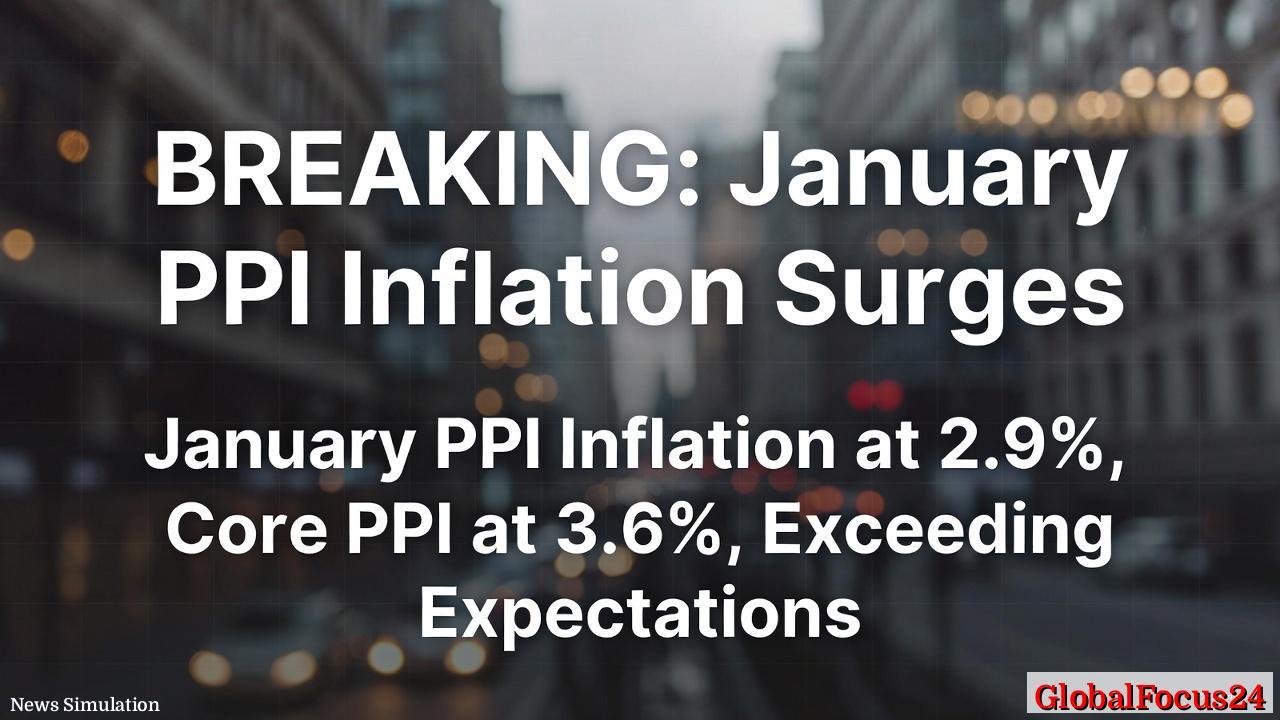
PPI Inflation Surges Beyond Forecasts, Redrawing the Economic Landscape
In a development that broadens market attention and sets the tone for near-term policy expectations, the latest producer price index (PPI) data show a sharper-than-anticipated rise in inflation at the wholesale level. January PPI inflation advanced to 2.9 percent year over year, topping consensus estimates of 2.6 percent. The core measure, which excludes volatile food and energy components, climbed to 3.6 percent, surpassing projections of 3.0 percent and marking its highest level since mid-2025. The combination ofand core increases underscores persistent price pressures across production channels and signals broader implications for pricing power, supply chains, and monetary policy.
Historical context and what the numbers signal To understand the present readings, it helps to place them in a broader arc. PPI has historically served as a leading indicator for consumer inflation, with shifts at the wholesale level often foreshadowing consumer price dynamics two to three quarters later. The January data reflect a period when demand for goods and services remained resilient even as input costs fluctuated amid ongoing supply chain adjustments. Historically, spikes in the core PPI—driven by durable goods, services, and intermediate materials—have preceded upticks in consumer prices, though the relationship is not perfectly one-to-one. Analysts emphasize that momentum in core PPI suggests more persistent price pressures than anticipated, even if some components may ease as supply conditions normalize or as commodity prices cool.
Economic implications and transmission channels The outturn in January points to several potential transmission channels through which wholesale inflation can influence the broader economy:
- Producer pricing power: A 3.6% core PPI implies that firms are still able to pass higher costs along certain production stages. This can manifest as higher prices for intermediate inputs, which, if sustained, may eventually filter through to consumer prices.
- Supply chain dynamics: Persistent core inflation can reflect tight margins on essential components, signaling that suppliers are adjusting in response to demand shifts, transportation costs, or input shortages. Such dynamics can affect sectors ranging from manufacturing equipment to consumer electronics.
- Interest rate expectations: Inflation measures that run hotter than anticipated tend to shape market expectations for central bank policy. If the core PPI remains elevated, traders may price in a higher probability of earlier or more aggressive tightening, influencing bond yields, financing costs, and investment decisions.
- Sectoral implications: Energy price fluctuations, commodity cycles, and the trade-off between domestic production and imports can amplify price movements in specific industries, including construction, machinery, and durable goods.
Regional comparisons and the domestic landscape Regionally, wholesale inflation trends can diverge due to differing input costs, labor market conditions, and industrial composition. Historically, regions with more energy-intensive industries or concentrated manufacturing bases may experience stronger PPI readings when commodity prices rise, while areas with greater services output can see more moderated wholesale inflation. In the current environment, manufacturing belts and export-oriented hubs have shown sensitivity to global supply chain normalization, currency movements, and global demand shifts. The dispersion of price pressures across sectors helps explain why policymakers and market participants watch core measures closely, as they tend to offer a more stable signal of underlying inflation thanfigures that are subject to energy and food volatility.
Implications for households and business decision-making For households, hotter-than-expected PPI readings can translate into higher costs embedded in goods and services over time. While the direct consumer impact depends on competitive dynamics and pass-through rates, sustained wholesale inflation can erode purchasing power if wage growth does not fully keep pace with price gains. For businesses, elevated core inflation can influence profit margins, inventory strategies, and capital expenditure plans. Firms may seek to hedge inputs, renegotiate supplier contracts, or adjust pricing strategies to maintain margins in a environment of ongoing cost pressures. Small and medium-sized enterprises, in particular, may experience tighter financing conditions if central banks respond with tighter monetary policy to curb inflation, potentially affecting credit availability and investment.
Policy context and potential actions From a policy perspective, the January PPI outcomes feed into ongoing deliberations about price stability and the appropriate stance of monetary policy. If core inflation remains elevated, policymakers may consider a measured approach to tightening, balancing the goal of cooling demand with the risk of slowing growth. Market participants will monitor accompanying data, including consumer price indices, labor market metrics, and services inflation, to gauge whether the current inflation trajectory reflects temporary frictions or a more entrenched trend. The dynamics illustrate the delicate calibration policymakers face: dampening inflation without unduly curbing investment and employment.
Historical parallels and lessons Historically, periods of rising core PPI have preceded episodes where inflation proved sticky, necessitating policy adjustments to preempt a wage-price spiral. However, the modern inflation regime contains unique features, including evolving supply chain resiliency, digitalization of pricing, and a globalized yet fragmented goods market. The January reading reinforces the importance of watching not onlynumbers but the underlying components that drive core inflation. Economists emphasize that while energy and food prices can swing, core measures tied to services and durable goods tend to better reflect enduring price pressures in the economy.
Regional resilience and comparative perspectives Comparative analyses across major economies reveal that inflation dynamics are influenced by varied combinations of monetary policy, fiscal support, and supply-side constraints. In some jurisdictions, stronger wage growth and persistent demand have bolstered inflation despite commodity price volatility, prompting proactive tightening. In others, inflation has cooled as energy prices declined or as supply chains adapted. The current domestic core PPI could be mirrored by similar readings in sectors with high input intensity, implying a broad-based re-pricing of production costs rather than isolated spikes.
What to watch next
- Core PPI trajectory: A sustained or rising core rate would keep inflation risks elevated and may push expectations higher, affecting pricing power and investment decisions.
- Input-cost components: Tracking which inputs—such as metals, energy, or transportation—are driving the core readings can illuminate where price pressures are centered.
- Producer-to-consumer pass-through: Observing consumer price trends in the ensuing months will indicate how effectively wholesale inflation translates into retail costs.
- Policy signals: Central bank communications and rate guidance in response to the data will shape financial market expectations and economic activity.
Public reaction and market sentiment In the immediate aftermath of the report, markets typically respond to the surprise elements in PPI data. When core inflation accelerates unexpectedly, investors may recalibrate expectations for interest rate paths, currency valuations, and commodity demand. Consumers and businesses watch such developments closely, interpreting them through the lens of their own budgets and risk assessments. The sense of urgency often centers on the pace at which inflation might cool and how policy adjustments could influence borrowing costs, investment returns, and long-term financial planning.
Regional performance indicators and sector highlights Sector-by-sector analysis within the wholesale data can reveal which industries are contributing most to the uptick. Durable goods, for example, may reflect ongoing demand for machinery, aerospace components, or transportation equipment, while intermediate goods may capture supply constraints in materials or manufacturing inputs. Real-time indicators, including freight rates, supplier lead times, and order backlogs, help corroborate the narrative suggested by the PPI figures. Regions with strong manufacturing clusters may exhibit more pronounced movements in wholesale prices, while service-oriented regions might be affected more subtly through downstream effects.
Interpreting the environment for investors For investors, the January PPI numbers imply a landscape with higher sensitivity to inflation surprises. Asset pricing models that assume gradual inflation normalization may need adjustment to accommodate a more persistent core inflation path. Fixed income markets could respond with adjustments to term premia and duration risk, while equities may see sector rotations as investors reassess cyclical exposure versus inflation hedges. Currency markets may also react, particularly if domestic inflation data diverges from international peers, influencing export competitiveness and import costs.
Sustainability and long-term considerations Beyond the immediate economic impact, the inflation narrative interacts with longer-run policies around energy efficiency, automation, and global supply chains. Sustained core price gains can influence investments in productivity-enhancing technologies, shifts toward domestic production, and resilience-building measures across critical industries. In the longer horizon, the relationship between wholesale pricing dynamics and consumer welfare will depend on policy responses, technological innovation, and the ability of firms to manage costs while maintaining competitive pricing.
Conclusion without sentiment The January PPI readings paint a picture of an economy grappling with elevated inflation at the wholesale level, particularly in the core measure. The implications span pricing strategies, policy expectations, and the broader macroeconomic environment. While the data do not dictate a singular outcome, they underscore the need for careful monitoring of input costs, supply chain signals, and consumer transmission dynamics. As markets digest the numbers, the central question remains: will core inflation cool in the coming months, or will price pressures prove more persistent than anticipated? The answer will hinge on a complex mix of demand strength, supply-side improvements, and the policy path chosen by authorities in the quarters ahead.