Oil Prices Whipsaw After U.S. Pauses Iran Strikes: Market Turbulence Highlights Global Energy Uncertainty
Rapid Market Jolt After Presidential Announcement
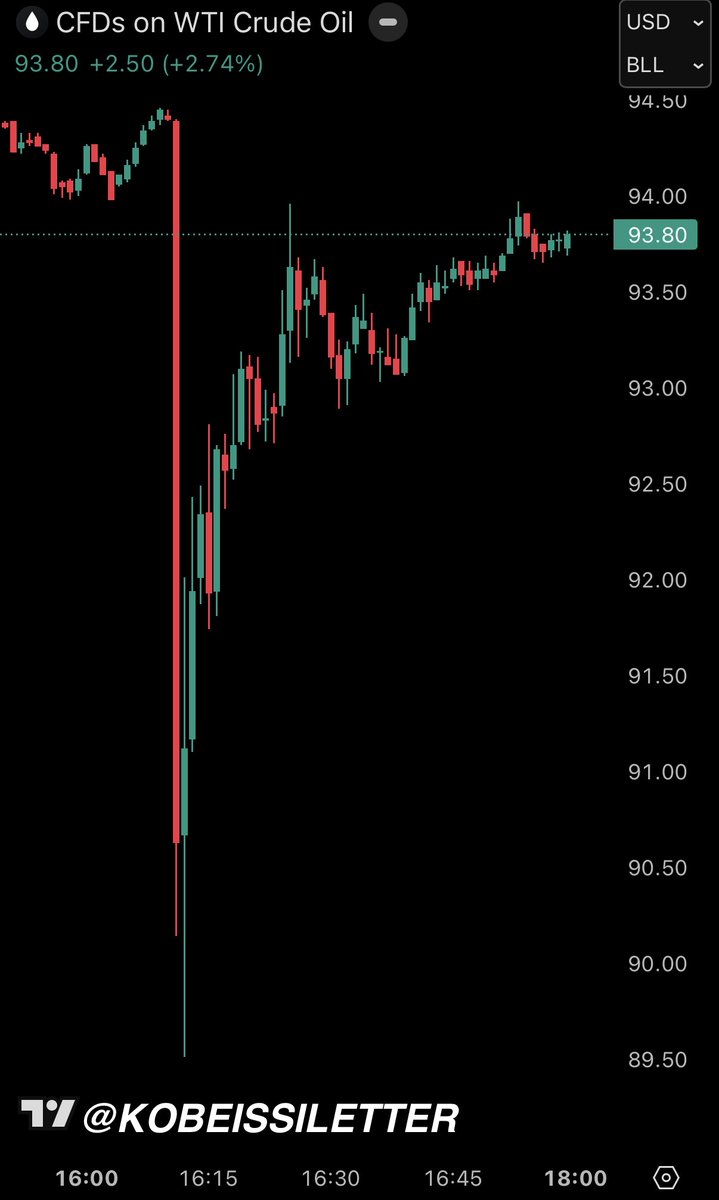
Oil markets experienced a stunning intraday swing on Thursday after President Trump announced an extension of a pause on U.S. military strikes against Iranian power facilities. The announcement, made at 4:11 p.m. ET, sent West Texas Intermediate (WTI) crude futures tumbling nearly 6 percent within minutes. Traders rushed to unwind positions ass broke across financial terminals and energy markets reacted to the unexpected reprieve.
By 4:51 p.m. ET, however, prices had fully recovered — a 40-minute round trip that erased all losses, underscoring the intense volatility that continues to define global oil trading amid geopolitical uncertainty. Brent crude followed a similar trajectory, dipping sharply before rebounding, while energy stocks mirrored the chaotic price action in after-hours trading.
The whipsaw reflected not just momentary reaction, but also deeper market anxieties over U.S.-Iran relations, the stability of global oil supply, and the sensitivity of prices to diplomatic maneuvers in the Middle East.
A Pattern of Geopolitical Price Volatility
This latest spike and recovery added another chapter to the long history of Middle East tensions roiling energy markets. Analysts noted that while-driven surges and slumps are not new, the speed and amplitude of Thursday’s reversal stood out even in a market accustomed to geopolitical noise.
Since the late 1970s, when the Iranian Revolution disrupted global oil flows, traders have watched developments in the region as a barometer for potential supply shocks. The 1980s Iran-Iraq war saw similar price instability, with oil contracts rising and falling by double-digit percentages as each side targeted energy infrastructure. In the 1990 Gulf War and 2003 Iraq invasion, crude prices surged on fears of disrupted exports before stabilizing when supplies proved resilient.
Thursday’s 6 percent plunge, followed by an equally abrupt rebound, echoed that same pattern — a market caught between fear of conflict escalation and hope for diplomatic resolution. For short-term traders, the swings created both peril and opportunity. For energy policymakers, it served as a vivid reminder of how exposed global markets remain to geopolitical drift.
Economic Context: A Tightrope for Energy Stability
Oil’s violent reversal came against a backdrop of fragile energy sentiment. Coming into the week, prices had already been elevated due to earlier drone strikes near key Iranian energy sites that disrupted limited output and heightened uncertainty about the region’s production capacity.
Industry analysts said the U.S. president’s decision to extend the pause on strikes momentarily deflated risk premiums built into oil futures. Traders had priced in potential retaliatory action that could threaten shipping routes in the Strait of Hormuz, through which about one-fifth of the world’s oil supply travels daily. When those fears ebbed, automated trading systems accelerated sell orders, intensifying the initial drop.
But as markets processed the statement more cautiously — considering the potential for renewed escalation or diplomatic pivot — buyers returned. The rebound revealed the deep underlying demand for oil contracts in a market already tight on supply, with inventories hovering near multi-year lows.
“This was a sharp correction followed by equally swift stabilization,” said an energy economist at a Houston-based trading firm. “It tells us traders are still nervous but not panicked. The market wants to believe de-escalation will hold, but it’s prepared for the opposite.”
Historical Context: From Supply Shock to Market Sophistication
The events underscored how technological advances have accelerated both the pace and intensity of oil reactions to geopolitical news. In earlier decades, traders relied on slower channels — physical teletypes and phone calls — to digest breaking developments from Washington or Tehran. Now, algorithmic systems monitor real-time feeds and execute trades in milliseconds, making price swings like Thursday’s almost instantaneous.
Historically, such volatility was tied primarily to physical disruptions — wars, blockades, or embargoes. The 1973 oil crisis, driven by an OPEC embargo following the Yom Kippur War, quadrupled oil prices over months. Today, the same magnitude of price movement can occur in minutes, fueled by speculative flows and automated risk hedging rather than by physical supply constraints.
That shift reflects a broader transformation in oil markets: crude is now as much a financial asset as it is a physical commodity. This dual role amplifies the market’s susceptibility to abrupt political or military announcements, even when underlying supply and demand fundamentals remain mostly unchanged.
Regional Impact and Global Implications
The Middle East remains the epicenter of oil market sensitivity. While U.S. shale production has reduced American dependence on imported crude, the global benchmark remains anchored to supply routes that pass through politically tense regions. As a result, even rumors of disruption in the Persian Gulf can ripple through refineries from Europe to Asia.
Countries such as Saudi Arabia, the United Arab Emirates, and Qatar watch these moves closely, balancing between protecting their export flows and maintaining diplomatic channels with both Washington and Tehran. Regional analysts said the U.S. decision to pause military action may bring short-term calm but could prolong strategic anxiety if tensions remain unresolved.
In Asia, where crude imports power industrial economies, energy strategists indicated that sustained volatility could complicate policy planning. China, Japan, and South Korea — collectively three of the world’s largest oil importers — may accelerate diversification efforts into renewables and liquefied natural gas contracts to reduce exposure to sudden price moves.
European traders, meanwhile, saw the U.S. announcement as a potential turning point. “If the pause leads to negotiation, the price ceiling will hold,” said one London-based analyst. “But if the pause collapses, you’ll see another supply risk premium priced in immediately.”
Economic Ripple Effects in the United States
Within the United States, the brief oil plunge offered an unexpected reprieve to consumers, though too short-lived to meaningfully impact retail gasoline prices. Typically, a 6 percent intraday fall in crude could translate to lower pump prices within days, but the rapid rebound erased much of that potential benefit.
Energy equities including major oil producers and refiners saw after-hours volatility. Shares of ExxonMobil, Chevron, and several shale-focused firms fell sharply before recovering portions of their losses by market close. The oscillations reflected the delicate balance between investor wariness and longer-term confidence in stable demand.
For the broader U.S. economy, analysts highlighted that oil price stability remains crucial for inflation control. The Federal Reserve has repeatedly cited energy costs as a key variable in its near-term monetary outlook. Even without significant supply disruptions, such sharp intraday gyrations influence sentiment across financial markets, from bond yields to currency valuations.
Comparisons to Prior Flash Events in Oil Futures
Thursday’s rapid price swing drew parallels to past “flash crashes” in commodities markets, where electronic systems magnified reactions to unexpected events. Similar glitches occurred in April 2020, when WTI futures briefly turned negative due to a collapse in demand during the COVID-19 pandemic. While that event was driven by physical oversupply, the latest episode arose from geopolitics — yet both underscored market fragility under stress.
Notably, regulators and exchange operators have improved circuit breakers and volatility control measures since then. The fact that Thursday’s rebound occurred smoothly without halts or liquidity failures suggests structural resilience has improved, even as trader sentiment remains shaky. Still, observers warned that algorithmic acceleration could magnify future swings if geopolitical tensions worsen.
Broader Strategic Outlook for Energy Markets
Looking ahead, analysts emphasized that the U.S.-Iran standoff remains a decisive variable in energy forecasting. A prolonged pause in military action may keep oil futures oscillating within a narrow band as traders await clearer diplomatic signals. Conversely, any new confrontation — whether cyber, aerial, or maritime — could instantly reintroduce a risk premium of $5–10 per barrel.
Longer-term forecasts remain cautiously bullish amid limited spare production capacity from OPEC members and growing post-pandemic demand. However, Thursday’s turbulence served as a reminder that fundamentals can be overshadowed, at least temporarily, by the volatility of politics.
Investors and policymakers alike are watching whether Washington and Tehran shift toward back-channel diplomacy or renewed brinkmanship. For now, markets appear to be pricing a fragile equilibrium, one that could break quickly on the next.
Conclusion: A Symptom of a More Volatile Era
Thursday’s 40-minute roller coaster in oil prices encapsulated the new normal for a market where information moves faster than supply chains and sentiment can change in seconds. The 6 percent plunge and complete rebound captured not just trading algorithms at work, but the collective anxiety of an interconnected energy system perched between restraint and escalation.
In essence, the oil market’s reaction mirrored the global mood — wary, hyper-reactive, and searching for equilibrium amid uncertainty. Whether the extended pause in U.S. strikes marks a step toward lasting stability or just the calm before another shock remains to be seen. What is certain is that every statement, every pause, and every strike now reverberates instantly through global markets, reminding the world how closely energy and geopolitics remain intertwined.