You asked for a professional, SEO‑optimized news-style article based on the provided information. Below is the article.
U.S. Crude Oil Surges Above $102 as Middle East Conflict Raises Global Supply Concerns
Oil Prices Spike Amid Escalating Middle East Tensions
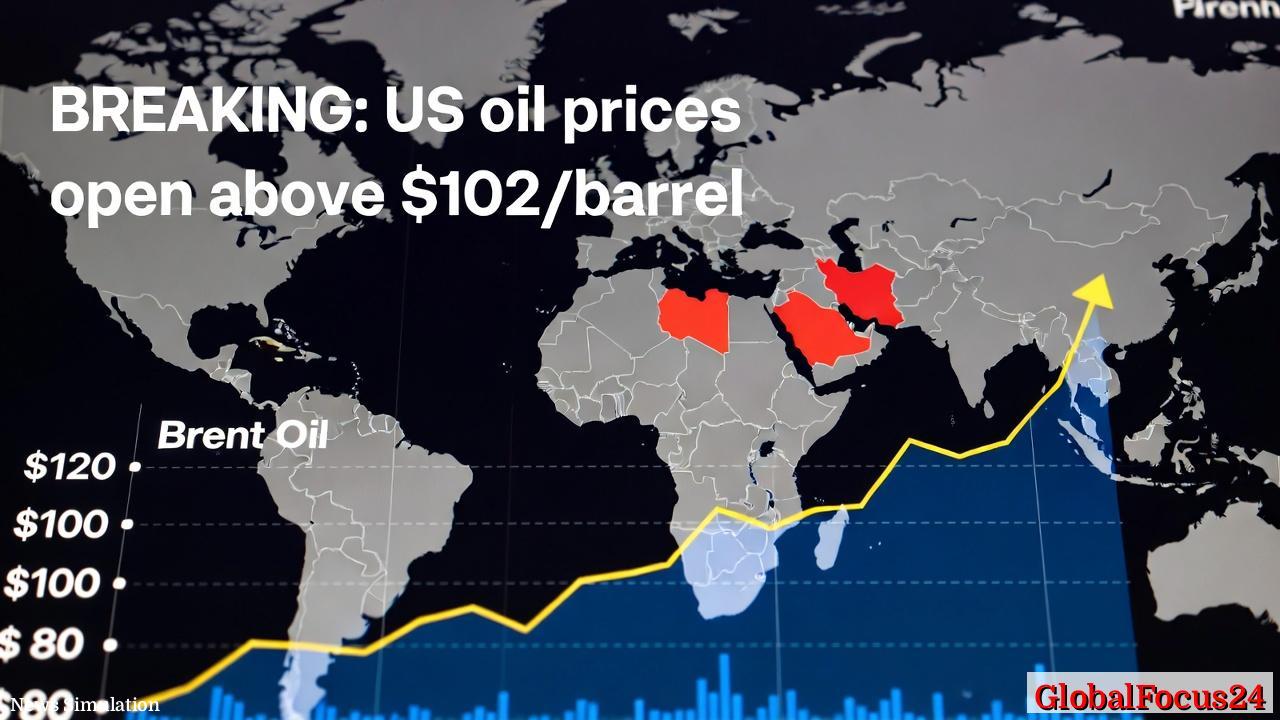
U.S. crude oil prices surged past the $102 per barrel mark in early Sunday trading, reflecting mounting concern across global energy markets as tensions intensify in the Middle East. West Texas Intermediate (WTI) futures climbed more than 2 percent during initial trading hours, while the international benchmark Brent crude rose to approximately $106 per barrel.
The sharp increase follows a weekend of heightened military and geopolitical activity connected to U.S. and Israeli operations targeting Iranian interests. These developments have placed significant pressure on maritime routes through the Strait of Hormuz, one of the world’s most critical oil transportation corridors. Any threat to shipping through the narrow passage immediately reverberates through global markets because of the vast volumes of crude that pass through it every day.
Traders and energy analysts reacted swiftly as reports surfaced of disruptions to tanker traffic and elevated security risks for vessels traveling through the region. With global supply chains already sensitive to geopolitical shocks, the price movement reflects the market’s rapid recalibration of risk.
The Strategic Importance of the Strait of Hormuz
At the center of the current price surge is the Strait of Hormuz, a narrow waterway connecting the Persian Gulf to the Gulf of Oman and the Arabian Sea. The strait serves as the main export route for oil producers across the Gulf region, including Saudi Arabia, the United Arab Emirates, Kuwait, Iraq, and Iran.
Roughly one-fifth of the world’s crude oil supply flows through this corridor each day. Energy infrastructure analysts estimate that between 17 million and 20 million barrels of crude oil and refined products pass through the strait daily. Even temporary disruptions can ripple across global energy markets within hours.
Shipping companies and maritime security agencies have reported increased caution among tanker operators in recent days. Some vessels have altered routes or delayed departures due to heightened security alerts, adding logistical complications to an already strained supply chain.
The vulnerability of the Strait of Hormuz has long been recognized as a potential flashpoint for oil markets. Any perceived threat to its accessibility typically triggers a swift increase in oil prices, as traders anticipate supply shortages or transportation delays.
Historical Patterns of Oil Price Surges During Regional Conflicts
The latest spike in oil prices echoes several historical episodes when geopolitical tensions in the Middle East caused rapid shifts in global energy markets.
One of the most notable examples occurred during the 1973 oil embargo, when members of the Organization of Arab Petroleum Exporting Countries restricted oil exports in response to geopolitical developments. Prices quadrupled within months, triggering widespread economic disruption across Western economies.
Another example came during the Gulf War in 1990–1991, when Iraq’s invasion of Kuwait disrupted regional oil production. Oil prices surged sharply as markets feared extended supply shortages. Although the conflict was relatively short-lived, the initial shock demonstrated how quickly geopolitical events could influence energy markets.
More recently, oil markets experienced volatility during tensions involving Iran and shipping incidents in the Gulf region during the late 2010s. Even isolated attacks on tankers or temporary port closures were enough to push crude prices higher due to the region’s central role in global energy supply.
The current situation shares similarities with those earlier periods. Traders are responding not only to immediate supply risks but also to the possibility that the conflict could expand or prolong instability across key energy-producing regions.
Economic Impact on Global Energy Markets
Oil prices serve as a foundational input for the global economy. When crude prices climb above the $100 threshold, the impact quickly spreads across industries ranging from transportation and manufacturing to agriculture and consumer goods.
Higher crude prices often translate into increased gasoline and diesel costs, which can raise shipping and logistics expenses worldwide. Airlines, trucking companies, and shipping firms are among the first sectors to feel the impact, as fuel represents one of their largest operating costs.
Energy analysts warn that sustained prices above $100 per barrel could contribute to broader inflationary pressures, particularly in countries heavily dependent on imported energy. Governments and central banks frequently monitor oil price movements because they can influence both economic growth and consumer spending patterns.
In the United States, rising crude prices typically lead to higher gasoline prices at the pump, though the effect may take several days or weeks to appear depending on refinery capacity and regional fuel distribution systems.
For oil-producing nations, however, higher prices can boost government revenues and strengthen fiscal balances. Countries with large petroleum exports often experience increased budget flexibility when crude prices rise.
Regional Comparisons: How Different Markets Are Responding
The price surge is being felt across multiple regional energy markets, though the impact varies depending on local energy production and import dependence.
North America has a relatively diversified energy landscape, with significant domestic oil production in the United States and Canada. The U.S. shale industry, particularly in regions such as the Permian Basin, has helped buffer some supply shocks over the past decade. However, global pricing dynamics still influence domestic fuel costs.
Europe remains more exposed to international supply fluctuations due to its higher reliance on imported energy. While the region has diversified its energy sources in recent years, including increased renewable capacity and liquefied natural gas imports, oil remains a vital component of transportation and industrial activity.
Asia represents the largest growth center for oil demand, with countries such as China, India, Japan, and South Korea importing substantial volumes of crude oil from Middle Eastern suppliers. Any disruption to shipping routes in the Gulf region can therefore have outsized consequences for Asian economies.
Energy traders in Asian markets closely monitor developments around the Strait of Hormuz because a significant share of their imports pass directly through the corridor. Rising shipping insurance premiums and longer transport routes can further increase costs.
Market Sentiment and Investor Reactions
Financial markets reacted quickly to the rising geopolitical tension. Energy company stocks gained in early trading sessions as investors anticipated stronger revenues for oil producers and exploration firms.
Commodity traders increased activity in oil futures markets as volatility climbed. Futures contracts for both WTI and Brent crude experienced heightened trading volumes, reflecting attempts by investors to hedge against potential supply disruptions.
Market analysts note that oil prices often react strongly to geopolitical events during their early stages, particularly when information remains uncertain. Price movements may stabilize or reverse depending on subsequent developments and whether actual supply disruptions occur.
In this case, the perception of risk surrounding the Strait of Hormuz appears to be the primary driver of price momentum. Even limited interference with tanker traffic can prompt traders to anticipate shortages in global supply.
Strategic Reserves and Energy Security Measures
Many countries maintain strategic petroleum reserves designed to cushion the impact of supply disruptions. The United States Strategic Petroleum Reserve, one of the largest emergency oil stockpiles in the world, was created in the 1970s following the oil embargo crisis.
These reserves allow governments to release stored oil into the market during emergencies, helping to stabilize prices and maintain supply. Similar stockpiles exist across Europe and Asia through coordinated programs managed by the International Energy Agency.
Energy policymakers often consider the potential use of these reserves when geopolitical events threaten supply chains. However, such releases are typically reserved for severe disruptions rather than short-term price fluctuations.
Energy security has become an increasingly important issue in recent years, prompting countries to diversify supply sources, expand renewable energy production, and invest in domestic energy infrastructure.
Outlook for Global Oil Prices
The direction of oil prices in the coming weeks will largely depend on developments in the Middle East and the stability of shipping routes through the Strait of Hormuz. Markets are likely to remain highly sensitive to any signs of escalation or disruption to tanker traffic.
Energy analysts emphasize that oil prices often reflect both physical supply conditions and market expectations. Even the perception of risk can drive prices higher as traders adjust forecasts for future supply and demand.
If tensions ease and shipping routes remain open, prices could stabilize. However, continued instability or further disruptions could push crude prices even higher, potentially affecting global inflation and economic growth.
For now, the breach of the $100 threshold signals renewed volatility in global energy markets. As geopolitical events unfold, governments, energy companies, and consumers alike will be watching closely to see whether the latest surge marks a temporary spike or the beginning of a sustained period of elevated oil prices.