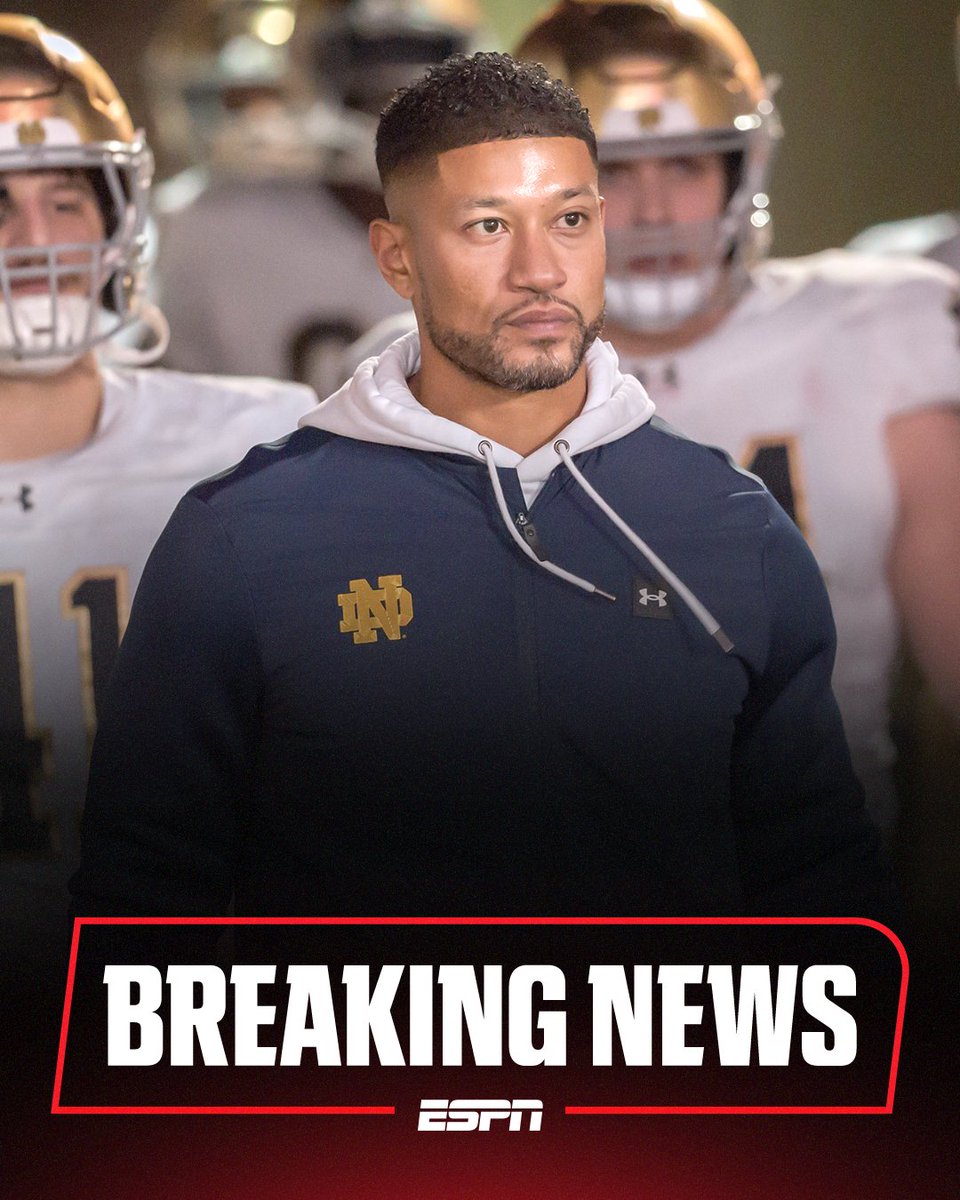
Notre Dame Opts Out of Bowl Season Following CFP Snub
SOUTH BEND, Ind. — In a move that surprised college football observers and reverberated across the sport, the University of Notre Dame announced Sunday that it will withdraw its name from consideration for any postseason bowl game, effectively ending the Fighting Irish’s 2025 football season without further play. The decision, disclosed by head coach Marcus Freeman in a statement released by the university, comes one day after the College Football Playoff selection committee released the 12-team field, which did not include Notre Dame despite the team finishing the regular season 11-1.
A season of resilience under scrutiny Freeman credited the players’ grit and perseverance throughout a year marked by dramatic late-game twists and high expectations. “We are proud of the resilience and fight our players showed all season,” Freeman said. “However, after careful consideration with our staff and leadership, we’ve decided that the best path forward for our program is to conclude our 2025 campaign here. This allows us to focus on healing, development, and preparing for what promises to be an even stronger 2026.”
Notre Dame’s exclusion from the playoff field stemmed from two pivotal losses to teams that advanced into the postseason: a 28-24 defeat at Texas A&M in Week 3 and a 17-14 upset by USC in the regular-season finale. The Irish finished the year ranked No. 8 in the final CFP top 25, behind the 12 teams selected for the playoff and two at-large bowls. The decision to bow out of postseason play underscores a broader shift in how programs balance immediate competitive ambitions with long-term development and welfare considerations for student-athletes.
Historical context: a program with postseason pedigree Notre Dame’s postseason legacy is storied, spanning more than a century. The university has participated in postseason play 47 times since 1920, a record that has often been cited as a benchmark for independent programs navigating the evolving landscape of college football. The Fighting Irish have frequently leveraged high-profile non-conference scheduling and a national following to negotiate their own path through the sport’s postseason ecosystem. Their occasional appearances in prestigious bowl games, including a Fiesta Bowl berth as recently as 2024, have reinforced Notre Dame’s image as a program that marches to its own beat while still competing at the sport’s highest levels.
The 2025 season, however, arrived with a different dynamic. The CFP’s expansion to 12 teams has redistributed postseason opportunities across conferences and independents alike. Notre Dame’s independent status, once a strategic advantage in scheduling and exposure, also magnified the scrutiny and debate around its postseason eligibility when results did not align with the selection committee’s projections. The decision to forgo a bowl berth in 2025 may be remembered as a rare choice that foregrounds institutional priorities over immediate competitive incentives, a move that some analysts describe as a strategic reset in a shifting football economy.
Economic implications for Notre Dame and regional stakeholders The decision to opt out of postseason play carries tangible economic ripple effects, even for a program that operates with substantial athletic revenue and independent branding. Bowl revenue, though not the sole determinant of Notre Dame’s financial health, historically contributes to departmental funding, facilities upgrades, academic-support programs for athletes, and scholarship endowments. The cancellation of a potential bowl appearance eliminates estimated ancillary income from ticket sales, tourism spillovers for South Bend, and broadcasting value associated with a meaningful postseason showcase.
Regional economists note that Notre Dame’s football ecosystem has long been intertwined with the surrounding economy. Local hospitality venues, game-day vendors, and student activity schedules depend in part on postseason activity for revenue and visibility. A pause in postseason logistics may moderate near-term economic activity in South Bend, while potentially concentrating athletic attention on recruiting efforts, facilities planning, and academic initiatives within the broader university ecosystem.
National media markets will also absorb the impact of Notre Dame’s postseason stance. The program’s national brand often drives sponsor engagements, licensing revenue, and alumni engagement, all of which can be sensitive to postseason exposure. While the immediate financial hit from not appearing in a bowl may be offset over several years by a focus on player development and recruiting, the move nonetheless reframes Notre Dame’s public narrative around football strategy, athlete welfare, and long-range brand strategy.
Transparency and the program’s long-term vision Athletic director Pete Bevacqua echoed Freeman’s sentiment, emphasizing a forward-looking approach. “This was not an easy call, but it’s one rooted in what’s best for our student-athletes,” Bevacqua said. “Notre Dame Football has always played by its own rules, and today is no different. We’ll use this time to regroup and return with the fire that defines us.”
Bevacqua’s comments highlight a broader trend in college athletics where leadership teams weigh short-term opportunities against longer-term development, academic success, and post-collegiate readiness. For Notre Dame, the 2025 season appears to be a hinge moment—an inflection point that prioritizes player welfare, strength and conditioning, and preparation for NFL Draft prospects over a single game’s reward or notoriety.
Player and staff responses With postseason aspirations set aside, players are expected to redirect their focus toward academics, strength and conditioning, and NFL potential evaluation. Freeman’s leadership during this transition will be pivotal as the program pivots toward rebuilding momentum for 2026. The coaching staff’s emphasis on injury recovery, skill refinement, and leadership development will shape the team’s trajectory in the offseason and into the fall.
Transfers and recruiting activity are likely to reflect the decision as well. While some programs pivot quickly to transfer pipelines to maintain competition level and depth, Notre Dame may leverage the time to reinforce existing recruitment strategies, secure commitments from high-potential prospects, and further integrate players into a long-term development plan ahead of the 2026 season.
Public reaction and broader college football context Reaction to Notre Dame’s decision spanned a wide spectrum among fans, analysts, and rival programs. Some lauded the move as a principled stand emphasizing student-athlete welfare and the importance of a thoughtful rehabilitation period. Others viewed it as a rare instance of a traditionally independent powerhouse stepping away from postseason spotlight, prompting discussions about whether the program should diversify its competitive approach or re-evaluate its postseason participation philosophy in light of conference realignment dynamics and the evolving playoff structure.
In the broader college football landscape, Notre Dame’s stance illustrates how traditional programs navigate a more expansive postseason framework and heightened performance expectations. The 12-team playoff era has intensified the competitive calculus, with more teams pursuing postseason opportunity than ever before. Notre Dame’s decision to abstain may influence future discussions about automatic qualifiers, independent program schedules, and the role of non-conference identity in a sport increasingly dominated by conference affiliations and championship considerations.
Historical performance versus current decisions Notre Dame’s 11-1 regular season marks a high point in on-field performance, underscoring the talent and coaching acumen within Freeman’s program. Yet history demonstrates that regular-season success alone does not guarantee a postseason berth in a landscape where committee judgments and conference dynamics shape outcomes. The two losses—one to a Texas A&M squad that advanced to the playoff and another to USC, a traditional rival with postseason aspirations—underscore how narrow margins and high-stakes opponents can tilt postseason fate.
The 2025 season’s arc—early promise, midseason adjustments, and a late-season setback—reflects a common narrative in major college football: excellence is necessary but not sufficient in a system that blends athletic merit with media scrutiny, revenue considerations, and the committee’s evolving criteria. Notre Dame’s decision to end the season on its own terms signals a commitment to sustainable growth, even at the expense of immediate postseason exposure.
What comes next for the program Details on the program’s offseason plans, including potential transfers, recruiting updates, and weight-room and conditioning timelines, are anticipated in the coming weeks. Notre Dame faces a critical period to cultivate depth, develop young talent, and align its strategic goals with an eye toward the 2026 season. The focus is likely to center on academic performance, injury rehabilitation, leadership development, and ensuring a smooth transition for players preparing for the NFL Draft or pursuing professional opportunities.
The university’s leadership has historically prioritized a holistic approach to student-athlete success. As the football program charts a path forward, the emphasis on education, personal growth, and competitive excellence is expected to remain central. Alumni, fans, and regional supporters will watch closely as Notre Dame rebuilds its football identity while maintaining its storied traditions.
Regional comparisons and national implications Comparisons with other independent programs and conference-affiliated teams reveal a nuanced landscape. Programs navigating similar postseason considerations may look to Notre Dame’s decision as a reference point for balancing competitive ambition with long-term welfare and academic priorities. At the same time, the broader trend of playoff expansion and conference alignment continues to reshape how independent programs compete for visibility, sponsorship value, and postseason opportunities.
For South Bend and the surrounding Midwest region, the decision reinforces a broader narrative about the role of college sports in regional identity. Notre Dame’s football program is not merely a team; it is a cultural touchstone that intersects with local media, hospitality sectors, and educational branding. The absence of a postseason game will be felt in local discourse, with discussions likely turning to long-range planning, fundraising, and community engagement built around the university’s athletic and academic missions.
Conclusion: a deliberate pause, not a retreat Notre Dame’s postseason decision marks a deliberate pause rather than a retreat from competition. By prioritizing player welfare, program development, and long-term readiness for 2026, the university signals a strategic recalibration within a highly competitive college football ecosystem. As the Fighting Irish shift focus away from immediate postseason play, the coming months are expected to feature a flurry of activity around recruiting, transfers, and conditioning, all aimed at building a stronger foundation for the next championship pursuit.
The football season may be complete, but the narrative surrounding Notre Dame’s program—its independence, its storied heritage, and its willingness to redefine success on its own terms—will continue to unfold. In the eyes of supporters and critics alike, the decision embodies a broader ethos: in a sport where glory can be fleeting, a measured, future-facing approach can carry enduring value for a program’s reputation, its student-athletes, and its place in college athletics for years to come.