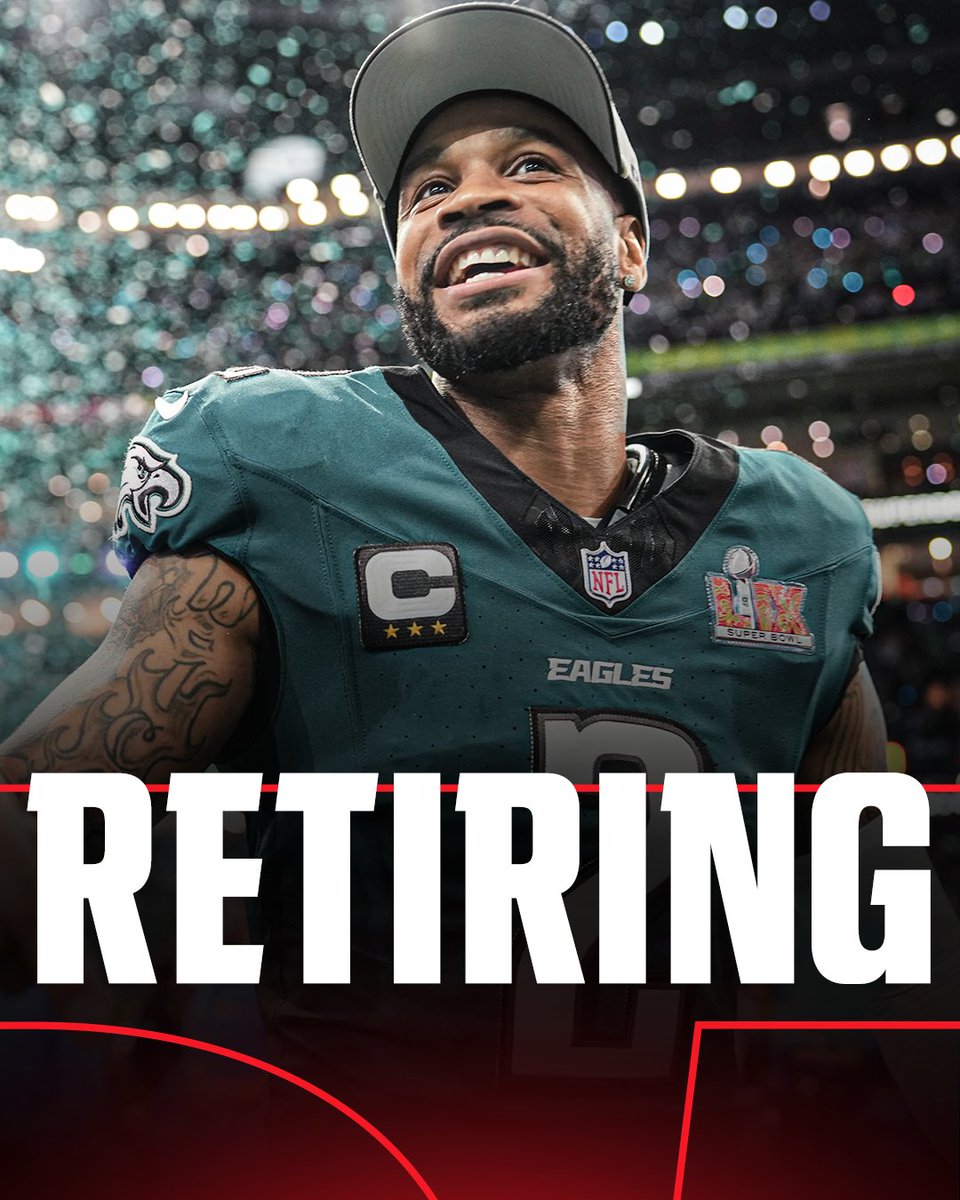
Darius Slay, Six-Time Pro Bowl Cornerback, Announces Retirement from the NFL
Darius Slay Closes the Book on a Distinguished NFL Career
Six-time Pro Bowl cornerback Darius Slay has officially retired from the NFL, bringing to an end a career that spanned more than a decade and established him as one of the most reliable and respected defensive backs of his era. Known for his sharp instincts, competitive edge, and knack for making game-altering plays, Slay leaves the league with a legacy built on consistency, leadership, and durability at one of football’s most demanding positions.
His decision marks a significant moment not only for the franchises he helped define, but also for a generation of defensive backs who came up modeling their craft on his blend of technique and confidence. It signals the departure of a player who spent his career shadowing the league’s best wide receivers, often in high-pressure situations and on national stages where a single misstep could reshape a season.
From Rookie Corner to Island Defender
Darius Slay entered the NFL as a promising rookie cornerback facing the steep learning curve that confronts most defensive backs at the professional level. Cornerback is a position where prospects often struggle early, but Slay quickly showed that he could handle the physical demands and mental complexity of pro schemes. Over time, he transformed from a young player finding his place in the depth chart into a trusted, every-down starter in the secondary.
What separated Slay was not just raw athleticism but an ability to read route combinations, anticipate quarterback tendencies, and recover when a play initially went against him. As he gained experience, defensive coordinators increasingly trusted him in isolated, “on an island” coverage responsibilities, often asking him to match up against opponents’ top receiving threats with minimal safety help over the top. That responsibility is reserved for a small subset of corners in any given era, and Slay held it for years.
The Rise to Pro Bowl Mainstay
Slay’s elevation to six Pro Bowl selections underscores how consistently he performed at a high level throughout his career. Earning a Pro Bowl nod once can be dismissed as a strong season or a product of name recognition, but repeating the achievement multiple times confirms a standard of excellence recognized across the league. Over a broad stretch of seasons, Slay routinely finished near the top of key coverage metrics, including passes defended, opponent completion percentage on throws in his direction, and impact plays in critical situations.
These honors came during a period when passing offenses exploded in sophistication and volume, with rules and officiating trends often favoring offensive production. That context magnifies what it meant for a cornerback to stay near the top of his position year after year. Slay’s Pro Bowl résumé ranks him in the upper tier of modern defensive backs, alongside other elite corners who shaped how teams approached pass defense in a more open, space-driven version of the sport.
Historical Context: Cornerback in the Modern Passing Era
To understand what Darius Slay’s retirement represents, it is essential to place his career within the historical evolution of the cornerback position. Earlier eras of the NFL were defined more by power running games and limited downfield passing, which fundamentally shaped defensive roles. As the league shifted toward pass-heavy offenses featuring spread formations, timing routes, and multi-receiver sets, cornerbacks were asked to do more in space, cover larger portions of the field, and adjust to rapidly changing offensive concepts.
Slay’s prime years fell squarely in this modern passing era, where shutdown corners became premium assets, and defensive coordinators relied on them to rebalance matchups tilted toward offenses. He played at a time when the rulebook increasingly restricted contact beyond five yards and emphasized player safety, making it more challenging for defensive backs to use physical coverage techniques that were commonplace in earlier decades. Within that environment, Slay distinguished himself as a technician who could mirror route runners, stay patient in coverage, and still produce turnovers.
Economic Impact of a Premier Cornerback
At the economic level, Slay’s career reflects how the market value of top-tier cornerbacks climbed as the league’s strategic focus shifted to passing. Premier corners became essential investments in roster construction, often ranking among a team’s highest-paid defensive players. For the organizations that employed him, committing major salary-cap resources to Slay was a strategic decision: by locking in a reliable, high-level cover corner, front offices could design defensive schemes that leaned on his abilities and allocate resources differently at safety, slot corner, or pass rush.
His contracts contributed to the broader salary landscape for defensive backs, helping set benchmarks that agents and teams referenced when negotiating deals for the next wave of players at the position. When a player with multiple Pro Bowls and consistent production signs significant extensions or reworked contracts, it inevitably shapes expectations for peers whose résumés fall just behind that standard. Slay’s long-term presence in the upper tier of cornerback compensation illustrates how individual performance ripples through the league’s broader economic ecosystem.
Beyond cap figures and contract structures, there is a less visible economic impact connected to on-field results. A cornerback capable of limiting elite wide receivers affects game outcomes, which in turn influence playoff appearances, television exposure, merchandise sales, and local economic activity tied to team success. While a single player never drives those dynamics alone, Slay’s role in pivotal regular-season and postseason pushes contributed to the competitive relevance of his teams, carrying tangible value for clubs and fan bases alike.
Regional Significance and Franchise Identity
Over his career, Darius Slay became deeply associated with the markets he played in, embodying elements of each region’s football identity. Fans often gravitate toward defensive players who bring visible energy, evident preparation, and resilience under pressure, and Slay’s style resonated in cities that pride themselves on toughness and accountability on the field. His reputation as a vocal but team-oriented presence in the locker room helped define the culture of the defenses he anchored.
In regions where football is a central part of civic life, a long-tenured, high-impact defender can become a familiar figure not only on Sundays but also in community outreach, youth programs, and local media. Slay’s presence in those spaces reinforced the bond between team and city. Even as rosters turned over and coaching staffs changed, his role as a steadying veteran in the secondary offered continuity, a trait particularly valued in markets that have weathered rebuilding cycles or fluctuating fortunes.
Comparing Slay’s Era to Other Defensive Generations
When comparing Darius Slay’s era to earlier generations of defensive backs, several contrasts highlight the significance of his accomplishments. In previous decades, shutdown corners often operated in more physical, handsy coverage environments, where contact at the top of routes was less tightly officiated. Modern corners like Slay operated under stricter enforcement of illegal contact and defensive holding, forcing them to refine footwork, angles, and anticipation rather than relying heavily on physical disruption.
The offenses Slay faced also differed markedly from those that defined prior eras. Spread formations, option concepts attached to passing plays, and pre-snap motion created constant stress on coverage rules and communication. Within this evolving landscape, he maintained a level of performance that earned him repeated recognition among peers and coaches. While statistical comparison across eras is complicated by scheme differences and rule changes, Slay stands out as a product—and master—of a particularly demanding phase in defensive back play.
Leadership, Mentorship, and Locker Room Presence
Beyond measurable statistics, Slay’s impact can be seen in the less quantifiable areas of leadership and mentorship. As his career progressed, he transitioned from being a young player absorbing guidance to a veteran voice helping shape younger cornerbacks and safeties entering the league. Coaches often entrusted him with not only the toughest coverage assignments but also the responsibility of setting practice standards and reinforcing the details of film study and preparation.
Younger defensive backs frequently describe the value of learning from veterans who model how to handle both success and adversity. Slay’s career contained both: stretches of elite performance, taxing matchups against top-tier receivers, and the inevitable injuries and scheme changes that test any player’s adaptability. His ability to navigate those realities while remaining productive offered a living template for how to sustain a long career at a physically punishing position.
The Challenges and Toll of Playing Cornerback
Retirement decisions in the NFL are often shaped by the cumulative toll of injuries, the physical demands of each season, and the mental strain of preparing weekly for high-stakes matchups. Few positions experience that intensity as acutely as cornerback. Each snap involves rapid acceleration, abrupt changes of direction, and close contact with bigger receivers and blocking tight ends, all while reacting in fractions of a second to complex route concepts.
For a player like Slay, who logged heavy snap counts over many years, the ongoing effort to maintain peak performance requires extensive offseason conditioning, in-season recovery, and constant film work. As players age, the margin for error narrows, and the risk-reward calculation of continuing a career grows more complicated. By electing to retire after compiling a substantial, decorated body of work, Slay follows a path taken by many veteran corners who choose to step away while still closely associated with high-level play.
Fan Reaction and Public Response
News of Darius Slay’s retirement has elicited a mix of gratitude, nostalgia, and appreciation from fans, teammates, and rivals alike. Supporters have highlighted defining moments: clutch pass breakups on third down, acrobatic interceptions, and sideline reactions that captured his competitive fire. Many are revisiting games in which his individual performance helped swing momentum, preserving playoff hopes or delivering key divisional wins.
Opposing players have also acknowledged his career, recognizing the challenge of facing a cornerback who combined confidence with detailed preparation. In a league where respect is often earned through repeated, high-level competition, Slay’s name routinely appeared among the receivers’ and quarterbacks’ lists of toughest matchups. The public conversation around his retirement positions him as a player whose contributions extended beyond highlight reels and into the everyday fabric of how his teams played defense.
What Slay’s Retirement Means for the NFL Landscape
With Darius Slay stepping away, the NFL loses not just a high-profile veteran but a stabilizing presence in the cornerback hierarchy. His absence opens opportunities for younger defensive backs to claim larger roles in the spotlight, but it also underscores how difficult it is to maintain elite performance for as many seasons as he did. Teams that once built coverage plans around his ability to neutralize primary receivers must now consider new combinations of scheme, talent, and depth in the secondary.
His retirement also contributes to the broader transition underway as many stars from the past decade move toward coaching, broadcasting, or other pursuits connected to the game. Slay’s knowledge of modern offensive trends, coverage techniques, and locker room dynamics positions him well for potential post-playing roles, whether on the sidelines, in media, or in advisory capacities. Regardless of the path he chooses, his on-field career forms a substantial foundation—one marked by six Pro Bowl selections, respected leadership, and a consistent presence in some of the most demanding assignments the sport offers.
In closing his playing chapter, Darius Slay leaves the NFL with a résumé that reflects both individual excellence and enduring professionalism at one of the league’s most challenging positions. His departure marks the end of a notable era for fans of lockdown coverage and high-stakes battles on the outside, and it sets the stage for a new generation of cornerbacks who will try to match the standard he helped define.