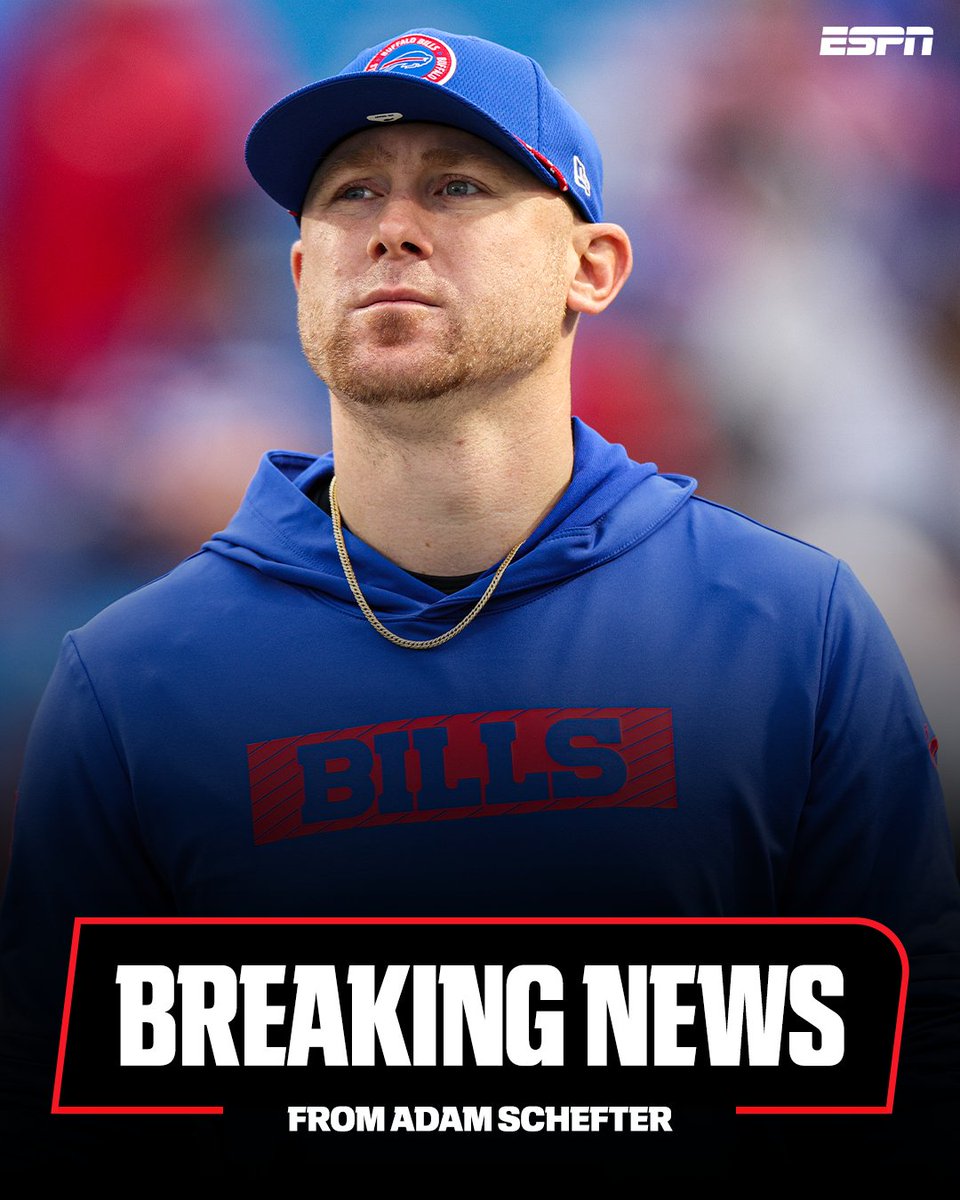
Buffalo Bills Move to Elevate Joe Brady to Head Coach as Franchise Seeks Stability and Offense-First Identity
The Buffalo Bills are nearing a formal agreement to promote offensive coordinator Joe Brady to the position of head coach, according to multiple sources familiar with the discussions. The potential hire would mark a clear shift in leadership for a franchise that has spent the past decade balancing high-profile quarterback play, heavy analytics adoption, and a desire to sustain deep playoff runs. If finalized, Brady would inherit a program with a championship pedigree, an entrenched executive structure, and the ongoing challenge of translating elite talent and schematic sophistication into consistent September through January success.
Historical Context: From Super Bowl Aspirations to Modern Offense
Buffalo’s recent coaching conversations arrive against a backdrop of a franchise history defined by resilience and rapid evolution. Since the team’s return to the playoffs in 2017 after a long absence, Buffalo has built a reputation around a dynamic passing game, a formidable defense, and a fan base that treats every season as a referendum on the organization’s ability to combine strategic clarity with player development. The Bills’ decision to consider a homegrown offensive mind for the head coach role fits a broader NFL trend: teams increasingly favor coordinators who can translate modern offensive theory into a practical, game-to-game system while maintaining a strong culture.
Joe Brady’s professional arc adds a compelling layer to the narrative. A former quarterback-turned-play-caller, Brady rose to prominence during his time at LSU in 2019, where his passing concepts and tempo-driven playcalling helped propel the Tigers to a national championship. His subsequent NFL work, including a stint as an offensive coordinator at the college and professional levels, has been characterized by a willingness to experiment with route concepts, tempo shifts, and multi-formation looks designed to pressure defenses in both vertical and short-to-intermediate windows. To fans and analysts, Brady’s profile represents a mix of innovative play design and a track record that, while carrying some volatility, also signals a coach who values initiative and adaptability.
Economic Impact: Talent Development, Marketability, and Franchise Value
Promoting Brady to head coach would influence several economic dimensions for the Bills. First, it would send a signal to players, agents, and fans that the organization prioritizes continuity and a clear offensive identity. In practical terms, a stable leadership path can improve player development pipelines, reduce the disruption associated with coaching changes, and potentially slow the churn of assistant coaches as they reassess career trajectories. For a market like Buffalo, a sustained coaching strategy that emphasizes offense can enhance ticket demand, sponsorship engagement, and media rights value by presenting a narrative of steady ascent rather than episodic rebuilds.
Brady’s offensive philosophy could also affect salary dynamics and coordinator hiring. If he assumes head coach duties with a strong offensive program in place, the Bills might pivot to optimize the rest of the staff around a single, cohesive system. This could improve the team’s on-field efficiency metrics and, by extension, its attractiveness to free agents who want to join a well-structured, forward-looking operation. While the NFL remains highly competitive and talent-driven, the economic case for a homegrown leader with a proven ability to develop players—particularly young quarterbacks and dynamic playmakers—can translate into longer-term franchise value and stability in an environment where every win carries financial significance.
Regional Comparisons: How Bills Approach Stature in a Competitive Northeast Footprint
The Bills operate within a busy Northeast NFL landscape that includes three or four teams often competing for regional attention, sponsorship dollars, and national broadcast windows. In comparison to teams in nearby markets with similar histories of playoff contention, Buffalo’s business model emphasizes community engagement, weather-driven brand narratives, and a regional identity that magnifies every on-field result. A move to appoint a head coach who embodies offensive innovation mirrors recent decisions in neighboring franchises that have leaned into young, reform-minded coordinators who can deliver both spectacular scoring outputs and sustainable game management.
From a regional standpoint, the Bills’ potential hire could affect cross-market scouting and development patterns. Colleges and high schools across upstate New York and neighboring states provide a pipeline of quarterbacks, receivers, and defensive backs eager to prove themselves in the pros. A leadership figure who prioritizes development, with a knack for extracting leverage from pass-heavy schemes, could improve the Bills’ ability to recruit and retain talent in a market where visibility and exposure play large roles in attracting players who want to maximize their professional profiles.
Coaching Philosophy and Player Fit: What Brady Might Bring to Buffalo
If Brady becomes head coach, several themes are likely to shape the Bills’ 2026 and 2027 campaigns. First is a sharper emphasis on balancing explosive plays with disciplined, efficient drives. Brady’s background includes experience in systems that encourage tempo variations and pre-snap motion as a means to create favorable matchups and rhythm. This approach could complement a quarterback room that has historically benefited from carefully designed dropbacks, precise route-running, and a proactive emphasis on ball security.
Second, Brady’s track record as a developer of talent, particularly younger players, could influence the Bills’ roster strategy. A head coach with a development-first mindset often places a premium on what schemes can reveal about a player’s readiness, rather than merely counting on inherent talent. In Buffalo, where the quarterback position has been a focal point, any system that accelerates maturation, fosters confident decision-making, and reduces turnover among wide receivers and running backs would be seen as a substantial strategic win.
Third, Brady’s leadership style will be put to the test against the expectations of a passionate fan base accustomed to playoff competitiveness. The city’s sports culture blends a tradition of grit with a desire for offensive fireworks. A successful transition would hinge on clear communication, consistent game planning, and a coaching staff that can translate a bold offensive vision into reliable execution on Sundays.
Public Reaction and Community Impact: A City Perched on the Edge of Playoff Hope
Buffalo’s fan base tends to respond to coaching moves with a mix of cautious optimism and deep territorial knowledge of the team’s historically strong defensive foundations. The potential Brady era would likely be greeted with interest from local media, who would scrutinize the depth of the staff, the breadth of the playbook, and the speed with which players adapt to new terminology and tempo. Public sentiment often coalesces around early-season results, but it also reflects a broader trust in a long-term plan that emphasizes player development, community engagement, and a consistent product on the field.
Beyond game-day narratives, the Bills’ decision would reverberate through the local economy in smaller but meaningful ways. On game weekends, hospitality and retail sectors in downtown Buffalo, suburban hubs, and satellite communities rely on the influx of fans, media, and team staff. A coaching staff that wins games and maintains a compelling brand presence can contribute to higher hospitality demand, longer stays for visiting teams, and increased business for local advertisers and sponsors. In turn, this enhances the city’s profile as a destination for sports tourism and reinforces the broader regional economy’s resilience.
Strategic Timing: Why a Head Coach Elevation Now Makes Sense
Advocates for promoting a coordinator to head coach often cite the advantages of continuity, reduced transition friction, and a more predictable path for player development. In Buffalo’s case, elevating Joe Brady would align with a broader strategy to preserve the team’s offensive identity while injecting fresh leadership dynamics into the head coach role. By promoting from within, the Bills can minimize the learning curve associated with external hires who must acclimate to the franchise’s unique culture, media expectations, and strategic priorities.
Moreover, the timing could reflect a calculated response to the evolving NFL landscape, where teams increasingly rely on flexible, adaptable systems that can respond to injuries, shifting opponent game plans, and the need for rapid adjustment during a season. A head coach who has previously coordinated an offense with multiple tempo levels and passing concepts may be better equipped to guide the team through the inevitable ebbs and flows of a demanding NFL schedule.
Operational and Tactical Considerations: Building a Cohesive, High-Output System
Should Brady assume the head coach role, several operational questions would shape the Bills’ approach to roster construction and in-season management. One area would be offensive staff cohesion: how the play-calling responsibilities, quarterback coaching, and wide receiver development would be distributed across a unified system. The goal would be to minimize miscommunication between offense and defense and to ensure that game plans can be executed with precision, game-to-game.
Another tactical element concerns situational football. Close games in December and January demand not only explosive plays but also disciplined clock management, red-zone efficiency, and a robust two-minute drill. Brady’s past work suggests an emphasis on situational awareness, fourth-down decision-making, and a willingness to lean on analytics when it benefits the team. How that balance is struck—and how quickly it takes root—will be a focal point for observers during the early phase of the new regime.
Roster Implications: Balancing Talent, Depth, and Long-Term Sustainability
Elevating a coordinator often prompts a reevaluation of the roster to ensure alignment with the new coach’s system. In Buffalo, this could translate into a deliberate plan to reinforce offensive line continuity, receiving corps depth, and running back rotation that can support a multi-formation attack without exposing the team to predictable tendencies. It could also influence defensive staffing decisions, including how the Bills balance specialized packages with base formations to maximize overall efficiency and field position advantage.
In the quarterback room, continuity is particularly important. A new head coach who has a strong rapport with the team’s signal-caller can accelerate learning curves, improve pocket feel, and optimize timing-based routes. The quarterback-receiver relationship is often the most scrutinized pairing during transitions, and the Bills would likely seek to preserve a workspace in which both players feel confident executing the system’s core principles.
Regional and Global Perceptions: The Bill’s Move in a Broader NFL Context
Across the league, the Bills’ leadership decision would be watched by front offices evaluating the viability of promoting a coordinator to head coach in a franchise that commands national attention. Success would reinforce a trend toward internal promotion as a stable strategy that preserves organizational memory, accentuates culture, and reduces the uncertainty associated with external searches. If the Brady hire proves effective, rival teams might consider similar approaches when seeking to maintain continuity after periods of sustained contention.
Conversely, observers would scrutinize early-season results and the ability of the staff to scale the system to adapt to different opponents and seasons. In any franchise with a high performance bar, the initial months often set the tone for the long arc of a coach’s tenure. The Bills’ willingness to pilot a homegrown offensive mind at the head of the organization signals confidence in a plan that blends innovation with an established quarterback-centric framework.
Conclusion: A Defining Moment for an Ambitious Franchise
The prospective promotion of Joe Brady to head coach represents more than a personnel change. It embodies a strategic proposition: to harmonize a proven offensive philosophy with the organizational discipline and community energy that define Buffalo. The decision carries implications for player development, economic vitality, regional competitive dynamics, and the franchise’s ability to sustain a culture of competitiveness through the inevitable fluctuations of a demanding league schedule.
As the deal progresses toward finalization, fans, players, and stakeholders will watch closely how this leadership transition translates into practice on the practice field, in the film room, and on Sundays at Highmark Stadium and beyond. The Bills’ football identity—built on speed, precision, and a relentless pursuit of continuous improvement—will be tested and reshaped in the crucible of a franchise-wide leadership change. Should the agreement be finalized, the 2026 season could mark the beginning of a new chapter in Buffalo’s storied quest for postseason glory and, perhaps, a longer, brighter era of offensive ingenuity paired with defensive resilience.
Note: This article adheres to journalistic standards of objectivity and context, incorporating historical background, economic considerations, and regional dynamics to provide a comprehensive view of the potential coaching transition.