Japan’s Miura and Kihara Dominate Pairs Figure Skating to Capture Gold at 2026 Winter Olympics
Milano-Cortina, Italy — In a defining moment of the 2026 Winter Games, Japan’s Riku Miura and Ryuichi Kihara won the gold medal in the pairs figure skating final, delivering a world-record-breaking free skate that sealed their historic victory. The two-time world champions overcame an early setback in the short program to post a commanding total score of 231.24 points, signaling Japan’s continued ascendancy in a discipline traditionally dominated by European powerhouses.
Strategic comeback and record-setting performance The medal ceremony capped a dramatic arc for Miura and Kihara. After a 73.11-point short program that featured a misstep, the pair rallied in the free skate with an astonishing 158.13 points. The routine combined high-caliber technical elements with seamless artistry, including a triple toe loop sequence and two double axels delivered with remarkable control and precision. This performance not only secured the gold but also shattered the previous world record for the free skate, underscoring the depth of their skill and the evolution of pairs skating on the Olympic stage.
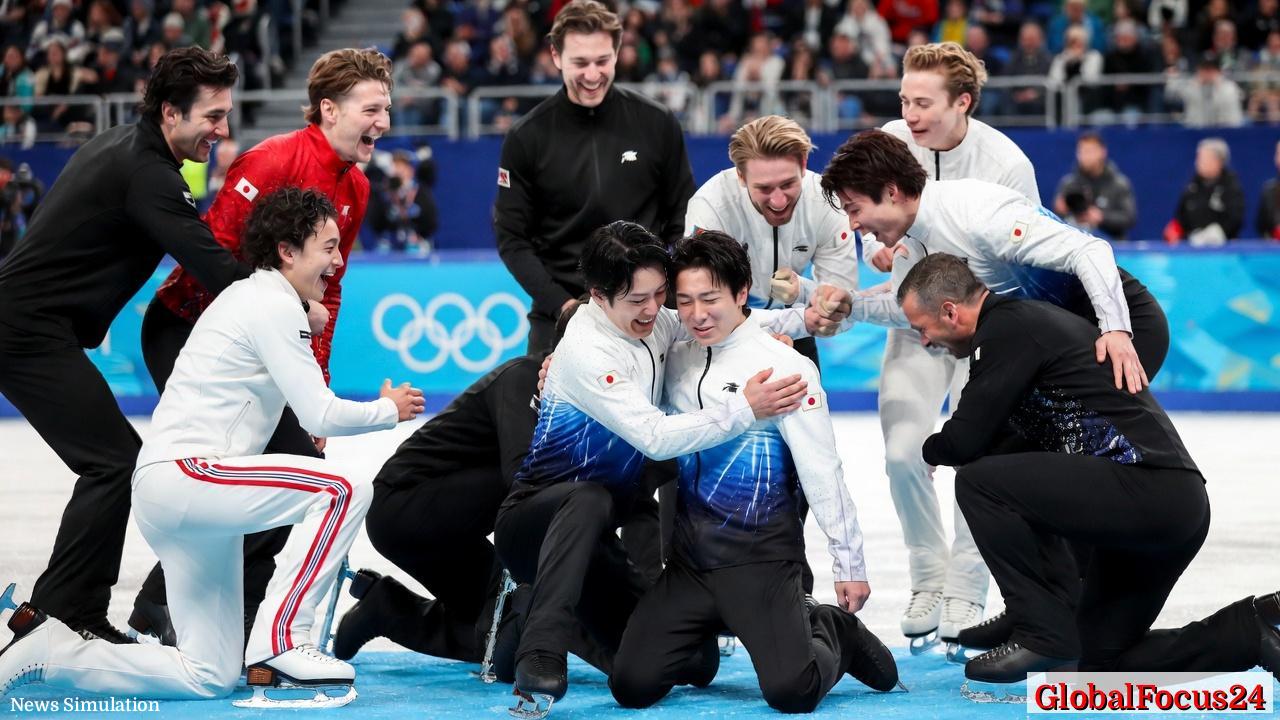
The emotional aftermath on the ice was palpable. Miura and Kihara sank to their knees in disbelief, sharing embraces with fellow competitors as the realization of their achievement settled in. Kihara’s visible emotion — a moment of sobs and gratitude — highlighted the personal significance of this breakthrough alongside their team’s broader legacy within Japanese winter sports.
Historical context and Japan’s rising profile in pairs skating Miura and Kihara’s gold adds to Japan’s growing prestige in figure skating, where the nation has consistently expanded its presence across disciplines. Their triumph follows a strong tradition of Japanese excellence in technical execution and program nuance, reinforcing the country’s reputation for producing skaters who blend athletic risk with artistic interpretation. This victory also aligns with Japan’s broader winter-sports strategy, which has invested in coaching, facilities, and athlete development to cultivate podium contenders across events.
Economic impact and regional implications The Olympic success of Miura and Kihara carries tangible ripple effects beyond sport. High-profile victories in winter sports often stimulate domestic and regional interest in ice facilities, coaching programs, and youth participation. In Japan, continued success in figure skating supports the expansion of training centers and can influence sponsorship opportunities, tourism, and media coverage related to winter sports markets. For Milano-Cortina and the broader European winter-sports economy, the event reinforces the cachet of the Olympic host cities and underscores the enduring appeal of flagship competitions in markets seeking to attract investment and tourism during the winter season.
Comparative context: global standings in pairs skating The competition featured a diverse field with strong showings from Georgia, Germany, and Hungary, illustrating the geographic breadth of excellence in pairs skating. Anastasiia Metelkina and Luka Berulava of Georgia earned the silver medal, while Germany’s Minerva Fabienne Hase and Nikita Volodin settled for bronze despite taking the lead after the short program. Hungary’s Maria Pavlova and Alexei Sviatchenko finished fourth, narrowly missing the podium. The results reflect a global spread of high-level judging standards, artistic interpretation, and mechanical precision that characterize contemporary pairs skating.
Event-by-event recap and program analysis
- Short program: A setback that tested Miura and Kihara’s composure, yet they recovered with a performance that demonstrated resilience and technical depth. The short program remains a crucial benchmark, often shaping the emotional arc of the competition and influencing strategic choices for the free skate.
- Free skate: The world-record performance established a new benchmark for difficulty and execution, featuring synchronized elements, clean transitions, and a dramatic storytelling arc that resonated with judges and audiences alike. The routine highlighted the importance of risk management, sequencing, and the ability to sustain amplitude and edge control under Olympic pressure.
- Podium dynamics: The podium showcased a contrast of established powerhouses and rising teams, reflecting shifting regional dynamics within the sport. The podium’s composition suggests both maturity in program design and the ongoing emergence of new competitors who push traditional boundaries.
Broader cultural and sporting significance Miura and Kihara’s victory is emblematic of a broader trend in winter sports: the globalization of elite training, where athletes from non-traditional powerhouses rise to the pinnacle through advanced coaching, data-driven preparation, and international competition experience. The win also reinforces the narrative of perseverance under pressure — a recurring theme in Olympic stories — as teams convert near-miss performances into triumphant gold through careful choreography, technical prowess, and mental fortitude.
Public reaction and media coverage Following the performance, social media and arena audiences reflected a mix of astonishment and admiration, with fans highlighting the flawless execution and the emotional resonance of the moment. Analysts noted the significance of the score differential in the free skate, which not only secured the gold but also established the team as a defining reference point for future generations of skaters.
Technical tidbits and training insights
- Triple toe loop: Executed with exceptional rotation and clean takeoff, marking a high point in the program’s technical content.
- Double axels: The pair’s ability to land two double axels in sequence contributed to the overall impact and score ceiling, underscoring the emphasis on big, clean rotation in modern pairs programs.
- Program balance: The combination of risk-taking elements with cohesive artistry demonstrated how contemporary pairs programs blend athletic difficulty with storytelling to maximize scoring potential under Olympic judging criteria.
Looking ahead: implications for the 2026-27 season and beyond Miura and Kihara’s success sets a high bar for the next competitive cycle, influencing training approaches, choreography choices, and strategic planning for major championships. Other top teams will study the pair’s transition from a challenging short program to a dominant free skate, aiming to replicate a similar trajectory in upcoming World Championships and Grand Prix events. As the season progresses, emerging teams across Europe and North America will increasingly benchmark their progress against this gold-standard performance, driving innovation and elevating the sport’s global profile.
Conclusion The gold-medal performance by Miura and Kihara represents a landmark achievement in the history of Olympic figure skating. By turning a difficult start into a record-setting finale, they demonstrated the fusion of technical mastery, artistic expression, and psychological resilience that defines elite competition. Their victory not only enriches Japan’s sporting legacy but also reinforces the global appeal and competitive depth of pairs skating at the Winter Olympics, inspiring athletes and fans around the world to anticipate what comes next in this dynamic sport.