From Early Promise to Long-Term Excellence: Tracing the Path of Prodigies in a Changing Economic Landscape
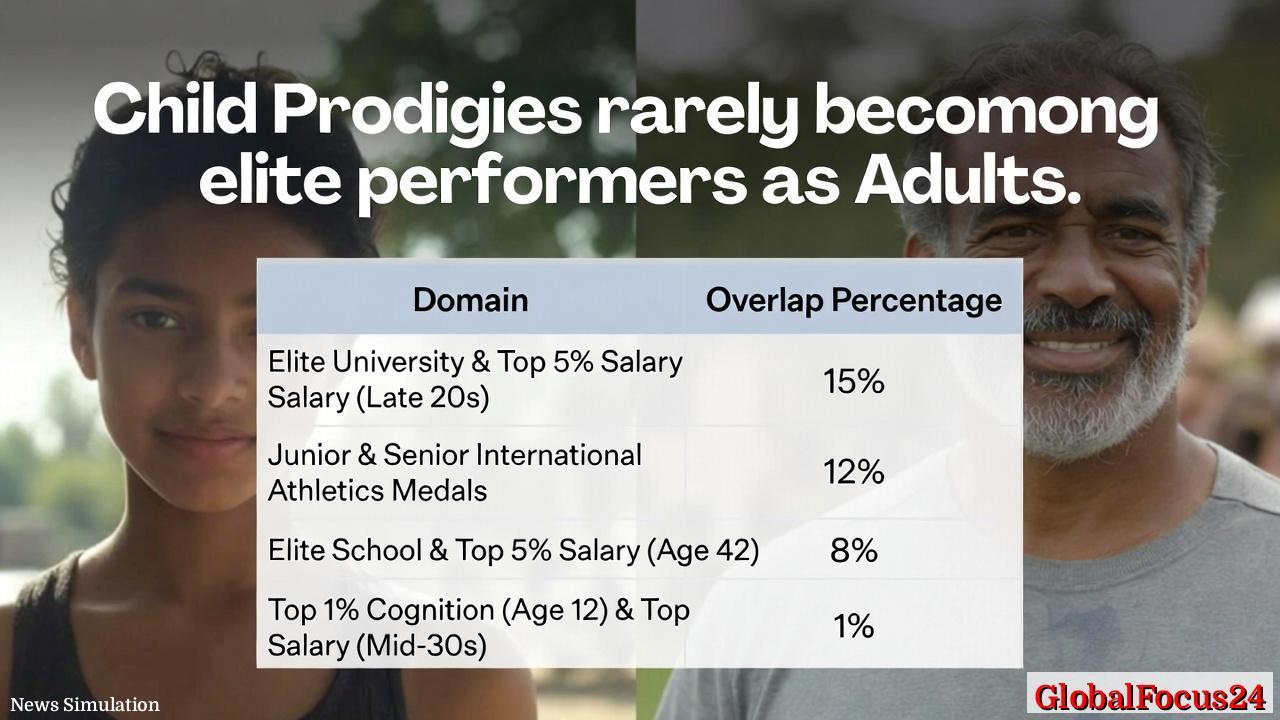
A nuanced picture emerges as researchers and policymakers increasingly examine how early talent translates into adult achievement. Across disciplines—from academics to professional sports—the arc from childhood brilliance to elite performance is not a straight line. While exceptional early indicators can forecast high potential, they rarely guarantee that same cohort will maintain or reach the apex of achievement years later. This evolving understanding carries implications for education systems, employers, and regional economies seeking to harness talent for sustainable growth.
Historical context: how early talent has shaped institutions and economies Talent selection has long influenced the design of schools, scouting networks, and university admissions. In the 20th century, many societies placed a premium on early demonstration of ability, channeling resources toward gifted programs, laboratory tracks, and scholarship opportunities. Institutions responded with accelerated curricula, standardized tests, and high-performance coaching aimed at converting early potential into later success. Yet history also shows how cohorts of child prodigies can diverge in adulthood. Some become enduring changemakers, while others shift trajectories due to changing interests, opportunities, or life priorities.
A broader historical lens reveals that elite performance often reflects cumulative experiences beyond raw cognitive scores. Access to mentorship, varied educational exposures, real-world problem solving, and resilience-building challenges can shape adaptive expertise. Regions with diversified economic ecosystems—where industries range from manufacturing and agriculture to high-tech innovation—tend to cultivate a wider set of competencies. In these contexts, early talent benefits from exposure to multiple domains, enabling flexible career pivots and longer, more sustainable career trajectories.
Economic impact: why the translation from prodigy to practitioner matters The journey from early edge to sustained performance matters economically for individuals and communities. When highly talented youths grow into well-rounded adults who can navigate complex markets, the ripple effects touch productivity, wage growth, and regional competitiveness. Yet the data suggest that the strongest economic returns are often linked not to a single talent spark but to a maturation process that includes schooling quality, on-the-job learning, and interdisciplinary exposure.
Consider the labor market implications: employers increasingly prize cognitive flexibility, collaboration, and problem-solving across contexts. These competencies are developed through diversified experiences—participation in team-based projects, cross-cultural exchanges, and practical internships—rather than through a narrow focus on early cognitive superiority alone. Policymakers, universities, and industry partners recognize that talent pipelines benefit from a holistic approach: early identification paired with broad-based development, continuous upskilling, and opportunities to apply skills in varied settings.
Regional comparisons: how different landscapes shape talent development In regions with dense innovation ecosystems, prodigy-to-performance transitions often occur alongside robust formal and informal learning networks. Silicon Valley-scale hubs, for instance, illustrate how access to capital, mentorship, and multidisciplinary collaboration can accelerate the maturation of talent into impactful careers. In other regions, talent may progress more gradually, emphasizing steady career progression, vocational training, and stable industry demand. The common thread is a shared emphasis on experiential learning and practical outcomes rather than solely on early cognitive markers.
Cross-regional studies also highlight disparities in how talent pools are nurtured. Areas with high-quality public education, equitable access to STEM and arts programs, and strong apprenticeship pipelines tend to retain prodigious youth by offering concrete opportunities to apply emerging skills. Conversely, regions with gaps in educational equity or limited pathways to advanced training may see bright students depart for opportunities elsewhere, potentially constraining local innovation ecosystems.
Sociocultural dynamics: shaping motivation, risk, and reinvention Talent development unfolds within social and cultural contexts that influence motivation, risk tolerance, and career reinvention. Societal expectations about specialization versus breadth can steer individuals toward focused career tracks or encourage exploratory campaigns across disciplines. Supportive communities that celebrate lifelong learning, resilience, and adaptability empower prodigies to pursue longer-term excellence, even as their early paths diverge from the most common trajectories.
Public reaction to the prodigy-to-elite narrative often centers on optimism about potential and concern about the pressures placed on young talents. A balanced view recognizes that extraordinary early ability does not lock in a fixed future. Instead, sustained excellence tends to arise from evolving goals, continued skill development, and opportunities to translate talent into meaningful, real-world impact.
Case studies: pathways from childhood brilliance to adult achievement
- Academic excellence and research leadership: Some individuals who demonstrate exceptional early aptitude in mathematics or science go on to build influential careers as researchers, professors, and innovators. Their success frequently stems from continued curiosity, access to advanced coursework, and opportunities to collaborate across disciplines, rather than from a singular early triumph.
- Athletic development and professional longevity: In sports, junior medalists may peak early, but a sizable share of elite performers reach their pinnacle through progressive training, adaptation to new roles, and injury management. Longevity in sport often depends on sustained coaching, nutrition, psychology, and transitions to coaching or related industries after peak competition years.
- Arts and creative industries: Early prodigy recognition can open doors to prestigious programs and collaborations. Yet maintaining prominence in dynamic creative fields often requires ongoing experimentation, audience engagement, and the ability to evolve with changing tastes and technologies.
Implications for policy and practice: building resilient talent ecosystems
- Education systems: Diversify pathways for talent development. Beyond standardized testing, integrate project-based learning, mentorship, and exposure to real-world challenges across STEM, arts, and humanities. Emphasize resilience and lifelong learning as core outcomes.
- Industry and workforce training: Pair early talent identification with robust apprenticeship, internship, and upskilling opportunities. Foster cross-sector collaborations to broaden experience and reduce the risk of early specialization narrowing later career options.
- Regional economic planning: Invest in inclusive talent pipelines that connect schools, universities, labor markets, and entrepreneurship ecosystems. Support programs that retain top performers by offering meaningful, locally anchored opportunities and pathways to leadership roles in growing sectors.
- Equity and access: Prioritize equitable access to high-quality education and career development resources. Ensure that talented youth from diverse backgrounds can participate in advanced programs and explore multiple avenues for long-term success.
Conclusion: embracing a nuanced view of talent development The relationship between early prodigy status and adult elite performance is complex and context-dependent. While remarkable early ability can signal potential, it is not a deterministic predictor of ultimate success. Instead, sustained excellence emerges from a combination of continued learning, diverse experiences, supportive ecosystems, and adaptive career strategies. As economies evolve and regional needs shift, policymakers, educators, and industry leaders alike have a compelling interest in nurturing broad-based, resilient talent pipelines that allow the brightest minds to thrive at every stage of their development.