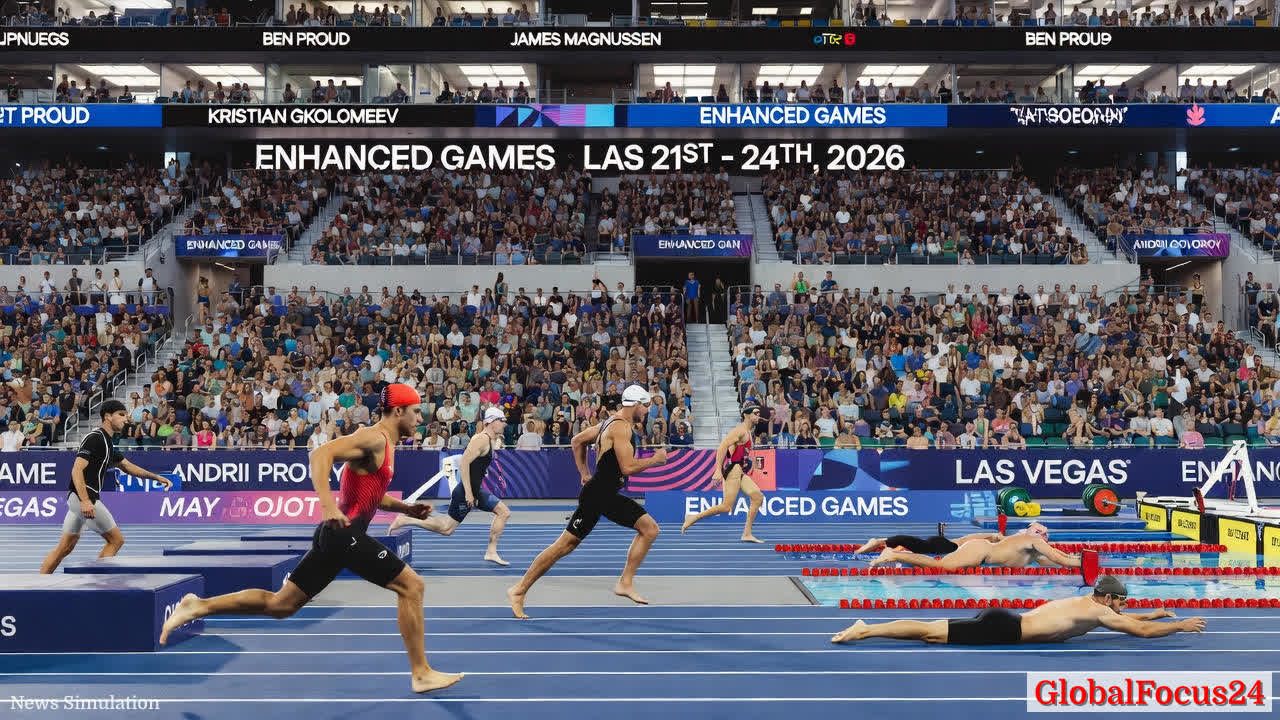
Enhanced Games: The 2026 Las Vegas Event That Tests the Edge of Fair Play
A bold, controversial experiment in competitive sports is slated to unfold in Las Vegas this spring, challenging long-standing norms around doping, safety, and athletic merit. From May 21 to 24, 2026, the Enhanced Games will stage a four-day meet featuring swimming, track, and weightlifting, with substantial prize money and a framework that permits performance-enhancing drugs under medical supervision. The event’s premise—wholeheartedly embracing, and even encouraging, pharmacological acceleration—has sparked vigorous debate among athletes, medical experts, governing bodies, and the public. Its outcome could reverberate through the economics, governance, and cultural perception of sport for years to come.
Founding vision and structure
At the core of the Enhanced Games is a provocative premise: athletes may compete naturally or opt into a regulated, physician-supervised enhancement pathway using only FDA-approved substances. Organizers argue that this approach preserves athlete autonomy while prioritizing safety through strict medical oversight. The competition is designed with two parallel tracks intended to maintain fairness: a traditional, drug-free cohort and an enhanced cohort beginning their drug protocols in two phases, with the second phase culminating as the games approach. In this model, all participants in the enhancement program start their regimens in a synchronized manner to control for timing effects on performance.
The event is framed as a testing ground for the boundaries of human performance, not merely a sports spectacle. Prize money is substantial—$500,000 per event—creating a financial dimension that reflects the growing role of prize purses in attracting elite athletes to new formats. A separate $1 million bonus will be offered for breaking world records in the 100-meter sprint and the 50-meter freestyle, events that traditionally symbolize peak speed in track and swimming disciplines.
Historical context: a long arc of performance, technology, and regulation
The debate over performance enhancement stretches back decades in professional sport. From modest nutritional interventions and legal supplements to more controversial pharmacology, the history of athletic performance is intertwined with evolving science, medical ethics, and governance. Anti-doping regimes emerged in the late 20th century in response to documented abuses and the public call for fair competition. Over time, the global anti-doping framework—led by organizations such as the World Anti-Doping Agency—sought to standardize rules, testing protocols, and sanctions, while also addressing concerns about health, privacy, and legal rights.
The Enhanced Games sit at a controversial juncture in that history. Proponents argue that today’s athletes already navigate environments saturated with performance incentives—high-tech training, data analytics, optimizing recovery, and a broad ecosystem of legal, over-the-counter aids. They contend that a regulated framework could minimize illicit, unsafe use and provide transparent, medically supervised options. Critics counter that normalization of pharmacological enhancement erodes the fundamental premise of sport as a test of natural ability, discipline, and strategic preparation. They warn of potential health risks, long-term consequences of sustained drug use, and the message sent to young athletes about acceptable pathways to success.
Economic impact and sponsorship dynamics
The event’s economics are built on a combination of prize pools, streaming ambitions, and strategic sponsorships. With $500,000 per event and a potential performance-related windfall, the Enhanced Games aim to attract top-tier athletes who are drawn by substantial direct compensation and the novelty of a high-profile platform for enhanced performance. The plan to broadcast globally—via a forthcoming live-streaming arrangement—reflects the broader industry trend toward digital-first distribution of elite competition, expanding reach beyond traditional broadcast deals. In this model, revenue streams are likely to hinge on a mix of subscription-based access, advertising, and sponsorships with technology and health sector brands signaling a prominent role.
From a regional economic perspective, Las Vegas offers an ecosystem calibrated for major sporting events: established hospitality infrastructure, a receptive regulatory environment for large gatherings, and a local workforce experienced in managing high-visibility, crowd-intensive events. The city’s history of hosting world-class sports and entertainment events provides a tested template for logistics, security, and fan engagement. If the Enhanced Games attract global viewership, ancillary benefits could include hotel occupancy boosts, regional tourism spending, and increased media attention that cascades into broader marketing opportunities for the broader Nevada economy.
Regional comparisons illuminate potential outcomes. In parallel international markets where major championships and invitational meets draw large audiences, organizers have demonstrated that new formats—especially those with a strong media hook—can deliver elevated exposure and revitalize interest in legacy disciplines. Yet, similar experiments have faced regulatory pushback and sponsorship hurdles in regions with stringent anti-doping norms. The Las Vegas edition, with its control framework and emphasis on safety supervision, will be watched closely by other jurisdictions considering how to balance athlete autonomy with public health considerations and traditional sporting values.
Health and safety considerations
A central talking point is safety. Critics argue that introducing performance-enhancing substances—even under medical supervision—could encourage a culture of risk, normalization of drug use, and potential long-term health concerns that extend beyond the competition’s timeframe. In response, organizers emphasize the safety net provided by medical oversight, including careful monitoring, dosage standardization, and adherence to FDA-approved substances. They contend that a tightly regulated process reduces the likelihood of unsafe, unregulated use, which has been a consistent concern in debates about doping.
The medical landscape around performance enhancement is complex and evolving. Clinicians emphasize individualized risk assessment, informed consent, and ongoing surveillance for adverse effects. Pharmacology advances have broadened the toolkit available to athletes seeking performance gains, but the long-term health implications—particularly for repeated exposure across seasons or different sports—remain unsettled in the public record. The event’s health protocols will be a focal point for medical professionals, athletes, and regulatory bodies observing how such a model performs in practice.
Athlete reactions and public sentiment
Public reaction to the Enhanced Games has been mixed. Some athletes welcome the possibility of choosing their own path under a safety framework, viewing it as a refinement of informed consent and a pragmatic response to the realities of a highly specialized, high-stakes sport environment. Others express concern about ethical implications, potential inequities, and the risk of pressuring athletes—especially younger competitors—to pursue pharmacological enhancements as a means to remain competitive.
National sports bodies and athletes’ associations have offered varied responses. In some cases, federations have publicly opposed participation in events that loosen anti-doping standards, citing the need to preserve fair competition, protect athlete health, and maintain integrity in the sport’s global ecosystem. The evolving stance of sponsors and broadcasters will also shape the event’s momentum, as brands weigh the ethical and reputational considerations of associating with a format that departs from established norms.
Technological and strategic dimensions
Beyond the medical framework, the Enhanced Games intersect with broader technologies shaping modern athletics. Data analytics, wearable sensors, and performance-tracking platforms are likely to play a prominent role in both the competition and its oversight. Real-time monitoring could enable rapid responses to safety concerns and inform post-event analyses of performance differentials between drug-assisted and drug-free cohorts. The event’s strategic emphasis on record-breaking feats in the 100-meter sprint and 50-meter freestyle aligns with the sport’s desire to capture dramatic moments that translate to global attention and digital engagement.
If the event advances, it could catalyze new strategic ecosystems around athlete preparation, recovery, and pharmacovigilance. Medical sponsors, telehealth services, and supplement brands may develop complementary offerings tailored to enhanced performance contexts. Such developments would reflect a broader convergence of sport, medicine, and consumer health products, reshaping not only competition but also the commercialization of athletic excellence.
Legal landscape and ongoing disputes
The legal backdrop to the Enhanced Games is complex and evolving. A number of parties have signaled opposition or taken legal action in response to perceived threats to the sport’s regulatory order. Notably, antitrust and governance concerns have emerged from various stakeholders within the international sports community, with organizers pursuing claims that attempts to suppress the competition violate competitive market principles. If disputes progress through courts or arbitration, outcomes could influence how new formats negotiate with existing federations, broadcast rights holders, and sponsors.
The case studies from other controversial experiments in sports governance offer cautionary lessons. The balance between safeguarding athletes’ health, maintaining fair competition, and honoring athletes’ autonomy is delicate. How regulators calibrate their response to a novel competition model often hinges on the demonstrated capacity to manage risk, ensure transparency, and provide clear, enforceable rules that withstand scrutiny from multiple jurisdictions.
Global context and comparative outlook
Placed within the broader tapestry of international sport, the Enhanced Games reflect ongoing tensions between innovation and tradition. In disciplines where record progression has slowed or plateaued, organizers sometimes seek new formats or incentives to re-energize interest. However, introducing pharmacological enhancement into elite competition challenges foundational concepts of sport—protecting health, ensuring fair competition, and preserving the aspirational narratives that motivate aspiring athletes.
Comparative regional analyses suggest that markets with mature anti-doping ecosystems and strong governance frameworks are likely to scrutinize and respond more aggressively to events that normalize drug use. Conversely, markets with rapid fan engagement, strong media ecosystems, and supportive investment communities may be more receptive to experimentation that promises heightened performance and novelty, provided safety assurances are credible and transparent.
Public reaction and cultural implications
The cultural discourse surrounding the Enhanced Games touches on ethics, ambition, and the public’s appetite for spectacle. For some spectators, the event represents a fearless exploration of human potential, a stage to witness unprecedented athletic performances and the frontier of what the body can achieve under controlled conditions. For others, it signals a troubling shift—a commodification of health risks and a departure from the accessible ideal of sport as a fair contest limited by natural limits and hard-won discipline.
Media portrayals will inevitably shape perceptions in real time. Compelling narratives often emerge from dramatic performances, the psychology of competition, and the human stories of athletes grappling with high-stakes choices. Whether the public embraces or resists this experiment, its impact on the broader conversation about integrity, safety, and personal choice in sport is likely to endure long after the final whistle.
Conclusion: a crossroads for sport’s future
The Enhanced Games inaugurate a high-stakes experiment at the intersection of medicine, economics, and athletic ambition. As Las Vegas prepares to host a competition that explicitly welcomes drug-assisted performance under medical supervision, observers will watch not only who wins or loses but how the event navigates safety, governance, and public trust. The decision to grant athletes a regulated path to enhancement could redefine the incentives that shape training, sponsorship, and investment in elite sport.
Whether the event will deliver superhuman feats or prove unsustainable under scrutiny remains to be seen. What is certain is that the 2026 edition will intensify the ongoing conversation about where sport sits within contemporary society’s admiration for achievement, the temptations of shortcuts, and the enduring commitment to protecting athletes’ health and the integrity of competition. As the world watches, the Enhanced Games may become a watershed moment—one that reveals whether sport can adapt its traditions to the pressures and possibilities of a new era in athletic performance.