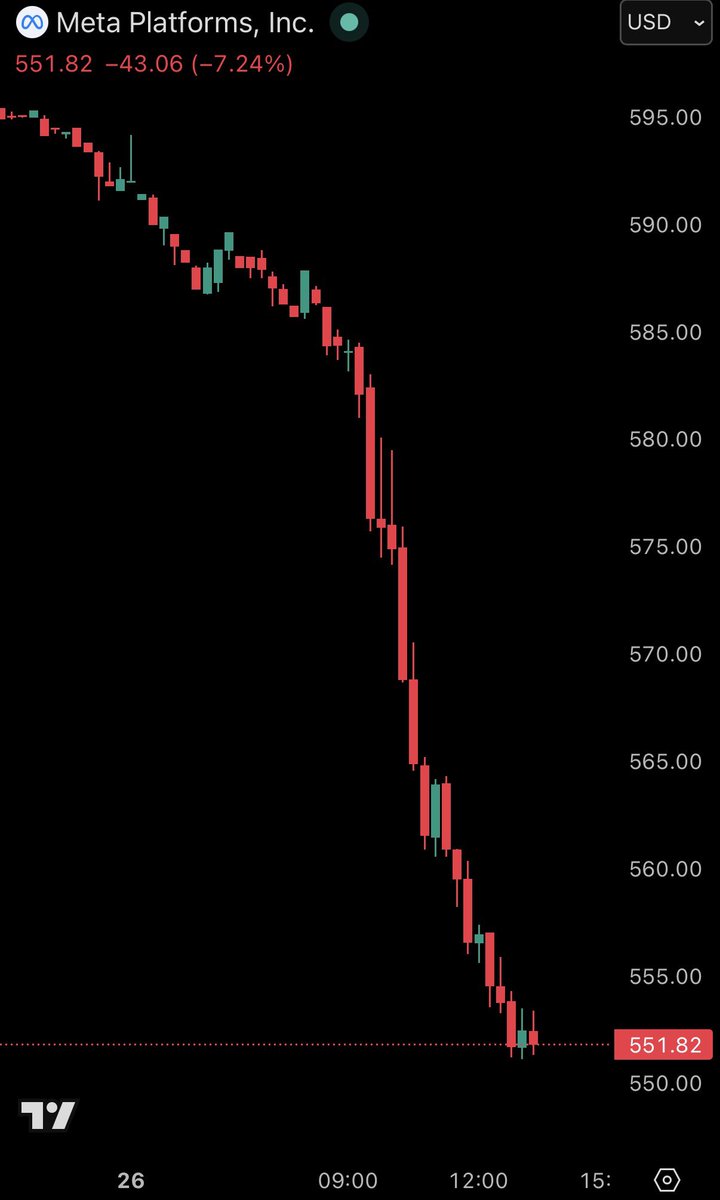
Meta Stock Plunges 7% After Court Ruling Over Youth Safety Violations
Meta Platforms Inc. shares tumbled more than 7% on Thursday, wiping out roughly $100 billion in market value, after a landmark U.S. federal court ruling found the company failed to adequately warn or protect young users on its social media platforms. The decision, viewed by analysts as a pivotal moment for digital privacy and child safety regulation, sent shockwaves through the tech sector and reignited debate around the responsibilities of social media giants toward minors.
A Landmark Legal Decision
The ruling, issued Wednesday evening by a federal district court, concluded that Meta’s practices around data collection, algorithmic recommendations, and mental health impacts did not sufficiently safeguard youth users. The court cited “systemic gaps in risk disclosure” and “persistent negligence” in addressing known harms associated with its platforms, particularly Instagram and Facebook.
While the company has faced dozens of lawsuits over content moderation and user safety in recent years, this judgment marks one of the most significant legal challenges in Meta’s two-decade history. It also comes amid heightened scrutiny from state attorneys general, U.S. lawmakers, and international regulators seeking to curb the influence of social media on children and teens.
Market Reaction and Investor Fallout
Meta’s stock opened sharply lower on Thursday and continued to slide throughout the day, closing with its steepest one-day loss since February 2022. The decline erased about $100 billion from its valuation, underscoring the financial vulnerability even of tech giants amid growing regulatory risks.
Trading volume surged across major exchanges, and several Wall Street analysts downgraded Meta’s shares on expectations that litigation costs, potential fines, and reputational damage could dampen growth prospects. The ruling triggered a broader sell-off among social media companies, with Snap Inc. and Pinterest each down nearly 4% by the closing bell.
Investors are now watching closely to see how Meta responds. The company has announced plans to appeal the court’s decision, describing the ruling as “a misunderstanding of our longstanding commitment to user safety.” But legal experts suggest the judgment could set a precedent for future cases against tech firms accused of failing to protect minors online.
Historical Context: A Pattern of Scrutiny
Meta’s regulatory troubles date back more than a decade. The company has faced multiple government investigations related to privacy lapses, misinformation, and data misuse — most notably the Cambridge Analytica scandal in 2018, which led to a $5 billion fine from the Federal Trade Commission. Since then, the company has attempted to reposition itself as a leader in privacy reforms and youth well-being initiatives, including enhanced parental controls and time-limit settings on Instagram.
However, critics argue these measures have not gone far enough. In 2021 and 2022, leaked internal research suggested that Instagram could contribute to body image issues among teenage girls — findings that fueled congressional hearings and widespread public backlash. Thursday’s ruling effectively validates many of those concerns, confirming that Meta’s internal warnings about young users’ mental health were not met with adequate corporate action.
Economic Impact and Wider Industry Implications
The immediate financial consequences for Meta could be severe. Beyond stock market losses, analysts estimate potential penalties from ongoing litigation and settlements could reach tens of billions of dollars. More importantly, the ruling could spur tighter regulations across the U.S. and other major markets, forcing companies to overhaul their recommendation systems and content algorithms.
The case also raises questions about liability for addictive design patterns — such as endless scrolling and algorithmic amplification — that keep users engaged for longer periods. Regulators in the European Union and the United Kingdom are already enforcing stricter age verification and mental health protection measures under new digital safety laws. The U.S., trailing in comprehensive regulation, may now follow suit as public concern over the effects of social media on youth intensifies.
Tech industry observers note that while similar scrutiny has targeted TikTok and YouTube, Meta’s long history and massive user base make it a bellwether for the sector’s regulatory exposure. If courts continue to side with plaintiffs accusing platforms of negligence, the entire social media business model — built around engagement-driven data monetization — could require structural change.
Regional Comparisons: The U.S., Europe, and Beyond
In Europe, governments have long taken a more aggressive stance toward child safety and digital transparency. The European Union’s Digital Services Act (DSA), which took full effect this year, compels major platforms to assess and mitigate risks to minors. Compliance failures can result in fines of up to 6% of a company’s global revenue. Meta has already made several operational adjustments in Europe, such as disabling personalized ads for teenage users and limiting algorithmic recommendations.
By contrast, the U.S. regulatory framework remains fragmented, relying largely on the Children’s Online Privacy Protection Act (COPPA) — a law enacted in 1998, long before modern social networks emerged. Several states, including California and New York, have proposed or enacted their own online safety legislation aimed at restricting harmful content and improving age verification. This latest ruling could serve as a catalyst for federal reform or inspire more state-level actions.
In Asia, where social media usage among young people is among the highest in the world, governments have introduced new oversight bodies to monitor online content. South Korea and Japan have both implemented stricter rules on age-appropriate content and user data protection, though enforcement remains inconsistent. Meta’s global operations may soon face simultaneous legal and regulatory pressures from multiple jurisdictions, complicating its compliance strategy and risk management.
The Broader Debate Over Digital Well-Being
At the heart of the case lies a deeper societal question: how to balance digital innovation with public health and privacy. For millions of young people, social media serves as a primary means of communication, community building, and self-expression. But mounting research — from academic institutions and advocacy groups — points to potential mental health consequences, including anxiety, depression, and reduced self-esteem linked to excessive social media use.
Meta has pledged to expand its digital literacy campaigns and promote positive online habits. Yet child advocacy groups argue that self-regulation by tech companies has historically fallen short. They are calling for mandatory safeguards, such as stricter data limits and independent oversight of the algorithms that determine what users see.
With Thursday’s court decision, the balance of power may be shifting toward regulators and courts, signaling a new era of accountability for digital platforms. Some experts compare the moment to the rise of consumer protections in industries such as tobacco and transportation — sectors that once resisted oversight but ultimately adapted under pressure from public health concerns and legal mandates.
Meta’s Strategic Outlook and Future Challenges
Looking ahead, Meta faces a dual challenge: navigating an immediate legal and financial crisis while sustaining its long-term transformation toward virtual and augmented reality technologies. The company’s flagship metaverse initiative, Reality Labs, continues to post heavy losses — more than $16 billion last year — even as its core social platforms face declining engagement among younger demographics.
Analysts caution that mounting regulatory costs and reputational damage could hinder Meta’s broader vision to diversify its business. Meanwhile, advertising — still Meta’s dominant revenue source — may suffer as brands reevaluate their association with a platform under legal scrutiny for youth safety violations.
Chief Executive Mark Zuckerberg has reiterated the company’s commitment to “building safe and supportive digital communities,” but acknowledged in a recent earnings call that restoring public trust will take time. The path forward likely involves not only legal appeals but also substantive changes to Meta’s internal governance, transparency reporting, and user protection policies.
Investor Sentiment and Public Response
Public reaction to the ruling has been swift and divided. Parents’ groups and mental health advocates applauded the decision as a long-overdue step toward accountability, while some business leaders warned it could stifle innovation by subjecting digital companies to excessive liability.
Among investors, sentiment remains cautious. Short-term traders are bracing for increased volatility as Meta’s appeal process unfolds, while long-term shareholders are reassessing the company’s risk profile in light of growing global scrutiny. Some analysts believe that, much like past crises, Meta could eventually recover if it demonstrates credible progress on user safety. Others contend the reputational damage from this ruling could linger for years, reshaping how regulators, advertisers, and users interact with social media altogether.
A Turning Point for the Tech Industry
Thursday’s court ruling represents more than just a blow to one company’s stock price — it marks a turning point in the evolution of digital accountability. As governments, parents, and young users confront the complex effects of social media on mental health, the outcome of this case may define the boundaries of corporate responsibility in the digital age.
Meta now stands at a crossroads: appeal and contest the ruling’s scope, or embrace its implications and lead reform within the industry it helped create. Whichever path it takes, the decision will resonate far beyond Silicon Valley, influencing how the world’s leading technology firms balance innovation with the duty of care owed to their youngest users.