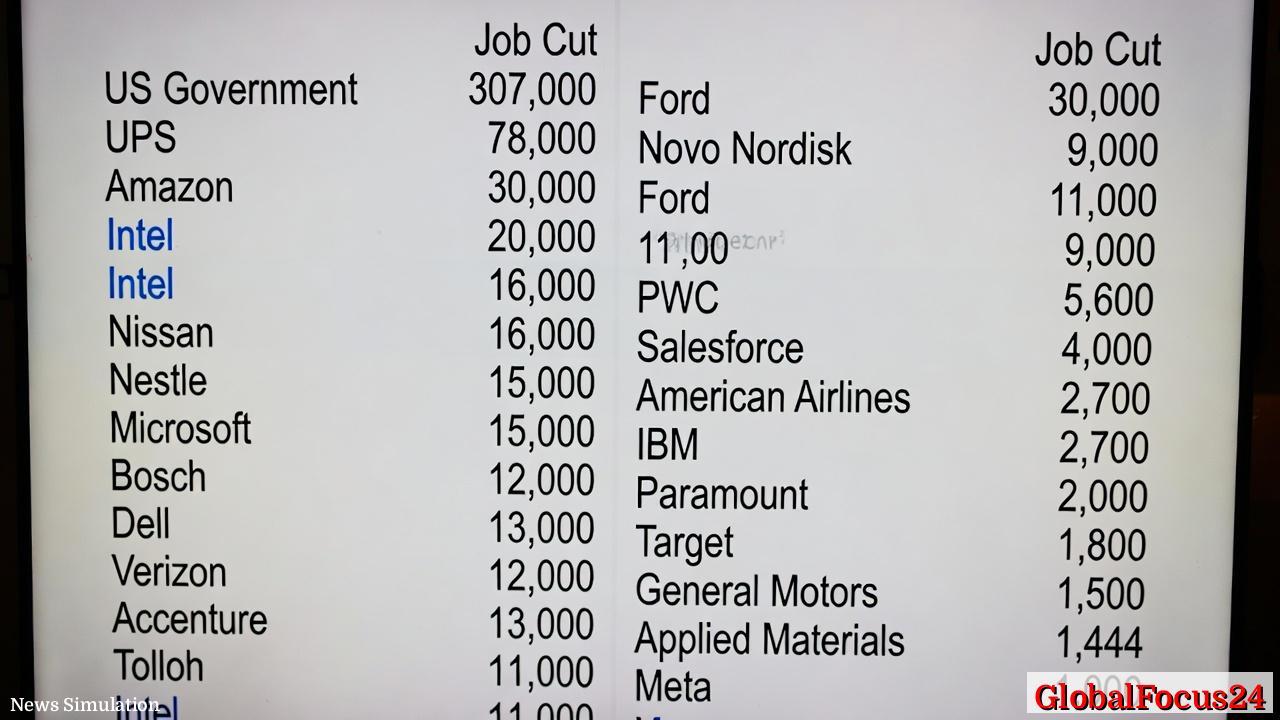
Workforce Downturn: Global Layoffs Signal Economic Reset Across Industries
The past months have delivered a broad wave of job reductions that span government, manufacturing, tech, retail, and services. From major government staff adjustments to corporate reorganizations, the pattern points to an ongoing recalibration of labor needs in response to shifting demand, automation, and evolving business models. While the scale and timing vary by sector and region, the cumulative effect is a clearer portrait of a labor market in transition.
Historical context: cycles of expansion and recalibration
- A long arc of macroeconomic cycles shows that large-scale layoffs often follow periods of rapid expansion, driven by demand surges, technology adoption, or reorganizations designed to boost efficiency.
- In recent years, many employers launched hiring spurts during rebound periods, aligning headcount with growth expectations. Now, as demand patterns settle and automation technologies mature, firms reassess staffing to align with sustainable profitability.
- Historical comparisons highlight that such adjustments typically ebb as companies consolidate, re-skill workers, and shift toward more capital-light models or strategic priorities such as core product modernization, supply-chain resilience, or digital transformation.
Economic impact: what the cuts mean for investment, wages, and regional economies
- Short-term drag on consumer spending: large-scale layoffs tend to reduce household income in affected regions, dampening local consumption and sometimes slowing adjacent businesses that rely on job stability.
- Productivity and capital intensity: reductions in payrolls often accompany investments in automation, AI-enabled processes, and cloud-based operations. In many cases, capital expenditure rises even as headcount falls, reflecting a shift toward technology-enabled efficiency.
- Regional divergence: metropolitan clusters with high concentrations of tech, logistics, or manufacturing activity may experience more pronounced employment shifts, while regions with diversified industries or strong small-business ecosystems can cushion the impact through re-employment opportunities and retraining programs.
- Talent market dynamics: while individual workers face displacement, the broader market often experiences a reallocation of skills. Sectors such as software, cybersecurity, data analytics, and advanced manufacturing frequently see demand for higher-skill roles, prompting accelerated retraining and mobility.
Industry snapshots: where cutbacks are concentrated and why
- Government and public sector: plans to reduce hundreds of thousands of positions reflect ongoing efficiency reviews, procurement restructurings, and program realignments. Public-facing services may experience longer wait times in some regions, even as agencies seek to protect essential functions.
- Logistics and delivery: companies in parcel, freight, and last-mile services are recalibrating to demand patterns, automation in warehouses, and cost controls. The result is a tiered impact across roles—from frontline operations to administrative support and contractor networks.
- Technology and semiconductors: major technology firms, from consumer platforms to semiconductor makers, are balancing growth investments in AI and cloud services with workforce reductions in legacy or non-core areas. This dual approach aims to sustain innovation timelines while improving capital efficiency.
- Consumer goods and food and beverage: multinational manufacturers and suppliers adjust to changes in consumer demand, supply chain pressures, and currency dynamics. Reductions in manufacturing, marketing, and corporate roles are common as companies streamline portfolios or consolidate functions.
- Automotive and manufacturing: legacy manufacturers restructure to accelerate electrification and software-defined vehicles. While some regions see job losses in traditional roles, new opportunities emerge in engineering, battery production, and software integration.
- Professional services and finance: firms in accounting, consulting, and financial services continue to optimize talent mix, focusing on higher-value services and technology-enabled delivery while trimming support and non-core functions.
Regional comparisons: what different markets reveal about resilience
- North America: a mix of government reductions, tech consolidation, and logistics realignments is shaping the labor landscape. Regions with robust retraining ecosystems and access to apprenticeship programs tend to rebound faster as workers transition into high-demand technology and operations roles.
- Europe: ongoing structural reforms, energy-transition investments, and manufacturing realignments contribute to selective layoffs. Countries with diversified industry bases and active workforce development programs show stronger post-layoff re-employment rates.
- Asia-Pacific: regions with strong manufacturing ecosystems, AI adoption, and export-driven growth are recalibrating roles toward automation, data services, and regional supply-chain resilience. Local policy incentives and reskilling initiatives influence recovery speed.
- Latin America and other markets: adjustments often reflect global demand shifts in tech, logistics, and consumer markets, with re-employment driven by regional opportunities in e-commerce, nearshoring, and energy sectors.
What executives and workers are watching
- Short-term volatility versus long-term strategy: leadership teams are balancing the need to preserve cash flow and profitability with the longer-term aim of positioning the business for growth in AI-enabled products, digital platforms, and high-skill services.
- Retraining and internal mobility: many organizations emphasize reskilling programs, internal transfers, and partnerships with education providers to minimize external displacement and preserve institutional knowledge.
- Workforce alternatives: some employers explore job-sharing, reduced hours, or voluntary separation programs as structured options to manage headcount while preserving employee goodwill and morale.
- Equity and benefits: in the context of layoffs, remaining teams weigh compensation, benefits, and career progression. Transparent communication and active support for transitioning workers can influence public perception and morale.
Public reaction and social considerations
- Community impacts: large-scale layoffs can ripple through local economies, affecting small businesses, housing markets, and school districts. Community organizations and local governments often respond with targeted retraining grants and job placement services.
- Media and investor sentiment: while layoffs can reflect prudent financial management, they can also trigger concerns about growth prospects. Clear messaging about strategic priorities and timelines for re-employment opportunities can help maintain confidence among investors and the public.
What comes next: trajectories for recovery and growth
- Re-employment opportunities: as companies realign with digital-enabled operations, workers with transferable skills in data, software, automation, supply chain optimization, and customer experience are likely to find new opportunities across industries.
- Sector-specific rebounds: logistics, AI-enabled software, cybersecurity, cloud services, and advanced manufacturing are sectors commonly positioned to absorb displaced labor more quickly, particularly when supported by retraining and regional investment.
- Policy and incentives: government programs that encourage retraining, wage subsidies for new hires, and incentives for companies to hire locally can influence recovery timelines and regional resilience.
Conclusion: navigating a transitioning labor market with clarity and opportunity
The wave of layoffs across diverse sectors signals more than immediate payroll reductions. It marks a broader realignment of labor demand as enterprises pursue efficiency, invest in automation and AI, and reshape portfolios to compete in a changing global economy. While the immediate effects on workers and communities are real and deserve attention, the shift also opens pathways for retraining, mobility, and the emergence of new roles in high-demand fields. Stakeholders—business leaders, policymakers, educators, and workers—will need to collaborate to translate this transition into durable opportunity, ensuring that the short-term disruptions pave the way for long-term resilience and growth.
If you would like, I can tailor this article to a specific region or industry, incorporate more detailed statistics, or adjust the focus to emphasize workforce development strategies and success stories from local communities.