U.S. Stocks Surge as Trump's Iran Comments Trigger Wild Market Rebound
Markets Whipsaw Before Powerful Recovery
U.S. stock markets staged a dramatic rally late Friday as investors reacted to a rapid succession of statements from President Donald Trump regarding the escalating conflict with Iran. Within hours, markets swung violently from deep losses to solid gains, underscoring Wall Street’s hypersensitivity to geopolitical cues and real-time government communication.
The volatility began early in the afternoon when, at approximately 2:30 p.m. ET, reports circulated that the president was considering the deployment of U.S. ground troops to Iran. The news rattled markets, reinforcing investor fears of a prolonged Middle East conflict and its potential to disrupt global energy supplies.
By 3:43 p.m. ET, those concerns deepened after Trump declared that he did not want a ceasefire with Iran, signaling continued escalation. The statement sent the S&P 500 to its lowest point of 2026, as traders fled risk assets in favor of traditional safe havens like gold, the U.S. dollar, and short-term Treasury bills.
Then, in an abrupt reversal of tone just 90 minutes later, Trump told reporters the United States was “considering winding down the war with Iran.” That single phrase triggered a sharp reversal in sentiment, sending major indexes soaring into the evening.
S&P 500 and Nasdaq Stage Rare Late-Day Rally
Between 3:43 p.m. and 5:13 p.m. ET, the S&P 500 broke free from its downward slide, climbing nearly 1% even before any official change in policy had been confirmed. By 6:15 p.m. ET, the index had gained 1.8% from its intraday low — equivalent to roughly $900 billion in restored market capitalization — a striking recovery given the day’s earlier tone of anxiety and defensive trading.
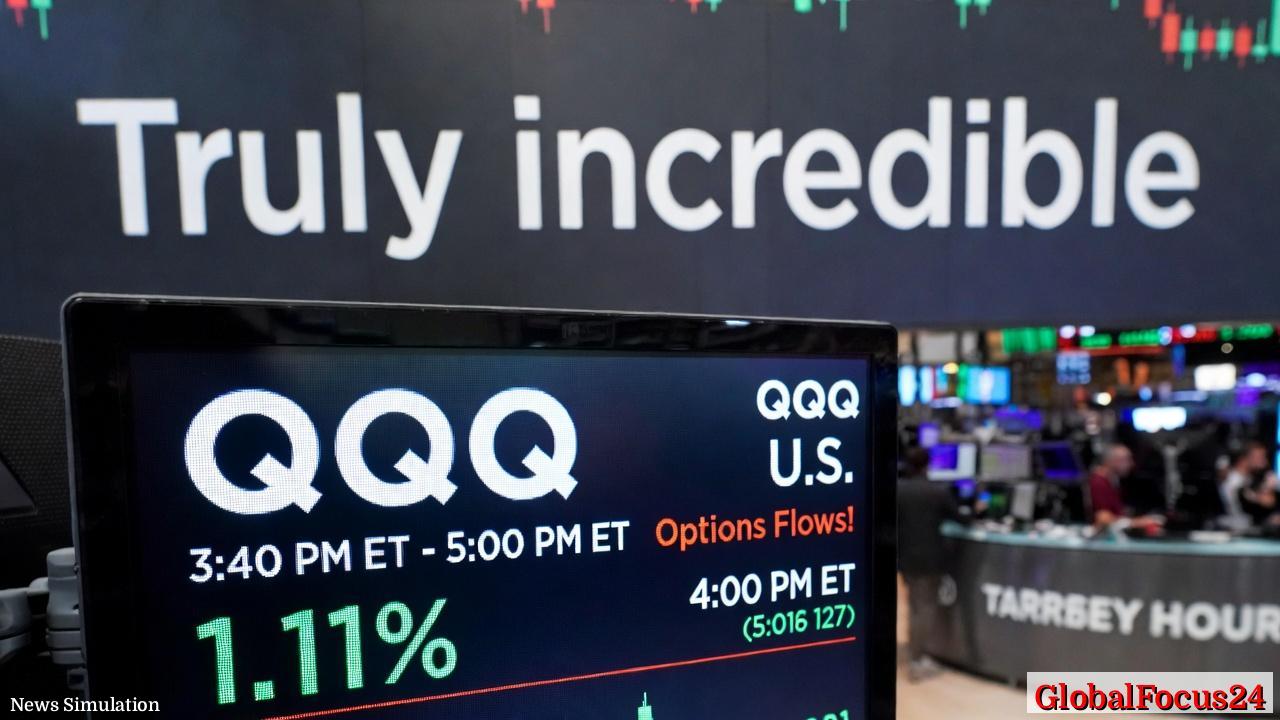
The Nasdaq 100, a technology-heavy benchmark that often signals investor risk appetite, followed a similar path. Its tracking ETF, the Invesco QQQ Trust (QQQ), surged 1.1% between 3:40 p.m. ET and 5:00 p.m. ET with no fresh catalysts, an unusual move that suggests institutional traders may have anticipated a shift in sentiment or policy. Later, following Trump’s 5:13 p.m. comments, QQQ gained a full 2% from its daily low.
Options markets reflected the frenzy. Long call options on QQQ, particularly those expiring March 23, saw an explosion of volume late in the session. Contracts that had been depressed earlier in the day surged in value, trading up as much as 200% from their lows. Analysts cited this options activity as evidence of aggressive positioning by funds expecting a rebound in the short term.
Volatility Tied to Geopolitical Messaging
Friday’s trading session highlighted how fragile investor confidence has become in a geopolitical climate where official statements can dramatically alter global risk assessments within minutes. The market’s whipsaw response to the president’s remarks is not without precedent; historically, similar patterns have unfolded during sudden international escalations.
During the 2003 Iraq War and the 2019 Iranian oil facility attacks, markets also swung abruptly in response to verbal signals and diplomatic uncertainty. However, the real-time amplification of information through social media and financial news platforms has made modern markets even more reactive. Traders and algorithms now parse every official comment, often triggering automated responses within seconds.
“The market’s moves were stunning — not just in scale, but in speed,” said one veteran equity strategist. “It underscores how tightly tethered equities are to geopolitical sentiment, especially when those signals are coming directly from the president.”
Historical Context: Political Shocks and Market Behavior
The relationship between geopolitical risk and stock performance stretches back decades. The S&P 500, for instance, fell nearly 6% in the week following the Cuban Missile Crisis of 1962 but recovered within a month as diplomatic tensions eased. During the Gulf War in 1991, markets initially sold off ons of military engagement, only to rally once operations appeared limited.
The current pattern follows that historical template: initial panic selling, followed by aggressive dip buying as clarity improves or the risk narrative softens. But what sets modern episodes apart is timing. In previous decades, market reactions often played out over days. Today, they occur in minutes, magnified by high-frequency trading and algorithmic strategies trained to respond to keyword-driven news flows.
This context helps explain why late-day market surges have become more common in recent years. Many institutional investors now rely on automated real-time sentiment analysis to determine entry and exit points, and whenrisk pivots suddenly, algorithmic buying can drive prices higher just as quickly as fear once drove them down.
Economic Impact and Investor Concerns
Beyond the immediate market volatility, Friday’s events raised broader concerns about economic stability and investor psychology heading into the second quarter of 2026. Treasury yields fluctuated sharply throughout the afternoon, with the 10-year note yield dipping below 3.5% before rebounding by market close. Oil prices, which had spiked earlier on fears of supply disruption, settled modestly lower after Trump’s conciliatory remarks.
For consumers and businesses, the primary concern remains energy costs and inflation sensitivities. A ceasefire, or even a perceived de-escalation, could help stabilize fuel prices after weeks of volatility. U.S. gasoline futures moderated slightly in after-hours trading, signaling cautious optimism that tensions may not spiral further.
However, economists warn that consistent unpredictability in official communication could deter long-term investment. “Markets can absorb bad news; what they struggle with is uncertainty,” said an economic analyst specializing in geopolitical risk. “Whens fluctuate as rapidly as they did today, it injects instability into capital planning, currency markets, and even corporate hiring decisions.”
Regional and Sector Comparisons
While U.S. markets captureds, the ripple effects extended globally. European and Asian markets, which had closed before the most dramatic U.S. reversals, are expected to react strongly when trading resumes Monday. Germany’s DAX index and Japan’s Nikkei 225 both finished Friday’s sessions in negative territory, reflecting early fears of expanded conflict. Futures trading late Friday in London suggested those losses could reverse when markets open next week.
In the U.S., sector performance varied. Defense contractors, which had rallied earlier in the day on speculation of expanded military operations, surrendered gains late in the session as peace prospects returned. Conversely, technology and consumer discretionary stocks powered the rebound. Mega-cap firms such as Apple, Microsoft, and Amazon contributed disproportionately to the S&P’s recovery, reinforcing their outsized influence on U.S. equity indices.
Energy companies ended mixed, caught between potential demand surges from military logistics and the market’s late-session repricing of oil risk. Meanwhile, airline and shipping stocks, initially under heavy pressure, staged recoveries mirroring broader sentiment shifts.
Investor Outlook Heading Into Next Week
As traders prepare for Monday’s open, attention will center on official updates from the White House and the Pentagon regarding Iran. Market participants will also watch for any follow-up statements clarifying whether withdrawal or de-escalation measures are genuinely being considered.
If tensions ease further, analysts expect continued momentum in risk assets as institutional investors reengage with equities. Conversely, any signs of renewed hostility could quickly reverse Friday’s recovery. Futures markets indicate elevated volatility expectations into the coming week, with the CBOE Volatility Index (VIX) ending Friday still above 20 — a level historically associated with market uncertainty.
The resilience of U.S. markets has long been one of their defining attributes, and Friday’s swift turnaround underscores both investor adaptability and the influence of real-time communication on modern finance. Yet it also demonstrates that the line between economic optimism and geopolitical anxiety can shift within a single hour — and often, with just a few words.
A Moment That Captures Market Fragility
Friday’s trading session will likely be studied as a textbook example of how communication risk — not just economic or military policy — can shape global financial outcomes. It compressed an entire geopolitical cycle of escalation and relief into a single afternoon, testing the limits of algorithmic speed and investor psychology alike.
The day ended not with panic, but with measured optimism. Still, beneath the surface, traders and policy analysts remain sharply aware that sentiment built on words can unravel as quickly as it rises. As markets head into a new week, investors will be watching both the charts and thes, knowing that in 2026’s hyper-connected economy, a sentence can move billions — and silence can be just as loud.