Stocks slump as Middle East tensions escalate and producer prices hit 13-month high
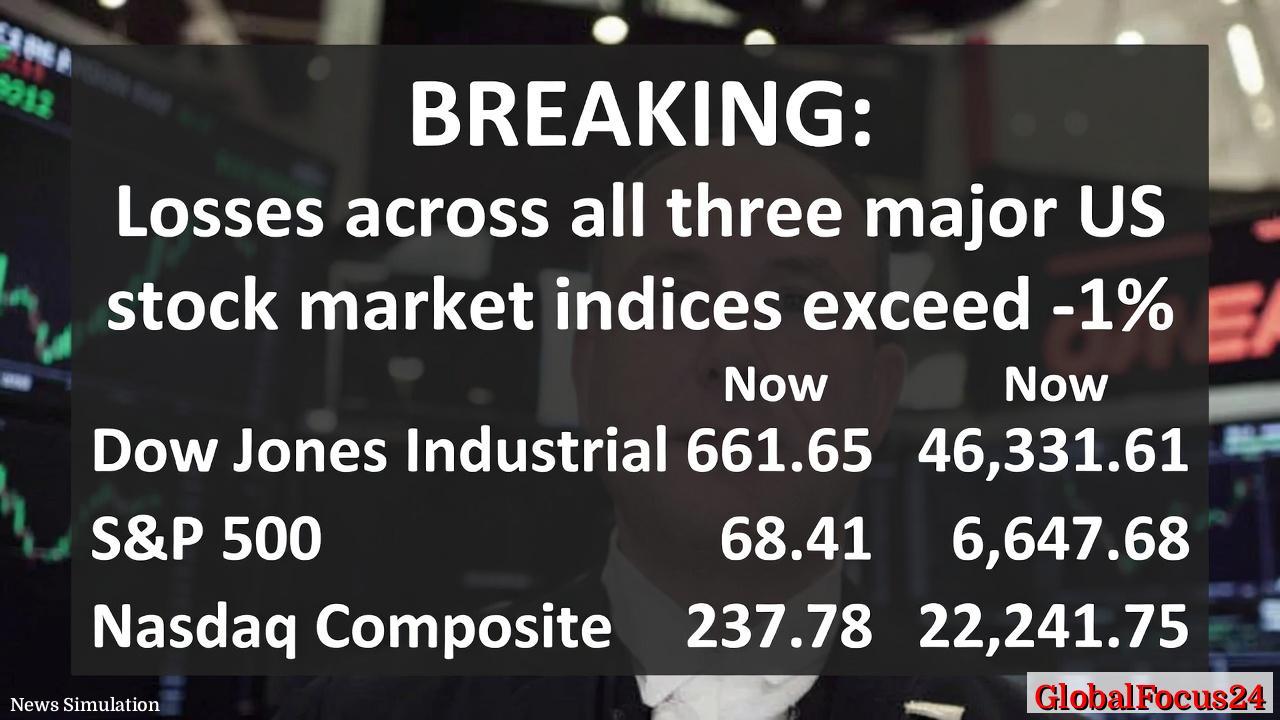
In a trading session defined by heightened geopolitical anxiety and persistent inflation signals, major U.S. stock indices closed with notable losses on Wednesday. The Dow Jones Industrial Average fell 661.65 points, down 1.41%, to 46,331.61. The S&P 500 retreated by 68.41 points, or 1.02%, ending at 6,647.68. The Nasdaq Composite declined by 237.78 points, or 1.06%, to 22,241.75. Traders cited a combination of escalating Middle East tensions, a firm read on producer prices, and ongoing concerns about the inflation trajectory as driving forces behind the broad market retreat.
Historical context and market sentiment
The day’s moves fit into a broader pattern observed over the past months, where market participants weigh geopolitical developments against the risk of sticky inflation and potential shifts in monetary policy. Historically, periods of regional conflict and supply-chain disruption tend to sharpen risk-off behavior, particularly when coupled with inflation metrics that suggest prices are not yet fully contained. Investors monitor every new data release for hints about the pace of Federal Reserve normalization, seeking signs of resilience in corporate earnings as a counterbalance to macro headwinds.
Economic context: producer prices and inflation signals
Wednesday’s session followed a release showing that producer price inflation remained elevated, signaling ongoing cost pressures across manufacturing networks. Higher input costs can flow through to consumer prices if businesses choose to maintain margins, influencing consumer spending and overall demand. Analysts noted that whileinflation has shown signs of cooling in some categories, core measures and producer-level data continue to reflect a tight pricing environment that can influence interest-rate expectations and equity valuations.
Market breadth and sector insight
Across sectors, declines were broad, with cyclicals and technology shares among the hardest hit. Financials also faced pressure as investors reassessed interest-rate expectations and the potential impact on loan growth and net interest margins. By contrast, certain defensive names saw relative resilience, aided by the perception that stable earnings streams can offer a degree of protection in an uncertain macro environment. Traders highlighted that rotation between sectors remained a notable feature, as investors recalibrated portfolios in response to evolving risk-reward dynamics.
Geopolitical developments and regional comparisons
Tensions in the Middle East intensified bidding for safe-haven assets, while supply considerations continued to influence markets. Energy-related equities and futures saw heightened activity as market participants evaluated the potential for supply disruptions and their implications for global energy prices. In parallel, regional economies with close trade linkages to energy markets observed amplified volatility, underscoring how geopolitical risk can translate into broader financial market movements. The cadence of price action reflected a global narrative: how conflict, sanctions, and diplomatic engagements interact with energy flows, inflation expectations, and the global economic outlook.
Economic indicators to watch
Investors are closely watching a suite of indicators for clues about the next policy path. In addition to producer prices, consumer price reports, wage growth data, and consumer spending figures remain integral to forming expectations about monetary tightening or easing. Supply chain data, manufacturing activity surveys, and corporate earnings guidance also contribute to a composite view of economic momentum. Market participants often treat these data points as milestones, recalibrating risk models and investment strategies in response to surprises or confirmations.
Regional performance and comparisons
Within the United States, regional market dynamics can diverge based on sector exposure and local economic conditions. Historically, coastal financial hubs may exhibit different sensitivity to inflation data and policy shifts than manufacturing-heavy Midwestern regions. International comparisons show that other developed markets can respond differently to the same macro signals, depending on currency movements, commodity imports, and domestic monetary policy frameworks. The current environment highlights how interconnected global markets have become, with U.S. equity performance influenced by external developments just as much as domestic fundamentals.
What this means for investors
For investors, the day reinforces the importance of diversification and risk management in uncertain times. A disciplined approach—anchored in long-term objectives, clear asset allocation, and tolerance for volatility—remains essential. Many market participants are reexamining hedging strategies, evaluating exposure to energy and inflation-sensitive sectors, and considering scenarios that account for persistent pricing pressures and potential shifts in monetary policy. While drawdowns can be uncomfortable, they also present opportunities for selective reallocation toward high-quality issuers with durable earnings, strong balance sheets, and demonstrated price discipline.
Corporate earnings and guidance as a backdrop
As earnings season progresses, investors are parsing results for evidence of pricing power, cost control, and margin resilience. Companies that can demonstrate adaptive pricing strategies, productivity gains, and efficient capital allocation may find themselves better positioned to weather inflationary environments. Conversely, firms facing elevated input costs or competing headwinds may see earnings trajectories revised lower, prompting adjustments to growth outlooks and capital expenditure plans. The balance between revenue growth and margin preservation continues to be a critical determinant of stock performance in the near term.
The inflation-earnings nexus
The interaction between inflation trajectories and corporate earnings is a persistent driver of market valuations. When input costs remain elevated, companies must either absorb the drag through margins or pass costs to customers, potentially impacting demand. This dynamic shapes not only stock prices but also sector leadership, as sectors with pricing power—such as technology services, healthcare, and certain consumer staples—may offer relative resilience. Investors weigh these factors against interest rate expectations, as higher rates can compress valuations, particularly for growth-oriented equities sensitive to discount rates.
Public sentiment and the demand backdrop
Public reaction to volatility can manifest in varied ways, from cautious consumer behavior to renewed interest in income-oriented investments. In periods of market stress, the demand for reliability and predictability tends to rise, benefitting equities with stable cash flows and durable competitive advantages. At the same time, a volatile equity backdrop can spur greater interest in alternative allocations and active risk management strategies, as investors seek to preserve capital while maintaining exposure to potential upside.
Looking ahead: near-term catalysts
Key near-term catalysts include additional inflation data, central bank communications, and ongoing geopolitical developments. Markets will likely respond to any surprises in producer prices, wage growth, and consumer sentiment, as well as any policy hints from the Federal Reserve about the trajectory of interest rates. Additionally, developments in the Middle East and related supply-chain implications could alter risk perceptions and volatility levels in the days ahead.
Regional price dynamics and energy markets
Energy prices often serve as a focal point in times of geopolitical tension. A rise in crude oil or natural gas prices can feed into consumer prices through transportation and heating costs, influencing household budgets and overall demand. This, in turn, can affect corporate profitability across industries, especially those with energy-intensive operations or large logistical networks. Observers watch for signs of sustained energy-price pressure versus transitory spikes, as the duration of price movements can shape the strategic responses of businesses and policymakers alike.
Policy implications and macroprudential considerations
While this analysis focuses on markets, policymakers face the challenge of balancing inflation containment with sustaining economic growth. Macroprudential considerations, such as financial stability and the risk of asset mispricing during periods of heightened volatility, are part of the broader dialogue. The evolving environment underscores the importance of transparent communication from policymakers and steady execution of monetary and fiscal measures that support credible inflation control and sustainable growth.
Public reaction and community impact
Media coverage and market movements often influence public perception and daily behavior. In communities across the country, households adjust spending patterns, timing of major purchases, and saving plans in light of fluctuating markets and inflation expectations. Business owners also adapt by re-evaluating inventory strategies, pricing, and staffing. The interconnectedness of markets and real economies means that shifts in investor sentiment can reverberate beyond trading floors and boardrooms, affecting everyday life in tangible ways.
Conclusion: navigating a volatile landscape
Wednesday’s trading session encapsulated a moment of heightened risk and uncertainty, driven by geopolitical tensions and inflation data. While the immediate reaction was a broad-based decline in major benchmarks, the longer-term trajectory will depend on the path of inflation, the pace of policy normalization, and the evolution of global events. For investors, the message is clear: maintain disciplined risk management, stay informed about macro developments, and focus on high-quality earnings potential in sectors with demonstrated pricing power and resilient cash flow. As markets absorb new information, selective opportunities may emerge for those who balance risk with a clear, long-term investment thesis.