Inflation Gap Deepens for Lower-Income U.S. Households, Fed Data Show
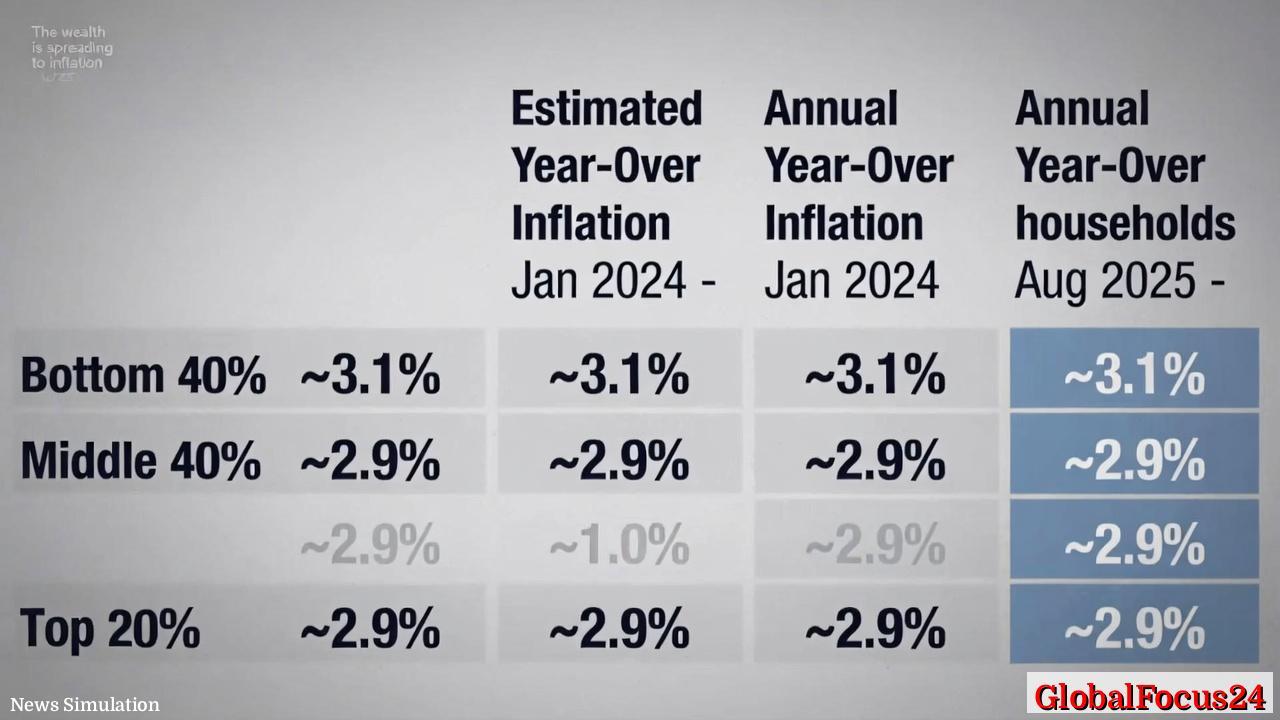
The latest Federal Reserve data underscore a widening problem: lower-income households are shouldering higher inflation than their wealthier counterparts. In the 40th percentile of income distribution, the year-over-year inflation rate has hovered around 3.1%, while the middle 40% and the top 20% have seen rates closer to 2.9%. While the gap may appear modest on a quarterly basis, the composition of spending that drives it makes the impact material for everyday life, policy, and regional economic comparisons.
Historical context: a long arc with short-term twists
Inflation in the United States has long differed across income groups, but the current pattern reflects structural elements that have persisted since the early recovery from the COVID-19 shock. One guiding principle is that lower-income households allocate a larger share of their budgets to essentials—rent or housing costs, utilities, food, transportation, and healthcare. When prices rise in these categories, families feel the squeeze more acutely because they cannot easily substitute toward cheaper services or scale back consumption without sacrificing basic needs.
Over the past two years, shocks to energy prices, supply chains, and housing markets amplified these dynamics. Rent, in particular, has proven more responsive to local conditions than to broad price indexes, creating pockets where the inflation rate among renters diverges from the national. Food prices, which comprise a significant portion of the budget for many households at the lower end of the income spectrum, have also trended higher thaninflation at times, driven by factors such as agricultural input costs, transportation, and shifts in demand.
The current data fit into a broader historical pattern: when inflation exceeds wage growth, low- and moderate-income households experience material declines in purchasing power. Conversely, higher-income households often see more budget flexibility and faster adjustments in spending patterns, which can dampen their measured inflation rate relative to the overall average.
Economic impact: real-world consequences beyond numbers
- Household budgets and consumption. A roughly 3.1% annual inflation rate for the bottom 40% translates into persistent pressure on monthly budgets. Even small year-over-year increases in rent or grocery costs can erode discretionary spending, affect savings rates, and influence decisions about housing, transportation, and healthcare.
- Housing markets and urban vibrancy. Rent and mortgage-related costs remain central to the inflation calculus for lower-income households. In many cities, including major metro areas across the Sun Belt and West Coast, tight rental markets and limited new supply keep housing affordability a focal point of consumer sentiment. When housing costs rise faster than wages, households may delay moving, reduce housing quality, or seek shared accommodations—outcomes with consequences for urban demographics and labor mobility.
- Transportation and energy sensitivity. Utilities and fuel expenses are frequently more burdensome for lower-income groups, particularly in regions with extreme weather or higher energy dependence. Energy price volatility can ripple through retail pricing for goods and services, further elevating the cost of essentials.
- Policy relevance and public programs. The disparity in inflation experiences across income groups informs debates over targeted relief measures, such as energy assistance, housing subsidies, or SNAP adjustments. Policymakers weigh the immediate needs of households facing higher inflation against longer-term goals like productivity, employment, and wage growth.
Regional comparisons: diverse landscapes of impact
- Coastal metro hubs versus inland regions. Coastal cities with high housing costs often exhibit elevated inflation pressures for renters, while inland areas with lower rent benchmarks may see more tempered increases. Yet regional supply chain disruptions and energy costs can complicate simple geographic judgments, producing pockets where low-income households experience outsized price movements.
- Energy-intensive states. States with heavy reliance on electricity and fuel for industry and households may experience more pronounced utility-driven inflation, especially during periods of energy-price volatility. In these places, even modest shifts in energy costs can disproportionately affect lower-income households that spend a larger share of income on utilities.
- Agricultural belts and consumer goods. Rural and semi-urban areas dependent on affordable food pricing may see inflation dynamics anchored in transport costs, farm input prices, and local labor markets. The result can be a layered effect where groceries and transportation combine to drive up the cost of living for the bottom 40%.
Interpreting the numbers: what the gap means for the future
- Price-wage dynamics. If wage growth accelerates in coming quarters, it could compress the inflation gap by expanding the income cushion of lower-income households. Conversely, if productivity gains lag behind price movements, the real income squeeze could persist.
- Monetary policy transmission. The Federal Reserve aims to balance inflation control with otherwise solid employment prospects. Inflation differentials by income group can influence expectations and consumer behavior, potentially affecting the effectiveness of policy prescriptions, such as rate adjustments, in a nuanced way.
- Inflation expectations and consumer psychology. Persistent above-average inflation for lower-income households can shape expectations about future price rises, influencing household saving behavior and spending timing. Central banks monitor such expectations closely as part of the broader inflation framework.
What to watch next: signals and policy levers
- Data granularity and timing. Improved breakdowns by income and region help analysts identify where relief or targeted measures could be most effective. Timely data release and consistent methodology will remain crucial for tracking how the bottom 40% navigates ongoing price pressures.
- Housing and rental markets. Any sustained movement in rental prices—especially in large urban centers—will likely keep the inflation gap salient. Policymakers may consider adaptive housing policies, aside from conventional monetary tools, to ease the rent burden if affordability remains a persistent issue.
- Social safety nets. Programs designed to cushion households during inflation spikes, including energy subsidies, food assistance, and housing support, can modulate the lived experience of price increases. The effectiveness of such programs often hinges on timely implementation and adequate funding.
A vivid picture of daily life amid rising costs
Imagine a working family renting a modest apartment in a mid-sized city. The family’s budget already stretches to cover multiple necessities: rent, utilities, groceries, commuting costs, and occasional healthcare needs. When energy bills spike for the winter, or when grocery prices rise due to supply chain hiccups, the family must decide where to cut—perhaps limiting nonessential purchases, negotiating transportation routes, or delaying planned upgrades. For those in the bottom 40%, such trade-offs are not abstract economic debates; they are daily realities that determine whether the stove stays lit, the rent is paid on time, and the children can participate in after-school activities.
The data underscore a broader public interest in the affordability landscape, not merely an abstract macroeconomic statistic. As inflation persists, the real-world consequences for families with tighter budgets become a focal point for civic life, media coverage, and community resilience efforts. Local governments and nonprofit organizations frequently respond with targeted outreach, while private-sector entities adjust product pricing strategies and promotional incentives to align with consumer capacity.
A note on measurement and interpretation
The inflation figures by income group illuminate important disparities, but they are one piece of a complex macroeconomic puzzle. Price indices aggregate diverse experiences and may reflect methodological choices, such as the weighting of household expenditures or the treatment of shelter costs. Analysts often cross-check with alternative metrics, such as personal consumption expenditures price indexes or specific shelter-cost measures, to build a more complete picture of how inflation unfolds for different households.
Additionally, regional price movements can diverge from national averages. Localized housing markets, weather patterns, and energy infrastructure all shape the lived inflation experience. Readers should view the income-based inflation gap as a lens into affordability challenges that may vary significantly from city to city or state to state.
Public reaction and the path forward
As inflation continues to command attention, communities respond with a blend of resilience and concern. Families adjust routines, workers seek wage adjustments in collective bargaining or negotiation, and policymakers explore targeted interventions to mitigate the most acute pressures. The conversation around inflation is unlikely to end soon, but understanding its uneven effects provides a foundation for thoughtful, evidence-based responses that protect vulnerable households while supporting broader economic stability.
In the months ahead, the persistence or evolution of the gap between lower- and higher-income inflation rates will be a key indicator of how well the economy is balancing price stability with inclusive growth. Stakeholders—from policymakers and business leaders to researchers and frontline service providers—will watch the data closely, interpreting shifts not only innumbers but in the daily experiences of households making ends meet.
Enduring takeaway: a nuanced inflation story
The newest Federal Reserve figures illuminate a familiar yet increasingly urgent story: inflation is not a monolith. For lower-income households, higher costs in housing, utilities, and groceries translate into a sharper erosion of purchasing power. For policymakers and communities, the challenge is to craft responses that stabilizes prices without dampening growth, while expanding support where it is most needed. The regional braid of housing markets, energy costs, and labor conditions means there is no one-size-fits-all remedy. But with precise data, targeted policy, and proactive community action, the nation can aim for a more equitable inflation trajectory—one that protects the most vulnerable without sacrificing overall economic vitality.