)
Japanese Investors Fueling US Markets Amid Global Rebalancing
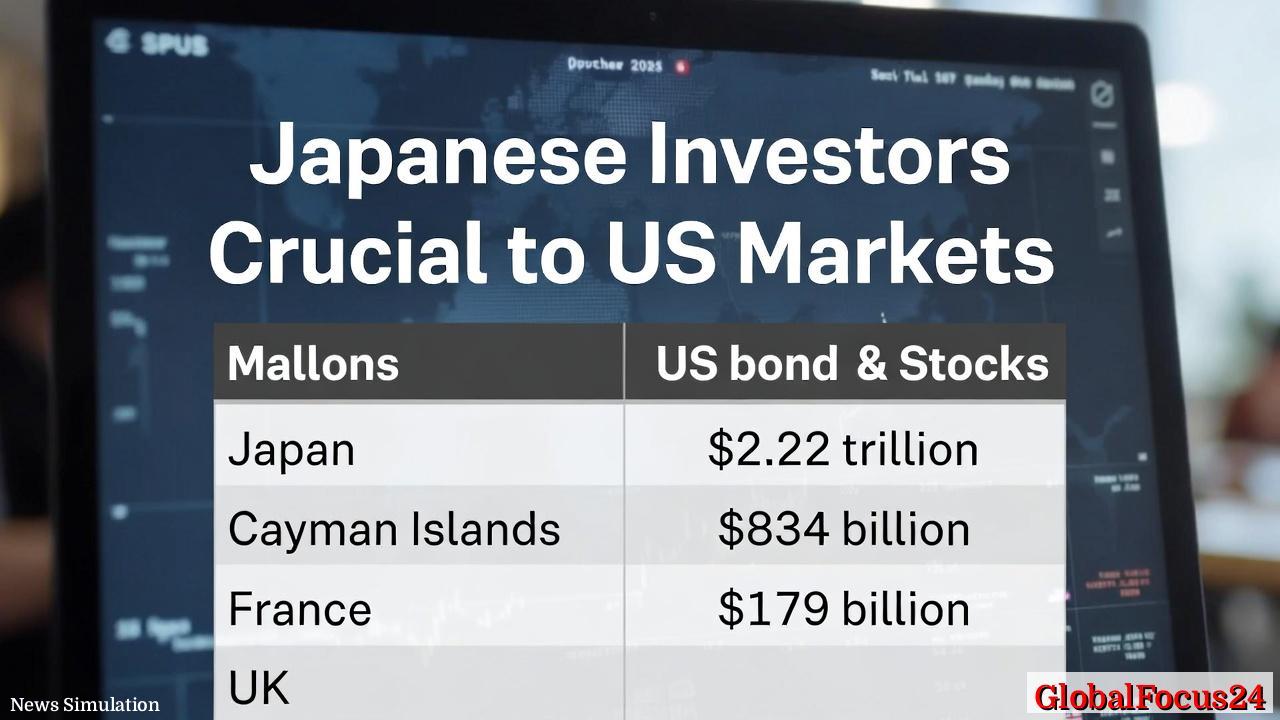
Japanese investors remain a pivotal force in the U.S. financial system, shaping bond and equity markets as cross-border capital flows adapt to evolving global conditions. End-of-2024 data show Japan holding a substantial $2.22 trillion in U.S. debt and equities, underscoring the depth of Tokyo’s exposure to American financial assets and the enduring appeal of U.S. securities to the Japanese investment community. This sizable portfolio sits near the top tier of foreign holders, reflecting decades of strategic asset allocation, currency considerations, and risk management practices that align with Japan’s broader macroeconomic objectives.
Historical context: a long arc of cross-border investment To understand the current scale, it helps to trace the historical arc of Japanese capital in the United States. After the postwar recovery, Japanese investors diversified from domestic banks and manufacturing-led growth into global capital markets in the 1980s and 1990s. The ensuing asset-trade cycles, currency movements, and regulatory shifts in both countries contributed to a complex, interwoven relationship. The Bank of Japan’s data capture a snapshot of this evolving partnership, revealing how Japanese institutions, pension funds, and insurers balance risk, return, and liquidity needs in a world of shifting interest rates and geopolitical dynamics.
In the decade leading up to 2024, Japan’s monetary policy normalization and the persistent search for yield among aging demographics influenced the allocation pattern. Japanese institutions favored a blend of U.S. Treasuries, corporate bonds, and large-cap equities, viewing U.S. assets as a reliable cornerstone for long-term portfolios. The resilience of American markets—marked by diversified sectors, deep liquidity, and strong corporate governance—continued to attract steady demand from Japanese buyers even as other regions experienced cycles of capital reallocation.
Current composition: a diversified U.S. exposure
- Bonds: U.S. Treasury securities and a broad array of corporate bonds form a central pillar of Japanese holdings. The demand for safe, high-quality debt instruments remains a key risk-management tactic, helping Japanese institutions stabilize balance sheets in the face of domestic yield constraints and aging population pressures.
- Stocks: U.S. equities offer exposure to technology, healthcare, consumer goods, and financial services, with large-cap names often dominating the allocation due to their global reach and governance standards. The lunchbox of growth and value strategies provides a balanced approach for Japanese investors seeking currency hedges and steady income streams.
- Liquidity and diversification: The U.S. market’s depth supports hedging strategies and efficient execution for large-ticket orders. Even as Tokyo adjusts its own policy stance, the ability to access broad market segments and obtain favorable pricing remains attractive for long-term institutional participants.
Economic impact: cross-border transmission and market efficiency The sizable Japanese stake in U.S. assets contributes to a network of capital flows that influence liquidity, pricing, and risk-sharing across financial markets. Several channels illustrate this impact:
- Liquidity provision: Large international holders can enhance market depth in both Treasuries and high-cap equities, especially during periods of volatility when liquidity is at a premium. This can help stabilize prices and reduce bid-ask spreads, benefiting a broad universe of market participants.
- Yield dynamics: Persistent demand for U.S. fixed income from Japanese investors supports benchmark yields, particularly on longer maturities. This demand interacts with domestic policy expectations in both countries to shape the global yield curve, influencing borrowing costs for corporations and governments alike.
- Currency considerations: The yen’s exchange rate, as part of broader currency management, interacts with U.S.-dollar-denominated assets. Advisors often incorporate currency hedging to manage translation risk, which can affect total portfolio returns and the attractiveness of U.S. assets for international buyers.
Regional comparisons: how Japan’s holdings stack up against peers When compared with other major holders, Japan’s position in U.S. assets remains substantial, though not unique. For context:
- Cayman Islands: With $834 billion in holdings, the Cayman Islands represent a major conduit for cross-border investment, buoyed by fund and private wealth structures. This channel reflects a different kind of market architecture—more centered on fund vehicles and domiciled investment strategies than on direct sovereign exposure.
- France: At approximately $179 billion, France sits as a diversified European participant with a long-standing financial relationship with the United States. French investors span banks, asset managers, and pension funds, contributing to a varied mix of U.S. securities.
- United Kingdom: The U.K. aggregates a sizable holdings footprint as well, supported by deep financial-market integration and a long tradition of transatlantic investment. London-based institutions are active in both U.S. Treasuries and equities, leveraging the global role of the dollar-denominated markets.
These regional comparisons illuminate how macroeconomic risks, regulatory environments, and tax structures shape cross-border flows. While Japan’s total is anchored by strategic asset allocation, other regions use different investment vehicles and regulatory frameworks to access U.S. markets. Collectively, these patterns reflect a resilient global demand for U.S. securities, even as capital strategies evolve in response to interest rate trajectories, inflation expectations, and geopolitical developments.
Strategic considerations for 2025 and beyond
- Market resilience: The U.S. market’s reputation for liquidity and innovation continues to attract long-term investors from Japan and around the world. As the global economy navigates cycles of growth and uncertainty, diversified exposures to U.S. assets help institutional portfolios weather volatility while pursuing sustainable returns.
- Policy influence: Monetary and fiscal policy developments in both the United States and Japan will influence cross-border investment behavior. Expectations for interest rates, inflation trajectories, and currency stability can shift the attractiveness of U.S. securities and the preferred mix of bonds versus stocks.
- Risk management: Currency hedging remains a critical tool for foreign investors. Expenses and effectiveness of hedging strategies can impact net returns, prompting ongoing optimization as market conditions evolve.
Public reaction and market sentiment Investors, financial professionals, and policymakers monitor foreign holdings as a barometer of confidence in the U.S. market’s long-term prospects. For many Japanese investors, the commitment to U.S. assets signals trust in solid corporate governance, transparent accounting standards, and the continuing global leadership of American financial markets. While capital flows can ebb and surge with global events, the underlying demand for high-quality U.S. securities tends to persist, reinforcing the cross-border relationship that has shaped both economies for decades.
Implications for investors and policymakers
- For institutional investors, understanding the scale and composition of international holdings informs risk budgeting, diversification strategies, and liquidity planning. The U.S. market offers a broad set of instruments, enabling tailored exposures aligned with risk tolerance and return objectives.
- For policymakers, the interdependence of global capital markets underscores the importance of stable, transparent regulatory frameworks. Coordinated communication, credible policy signaling, and robust market infrastructure contribute to a favorable investment climate that supports continued cross-border participation.
The future of Japanese participation in U.S. markets will likely hinge on a combination of macroeconomic stability, currency dynamics, and the evolving landscape of global investment vehicles. As technology-driven growth continues to redefine the U.S. corporate ecosystem, Japanese investors will continue to evaluate opportunities across sectors, from technology and healthcare to financial services and infrastructure. The result is a dynamic, ongoing dialogue between two advanced economies that benefits from a steady flow of capital, risk-sharing mechanisms, and shared commitments to open markets.
Conclusion Japan’s sizable holdings of U.S. bonds and stocks at the end of 2024 reflect a mature, multi-decade partnership that anchors broad-based participation in the U.S. financial system. This enduring linkage supports market liquidity, informs yield dynamics, and reinforces the global reach of American securities. As markets adapt to new policy landscapes and shifting risk perceptions, the Japanese investment community remains a cornerstone of cross-border finance, helping to sustain the momentum of U.S. markets while providing global diversification for Japanese institutions and pension funds.
Note: The information above is synthesized from publicly available data focusing on cross-border investment patterns and their macroeconomic implications.