)
Investors Piling into Gold Funds Amid Evolving Market Dynamics
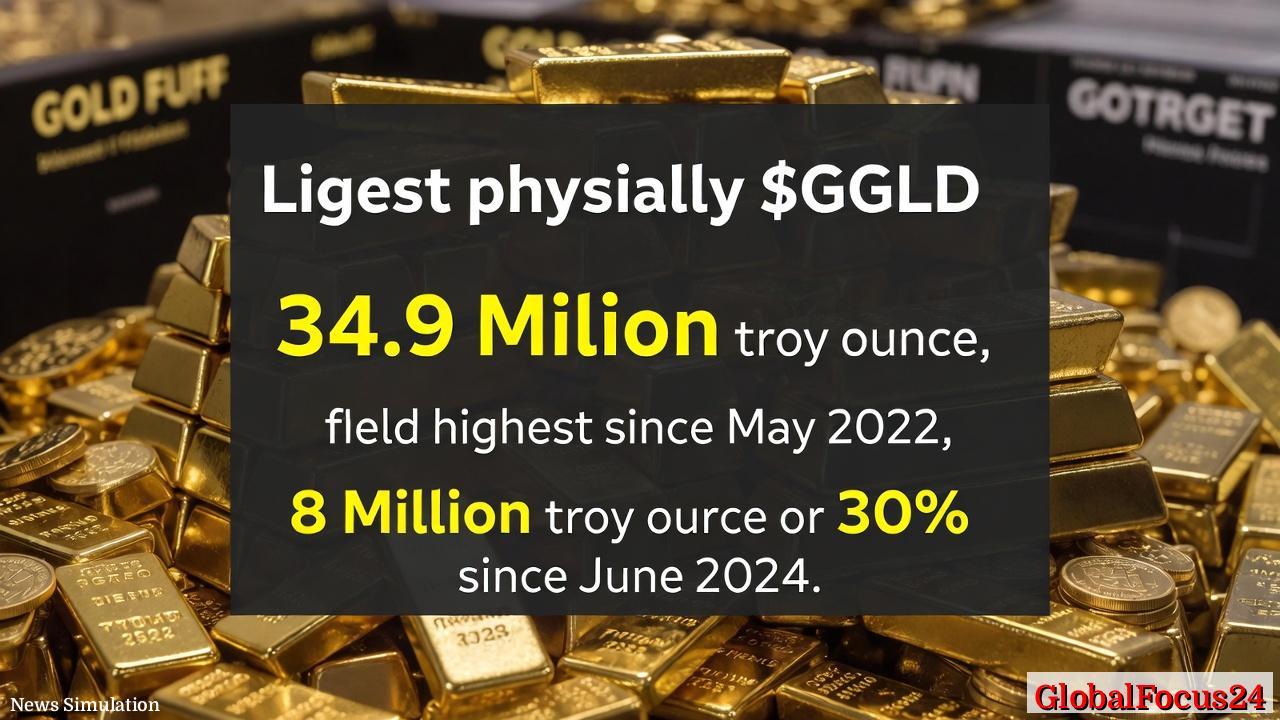
Gold funds reach new highs as investor demand accelerates, with the flagship physical gold-backed ETF reporting record-like inflows and holdings surging to levels last seen in early 2022. The latest numbers show the ETF’s gold holdings rising to 34.9 million troy ounces, signaling a sustained shift in investor preference toward bullion-backed vehicles even as markets wrestle with broader macro uncertainties.
Historical Context: A Century-Long Golden Thread Gold has long served as a barometer of risk and a hedge against uncertainty. In the modern era, exchange-traded funds that hold physical gold have allowed retail and institutional investors to participate in the metal’s price dynamics without the logistical complexities of storing bullion. The current accumulation, echoing patterns seen during previous bouts of market stress, underscores gold’s enduring appeal as a perceived safe haven and a diversifier within diversified portfolios.
The accumulated 34.9 million troy ounces mark represents a notable milestone for the fund, reflecting a multi-year accumulation trajectory. Since the middle of 2024, holdings have climbed by about 8 million troy ounces, a roughly 30% increase, illustrating a persistent shift in investor behavior. Market participants increasingly view gold as a stabilizing asset amid inflation concerns, geopolitical anxiety, and shifts in monetary policy that influence risk assets across equities, bonds, and commodities.
Economic Impact: Assessing the Ripple Effects A surge in physical gold fund holdings can influence several layers of the economy and financial markets:
- Price Signals and Liquidity: Rising demand for physical gold within exchange-traded funds tends to support near-term bullion prices, particularly when inflows come from broad-based investor bases rather than isolated institutional trades. The fungibility of gold, combined with the liquidity framework of ETFs, can translate into more efficient price discovery and tighter bid-ask spreads in the spot market.
- Portfolio Allocation Shifts: As investors allocate capital toward gold funds, capital flows may reduce exposure to other risk assets, such as equities tied to cyclical growth or high-yield debt. This reallocation can affect fund flows, performance benchmarks, and consequent risk-taking incentives across the broader investment landscape.
- Inflation and Real Rates: Gold’s appeal often strengthens when real yields are challenged or expectations for higher inflation persist. In this environment, the metal operates as a store of value that is not directly tied to corporate earnings or fixed-income coupons, providing a counterbalance to portfolios sensitive to inflation trajectories.
- Regional Impacts: In regions with elevated import exposure to precious metals, ongoing gold buying can influence trade balances and currency dynamics. Conversely, in markets where central banks accumulate or diversify reserves, coordinated or parallel demand for physical gold may reflect longer-term strategic positioning.
Regional Comparisons: How Markets Stack Up
- North America: In the United States, a long-standing consumer and institutional appetite for gold-backed funds persists, supported by a deep and mature ETF ecosystem. The current inflows align with a pattern of prudent diversification, where market participants seek to hedge macro risks without exposing themselves to specific equity risk factors.
- Europe: European investors have historically turned to physical bullion and gold-backed funds as a hedge against currency fluctuations and geopolitical uncertainty. The ongoing accumulation resonates with cautious sentiment and a desire to preserve purchasing power in an environment of relatively low nominal interest rates and evolving monetary policy.
- Asia-Pacific: The region presents a mixed picture, where demand for gold is influenced by cultural preferences, jewelry demand, and investment products. As central banks in Asia recalibrate currency reserves and contemplate diversification, gold funds can serve as a flexible instrument within broader portfolio strategies.
Market Dynamics: Why Now, and What It Means Several factors appear to be driving the current surge in gold holdings within the largest physical-backed ETF:
- Safe-Haven Demand: Periods of heightened geopolitical tension, inflation concerns, or macroeconomic uncertainty have historically boosted demand for gold as a hedge. The ETF’s rising holdings suggest that a broad base of investors continues to seek ballast in metallic form without sacrificing liquidity.
- Liquidity and Accessibility: The ETF structure offers a straightforward path to gold exposure, combining the safety of physical bullion with the ease of a financial instrument traded on major markets. This accessibility can attract a wider audience, from long-term savers to tactical traders.
- Diversification Considerations: As portfolios seek to manage drawdown risk, the role of gold as a non-correlated asset remains attractive. The current environment, characterized by the interplay of inflation expectations and interest rate trajectories, can magnify gold’s diversification benefits.
- Market Structure and Storage Efficiency: Advances in custody, auditing, and insurance within the ETF ecosystem have reinforced trust in physical-backed funds. Transparent reporting and robust vaulting standards contribute to investor confidence, reinforcing this asset class’s appeal during times of volatility.
Investor Sentiment and Public Reaction Public sentiment toward gold often mirrors broader risk-appetite cycles. Ass emphasize global economic shifts and potential policy recalibrations, investor conversations frequently center on balance sheets, risk budgets, and the role of non-yielding assets in preserving capital. The ongoing inflows to gold funds suggest that a wide range of market participants — from retirement accounts to sophisticated hedge strategies — view gold as a prudent complement to diversified holdings.
Technical Considerations: Reading the Tape From a market microstructure perspective, the accumulation in the ETF’s gold holdings may reflect symptoms of broader demand pressure in the bullion market. Analysts observe that rising ETF demand can translate into stronger price floors, particularly when other sectors exhibit volatility or downside risk. As with any commodity, price drivers include supply-demand dynamics, mining activity, jewelry demand, and macroeconomic indicators such as inflation data, exchange rates, and central-bank policy signals.
Historical Comparisons: Lessons from the Past Looking back, gold’s performance has often displayed resilience during episodes of uncertainty, with periods of heavy ETF inflows preceding or coinciding with sustained price strength. While past performance is not a guarantee of future results, the current trend aligns with a familiar narrative: investors seek liquidity-adjusted exposure to gold when traditional risk assets appear vulnerable or uncertain.
Strategic Takeaways for Investors
- Diversification remains a core objective. Gold-backed funds offer a practical avenue to diversify risk while maintaining exposure to a liquid, widely traded asset.
- Consider the horizon. Long-Term investors may view gold as a strategic hedge against inflation and monetary policy shifts, balancing potential near-term volatility with a stabilizing role over time.
- Monitor macro signals. Inflation trends, real interest rates, and geopolitical developments frequently influence gold’s risk-reward profile, informing decisions about allocation levels and rebalancing.
- Evaluate custody and costs. As with any physical-backed instrument, understanding storage, insurance, and management fees is essential to assessing total return potential.
Conclusion: A Persistent Asset in a Changing World The sustained rise in gold holdings within the leading physical-backed ETF underscores the metal’s enduring relevance in modern investment portfolios. As markets navigate a complex landscape of inflation pressures, rate expectations, and geopolitical nuance, gold continues to offer a compelling blend of liquidity, portability, and hedging strength. The 34.9 million troy ounces held by the ETF mark more than a statistical milestone; they reflect a widespread conviction that, in times of uncertainty, a dependable store of value can play a pivotal role in maintaining financial resilience.
Notes for readers and market observers emphasize that movements in gold funds do not operate in isolation. They interact with broader asset classes, currency dynamics, and policy decisions that shape risk and reward across the global economy. For investors constructing balanced portfolios, the current environment offers an opportunity to re-examine allocation strategies, ensuring that gold remains a thoughtfully integrated element in pursuit of long-term financial objectives.