Investor Sentiment Plunges as Fear and Greed Index Hits Lowest Level in Months
Extreme Fear Grips Financial Markets
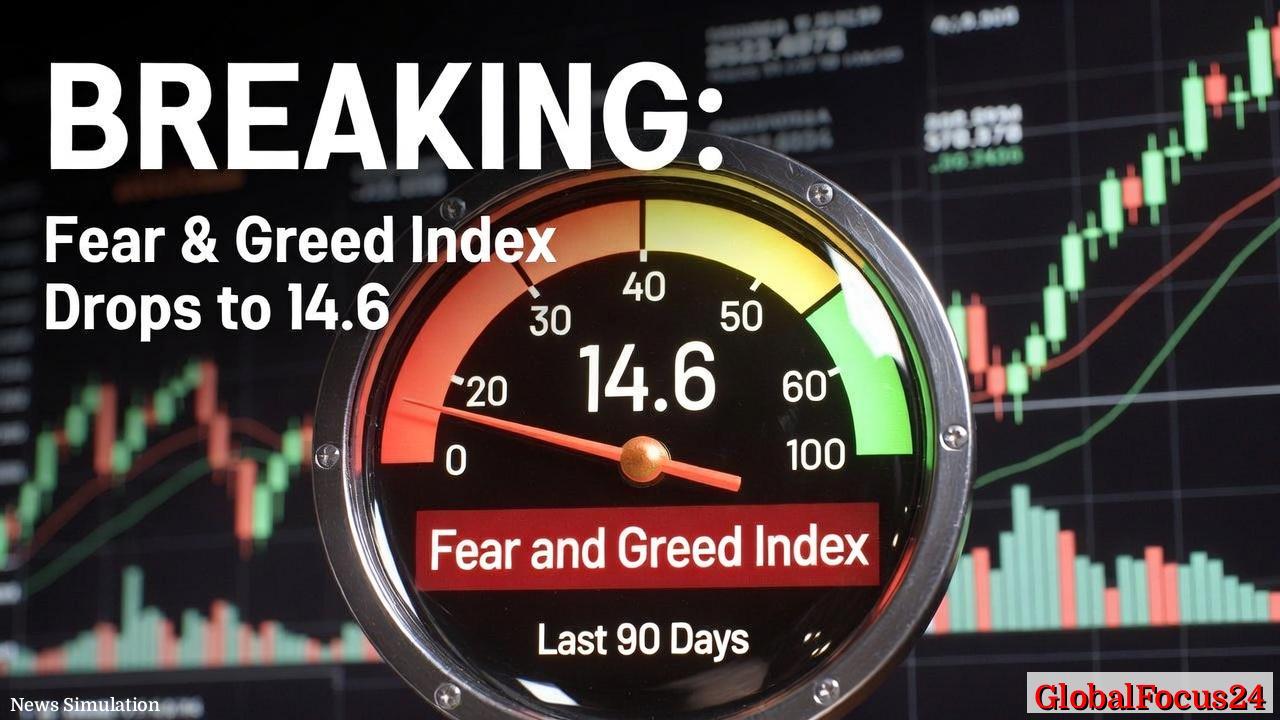
Investor sentiment across U.S. equity markets has reached a new low, with the Fear and Greed Index falling to 14.6, a sharp decline of 50.9 points since January. The reading not only places the index deep in the “extreme fear” territory but also marks its lowest level since November. This steep drop underscores rising market anxiety amid concerns over slowing economic growth, stubborn inflationary pressures, and volatile global conditions that have left investors seeking safety over risk.
In the past four years, similar low readings have been rare and often coincided with major market inflection points. Episodes in April 2025, following the “Liberation Day” sell-off, November 2025, and during the 2022 bear market all preceded either substantial rebounds or short-term rallies. Analysts are now closely watching whether current conditions will follow the same pattern or signal a deeper correction ahead.
Understanding the Fear and Greed Index
The Fear and Greed Index, popularized as a measure of market sentiment, aggregates seven key indicators: stock price momentum, market volatility, trading volume, put and call options activity, junk bond demand, safe-haven asset flow, and breadth of market performance. It ranges from 0 to 100, with lower values representing fear-driven markets and higher values indicating greed or excessive optimism.
At 14.6, the latest reading not only reflects widespread caution but also a potential overshoot to the downside in investor psychology. Historically, such extreme readings often precede short-term rebounds, as selling pressure becomes overextended and valuation metrics turn attractive for contrarian investors.
However, compared with 2022—when the index spent prolonged periods under 20—the current environment carries different dynamics. Then, inflation was accelerating at record levels, the Federal Reserve had just begun tightening interest rates, and energy prices were surging amid geopolitical uncertainty. Today’s fears appear more focused on an earnings slowdown, potential monetary policy fatigue, and global trade headwinds rather than systemic shocks.
Market Reaction and Volatility Surge
The decline in sentiment has been mirrored by renewed volatility across major benchmarks. The S&P 500 and Nasdaq Composite have each retreated from their late-February highs, while the VIX volatility index—known as Wall Street’s “fear gauge”—spiked above 27 this week, its highest level since last fall. Market breadth has deteriorated sharply, with defensive sectors such as utilities and consumer staples outperforming high-growth names in technology and discretionary segments.
Energy and financial stocks have also felt the strain. Oil prices dipped amid signs of weakening industrial demand, and regional banks continued to face margin pressures from a flatter yield curve. International markets echoed the mood, with European indices tracking similar declines and Asian markets showing mixed performance depending on currency dynamics and export exposure.
Strategists note that while liquidity remains stable, short-term asset reallocations are accelerating. Retail flows into money market funds hit a new quarterly record, suggesting that smaller investors are retreating into cash positions. Meanwhile, institutional players have scaled back risk exposure, seeking shelter in U.S. Treasuries and high-quality corporate bonds.
Historical Parallels: When Fear Turns to Opportunity
The Fear and Greed Index has long served as a barometer for crowd psychology—often turning most pessimistic just before markets begin to recover. For example, during the 2022 bear market, the index fell below 10 as inflation peaked and fears of a deep recession dominateds. Within six months, equities had staged a sharp rebound, driven by improving inflation data and resilient consumer spending.
A similar pattern unfolded in April 2025, when global equities sold off after geopolitical tensions and a brief economic contraction rattled confidence. The index dipped below 20, but by June, a broad-based rally had lifted the S&P 500 more than 8% as investors reassessed growth prospects and central banks signaled policy flexibility.
While past performance never guarantees future results, history shows that periods of extreme fear often coincide with buying opportunities for long-term investors. Yet timing remains difficult: recoveries following such sentiment troughs have varied in duration and intensity, depending on the severity of underlying economic factors.
Economic Context Behind the Decline
Several economic developments have contributed to the latest deterioration in sentiment. Growth data from early 2026 show a deceleration in consumer spending and softer industrial output, raising doubts about the strength of the post-2025 recovery. Inflation, while easing from 2024 highs, has remained above central bank targets, complicating policy decisions and weighing on household purchasing power.
At the same time, the Federal Reserve’s cautious stance on rate cuts has disappointed segments of the market expecting a faster easing cycle. Although inflation has cooled, wage pressures and housing costs have persisted, prompting investors to revise expectations for borrowing costs through mid-2026. These adjustments have translated into tighter financial conditions, slower credit growth, and weaker corporate earnings outlooks.
Across sectors, higher interest rates have exerted particular strain on real estate, manufacturing, and small-cap equities, which are more sensitive to financing costs. Technology firms, previously the market’s growth engine, have also faced fresh scrutiny over valuations and declining profit margins amid competitive market conditions.
Global Comparison: Diverging Sentiment Across Regions
The United States is not alone in its market unease, but its sentiment decline has outpaced that of many other regions. In Europe, investor confidence measures remain subdued but stable thanks to resilient job markets and ongoing government support for energy transition initiatives. Meanwhile, Asian markets have shown greater divergence: Japan has benefited from a weaker yen and supportive policy, while China continues to grapple with property sector stress and uneven consumer recovery.
Emerging markets, by contrast, have exhibited relative resilience as global investors seek undervalued opportunities outside established markets. Rising commodity prices, especially in Latin America and parts of Africa, have provided a cushion for local equities. Nonetheless, global capital flows remain highly sensitive to U.S. monetary policy, meaning any shift toward easing could quickly reverse current trends.
Investor Strategies Amid Extreme Fear
Investors facing such depressed sentiment are reevaluating strategies for both protection and potential opportunity. Defensive positioning—through low-volatility ETFs, dividend-focused funds, and Treasury securities—has become increasingly popular among both retail and institutional players. Others are taking a contrarian stance, arguing that markets have already priced in significant pessimism.
Financial advisers often point to diversified, long-term strategies as the best defense against emotional decision-making. History suggests that moments of widespread fear tend to produce favorable entry points for investors who can withstand short-term volatility. Still, risk management remains paramount, as macroeconomic surprises or renewed geopolitical tensions could further unsettle markets.
Notably, corporate insiders have begun modestly increasing share purchases, a trend some analysts interpret as a sign of confidence in longer-term fundamentals. Cash reserves among major corporations also remain high, potentially offering a buffer against economic downturns or a platform for opportunistic buybacks if conditions stabilize.
Looking Ahead: Signs of a Turning Point?
While sentiment remains deeply pessimistic, several indicators hint that the market could be nearing a transitional phase. Valuation multiples have compressed to multi-year lows in several sectors, and technical analysts note that recent declines are approaching key support levels that previously attracted institutional buying. The combination of subdued expectations and ongoing economic resilience could set the stage for a sentiment-driven rebound if upcoming data surprises to the upside.
Next week’s Federal Reserve communications, corporate earnings releases, and consumer confidence updates will test whether markets can stabilize. A modest improvement in any of these could help lift the Fear and Greed Index back toward neutral territory, signaling the potential beginning of a recovery phase.
For now, though, markets are dominated by caution. The plunge in sentiment to 14.6 serves as both a reflection of deep-seated investor anxiety and a reminder of how rapidly emotions can swing in times of uncertainty. Whether this fear marks the bottom of the current cycle or the prelude to deeper losses will depend on the delicate balance between policy, economic performance, and the enduring psychology of the market itself.