Institutional Selloff Leads U.S. Equity Outflows Despite Mixed Retail Backing
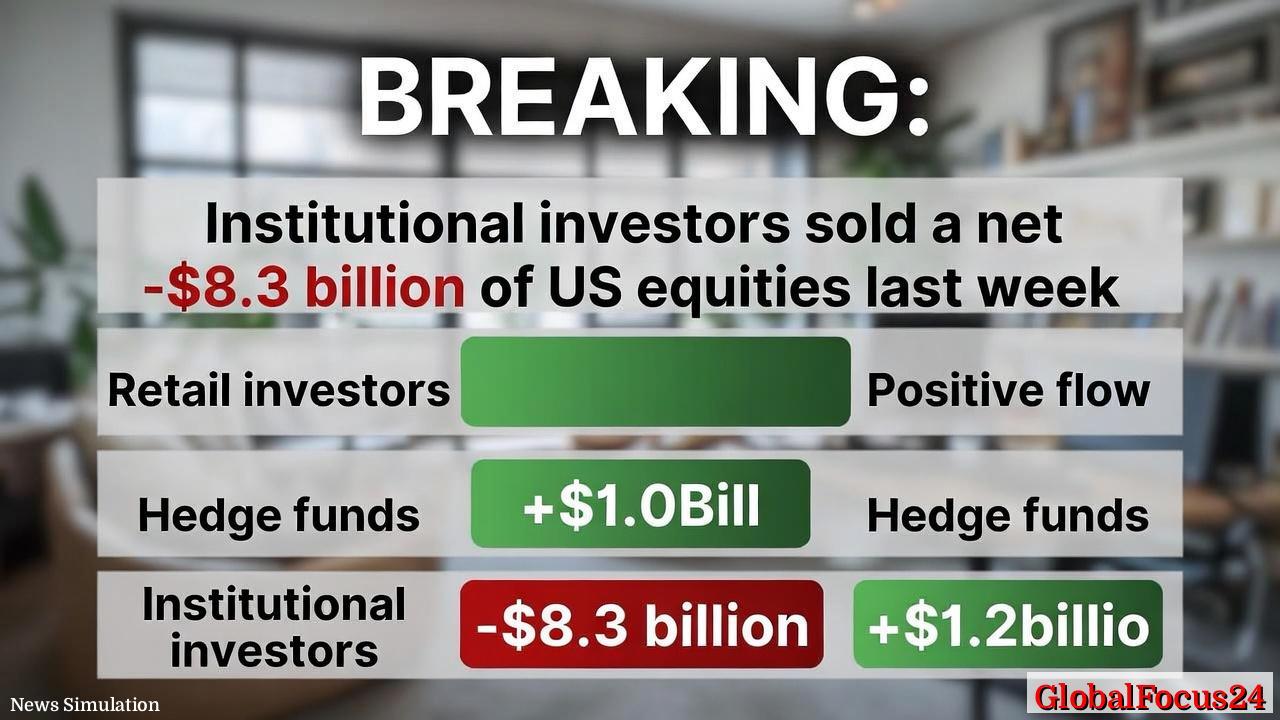
In a week defined by pronounced shifts in ownership, institutional investors emerged as the dominant force behind U.S. equity outflows. Bank of America’s latest weekly data show that institutional clients sold a net total of about $8.3 billion across stocks and equity exchange-traded funds (ETFs) from February 9 to February 13. This marked the third-highest weekly net sale on record since tracking began in 2008 and the second-largest in the most recent sequence of data points, underscoring a significant recalibration in large-holder positioning.
Background and historical context The institutional wave of selling arrives after a period of uneven market volatility and shifting macro signals. Historically, institutions—pension funds, endowments, sovereign wealth funds, and other large assets—have been the primary drivers of broad market flows due to their sizeable capital bases and governance structures that often compel long-term rebalancing or rapid responses to new information. The February episode fits into a longer arc of episodic outsized moves, where a single week of elevated outflows can reflect a confluence of risk management, liquidity considerations, sector rotations, and updates to macroeconomic outlooks.
Within this week’s framework, institutions were unequivocally the main catalyst for net selling in stocks and equity ETFs. The outflow from this group dwarfed activity from hedge funds and retail investors, who behaved more modestly in net terms. Hedge funds, for their part, posted net buying of approximately $1.2 billion, continuing a streak of purchases in eight of the last nine weeks. Retail investors also contributed positively, adding about $1.0 billion—their fifth consecutive week of net purchases. Yet these inflows from non-institutional participants were insufficient to offset the scale of selling from institutional clients, resulting in an overall net negative balance for the period.
Economic and market implications The scale of institutional outflows has several potential implications for market dynamics and investor sentiment. First, large-scale selling can exert downward pressure on broad indices, particularly if it coincides with negative macro surprises or risk-off trading environments. Second, persistent outflows from institutions may prompt a reassessment of benchmark allocations and glide paths for long-horizon portfolios, potentially accelerating moves toward cash, short-duration bonds, or alternative investments. Third, the relative strength of hedge funds and retail buyers during the same window suggests a bifurcation in market participation, with nimble, relative-value players taking advantage of volatility pockets while more traditional, long-duration institutions pull back.
From an economic lens, the outflows could reflect several macro considerations: shifting expectations on inflation trajectories, central bank policy paths, and growth prospects for major sectors. If investors perceive that inflation has peaked or that monetary tightening is nearing an end, risk assets often rally on relief. Conversely, renewed concerns about demand, supply-chain frictions, or geopolitical tensions can trigger renewed risk aversion and asset reallocation away from equities. The February week’s flows may be capturing such recalibrations in real-time, with institutions rebalancing toward segments deemed more resilient to evolving macro conditions.
Regional and sectorial context Regional comparisons illuminate how this week’s flows align with broader market patterns across different geographies. In the U.S., institutional selling on the equities front contrasts with pockets of strength in specific sectors, such as technology, healthcare, or energy, where stock-specific catalysts or earnings signals can prompt divergent fund movements. Across major markets, similar themes have emerged: institutions often lead the charge in response to domestic macro data, while hedge funds and retail participants maintain a more opportunistic or speculative posture.
Examining sector contributions to the week’s movements can yield insight into the drivers behind the net outflow. If selling concentrated in economically sensitive sectors—like cyclicals, energy, or financials—this could indicate traders repositioning for a slower-growth environment or recalibrating interest-rate expectations. Conversely, selective buying by hedge funds and retail buyers in tech or consumables could reflect a strategy to chase growth or value opportunities amid volatility.
Additionally, liquidity considerations remain important. When units of liquidity are scarce, even modest sized trades can move prices more than expected, amplifying the impact of institutional decisions. The February data release underscores how shifts in the balance of power among investor groups can translate into observable price dynamics in a short window.
Interpreting the four-week average context The note accompanying the data mentions four-week averages and the historical inclusion of certain ETFs prior to changes in methodology. This context matters for interpreting trends rather than a single week’s snapshot. Four-week averages smooth out temporary noise, offering a more durable signal of investor behavior. They can help distinguish between a one-off liquidity event and a sustained shift in sentiment or risk appetite. Analysts typically weigh these rolling figures alongsideweekly numbers to assess whether outflows reflect a transitory repositioning or the onset of a longer-term trend.
Comparative performance and regional benchmarks To place the February outflow in a broader frame, investors often compare domestic flows to regional benchmarks and international equivalents. For example, if U.S. institutions are selling while European or Asian institutions maintain or increase exposure, that divergence can highlight country-specific risk factors or differing macro trajectories. Regional benchmarks—such as domestic equity indices, sector rotation indexes, or government bond yields—provide context for whether cash being reallocated within equities is being redirected toward higher quality equities, defensive sectors, or alternative assets.
What investors should watch next
- Monitor institutional flow patterns: The persistence or reversal of wholesale institutional selling can signal the near-term direction of major indices. If institutional outflows abate or turn into inflows, it may indicate improving market breadth or a shift in risk sentiment.
- Track hedge fund and retail activity: The continued net buying by hedge funds and retail investors can provide a counterbalance to institutional pressure. Observing which sectors, regions, or factors these groups favor can offer clues about the evolving market narrative.
- Assess macro indicators: Inflation data, wage trends, consumer spending, and central bank guidance will influence risk appetite. A clear path for policy normalization or a surprise in macro data can prompt rapid reallocation by large asset owners.
- Evaluate liquidity and volatility signals: Periods of elevated volatility often accompany large outflows. Keeping an eye on volatility indices and liquidity metrics can help investors gauge potential price swings and risk management needs.
Historical perspective on institutional flows Historically, institutional investor behavior has often presaged broader market moves, given their scale and the strategic nature of their allocations. Large, institution-led rebalancing can reflect portfolio managers’ interpretations of earnings cycles, sector rotations, or risk factors such as valuation dispersion and earnings resilience. Over time, episodes of outsized selling or buying by institutions contribute to observable shifts in market structure, including changes in liquidity provision, bid-ask spreads, and price discovery dynamics.
In this week’s context, the outsized net selling by institutions contrasts with more measured activity from hedge funds and retail participants. The divergence underscores how different investor cohorts respond to the same macro environment, and it highlights the importance of a diversified approach to understanding market movements. For analysts and readers, this dynamic serves as a reminder that the market is a tapestry of distinct voices, each weighing risk and reward through its own lens.
Regional cost considerations and market structure From a cost perspective, large-scale trading by institutions often involves sophisticated execution strategies to minimize market impact. Techniques such as algorithmic slicing, passive indexing, and careful sequencing of trades help mitigate adverse price movements. However, even well-planned, instrumented selling can leave a footprint on liquidity and price levels, particularly in less liquid segments. The February data point might therefore reflect both strategic behavior and real-time market reactions, with implications for future liquidity provision and market depth.
Sustainability and long-term implications Long-term investors increasingly weigh environmental, social, and governance (ESG) criteria, as well as macro resilience, when rebalancing portfolios. While the immediate week’s data focus on net flows, the broader trend toward sustainable investing continues to influence asset allocations. Institutions with longer investment horizons may tilt toward higher-quality equities, resilient sectors, or diversified exposure to fixed income and real assets, balancing growth with risk management.
Public reaction and market psychology Public sentiment during periods of notable institutional selling can run the gamut from cautious to anxious. News outlets and market commentators may frame such flow patterns as signals of fading confidence or as typical rebalancing activity. In reality, a mix of explanations—from portfolio optimization and risk controls to client withdrawal dynamics and fund mandate constraints—often underpins these moves. In this week’s environment, observers might perceive a sense of urgency among institutional managers, even as hedge funds and retail buyers demonstrate a steadier, opportunistic approach.
Implications for investors and financial professionals
- For individual investors, the underlying message is not to chase one week’s moves but to consider your own risk tolerance and long-term goals. Diversification, disciplined rebalancing, and a clear investment thesis remain essential.
- For financial professionals, understanding the drivers of institutional flows can inform client communications, risk management strategies, and portfolio construction decisions. Staying aligned with liquidity considerations and market microstructure helps navigate periods of pronounced outflows.
- For policymakers and market observers, flow data offer a window into the evolving balance of risk appetite and market resilience. While not a direct signal for policy action, they contribute to a broader understanding of financial stability and market functioning.
Conclusion The latest weekly data underscore a pivotal moment in market dynamics, with institutional investors accounting for the bulk of net selling in U.S. equities and equity ETFs. The magnitude of the outflows, set against a backdrop of hedge fund buying and continued retail demand, paints a nuanced picture of a market negotiating a complex mechanical and psychological landscape. As investors await forthcoming earnings, macro data releases, and central bank signals, the direction of flows will remain a critical barometer of risk appetite and market breadth in the months ahead.
Note: Data reflect net flows in stocks and equity ETFs for the week of February 9–13, with four-week average context and historical methodology considerations noted.