U.S. Labor Market Growth Tilts Sharply Toward Health Care and Social Assistance as Other Industries Lag
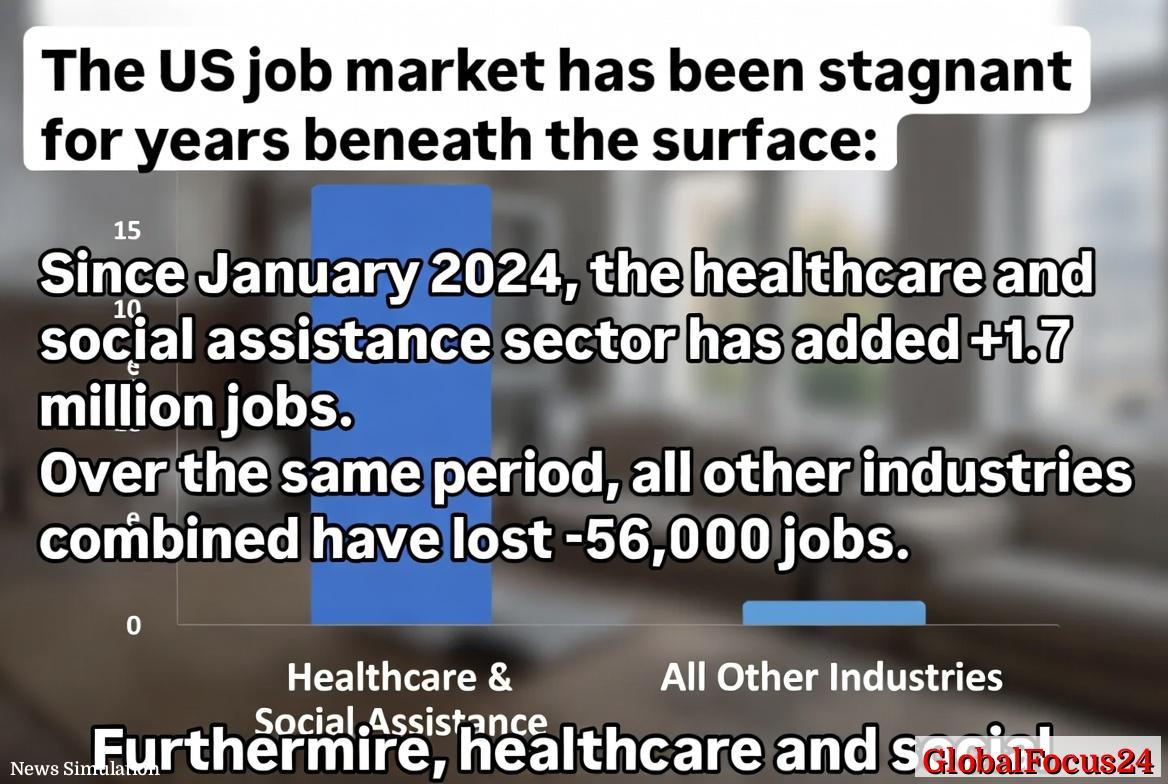
The U.S. labor market has become increasingly dependent on health care and social assistance for job growth, with the sector adding 1.7 million jobs since January 2024 while all other industries combined have lost 56,000 jobs over the same period. The imbalance has become even more pronounced since December 2024, when health care and social assistance added roughly 855,000 jobs as the rest of the private sector shed 322,000 positions.
Health Care Becomes the Main Engine of Hiring
The latest labor figures underscore a labor market that is no longer expanding evenly across industries. Instead, hiring has concentrated in hospitals, outpatient centers, nursing facilities, home health agencies, and related social services, while much of the private economy has struggled to maintain momentum. The private sector excluding health care has been losing an average of 21,500 jobs per month since December 2024, a pace that points to broad softness outside one of the economy’s most essential service areas.
That concentration matters because health care and social assistance are not only adding jobs in large numbers, but also anchoring overall employment growth at a time when other sectors are flat or shrinking. For employers, workers, and local economies, this means the labor market’s health increasingly depends on demographic demand rather than on cyclical business expansion.
Senior Care Employment Surges
One of the strongest pockets of growth has been senior care. Senior care roles have risen 18 percent since January 2020, far outpacing the 4 percent growth seen across all other industries. The gap reflects a long-running demographic shift: the population is aging, the number of older adults needing daily support is rising, and care delivery is moving from hospitals toward home-based, assisted living, and long-term care settings.
This trend has deep historical roots. The modern U.S. health care labor market has long expanded in response to population growth, medical advances, and insurance coverage changes, but the current cycle is different because it is driven by aging rather than by a temporary boom in consumer spending or construction. Senior care, in particular, has become a durable labor engine because demand tends to rise regardless of the broader business cycle.
Why The Gap Is Growing
Several forces explain why health care is outpacing the rest of the economy. An aging population is increasing the need for nurses, aides, therapists, and support staff. Chronic conditions require more frequent treatment and monitoring. At the same time, much of the economy outside health care has faced slower demand, tighter margins, and cautious hiring.
The result is a labor market split between recession-like weakness in some industries and sustained expansion in others. Manufacturing, business services, retail, and parts of transportation have each faced different pressures, but the broad pattern is the same: many employers are reluctant to add staff, while health care providers continue to hire because patient demand does not pause.
That dynamic also helps explain why the labor market can appear stronger onnumbers than it feels in many communities. A growing health care sector can lift total employment even when several other major industries are losing jobs.
Regional Effects Across The U.S.
The labor-market divide is playing out differently across regions. States with large hospital networks, aging populations, or major senior living markets are seeing stronger employment gains than areas tied more heavily to manufacturing, logistics, or office-based services. Coastal states and parts of the Sun Belt have benefited from steady demand for home health and assisted living, while some Midwest and industrial regions have experienced flatter private-sector hiring outside medical services.
Regional differences also reflect local demographics. Communities with larger retiree populations tend to need more aides, caregivers, and long-term care staff. That can support payroll growth even when broader local business activity softens. By contrast, places dependent on construction, exports, or corporate hiring have less of a natural cushion.
The pattern is especially visible in metro areas with large medical systems, where hospitals and related employers now carry more weight in employment totals than they did a decade ago. In smaller towns, by contrast, a single nursing home, assisted living campus, or health network expansion can noticeably affect local job counts and tax revenue.
Economic Impact Beyond Payrolls
The rise in health care hiring has implications well beyond the labor market. More jobs in hospitals, senior care, and social assistance increase household income and support local spending on housing, food, transportation, and services. They also generate demand for suppliers, from medical equipment firms to laundry services and commercial cleaning companies.
At the same time, the sector’s growth places pressure on employers to recruit and retain workers in jobs that are often physically demanding and relatively low paid. Staffing shortages can raise labor costs, squeeze margins, and increase turnover. For state and local governments, the sector’s expansion can mean stronger payroll tax bases but also higher public spending, especially when Medicaid-funded long-term care is a major employer.
There is also a productivity dimension. A labor market leaning heavily on health care can sustain employment, but it may not generate the same broad-based output gains as industries with rapid efficiency improvements or high capital investment. That does not make the jobs less important; it simply means the composition of growth matters as much as the total number of jobs added.
A Long-Term Structural Shift
The latest figures fit a broader historical pattern: when healthcare is excluded, the U.S. labor market has been shrinking for years. That does not mean the economy is in outright collapse, but it does signal that the strongest sources of job creation have become increasingly narrow. The current cycle resembles a structural adjustment more than a short-term fluctuation.
In past decades, broad hiring was often driven by manufacturing booms, construction cycles, retail expansion, or business investment. Today, the most reliable source of employment growth is care work tied to aging and medical need. That shift is likely to persist because the underlying demographics are not temporary. The baby-boom generation is moving deeper into retirement age, and demand for health-related services is likely to keep rising even if overall economic growth slows.
For employers and policymakers, the challenge is how to support a sector that keeps growing while also encouraging job creation in other parts of the economy. For workers, the message is clearer: health care and social assistance remain among the most resilient sources of employment in an otherwise uneven labor market.
What The Numbers Mean Going Forward
The gap between health care and the rest of the private sector offers an important signal about the direction of the U.S. economy. On one hand, continued job growth in essential care industries provides stability and helps prevent a broader employment downturn. On the other, the weakness outside health care suggests that much of the labor market is still struggling to regain its pre-2024 momentum.
If current trends continue, health care will remain the dominant source of payroll gains, while other sectors may need stronger consumer demand, lower borrowing costs, or improved business confidence before hiring broadens again. For now, the evidence points to a labor market increasingly shaped by one powerful force: the aging of America and the steady rise in demand for care.