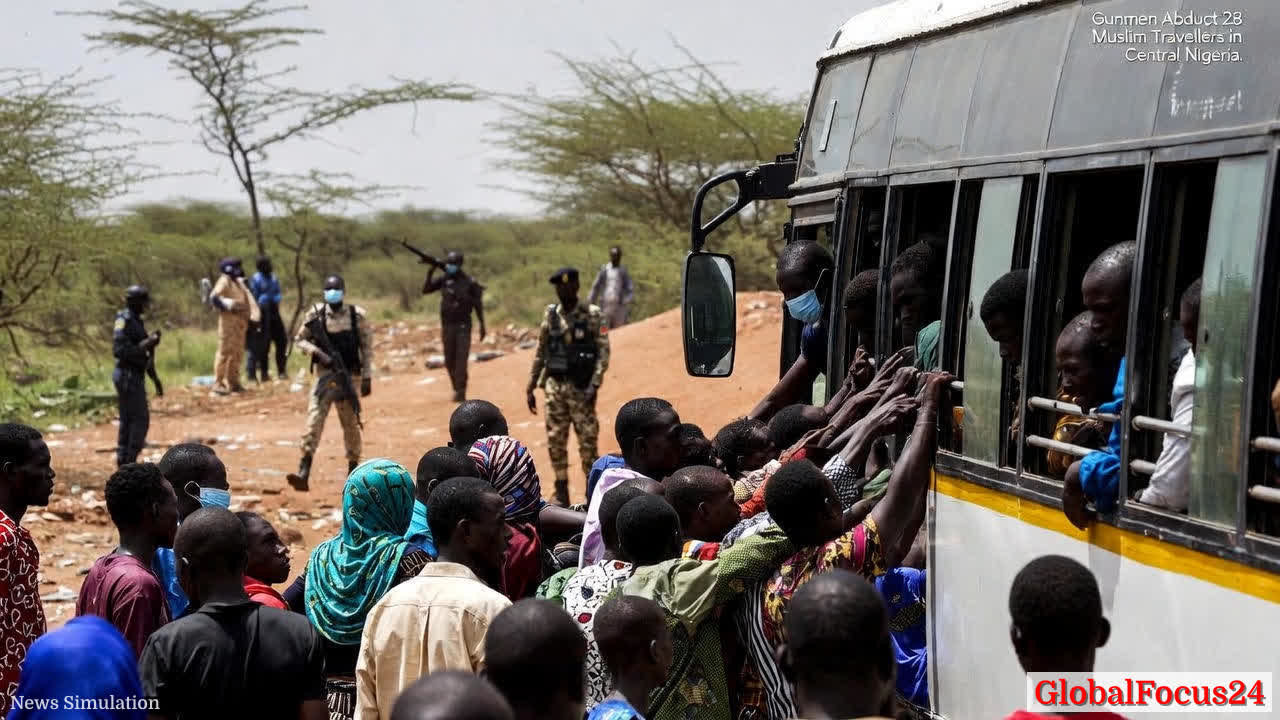
Gunmen Abduct 28 Muslim Travellers in Central Nigeria, Triggering Regional Security Alarm
In a violent turn of events that underscores Nigeria’s ongoing security challenges, armed assailants abducted 28 travelers in the central Plateau state as they journeyed toward an annual Islamic event. The victims, which included women and children, were ambushed on a bus late Sunday night while the vehicle was traversing between rural villages. Police officials confirmed the incident and said that security assets have been deployed to the area in an effort to locate the abductees and secure their safe release.
Context and chronology of events
The Plateau incident adds to a troubling pattern of mass abductions that has emerged across parts of northern and central Nigeria over the past several years. In many cases, criminal networks operating under the local label of bandits have relied on ransoms to fund their operations, leading to a surge of kidnap-for-ransom incidents targeting travelers, students, worshippers, and market-goers. The Plateau abduction occurred just days after Nigerian authorities announced the release of the remaining 130 individuals—students and teachers—from a separate mass kidnapping at a Catholic boarding school in Niger state. The juxtaposition of these events highlights both the persistence of insecurity and the complexity of responses required to curb it.
Officials have not publicly identified the perpetrators in the Plateau case, and ongoing investigations are expected to determine whether this incident aligns with the broader banditry spectrum, a conflict economy characterized by opportunistic targeting of soft targets and ransom-driven negotiation tactics. The police statement emphasized that the security response includes reconnaissance, targeted patrols, and collaboration with local communities to gather actionable intelligence, while also mobilizing resources across neighboring districts that share transport corridors used by travelers during peak religious or seasonal travel periods.
Historical backdrop
To understand the current threat landscape, it is essential to recognize Nigeria’s long arc of insecurity that intersects with geographic, economic, and social factors. The country’s north-central and northeast regions have experienced recurrent violence tied to multiple drivers: organized crime networks, ethno-religious tensions, competition over scarce resources, and grievances tied to governance and service delivery. The rise of kidnapping for ransom as a monetization strategy has intensified after periods of economic stress and arms proliferation in neighboring regions. Plateau state, with its mix of rural communities, agrarian economies, and movement corridors linking major cities, has become a focal point for such activity, even as security forces strive to adapt with intelligence-led operations.
Economic impact and human cost
The economic repercussions of such abductions ripple through multiple layers of society. Families endure immediate trauma and, in many cases, long-term financial strain as ransom demands place a heavy burden on households. Local businesses along transport routes may experience reduced traveler traffic, contributing to slower commerce and a chilling effect on regional mobility. For communities dependent on seasonal religious and cultural events as economic catalysts, disruptions to travel can translate into lost income, missed opportunities for trade, and heightened security costs for organizers and pilgrims alike.
On a broader scale, recurrent kidnappings divert resources from development priorities. Governments must balance criminal justice responses with social investments—education, training for security personnel, and community-based programs designed to deter violence and improve local resilience. The Plateau incident underscores the ongoing need for coordinated security approaches that combine patrols, intelligence sharing, and protection of vulnerable populations during peak travel periods linked to religious, cultural, or market activity.
Regional comparisons
Nigeria’s security situation exhibits notable regional variation. In the north-east, jihadist groups have sustained a prolonged insurgency, drawing international attention and prompting military and humanitarian responses. In the north-central belt, including Plateau state, banditry and kidnappings targeting travelers, traders, and worshippers have become more pronounced. Southern regions have faced their own security dynamics, often tied to political and economic shifts rather than mass abductions of the scale seen in the central zones. Analysts stress that localized security strategies must be tailored to each area's unique threat landscape, even as national authorities strive for a cohesive framework to counter criminal networks that operate across state lines.
Public reaction and policy responses
Public sentiment in affected communities typically mixes concern with resilience. Parents, religious groups, and local leaders frequently call for enhanced protection along major travel routes, better intelligence-sharing between security agencies, and swift responses to ransom demands that fuel criminal economies. National authorities have indicated a commitment to adjusting security tactics, including deploying trained forest guards to secure remote areas and forests used as hideouts by criminals. This approach aims to supplement existing military and police efforts by extending coverage into hard-to-reach environments where criminal groups often find temporary sanctuaries.
From an international perspective, Nigeria’s security challenges have intermittently attracted external attention and diplomatic dialogue. While such focus can raise the profile of the country’s security needs, it also places additional pressure on policymakers to demonstrate tangible progress in safeguarding civilians and restoring normalcy to affected regions. The government maintains that security measures are being calibrated to protect all communities, including minority groups and travelers, without politicizing safety operations.
Operational and tactical considerations
Key operational questions in the aftermath of the Plateau abduction include the following considerations:
- Intelligence and on-the-ground coordination: How quickly can security forces triangulate intelligence from multiple sources to locate and recover hostages, and how will they coordinate with local authorities and communities who hold critical local knowledge?
- Transportation corridors and risk management: Which routes and times present the highest risk, and what measures—such as convoy protections, transit monitoring, or temporary route suspensions—can reduce exposure without unduly disrupting essential travel?
- Coordination with humanitarian networks: How can relief organizations assist without compromising safety, ensuring families receive timely information while protecting sensitive data about hostages and families?
- Negotiation dynamics and legal frameworks: What are the legal and ethical boundaries surrounding ransom negotiations, and how do authorities balance the imperative to resolve incidents with the risk of incentivizing further abductions?
The road ahead: security enhancements and preventative measures
Looking forward, several measures are likely to feature prominently in Nigeria’s ongoing security strategy. These include strengthening intelligence-sharing arrangements among federal and state agencies, expanding presence along vulnerable transport corridors, and deploying specialized units trained to respond to mass-abduction scenarios. Training for local communities on situational awareness and safe travel practices can also play a critical role in early detection and rapid reporting of suspicious activity. Additionally, investments in road infrastructure, lighting, and communications can improve overall security posture and reduce vulnerabilities that criminals exploit.
Societal resilience and community engagement
Beyond police and military actions, the engagement of civil society, religious organizations, and community leaders remains vital. When communities participate in early-warning networks, report sightings of suspicious groups, and support families affected by violence, a more holistic approach emerges. Efforts to provide psychosocial support to victims and their families are essential, as the emotional and psychological toll of abductions can persist long after hostages are released or recovered. Media coverage that emphasizes factual reporting, avoids sensationalism, and centers on survivor stories can help maintain public awareness without perpetuating fear.
Historical parallels and lessons learned
Historically, countries facing episodic mass kidnappings have benefited from multi-layered security reforms that combine deterrence with community integration. For Nigeria, this translates into an approach that pairs robust law enforcement with social programs designed to address underlying vulnerabilities—economic deprivation, youth unemployment, and perceptions of government neglect—that can contribute to criminal networks’ capacity to recruit. While no single intervention guarantees protection, a cohesive strategy that links intelligence, mobility management, and community resilience has demonstrated measurable reductions in abductions in various regional contexts around the world.
Conclusion (not a formal verdict)
The Plateau abduction of 28 travelers is a stark reminder that insecurity remains a defining challenge for central Nigeria. While authorities mobilize resources to rescue those taken and to dismantle criminal networks, communities must remain vigilant and informed, and policymakers must continue refining strategies that preserve civil liberties while enhancing public safety. The incident sits within a broader tapestry of Nigeria’s security landscape—one that requires sustained, evidence-based actions, regional collaboration, and a recommitment to protecting the everyday movements of people who rely on transport corridors for work, faith, and family.
Note on regional dynamics and global context
As Nigeria navigates this complex security environment, regional comparisons offer valuable perspectives. Neighboring countries facing similar threats have emphasized a blend of intelligence-driven policing, economic development, and community partnerships to disrupt criminal supply chains. While regional contrasts exist, the shared objective remains clear: to reduce the appeal and profitability of kidnapping as a criminal enterprise, restore confidence in mobility and public life, and ensure that social and economic activities can proceed with minimal disruption.
Final observations
Security operators, policymakers, and communities will closely monitor the Plateau situation as it unfolds. The immediate priority is the safe recovery of the abducted travelers, followed by transparent reporting on the circumstances of the incident and the steps taken to prevent recurrence. In the longer term, Nigeria faces the ongoing challenge of balancing security with civil liberties, fostering resilience, and building a sustainable framework for protecting travelers and vulnerable populations across diverse regions. Public engagement, proactive risk assessment, and disciplined, proportionate responses will be essential components of any effective strategy moving forward.