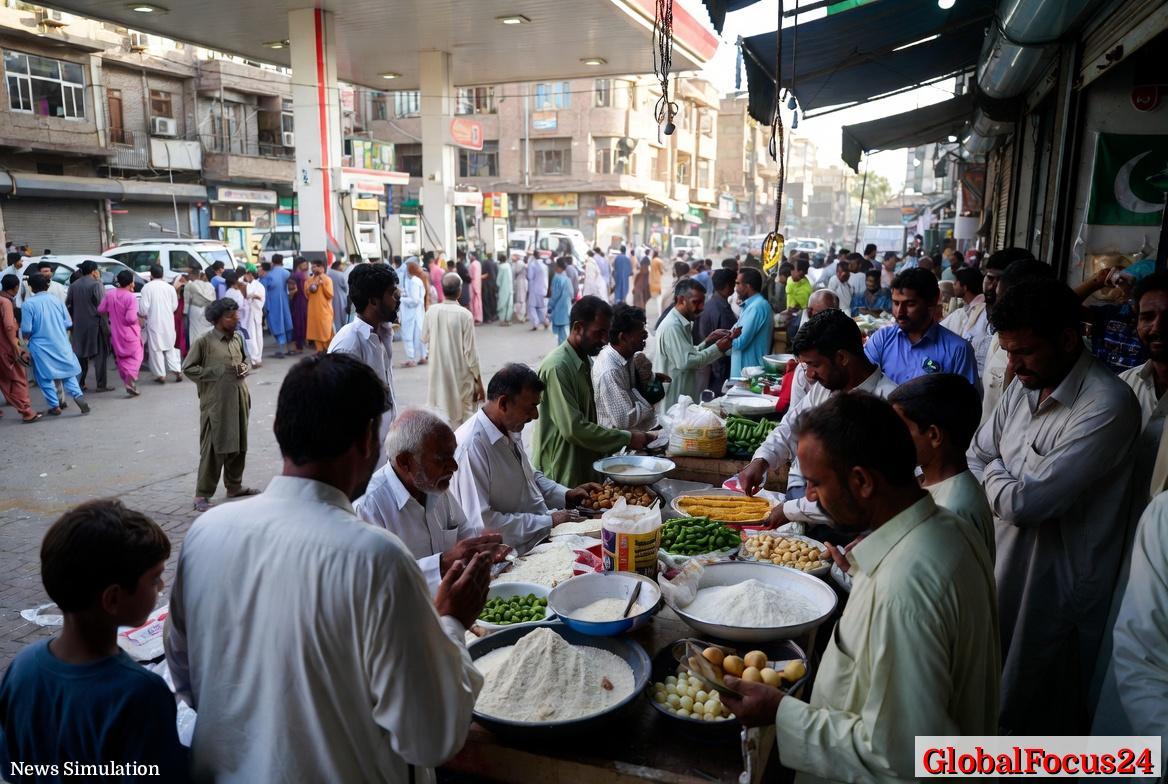
Pakistan Faces Rising Fuel and Food Prices Amid Gulf War Pressures
Mounting Costs Ripple Across Pakistan’s Economy
Pakistan is grappling with a sharp rise in fuel and food prices as the ongoing Gulf conflict disrupts global energy markets and trade flows. The surge is being felt across urban centers and rural communities alike, intensifying inflationary pressures in a country already navigating economic fragility.
Petrol and diesel prices have climbed steadily in recent weeks, driven by higher international crude oil benchmarks and increased shipping costs through key maritime routes. Pakistan, which imports a significant share of its energy needs, has little insulation from global price swings. The result has been immediate: higher transportation costs, more expensive agricultural inputs, and rising prices for everyday essentials.
Food inflation, already a persistent concern, has accelerated further. Staples such as wheat flour, cooking oil, and pulses have seen noticeable price increases in local markets. Traders cite higher freight charges and currency depreciation as contributing factors, while consumers report shrinking purchasing power and growing anxiety about household budgets.
Gulf Conflict Disrupts Energy Supply Chains
The Gulf region plays a pivotal role in global energy supply, and any instability there reverberates worldwide. Shipping lanes have become more volatile, insurance premiums for cargo vessels have risen, and some shipments face delays or rerouting. These disruptions translate into higher landed costs for importing countries like Pakistan.
Historically, Pakistan has relied on energy imports from the Middle East to meet domestic demand. Even minor disruptions in the region have previously led to spikes in local fuel prices. During past conflicts in the Gulf, similar patterns emerged, with inflation rising and economic growth slowing due to increased input costs.
This time, the impact is compounded by a tight global energy market. Limited spare production capacity and strong demand from recovering economies have left little room to cushion price shocks. As a result, Pakistan’s import bill is swelling, putting pressure on foreign exchange reserves and the national currency.
Food Prices Climb Alongside Fuel
The connection between fuel and food prices is particularly visible in Pakistan’s agricultural sector. Diesel is a key input for irrigation, transportation, and harvesting. As fuel costs rise, so too do the expenses associated with bringing crops to market.
Farmers report higher costs for fertilizers and pesticides, many of which are imported or tied to global commodity prices. These increases are often passed on to wholesalers and retailers, ultimately reaching consumers. In urban areas, food vendors and small businesses are adjusting prices to cope with higher overheads, while in rural regions, the burden is felt through reduced margins and limited access to affordable inputs.
The impact is uneven but widespread. Lower-income households are especially vulnerable, as a larger share of their income is spent on food and energy. For many families, dietary choices are narrowing, and discretionary spending has been cut back.
Economic Implications and Inflationary Pressures
Pakistan’s economy is highly sensitive to external shocks, and the current situation underscores that vulnerability. Rising import costs are widening the trade deficit, while inflation is eroding real incomes. Policymakers face a delicate balancing act: managing inflation without stifling economic activity.
Central bank measures, such as interest rate adjustments, can help contain inflation but may also slow investment and growth. Meanwhile, government subsidies on fuel and essential commodities can provide temporary relief but strain public finances.
The ripple effects extend beyond households. Industries reliant on fuel—such as transportation, manufacturing, and logistics—are experiencing higher operating costs. Some businesses are passing these costs on to consumers, while others are absorbing losses, reducing profitability and potentially affecting employment.
Diplomatic Gains Offer Limited Relief
Pakistan’s diplomatic engagement during the Gulf crisis has been widely noted, with officials maintaining communication with multiple regional actors. This approach has helped secure continued access to energy supplies and avoid more severe disruptions.
However, these diplomatic successes offer only partial relief. While supply continuity has been maintained, price stability remains elusive. Global market dynamics, rather than bilateral agreements, are the dominant force driving costs.
Public sentiment reflects this dual reality. There is a degree of national pride in the country’s ability to navigate complex geopolitical terrain, but it is tempered by the tangible impact of rising prices on daily life.
Regional Comparisons Highlight Broader Trends
Pakistan is not alone in facing these challenges. Across South Asia, countries such as India and Bangladesh are also contending with higher fuel and food prices linked to the Gulf conflict. However, the degree of impact varies based on economic resilience, energy diversification, and fiscal capacity.
India, with its larger economy and more diversified energy mix, has some ability to absorb shocks, though consumers there are also experiencing price increases. Bangladesh, like Pakistan, is heavily reliant on imports and faces similar inflationary pressures.
In contrast, some Gulf countries themselves benefit from higher oil prices, which boost government revenues. This divergence highlights the asymmetry in how global energy shocks affect producers versus importers.
Historical Context of Energy Shocks
Pakistan’s current predicament echoes earlier periods of global energy volatility. During the oil crises of the 1970s, the country faced similar challenges, with rising import costs triggering inflation and economic strain. More recently, fluctuations in oil prices during the early 2000s and the late 2010s also had pronounced effects on domestic markets.
These episodes underscore a recurring theme: dependence on imported energy leaves economies exposed to external shocks. Over time, Pakistan has attempted to diversify its energy sources, including investments in hydropower, coal, and renewable energy. However, progress has been gradual, and fossil fuel imports remain a cornerstone of the energy mix.
Impact on Daily Life and Public Response
For ordinary Pakistanis, the economic narrative translates into daily adjustments and compromises. Commuters face higher transportation fares, households spend more on groceries, and small businesses navigate shrinking margins.
In major cities such as Karachi and Lahore, residents report cutting back on non-essential spending. Street vendors and shopkeepers describe slower sales and more price-sensitive customers. In rural areas, the combination of higher input costs and uncertain market prices creates additional stress for farmers.
Despite these challenges, there is also resilience. Communities are adapting by pooling resources, seeking alternative income sources, and adjusting consumption patterns. Informal support networks play a crucial role in cushioning the impact for vulnerable groups.
Government Measures and Policy Options
Authorities have introduced a range of measures aimed at mitigating the impact of rising prices. These include targeted subsidies, adjustments to fuel pricing mechanisms, and efforts to stabilize the currency. There is also renewed focus on increasing domestic production of key food items to reduce reliance on imports.
Longer-term strategies are being discussed, including accelerating the transition to renewable energy, improving energy efficiency, and strengthening supply chains. Such measures, however, require time and investment, and their benefits are unlikely to be immediate.
Economic analysts emphasize the importance of structural reforms to enhance resilience. Diversifying energy sources, improving agricultural productivity, and expanding export capacity are seen as critical steps toward reducing vulnerability to external shocks.
Outlook Amid Continued Uncertainty
The trajectory of fuel and food prices in Pakistan will largely depend on developments in the Gulf and the broader global energy market. If tensions persist or escalate, further price increases cannot be ruled out. Conversely, any stabilization in the region could ease pressure on supply chains and help moderate costs.
For now, uncertainty remains a defining feature of the economic landscape. Policymakers, businesses, and households alike are navigating a complex environment shaped by forces beyond national control.
The interplay between global geopolitics and domestic economics is once again evident, highlighting both the opportunities and challenges of an interconnected world. As Pakistan manages the immediate impacts of rising prices, the experience may also serve as a catalyst for longer-term changes aimed at strengthening economic resilience.