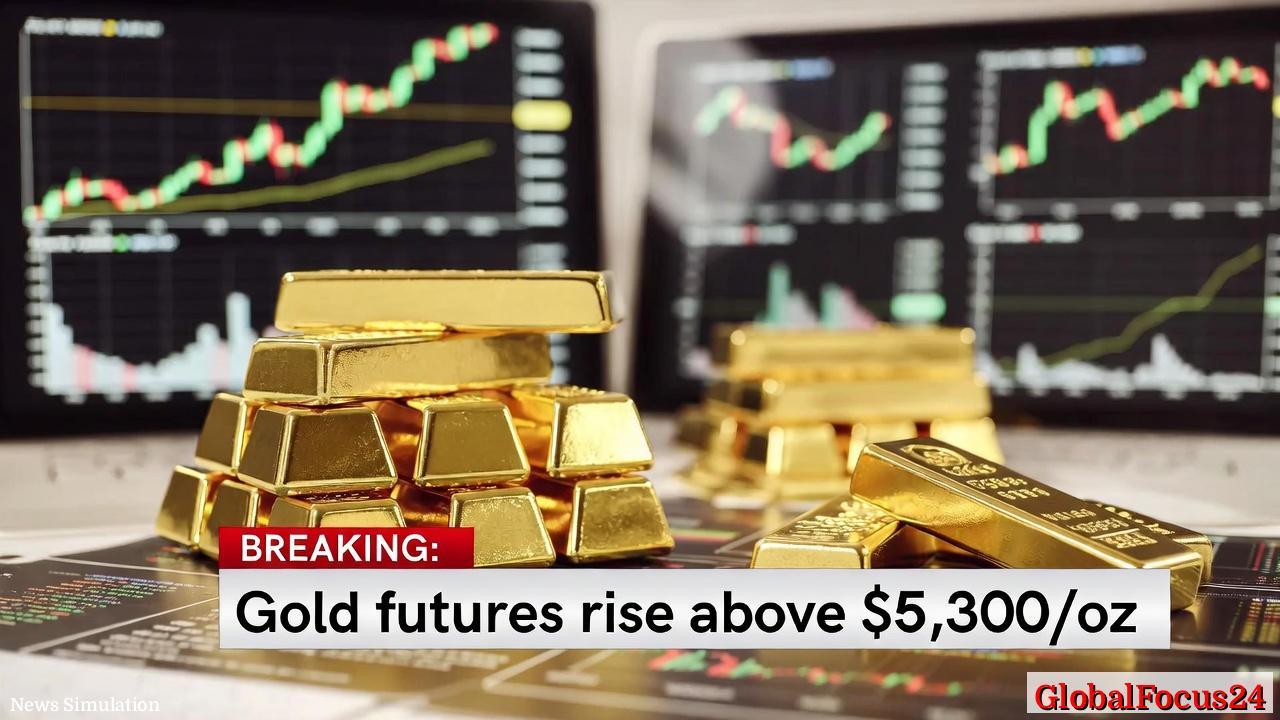
Gold Futures Surge Past $5,300 Per Ounce for First Time Ever
Gold futures surged to a record-high above $5,300 per ounce, marking a historic milestone for the precious metal as traders weigh inflation pressures, geopolitical considerations, and shifting monetary policy expectations. The price, recently hovering around $5,299 per ounce, advanced by roughly 3.5% on the session, with traders noting a multi-week rally that has transformed a traditional hedge into a focal point of portfolios worldwide. The move culminates a climb that has stretched over several years, signaling a potential new plateau for a market that historically trades in wide ranges.
Historical context: gold’s enduring role in portfolios and its recent ascent Historically, gold has served as a store of value during times of uncertainty, inflationary pressure, and currency volatility. The metal’s appeal lies in its perceived intrinsic worth and its independence from any single issuer or economy. In the past decade, gold has endured cycles of volatility, often acting as a counterbalance to equities. The latest milestone reflects a broader reassessment of risk and resilience among investors, as central banks navigate inflation trends, balance sheets, and the delicate art of communicating policy intent.
From a historical lens, the ascent to a multi-thousand-dollar price level is more than a numeric benchmark; it mirrors a broader shift in how investors evaluate asset resilience. The journey from the early-2020s pandemic era to today’s complex macro landscape has seen gold transition from cautious hedging to a core allocation for many institutional and sovereign wealth portfolios. This longer-term trajectory underscores the metal’s role as a potential ballast against inflationary spirals and fluctuating real interest rates, even as other asset classes experience episodic strength and retreat.
Economic impact: implications for markets, consumers, and central banks The surge in gold futures carries multifaceted implications across economies and markets. On one hand, higher gold prices can reflect growing demand from investors seeking diversification, wealth preservation, and protection against currency devaluation. On the manufacturing side, gold remains a critical input for electronics, dentistry, and various high-precision applications, with price signals potentially influencing production costs and pricing strategies for manufacturers that rely on precious metals.
For consumers, elevated gold prices can influence jewelry markets, consumer sentiment, and discretionary spending dynamics, particularly in regions with higher exposure to gold as a cultural or economic anchor. In economies where gold is used as a savings vehicle, record highs may alter household balance sheets and financial planning, prompting shifts in savings behavior or investment planning.
From a macroeconomic perspective, the gold market interacts with broader trends in inflation, real yields, and currency strength. As real interest rates remain a focal point for central banks worldwide, the opportunity cost of holding non-yielding assets like bullion becomes a central consideration for investors. A sustained rally could affect portfolio allocations, risk parity strategies, and hedging practices as market participants reassess risk margins and liquidity conditions.
Regional comparisons: how different markets are responding Across regions, the gold market exhibits diverse responses shaped by domestic inflation rates, currency movements, and investment culture. In certain economies with elevated inflation and currency depreciation, gold remains a traditional hedge and a preferred store of value, leading to sustained demand that supports higher price levels. In other markets with deep, liquid financial markets and strong regulatory frameworks, investors may favor a blend of bullion alongside futures and exchange-traded products as part of a diversified asset allocation strategy.
Emerging markets have shown particular sensitivity to shifts in global liquidity and risk appetite. When U.S. and European monetary policies tighten or signal tightening, risk-off sentiment can trigger inflows into gold as a safe-haven asset, even as other asset classes experience volatility. Meanwhile, developed markets often watch for central bank communications and inflation data that influence expectations about real yields, which in turn affect the relative attractiveness of gold as an inflation hedge.
Market mechanics: what drives the price action Several interlocking factors drive the current gold price action. Inflation expectations, currency dynamics, and shifts in real yields interact with geopolitical developments and macroeconomic data releases to shape investor behavior. Safe-haven demand tends to rise during periods of heightened uncertainty, while central bank policy signals—such as policy rate trajectories and balance sheet normalization—affect expectations for future real interest rates, a key driver for bullion valuations.
Additionally, speculative activity in futures markets contributes to short-term volatility. Traders monitor broad market liquidity, open interest, and the term structure of futures to gauge potential continuation or consolidation. Technical indicators often reflect established support around psychological thresholds while resistance levels can emerge as market participants take profits after rapid advances. The current momentum suggests a broad-based reassessment of risk and portfolio diversification strategies that place bullion at the center of many hedging frameworks.
Supply considerations and gold’s broader role Supply dynamics, including mining output, central bank purchases, and recycled gold, influence price sustainability. While physical demand from jewelry and technology sectors remains steady in many regions, changes in mine supply, seasonal demand patterns, and regulatory developments can introduce short- to medium-term variability. Central banks’ gold reserves and policy appetites for diversification continue to shape long-run price expectations, particularly in economies pursuing reserve diversification or seeking to anchor credibility through tangible assets.
Public reaction and market sentiment Public sentiment around gold is typically nuanced, blending fascination with caution. In markets where households hold gold as part of cultural tradition or long-standing investment practice, price milestones generate renewed attention and dialogue about wealth preservation. In professional circles, the reach of a multi-thousand-dollar price point invites reassessment of risk budgets, rebalancing decisions, and scenario planning for portfolios that span commodities, equities, fixed income, and alternatives.
Broader implications for policy and investment strategies Governments and fiscal authorities are often attentive to commodity price signals as they inform inflation expectations, trade balances, and policy risk assessments. While central banks may emphasize a focus on core inflation and labor markets, fluctuations in gold prices can subtly influence market psychology and expectations. For long-term investors, the current environment highlights the importance of diversified strategies that incorporate inflation hedges, liquidity management, and prudent risk controls.
Looking ahead: navigating uncertainty As markets digest the latest milestone in gold futures, participants should monitor key indicators that could shape the trajectory of bullion prices. Inflation readings, real yield developments, and currency movements remain core determinants of value. Additionally, geopolitical developments, trade dynamics, and technological demand for gold-based components can contribute to evolving demand profiles. Investors may consider scenarios that include gradual normalization of monetary policy, reshaped risk appetites, and potential shifts in global growth momentum.
Conclusion: a milestone that reflects a complex landscape The ascent of gold futures past the $5,300 per ounce level underscores a confluence of inflation concerns, policy expectations, and risk management practices that define contemporary markets. While no single factor guarantees future performance, the current price action signals a pivotal moment for the precious metal within diversified investment strategies. As markets continue to adapt to a dynamic macro environment, gold remains a focal point for participants seeking resilience, liquidity, and a tangible anchor in a world of evolving risk.