Global Gold Market Surges to Record 2025 Demand Amid Recovery in Investment and Central Bank Purchases
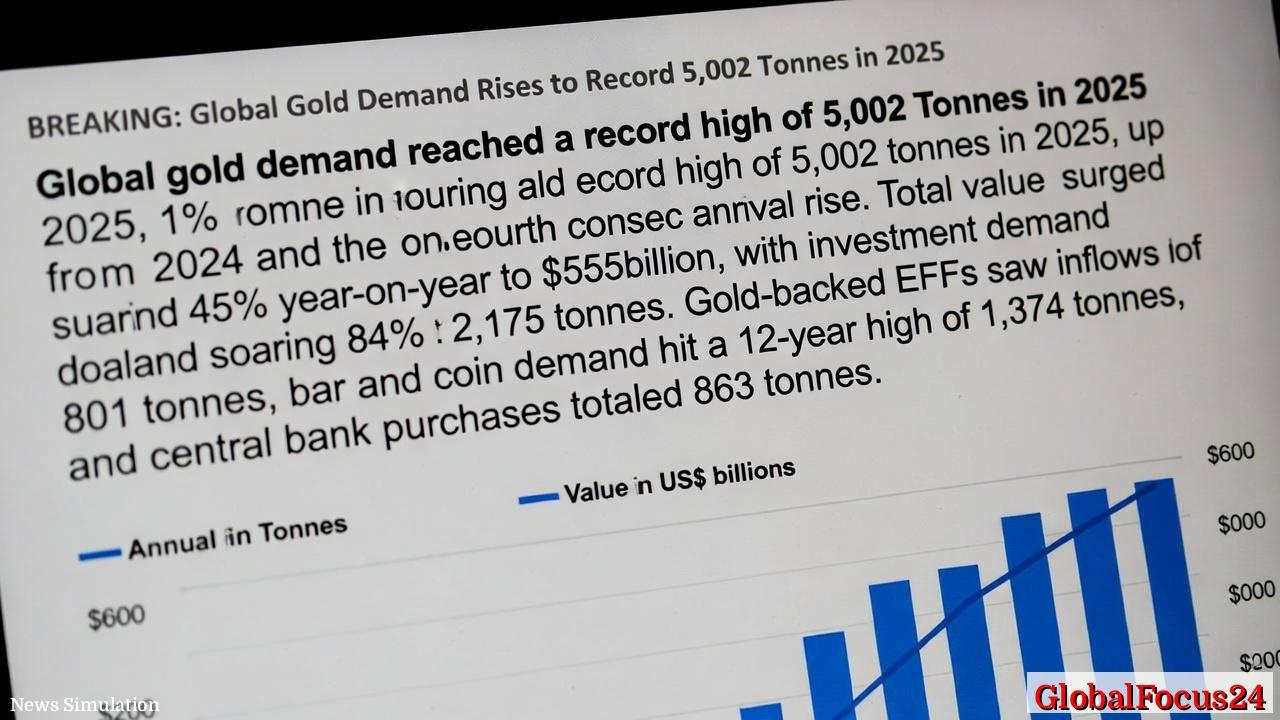
Global gold demand for 2025 reached a record 5,002 tonnes, marking the first time annual demand surpassed the 5,000-tonne threshold and signaling a continued shift in the metal’s role from a traditional hedge to a multi-faceted asset class. The total value of gold demand rose by 45% year over year to about $555 billion, driven by a year-long run of new price highs that culminated in 53 record-setting intrayear peaks. This combination of rising price levels and expanding investor interest underpins a robust new phase for gold markets, even as traditional consumption for jewelry and industry remains part of the broader demand picture.
Historical backdrop: a decade of accumulation and ebbing cycles To understand the momentum behind 2025, it helps to place the year in the arc of a long-running demand cycle. After the global financial crisis, central banks expanded their balance sheets, and precious metals gradually regained a position as a liquid hedge against inflation and currency risk. The early 2010s saw gold prices trending higher before stabilizing and retracing during various macroeconomic cycles. By the mid-to-late 2020s, investors increasingly treated gold as a core portfolio ballast, complementing equities and bonds during periods of heightened volatility or inflationary pressure. The 2025 surge reflects this shift, with investment demand now the primary driver of overall consumption, supported by central bank purchases and robust bar-and-coin activity.
Investment demand drives the growth Investment demand in 2025 surged by 84% to a record 2,175 tonnes, underscoring a strong appetite among institutional and retail investors for gold as a protective and strategic asset. This surge was not an isolated blip; it followed a sustained pattern of inflows into gold-backed exchange-traded funds (ETFs), which collected 801 tonnes—the second-strongest year on record. The preference for exchange-traded exposure provided liquidity, transparency, and ease of access for a broad range of investors seeking diversification and inflation protection. In addition to ETF inflows, bar and coin demand reached 1,374 tonnes, signaling that physical ownership and the traditional cultural appeal of gold remained vibrant even as financial instruments gained prominence.
Central banks remain a crucial pillar Official sector demand continued to be a cornerstone of the 2025 story, with central banks buying 863 tonnes—one of the four highest totals on record and well above the long-term average from 2010 to 2021. Central banks have historically viewed gold as a strategic reserve asset with long-duration value and diversification benefits. The 2025 data reinforce the observation that nations seek to strengthen balance sheets and diversify holdings in response to geopolitical risk, dollar exposure, and concerns about inflationary dynamics. The sustained appetite from the official sector provides notable support to global demand, reinforcing price resilience even in the face of global economic uncertainty.
Regional dynamics and comparative perspectives Regional patterns in 2025 reflect a nuanced landscape for gold demand, shaped by both macroeconomic conditions and domestic market structures.
- Asia-Pacific: The region continued to be a dominant force in physical demand, driven by a combination of cultural affinity for gold and the expanding middle class. Jewelry purchases remained an important component of regional demand, while investment vehicles and savings strategies increasingly turned toward gold as a store of value and hedge against currency fluctuations.
- Europe: European investors exercised prudence with a cautious tilt toward diversification and capital preservation. Central banks in the region contributed to the official sector totals, and retail demand for coin and bar products benefited from relatively stable consumption patterns, aided by market accessibility and policy support.
- North America: In the United States and Canada, ETF inflows and institutional allocations played a major role in 2025. The accessibility of digital and physical gold products, coupled with macroeconomic uncertainty, supported a steady increase in gold allocations within diversified portfolios. Some buyers treated gold as a protective layer against potential inflationary pressures and geopolitical risk.
- other markets: Across Latin America and the Middle East, local demand fluctuated with currency movements, local price signals, and consumer sentiment. In many cases, government policy, import duties, and tax structures influenced the pace of consumption and investment activities, while bullion dealers reported strong interest in both bar and coin formats as a physical hedge.
Economic impact and broader implications The 2025 surge in gold demand carried implications beyond bullion markets, touching financial markets, manufacturing, and consumer sectors.
- Price formation and volatility: The record price highs across the year helped lift the overall value of gold demand to record levels. While volatility naturally accompanies price discovery in a commodity market, the sustained investment demand provided a stabilizing force by channeling risk-off sentiment into gold holdings.
- Financial market behavior: With increased investment demand, gold served as a complement to traditional assets, influencing portfolio rebalancing and risk management strategies. The role of gold as a liquid, globally accessible asset contributed to its ongoing relevance in diversified investment mandates.
- Central bank policy and reserves management: Sustained official sector purchases highlighted a continued emphasis on reserve diversification and capital preservation. This trend may influence regional fiscal strategies and currency dynamics, particularly in economies seeking to reduce reliance on a single reserve currency.
- Jewelry and jewelry market dynamics: While investment demand dominated thefigures, jewelry and consumer-driven demand remained a meaningful component, supporting domestic manufacturing, retail employment, and watchwords of cultural significance in many regions. The blend of investment and consumer demand helped sustain a multi-channel gold market.
- Supply chain and mining considerations: The demand surge interacts with supply from mining and recycling streams. While new ore production faces cost pressures and geopolitical considerations, the recovered and recycled gold supply continues to contribute to the overall balance of supply and demand, influencing sentiment and price trajectories.
Technological and market developments The 2025 year also reflected ongoing innovations in how investors access gold and how gold is integrated into broader financial ecosystems.
- Digital platforms: The growth of gold-backed digital platforms and fractional ownership models broadened accessibility, enabling small-scale investors to participate in gold price movements and hedging strategies.
- Refinery and supply chain transparency: Advances in traceability and assurance for gold origin supported confidence in the market, aligning consumer preferences with ethical sourcing and compliance standards.
- Market integration: Cross-border trading, advancing clearing mechanisms, and standardized reporting contributed to more efficient price discovery and market readability for participants globally.
Public reaction and sentiment Public sentiment toward gold in 2025 ranged from cautious optimism to renewed confidence. Many households and institutions viewed gold as a prudent hedge in a volatile macroeconomic environment, while others recognized its potential as a strategic asset within diversified portfolios. Cultural and historical associations with gold continued to lend it enduring appeal, reinforcing demand not just as a financial instrument but as a symbol of stability and resilience.
Global context and comparative outlook for 2026 Looking ahead, the gold market faces a landscape shaped by inflation expectations, currency dynamics, and geopolitical developments. If the investment thesis that supported 2025 persists, central banks may maintain an elevated level of diversification in reserve holdings, while ETF flows and physical demand could continue to reflect a balanced mix of risk management and savings behavior. Market participants will likely monitor price signals closely, as macroeconomic indicators and policy moves could influence both the pace of demand and the distribution among investment channels, jewelry, and industrial use.
Bottom line: a watershed year with enduring implications The 2025 milestone—global gold demand surpassing 5,000 tonnes for the first time, with record-valued purchases and a dominant investment driver—represents more than a moment in commodity statistics. It marks a shift in how gold is perceived and used within global financial systems: not only as a time-honored hedge but as a flexible, liquid asset embedded in diversified portfolios, official reserves, and consumer markets. As monetary and fiscal landscapes continue to evolve, gold’s role in safeguarding wealth, providing liquidity, and anchoring financial plans remains clear, with 2025 serving as a defining benchmark for future demand and market dynamics.