Global Commodities Shifts Redefine Trading: Tariffs, Stockpiling, and Volatility Reshape Markets
The global commodity landscape is undergoing a seismic shift as barriers, export controls, and strategic stockpiling increasingly define trading dynamics across metals, energy, and essential inputs. What began as episodic protectionist actions has evolved into a broader, structural realignment of supply chains, with implications for pricing signals, manufacturing costs, and regional competitiveness. This piece examines the current environment, tracing historical context, assessing economic impact, and drawing regional comparisons to illuminate how markets, policymakers, and businesses are adapting.
Historical Context: From Globalization to Strategic Stockpiles
The late 20th and early 21st centuries were characterized by rapid globalization, with open trade and relatively predictable pricing guiding capital and production decisions. Multilateral agreements, lower tariff regimes, and integrated supply chains kept costs down and encouraged investment across sectors from electronics to infrastructure materials. Yet, the 2010s and into the 2020s saw a shift. Geopolitical frictions, national security considerations, and evolving industrial strategies prompted countries to reassess vulnerability in critical supply lines. The result has been a gradual but persistent tilt toward precautionary stockpiling and selective trade controls.
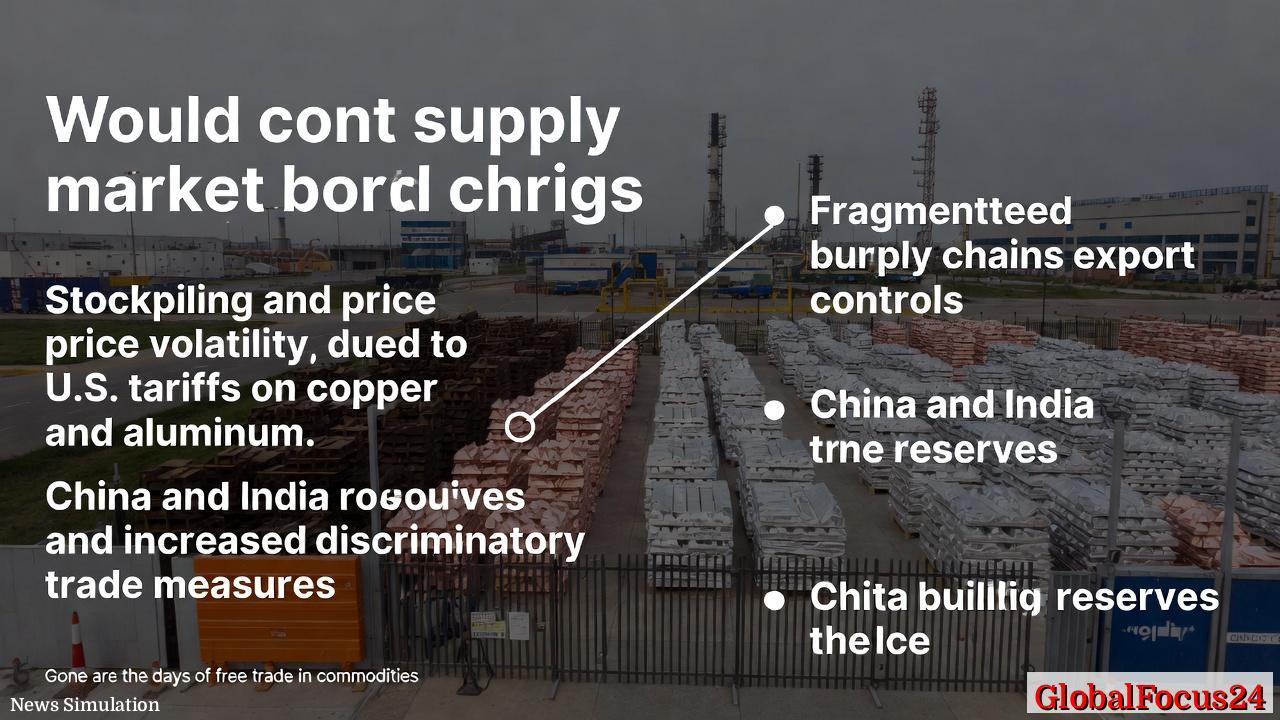
In copper, for example, tariff actions in certain markets propelled significant stockpiling as buyers sought to mitigate exposure to price spikes. When inventories tighten and futures markets reflect anticipated supply constraints, speculative and hedging activity can amplify price differentials. This dynamic creates pronounced deviations between benchmark prices on different exchanges, complicating valuation for buyers and sellers who operate across borders. Silver and aluminum likewise showed how policy, perception of risk, and inventory discipline interact to shape market outcomes.
Economic Impact: Price Volatility, Inflation, and Manufacturing Costs
- Price signals become noisier. Tariffs, export bans, and sanctions inject uncertainty into the supply chain, making it harder for businesses to forecast input costs. This uncertainty often translates into wider bid-ask spreads, longer procurement lead times, and more cautious investment planning.
- Inventories as pricing instruments. When governments and market participants treat commodities as strategic reserves or “insurance” assets, inventories become a tool to stabilize or strategically influence domestic pricing. This revaluation of commodities as both inputs and buffers contributes to higher volatility, as stock levels swing with policy expectations and geopoliticals.
- Competitive dynamics shift. Trading houses and some mining entities have benefited from heightened volatility by expanding trading strategies and leveraging hedges. Conversely, manufacturers—especially those reliant on bulk metals and energy inputs—face higher production costs and thinner margins during periods of rapid price movement.
- Global price divergence. With regional reserves, currency effects, and policy-induced scarcity, price levels can diverge significantly from global benchmarks. Such divergence complicates pricing strategies for exporters and importers alike, demanding more sophisticated risk management and procurement practices.
- Investment implications. Investors increasingly view certain commodities as “risk insurance” against macroeconomic shocks. This perception can attract capital during periods of policy tension but may also lead to sharp corrections when policy signals shift or supply conditions stabilize.
Regional Comparisons: How Markets Respond Across Key Hubs
United States
- Tariffs and stockpiling have been a notable feature in several metal markets, including copper and aluminum. Domestic manufacturers face higher input costs when international pricing becomes disconnected from local market conditions, influencing decisions on sourcing, substitution, and onshoring strategies.
- The creation of national stockpiles for critical minerals reflects a broader strategy to enhance resilience against external disruptions. While this can dampen import dependency in the long run, it may temporarily tighten global flows and contribute to price dislocations.
Europe
- European markets experience a mix of price discovery effects and regulatory responses aimed at safeguarding supply chains. With substantial regional manufacturing ecosystems, European buyers often respond to tariff-driven volatility by diversifying suppliers, pursuing recycling and circular economy initiatives, and accelerating energy transition projects that influence demand for certain metals and minerals.
Asia
- China, in particular, continues to build strategic reserves across multiple commodities, including oil and copper. The approach often leverages discounted sanctioned supplies, which can alter market expectations and pricing dynamics globally.
- Emerging economies in the region have increasingly adopted stockpiling as part of macro-prudential planning, adjusting import strategies in response to domestic consumption cycles and industrial policy goals.
Other Markets
- Increases in discriminatory trade measures, including export controls and sanctions, have risen sharply in recent years. This trend broadens the risk landscape for global buyers and sellers, elevating the importance of diversification, supplier-fatigue management, and scenario planning.
Strategic Implications for Trade, Industry, and Policy
- Diversification and resilience. Firms are accelerating supplier diversification, regional production networks, and strategic reserves to mitigate policy-induced risk. This often means higher transaction costs in the near term, but potentially steadier supply in the face of geopolitical shifts.
- Enhanced risk management. Given heightened volatility, risk management practices—such as dynamic hedging, inventory optimization, and scenario analysis—have become essential tools for industrial players. Accurate valuation under fragmented pricing signals requires robust data analytics and real-time monitoring.
- Policy trade-offs. Governments pursuing stockpiles and selective controls aim to balance strategic autonomy with economic efficiency. While such measures can strengthen national security and resilience, they may also raise global costs, distort competition, and complicate compliance for multinational enterprises.
- Investment and productivity. Elevated uncertainty can slow long-term investment, particularly in capital-intensive sectors like mining, refining, and infrastructure. Policymakers and industry leaders must work together to create transparent frameworks, credible long-term plans, and predictable regulatory environments that encourage investment while safeguarding public interests.
Case Studies: Illustrative Illustrations of Policy and Market Dynamics
- Copper stockpiling in response to tariffs. When price signals reflect anticipated supply constraints, buyers may accumulate copper inventories to cushion against price spikes. This behavior can push futures above local benchmarks on major exchanges, contributing to a global price floor that reflects both physical scarcity and speculative pressure.
- Silver squeezes and London inventories. Tariff speculation and heightened U.S. demand can deplete regional inventories, amplifying price rises beyond typical seasonal patterns. The resulting price action often signals tighter market liquidity and a shift in how market participants value near-term versus longer-term delivery.
- Aluminum pricing and domestic production. A governance framework that imposes duties on imports can tilt the domestic market toward higher local prices relative to international benchmarks. Such movements can incentivize domestic manufacturing strategies that emphasize efficiency, lightweight design, and alternative materials where viable.
Public Perception and Market Sentiment: A Sense of Urgency
Public reaction to these shifts varies by region but often centers on concern about rising costs for builders, manufacturers, and consumers. In industries that depend on stable input costs—such as construction, electronics, and automotive—stakeholders seek credible policy signals, transparent pricing, and resilience measures to protect jobs and competitiveness. News cycles that highlight geopolitical flashpoints or sanction developments tend to intensify market skittishness, reinforcing the relationship between policy announcements and immediate price movements.
Conclusion: Navigating a New Normal in Global Commodities
The constellation of tariffs, export controls, and strategic stockpiling is reshaping the fundamentals of global commodity markets. By injecting precautionary behaviors, fragmenting traditional price signals, and elevating the role of stockpiles as both risk management tools and strategic assets, policymakers and market participants are navigating a landscape that blends risk, opportunity, and increased costs. The enduring challenge is to balance resilience with efficiency, ensuring that essential building blocks for economies—metals, energy, and critical minerals—remain accessible while maintaining fair competition and predictable investment climates.
As regions adapt, the global marketplace will continue to reflect a tapestry of regional approaches, each influenced by domestic priorities, energy considerations, and industrial ambitions. The outcome will hinge on how well policymakers, traders, and manufacturers coordinate to maintain functional supply chains, manage volatility, and sustain economic growth in an era defined by strategic resource stewardship rather than unfettered free trade.