Alcohol Industry Faces $830 Billion Market Value Loss Amid Gen Z's Declining Consumption
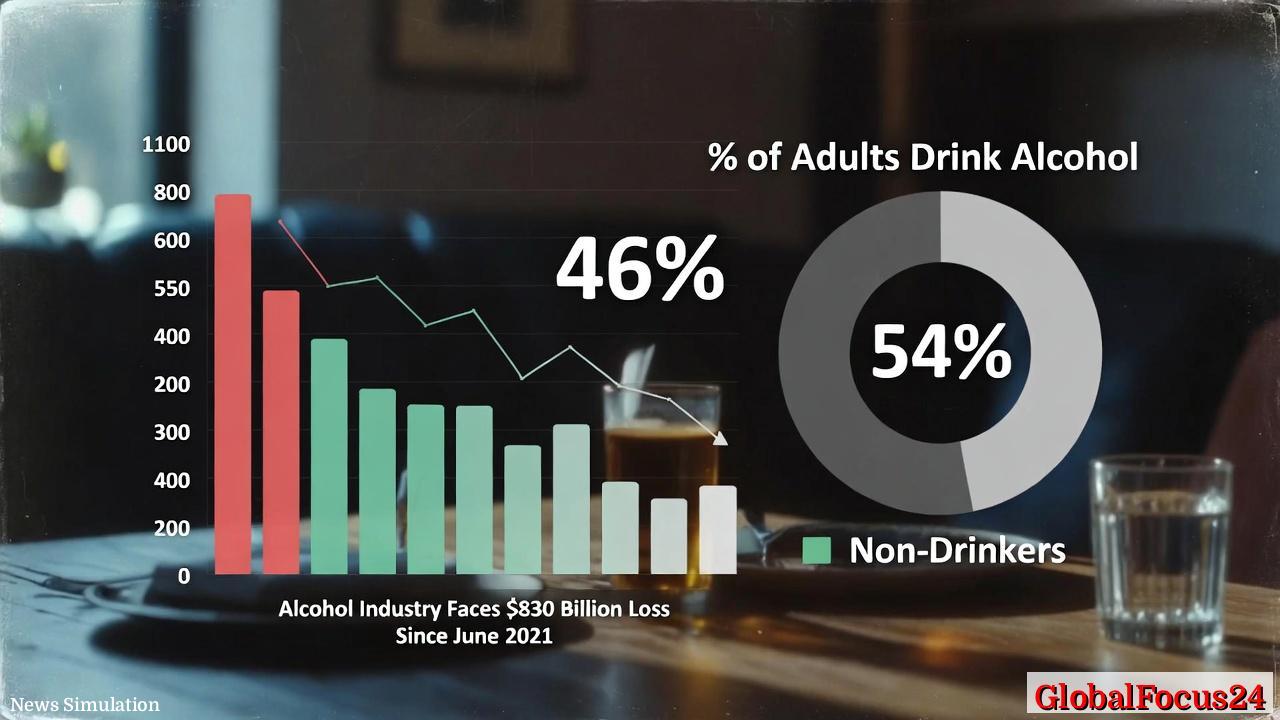
The global alcohol industry is enduring one of its steepest downturns in modern history, losing approximately $830 billion in market value since its 2021 peak. The sharp decline, representing a 46% drop in value, underscores a widespread cultural shift in consumer behavior — one that challenges decades of assumption about alcohol’s central place in social and leisure life.
At the heart of this change is Generation Z, whose approach to drinking diverges dramatically from that of previous generations. Health consciousness, digital connectivity, and evolving lifestyle choices have converged to create a generation that drinks less, or not at all, reshaping one of the world’s oldest and largest consumer sectors.
A Dramatic Decline in Market Value
The downturn has rippled across the industry’s biggest players. Global beer conglomerates, premium wine houses, and luxury spirits producers have each faced significant losses in share value. Some brands, once symbols of resilience even during economic recessions, have found themselves vulnerable to a kind of demand erosion that is structural rather than cyclical.
Measured across the sector, this market value reduction translates into billions of dollars in lost revenue, layoffs in production and distribution, and slower investment in emerging markets. Analysts note that what began as a short-term reaction to pandemic-era health trends has evolved into a long-term cultural transformation in drinking behavior.
While external pressures — such as inflation, supply chain costs, and changing trade tariffs — have contributed to financial strain, industry observers agree that the most substantial force behind the decline is a generational one.
Gen Z’s Rejection of Traditional Drinking Culture
Generation Z’s relationship with alcohol is unlike that of any cohort before it. Data from recent surveys show that only about half of adults in the United States now identify as drinkers — the lowest proportion since 1939. Among Gen Z specifically, abstinence rates are notably higher, and average consumption far lower, than Baby Boomers, Generation X, or Millennials at equivalent ages.
For many young people, moderation or abstinence has become a key part of identity and well-being. The growing popularity of “dry” social events, sober bars, and the global “Dry January” movement reflects a cultural redefinition of fun and relaxation. Social media has amplified these trends, with creators and influencers promoting self-care lifestyles that often exclude alcohol entirely.
Health awareness plays a major role. Generation Z has grown up with unprecedented access to information about the short- and long-term effects of alcohol consumption, from mental health risks to cancer warnings. Campaigns by organizations such as the World Health Organization and public health agencies across Europe and North America have stressed that no level of alcohol consumption is considered safe — a message now resonating deeply with younger demographics.
The Rise of the Low and No-Alcohol Market
As younger consumers drink less, another sector has surged: the market for non-alcoholic and low-alcohol beverages. Once relegated to token “mocktails,” this category has matured into a sophisticated global segment valued in the tens of billions. Craft brewers now produce alcohol-free IPAs, distilleries create botanical spirits without ethanol, and top restaurants feature full menus of alcohol-free pairings.
Major alcohol companies, recognizing the shift, are rapidly diversifying their portfolios. Giants like Heineken, Diageo, and Anheuser-Busch InBev have launched and expanded non-alcoholic product lines, often marketed with the same creativity and prestige as their alcoholic counterparts. These efforts aim to retain younger consumers within brand ecosystems — even if they no longer drink.
Despite rapid growth, however, the non-alcoholic sector has not yet offset the economic losses sustained by the broader alcohol industry. Analysts estimate that even under optimistic scenarios, it could take years before global beverage companies restore revenue levels comparable to 2019–2020 figures.
Economic and Cultural Repercussions
The contraction in alcohol consumption is rippling through global economies and local communities alike. In the United States, breweries and distilleries represent billions in tax revenue and employment. A sustained decline in demand could impact hospitality sectors, restaurant chains, and night-life economies already challenged by post-pandemic shifts in consumer behavior.
Europe — traditionally home to some of the world’s highest per-capita alcohol consumption — is witnessing similar patterns. Nations such as France, Germany, and the United Kingdom have reported steady year-over-year declines in alcohol sales, particularly among young adults. In France, wine exports have stagnated despite aggressive international marketing efforts, while in the UK, pub closures continue to accelerate as foot traffic wanes.
In Asia, the story is more complex. While some markets, particularly Japan and South Korea, mirror Western trends of youth abstention, others like India and parts of Southeast Asia still see moderate growth in alcohol sales driven by expanding middle classes. However, even in these regions, the appeal of “mindful drinking” and wellness-oriented lifestyles is taking root — suggesting a global generational consensus rather than a localized fad.
Health Trends and the Impact of Weight-Loss Medications
A parallel change influencing alcohol consumption is the surge in popularity of weight-loss medications, especially GLP-1 agonists such as Ozempic and Wegovy. Users of these drugs frequently report reduced cravings for alcohol, intensifying the downward pressure on beverage sales. Pharmaceutical trends, once considered unrelated to consumer goods markets, have thus become indirect but powerful disruptors in the alcohol economy.
Public health research further supports a reevaluation of long-held scientific assumptions about “moderate drinking,” once rumored to benefit cardiovascular health. Recent large-scale studies have dispelled these claims, strengthening the narrative that abstaining entirely is most beneficial. This reinforcement of medical consensus has helped legitimize the lifestyle shift among Gen Z and health-conscious Millennials alike.
The Influence of Celebrity and Social Media Movements
Cultural figures have amplified the normalization of sobriety. Athletes, actors, and social media personalities now frequently share their decisions to quit drinking as part of personal health journeys. Their status adds aspirational weight to what was once considered a restrictive or unusual choice.
Celebrity-founded non-alcoholic beverage brands — including alcohol-free wines, botanical cocktails, and adaptogenic drinks — have found strong traction with young buyers seeking social alternatives without intoxication or hangovers. This rise in aspirational, functional beverages mirrors a broader consumer shift toward wellness consumerism, where food and drink are valued as lifestyle statements as much as indulgences.
Historical Context: Echoes of a Changing Society
The present decline is not the first time alcohol consumption has fallen significantly, but its causes differ from earlier historical phases. The last comparable U.S. decline occurred during the late 1930s, when lingering effects of Prohibition and economic distress reshaped public behavior. In the decades that followed, alcohol consumption steadily climbed alongside rising disposable income and the commercialization of leisure.
Today’s reversal marks a cultural inflection point rather than a regulatory one. Unlike the state-imposed temperance of the early 20th century, the contemporary downgrade in alcohol use is consumer-led — emerging organically from personal preferences, digital culture, and health data rather than legislation or morality.
Industry Adaptation and Future Outlook
Facing a changing demographic landscape, companies are reimagining their strategies. Leading brands are expanding into health-aligned categories: non-alcoholic spirits, energy beverages, and cannabis-infused drinks have become areas of experimentation. Marketing approaches are shifting away from traditional party-centric themes toward messages of authenticity, balance, and inclusion.
Analysts forecast that the industry’s recovery will depend on innovation rather than nostalgia. Brands that adapt to lifestyle diversification — offering choice rather than persuasion — are most likely to thrive. Local craft industries, with their agility and community focus, may also find new relevance by embracing non-alcoholic or functional products while leveraging regional authenticity.
Still, skepticism remains about whether the economic scale of traditional alcohol can ever be fully recaptured. With cultural, medical, and psychological narratives converging to elevate sobriety, the industry’s challenge is not simply one of marketing, but of identity transformation.
A Turning Point for an Ancient Industry
For millennia, alcohol has occupied a central role in human culture — symbolizing celebration, connection, and craft. Yet as generational preferences evolve, it faces a reckoning unlike any previous downturn. The $830 billion loss in market value is more than a financial statistic; it is a reflection of shifting human priorities.
In this new era, moderation, mindfulness, and wellness are redefining what it means to socialize — and the global alcohol industry must reinvent itself to stay relevant in a world increasingly choosing clarity over intoxication.