)
BREAKING: Four alleged extremist group members detained in Southern California over New Year’s Eve bombing plots
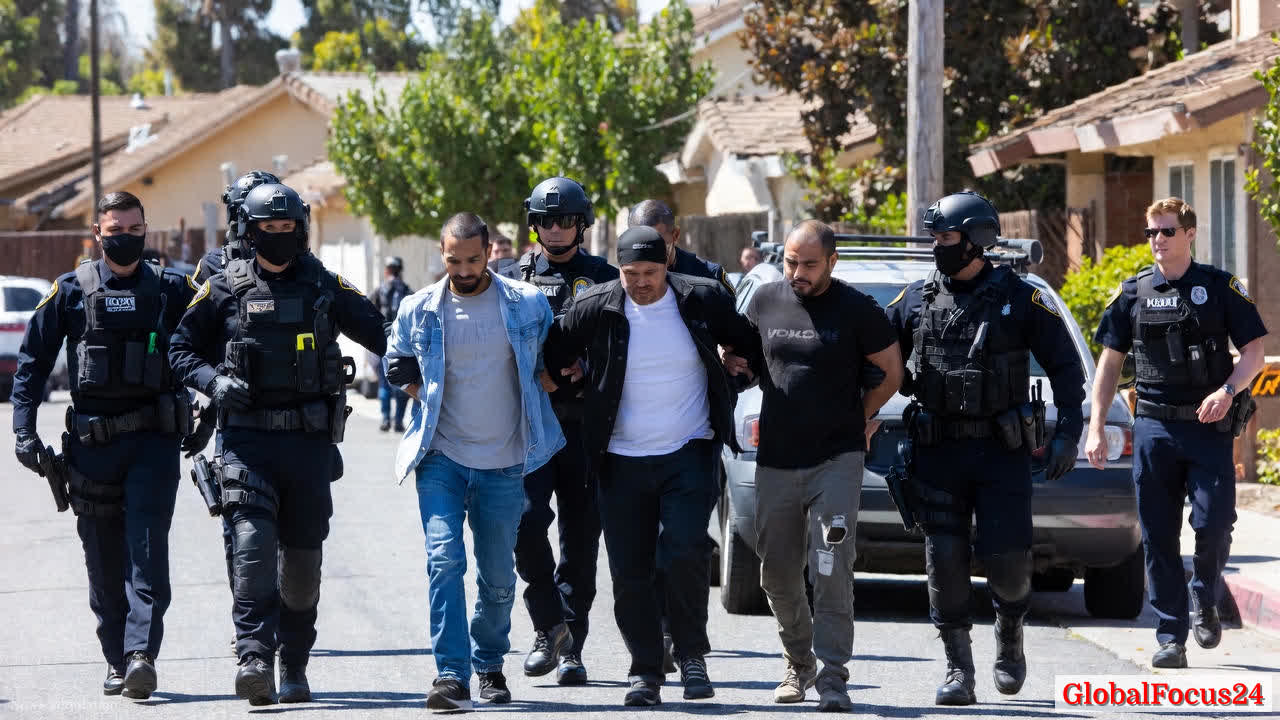
In a rapid, coordinated operation across multiple Southern California counties early Tuesday, authorities announced the detention of four individuals believed to be members of an extremist organization suspected of planning bombing attacks tied to New Year’s Eve celebrations. The arrests marked a significant development in a case that public safety officials had begun to monitor weeks in advance, as investigators pieced together online activity, reconnaissance notes, and alleged procurement of materials suitable for improvised explosive devices. The incident has reverberated through local communities, prompting heightened security measures at public gatherings and a surge of public interest in how regional counterterrorism efforts are evolving in real time.
Historical context: a long arc of vigilance in a complex security landscape
Southern California has long faced a spectrum of security challenges, from organized crime and cyber threats to homegrown extremism driven by global online networks. The current arrests fit into a broader historical pattern of targeted operations designed to disrupt planned attacks before they unfold, a strategy that has grown more sophisticated with advances in data analytics, social media monitoring, and interagency cooperation.
Over the past decade, regional authorities have frequently faced the tension between robust counterterrorism efforts and civil liberties considerations. The present case underscores how public safety agencies track online rhetoric and offline movements, merging traditional investigative work with digital forensics. In many instances, cases have shown that extremist plots can emerge from small clusters of individuals who communicate via encrypted messaging, open forums, and micro-communities. This weekend’s developments highlight that threat actors often look to high-visibility moments such as holidays to maximize impact, prompting a rapid, multi-jurisdictional response from federal, state, and local agencies.
Operational timeline and investigative thread
- Initial indicators surfaced during routine monitoring of online chatter linked to extremist manifestos and propaganda, followed by a layered intelligence-gathering approach that included human intelligence, digital analysis, and corroboration from community outreach programs.
- Investigators traced patterns of travel, purchase attempts for materials with dual-use potential, and coordination signals among associates, enabling law enforcement to forecast potential attack windows without compromising ongoing investigations.
- The four individuals were taken into custody without reported injuries or a confrontation, and authorities stated that the suspects did not possess the capacity to cause immediate harm at the time of arrest. A number of other leads are reportedly being evaluated, with investigators reinforcing that the operation remains active as they pursue additional information.
Law enforcement response and public safety measures
Following the arrests, local police departments and federal partners coordinated to bolster security at major transit hubs, shopping districts, and large-scale public events anticipated during the New Year’s countdown. Police advisories encouraged attendees to remain vigilant and to report any suspicious activity or unattended packages. In several cities across Southern California, law enforcement intensified patrols in high-traffic corridors and activated additional surveillance resources to maintain a visible presence at gatherings and transportation nodes.
Legal proceedings and pending charges
Authorities indicated that formal charges would be filed in federal or state court, depending on the nature of evidence and the specific materials found during the investigation. Prosecutors typically pursue charges related to conspiracy, possession of weapons or materials for constructing explosives, and attempted use of weapons in a violent act. The legal process will focus on establishing intent, capability, and the connection between the individuals and the broader organization allegedly involved.
Economic impact: regional resilience and the cost of security
The alert status and security enhancements have ripple effects across the regional economy. Businesses around event venues, transit stations, and entertainment districts have reported temporary slowdowns as precautionary measures extend into evening hours. Local authorities have emphasized that while security costs may be borne by public budgets, the broader economic ecosystem—restaurants, hospitality, retail trade, and transportation—benefits from stable public safety conditions, especially during peak tourist seasons and year-end celebrations.
Analysts note that sustained security investments in major urban corridors can yield long-term economic returns by reinforcing consumer confidence, preserving tourism, and safeguarding infrastructure. Conversely, unnecessary or prolonged security measures can impose operational frictions and impact small businesses, particularly those in high-foot-traffic areas. Striking a balance between robust protection and economic vitality remains a central concern for municipalities throughout the region.
Regional comparisons: how Southern California stacks up
When compared with other major cities facing similar threats, Southern California’s response showcases a layered security posture that combines rapid tactical deployments with proactive intelligence-sharing networks. Cities such as New York, Chicago, and Washington, D.C., regularly report incidents of planned attacks thwarted through interagency collaboration and community engagement initiatives. Southern California’s approach emphasizes cross-border coordination among local police, county sheriffs, state agencies, and federal partners, leveraging the region’s extensive transportation infrastructure to monitor potential threats at critical junctures.
In terms of resources, Southern California benefits from a dense network of surveillance infrastructure, but this is offset by the sheer scale and diversity of the region. The area features multiple international gateways, sprawling suburbs, and a dynamic, globally connected economy. This complexity necessitates ongoing investment in personnel training, technological upgrades, and community outreach programs designed to deter radicalization and improve reporting of suspicious activity.
Public reaction and community response
Community leaders stressed the importance of calm, vigilance, and public cooperation following the arrests. Local officials urged residents to rely on official information channels and to report concerns through established hotlines and online platforms. Educational institutions and faith-based organizations have increasingly engaged in dialogue about safety measures and resilience, emphasizing that a secure environment depends on both robust enforcement and open, trusted communication with residents.
Public sentiment across Southern California reflects a mix of appreciation for swift action and concern about civil liberties and the potential for overreach. Civil society groups have called for careful balancing of security measures with constitutional rights, particularly when surveillance and profiling issues arise. Law enforcement has reiterated its commitment to operating within legal frameworks while protecting public safety, noting that transparency and accountability remain essential components of the ongoing investigation and future security policies.
Background on the extremist group and ideological landscape
Authorities have not publicly disclosed the formal name of the extremist organization involved during early reporting, and at this time, officials are withholding certain operational specifics to preserve investigative integrity and ongoing prosecutions. What is clear from prior similar cases is that extremist networks often utilize decentralized cells and online propaganda to recruit and coordinate activities, sometimes exploiting periods of social tension or political volatility to legitimize their narratives.
This incident arrives amid a broader national conversation about online radicalization, the responsibilities of tech platforms, and the effectiveness of counter-radicalization programs. Analysts emphasize that preventing violent acts requires a multi-faceted approach: identifying individuals at risk of evolving from rhetoric to action, interrupting supply chains for prohibited materials, and strengthening community resilience so residents feel empowered to report concerning behavior without stigma.
Security technology and intelligence innovations
The investigation underscores how modern security operations blend traditional policing with technology-enabled intelligence. From facial recognition and license plate readers to networked surveillance cameras and data analytics, authorities can assemble a mosaic of activity that links disparate events into coherent threats. While these tools enhance protective capabilities, they also raise ongoing questions about privacy, data retention, and the potential for false positives. Officials highlight that safeguards, oversight, and clearly defined purposes accompany these technologies to minimize harm and preserve civil liberties.
Legal and ethical considerations
As this case progresses through the judicial process, it will likely illuminate the balance between proactive counterterrorism measures and individual rights. Courts will examine whether the evidence meets the threshold for criminal conspiracy and attempted violent acts, and how investigators established intent and operational planning. The outcome may influence future policy debates about interagency information-sharing protocols, resource allocation, and the legal boundaries of surveillance in domestic security operations.
What comes next: monitoring, prevention, and public communication
Authorities have signaled that the case remains active as they continue to investigate potential ties to other individuals or groups and to determine whether additional plots were contemplated. Public safety officials plan to maintain enhanced security at major events and to continue outreach efforts aimed at educating communities about recognizing warning signs and reporting suspicious activity.
Communities are encouraged to stay informed through official channels and to participate in neighborhood watch and safety programs that foster a proactive, collective approach to security. While no immediate threats have been disclosed beyond the arrests, the situation illustrates the ongoing risk landscape in large metropolitan regions where high-density events and holiday gatherings create potential targets.
Conclusion: a moment of intensified vigilance
The arrests mark a watershed moment in Southern California’s long-standing commitment to preventing terrorist acts and safeguarding public life during high-traffic periods. As investigations unfold, authorities will continue to balance robust security measures with transparent communication and respect for civil liberties. The public’s role in reporting concerns remains a critical component of a comprehensive safety strategy, one that combines professional diligence with community resilience to deter violence and protect everyday life as communities ring in the New Year.