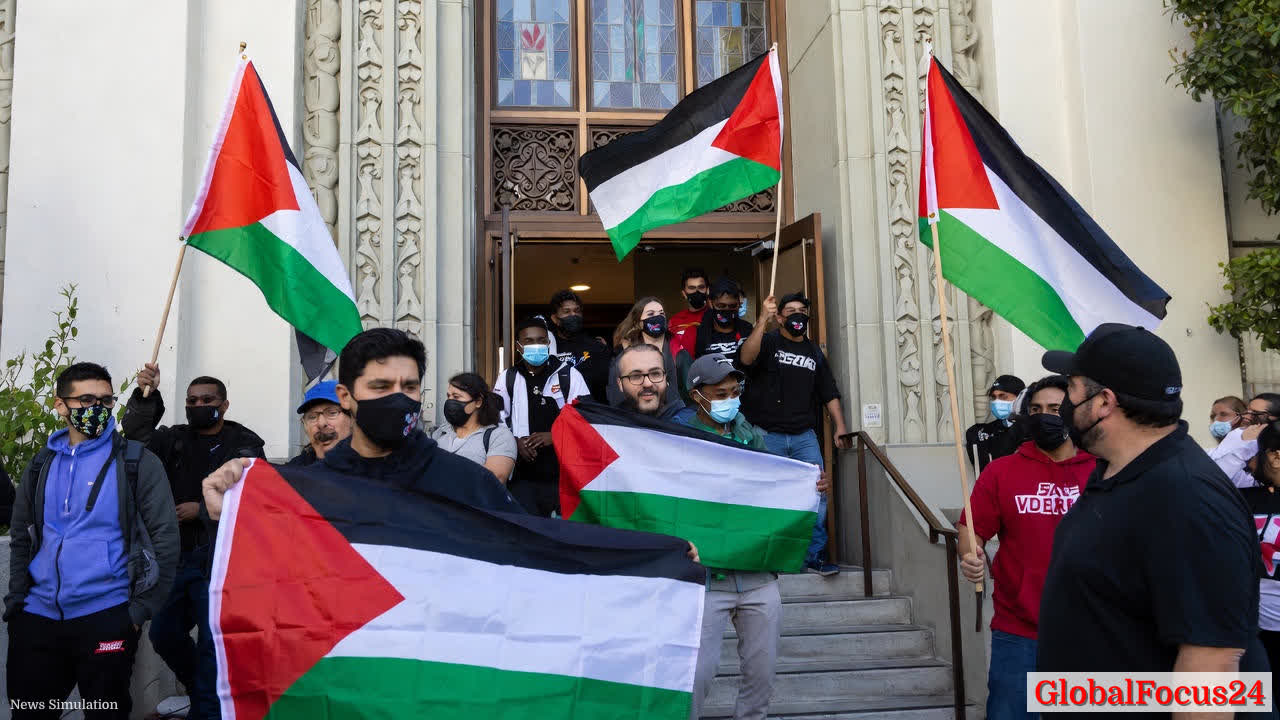
Los Angeles Faces Tension Amid Protests Linked to Alleged Bomb Plot and Jewish Community Site Incident
A recent string of events in Los Angeles has drawn national attention to security, civil discourse, and the evolving dynamics of protest in urban centers. At issue is a protest outside a Los Angeles synagogue that intersected with an alleged New Year’s Eve bombing plot, prompting authorities to arrest several individuals with charges related to conspiracy and possession of an unregistered destructive device. The sequence of actions, including demonstrations, property damage, and shouted antisemitic slurs, has raised questions about the role of protest in public life, the responsibilities of organizers, and the threats associated with violent extremism in a metropolitan context.
Historical context: protests and security in Los Angeles Los Angeles has a long history of public demonstrations, ranging from labor rallies to civil rights marches, religious processions, and political protests. The city’s diverse population and geographic density create a fertile ground for expressive gatherings that can quickly attract attention—whether the message is doctrinal, humanitarian, or provocative. In recent decades, security concerns at sensitive sites—such as religious institutions, government facilities, and critical infrastructure—have grown in parallel with the frequency and visibility of protests. Law enforcement agencies have developed frameworks for risk assessment, crowd management, and rapid response, while communities have stressed the importance of maintaining open dialogue and lawful assembly.
The intersection of a protest outside a synagogue and an alleged bombing plot underscores how security considerations can expand beyond immediate warnings to events in adjacent neighborhoods. Synagogues, as with other places of worship, often serve as community anchors and targets of disruptive acts or intimidation. The presence of a defense contractor’s name in the surrounding discourse adds a layer of international and industrial tension, illustrating how global supply chains and geopolitics occasionally converge with local street demonstrations. These developments reveal the delicate balance between protecting civil rights to protest and ensuring public safety.
Economic impact: implications for local businesses and community assets The disruption surrounding the protest and the broader security concerns have direct and indirect economic consequences for the surrounding Koreatown area and greater Los Angeles. Short-term effects include potential closures of nearby businesses during heightened security periods, increased security measures for events and facilities, and a cautious consumer environment as residents assess risk and access. In the longer term, repeated incidents of violence or threats can influence real estate values, foot traffic, and the willingness of vendors to invest in community-based initiatives.
Local authorities and business associations often respond with coordinated communication strategies to reassure residents, workers, and visitors. Measures may include enhanced street lighting, visible security presence at sensitive venues, and targeted outreach to community leaders to mitigate fear and misinformation. The broader economic narrative also touches on tourism patterns, as visitors weigh safety considerations when planning city experiences. While one incident does not define the economic trajectory of a neighborhood, persistent volatility can shape public perception and investor confidence.
Regional comparisons: how other urban centers have navigated similar incidents Across major U.S. cities, protests near religious or cultural sites have prompted varied responses that reflect different administrative approaches and community dynamics. In some places, rapid deployment of law enforcement resources alongside clear guidelines for peaceful assembly has helped de-escalate tensions while preserving the right to protest. In others, miscommunication or overly aggressive policing has exacerbated mistrust between communities and authorities.
A comparative lens can reveal best practices: transparent investigation updates to prevent speculation, active engagement with faith and community leaders to ensure safety without restricting lawful expression, and coordinated support services for those affected by the incident. The Los Angeles case, with arrests tied to a broader alleged plot, highlights the need for vigilant threat assessment, robust intelligence sharing among agencies, and public communication that distinguishes criminal activity from legitimate dissent. The ongoing evaluation of policy tools—such as permit requirements for demonstrations, crowd-control protocols, and public-safety funding—continues to shape how cities balance civil liberties with security.
Contextual factors: social dynamics, media framing, and public reaction Public response to protests near sensitive sites often reflects a mosaic of emotions and viewpoints. In communities directly impacted, neighbors may experience heightened concern about safety, while others emphasize the importance of exercising constitutional rights and raising awareness about issues they deem important. Media coverage can influence perceptions by emphasizing dramatic elements—such as confrontations, flags, or graffiti—and by presenting a narrative that may amplify fear or sympathy. Responsible reporting, including verification of facts and timely updates from authorities, plays a crucial role in preventing the spread of rumors and ensuring that the public receives accurate information.
Legal and investigative developments: accountability and due process Authorities have pursued specific charges related to conspiracy and possession of an unregistered destructive device, signaling a focus on elements of preparation and intent associated with violent acts. The legal process will determine the strength of the case, with trials, potential plea agreements, and the presentation of evidence to the court. Independent oversight and transparency in investigations help maintain public trust, particularly when incidents involve sensitive community sites and allegations of antisemitic behavior. Courts will assess whether actions meet the thresholds of criminal activity while respecting civil rights and ensuring fair treatment for all involved.
Community resilience and interfaith outreach In the wake of such incidents, many community leaders emphasize resilience and the importance of dialogue across faiths and backgrounds. Programs that foster interfaith understanding, youth engagement, and collaborative security planning can help reduce divisive tensions. Schools, nonprofits, and faith-based organizations often partner to create spaces for constructive conversation, conflict resolution training, and cultural exchange. These efforts can also contribute to broader economic and social vitality by reinforcing a sense of shared fate and mutual responsibility.
Operational guidance for institutions and residents
- Strengthen security protocols at sensitive venues without creating a climate of fear. This includes coordinated communication channels with local law enforcement and clear emergency procedures for staff and attendees.
- Promote transparent information sharing to counter misinformation while protecting investigative processes. Regular public updates can help manage expectations and reduce speculation.
- Encourage community-led initiatives that emphasize nonviolent protest, inclusivity, and respect for civil rights. Providing safe avenues for dissent can channel energy into constructive civic engagement.
- Invest in public safety infrastructure that enhances overall resilience, such as lighting improvements, surveillance where appropriate, and rapid response capabilities.
- Support mental health and social services as part of a comprehensive approach to community well-being, recognizing that social stressors can influence behavior and safety dynamics.
Public sentiment and the human dimension Public reaction to incidents of this kind often swings between concern for personal safety, curiosity about ongoing investigations, and a call for calm and reasoned discourse. Community surveys, town halls, and faith-based conversations may surface a spectrum of perspectives, from condemnation of violence to insistence on protecting the right to protest. While emotions can run high in the immediate aftermath, many observers stress the importance of upholding the principles of a free and open society, even as security concerns are addressed with seriousness and precision.
Future outlook: stability, oversight, and regional security posture As investigations proceed and authorities provide updates, the broader outlook hinges on several factors. The effectiveness of interagency cooperation, the speed and clarity of communications to the public, and the community’s ability to mobilize peaceful, constructive responses will shape the city’s sense of security. Economically, ongoing efforts to protect storefronts, attract visitors, and support local businesses will contribute to a stable operating environment that encourages investment and community activity. The regional security posture—encompassing neighboring jurisdictions and law enforcement networks—will also influence how quickly threats are neutralized and how information is shared to prevent replication elsewhere.
Conclusion: balancing vigilance with open civic life In metropolitan environments such as Los Angeles, incidents that intersect protest activity with security threats test the mechanisms that defend public safety while safeguarding civil liberties. The measured response—rooted in lawful conduct, due process, transparent communication, and community engagement—helps sustain a city that values robust public discourse without compromising safety. As investigations unfold and communities heal, the emphasis remains on protecting residents, supporting affected institutions, and reinforcing the social fabric that binds diverse neighborhoods together.
Note: This article maintains a factual, neutral tone and presents information in a way intended for broad readership while avoiding commentary on political positions. The focus is on events, context, and practical implications rather than advocacy or opinion.