Global Foreign Holdings of U.S. Treasuries Rise to New Highs in February, with Japan and the UK Leading Increases
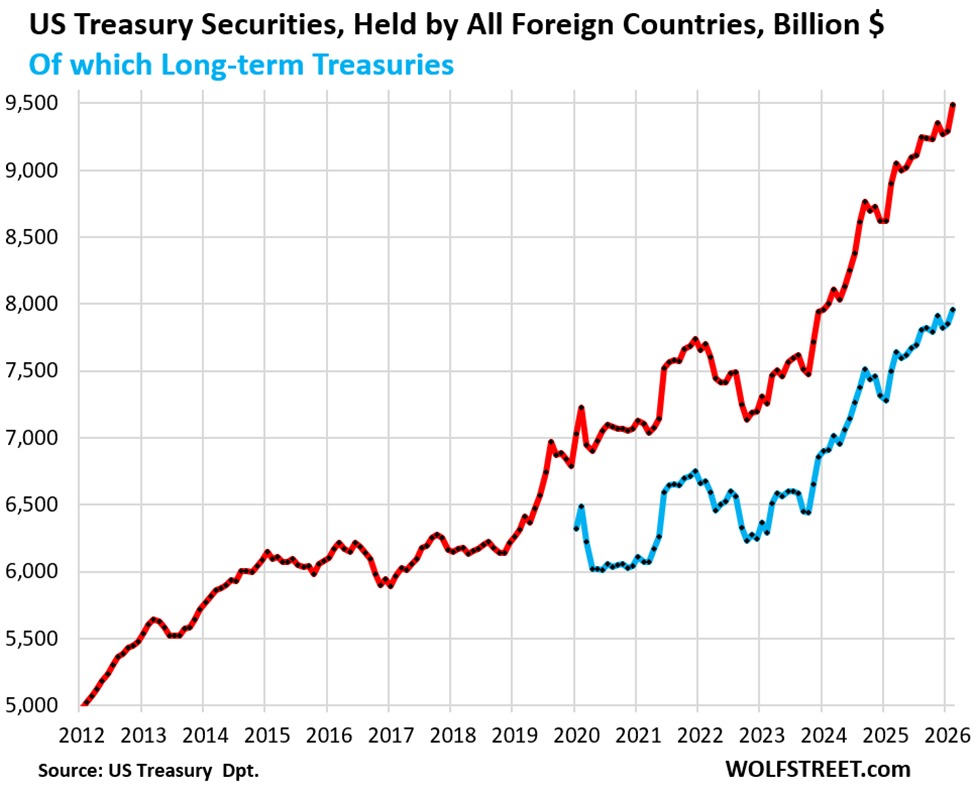
Foreign holdings of U.S. Treasuries surged in February, marking another milestone in the evolving dynamics of international finance and the global demand for U.S. debt. The total stock of foreign-held Treasuries reached $9.49 trillion, up $200 billion from January and eclipsing previous records. Of this total, long-term Treasury securities accounted for $7.76 trillion, or 84 percent, while the remainder consisted of short-term Treasury bills. Over the trailing 12 months, foreign ownership increased by $587 billion, underscoring sustained external demand amid shifting global economic conditions.
Historical context: a long arc of international demand The United States has long benefited from a broad, diverse base of foreign investors that trust U.S. Treasuries as a safe, liquid store of value. After the global financial crisis of 2008–2009, foreign holdings tended to rise steadily as global central banks accumulated reserves to support domestic policy aims and to diversify away from domestic-only risk. Over the past decade, the mix of buyers has included official institutions such as central banks and sovereign wealth funds, as well as private sector entities and international financial institutions. The February data continue that pattern, illustrating how foreign central banks view Treasuries as a core element of reserve management, liquidity, and a hedge against exchange-rate volatility.
Japan’s steady accumulation stands out Japan emerged as the largest foreign holder of U.S. Treasuries, increasing its stockpile by $14 billion in February to $1.24 trillion—the highest level since February 2022. This marks the 13th monthly purchase in the last 14 months, reflecting a deliberate strategy by Japanese authorities to manage currency and investment exposures in a world of fluctuating interest rates and global risk sentiment. The persistent buying by Japan signals confidence in the U.S. debt market’s safety and liquidity, even as Japanese monetary policy remains subject to domestic considerations such as inflation, growth projections, and the impact of demographic shifts on savings behavior.
The United Kingdom follows closely The United Kingdom rose by $17 billion in February, to $897 billion—the second-highest level on record for UK holdings. The UK’s ongoing presence as a major holder highlights its role in global portfolio reallocation and reserve management. British purchases of Treasuries are often linked to a combination of exchange-rate considerations, cross-border investment activity, and the broader evolution of the City of London’s financial services ecosystem. While the exact drivers can be multifaceted, the sustained UK engagement with U.S. debt markets underscores the perceived stability and deep liquidity that Treasuries offer.
China’s position remains sizable but softer China remains the third-largest foreign owner, with February data showing a modest trim of $1 billion to $693 billion. The trajectory of Chinese holdings has been shaped by a mix of policy choices, exchange-rate management, and the broader shift in global supply chains and financial flows. While the pace of purchases has varied in recent months, China’s continued presence in the top tier of holders indicates a diversified foreign-exchange reserve strategy that weighs currency stability, domestic financial needs, and global market conditions.
Regional comparisons and implications
- Europe’s central banks and pension funds: Europe continues to be a substantial source of demand for U.S. Treasuries through official reserves and institutional investment. The United Kingdom’s notable accumulation reflects its status as a major financial hub with an active cross-border investment environment. In the broader European context, Treasuries remain a familiar anchor for balance-sheet risk management and reserve diversification.
- Asia’s reserve posture: Beyond Japan and China, other Asian economies monitor the U.S. debt market closely as part of their broader currency and macroeconomic strategies. The February data reinforce a shift toward greater U.S. dollar-denominated debt holdings among several Asian reserve managers, driven by liquidity, transparency, and the global role of the dollar.
- Global liquidity and rate dynamics: The level and composition of foreign holdings influence, and are influenced by, global yields, currency markets, and risk sentiment. When foreign buyers accumulate long-duration Treasuries, they contribute to steady demand that can help stabilize longer-term rates, while maintaining the ability to step into the market during periods of volatility.
Economic impact: considerations for policymakers, investors, and markets
- Government financing costs: A robust overseas demand for Treasuries helps to keep borrowing costs lower for the U.S. government by sustaining healthy demand at auction. This dynamic supports fiscal flexibility, particularly in periods of stimulus, infrastructure investment, or emergency funding needs.
- Interest-rate transmission: The willingness of foreign buyers to hold long-term securities interacts with the domestic monetary policy stance. If foreign demand remains strong for long-term Treasuries, it can influence the slope of the yield curve and affect expectations for future policy rate paths.
- Global investment strategies: For international investors, Treasuries offer a familiar, liquid instrument with a long history of performance in varied market conditions. The willingness of major holders to expand or trim positions can reflect changing risk appetites, inflation expectations, and cross-border capital flows.
Market context and trends to watch
- Long-term security demand: The emphasis on long-term Treasuries within foreign holdings signals confidence in the macroeconomic framework and in the U.S. government’s ability to manage debt over extended horizons. This trend can influence the pricing and availability of long-duration debt at auction.
- Short-term bill dynamics: While long-term holdings dominate, the 16 percent of foreign holdings in short-term bills remains an important component for liquidity management and near-term funding needs for both foreign and domestic actors.
- Policy and geopolitical considerations: External demand for Treasuries can be affected by a range of factors, including trade tensions, currency policy shifts, and global economic health. Policymakers and market participants watch these signals for clues about future capital flows and risk sentiment.
Historical comparison: where this fits in the broader timeline This February surge fits into a broader arc of rising foreign ownership observed over the last several years, punctuated by periodic adjustments in response to global growth patterns, inflation trajectories, and central-bank policy normalization. The combination of record-high totals and notable country-level movements—Japan’s sustained purchases, the UK’s record-level holding, and China’s measured stance—illustrates the nuanced, country-specific strategies that underlie a global debt market often described as the deepest and most liquid in the world.
Public reaction and policy discussion Public and market reactions to shifts in foreign holdings tend to focus on concerns about dependence on external financing, potential vulnerabilities if external demand were to wane, and the implications for domestic monetary policy autonomy. Analysts often emphasize the importance of a diversified investor base, transparent debt management practices, and prudent fiscal stewardship to ensure long-term market resilience. While the data invite scrutiny of external factors, they also highlight the enduring role of U.S. Treasuries as a cornerstone of international finance and a benchmark for global yield curves.
Regional snapshots: comparing notable markets
- Japan: A combination of persistent reserve accumulation and exchange-rate considerations has kept U.S. Treasuries as a central tool in Japan’s external balance management. The ongoing purchases reflect strategic objectives that balance domestic liquidity needs with outward-facing financial stability.
- United Kingdom: The UK’s holdings reflect its status as a global financial center and its broad portfolio of international assets. The record or near-record levels underscore the adaptive nature of UK capital flows in a world of fluctuating yields and currency dynamics.
- China: China’s reserve management priorities include diversification, risk containment, and strategic asset allocation. The marginal reduction in February does not erase a substantial overall position but signals a recalibration in response to domestic and global conditions.
Conclusion: a pivotal moment in a continuing story The February increase in foreign holdings of U.S. Treasuries reinforces the essential role of U.S. government debt in the global financial system. With Japan and the United Kingdom driving the latest gains and China maintaining a substantial but evolving stake, the landscape reflects a balance between safety, liquidity, and strategic asset allocation across international investors. As markets monitor evolving inflation trajectories, central-bank policies, and geopolitical developments, the appetite for Treasuries will likely remain a critical barometer of global risk sentiment and financial stability.
Note: numbers reflect February data: total foreign-held Treasuries at $9.49 trillion; long-term securities at $7.76 trillion; short-term bills making up the remainder. Japan at $1.24 trillion, UK at $897 billion, China at $693 billion.