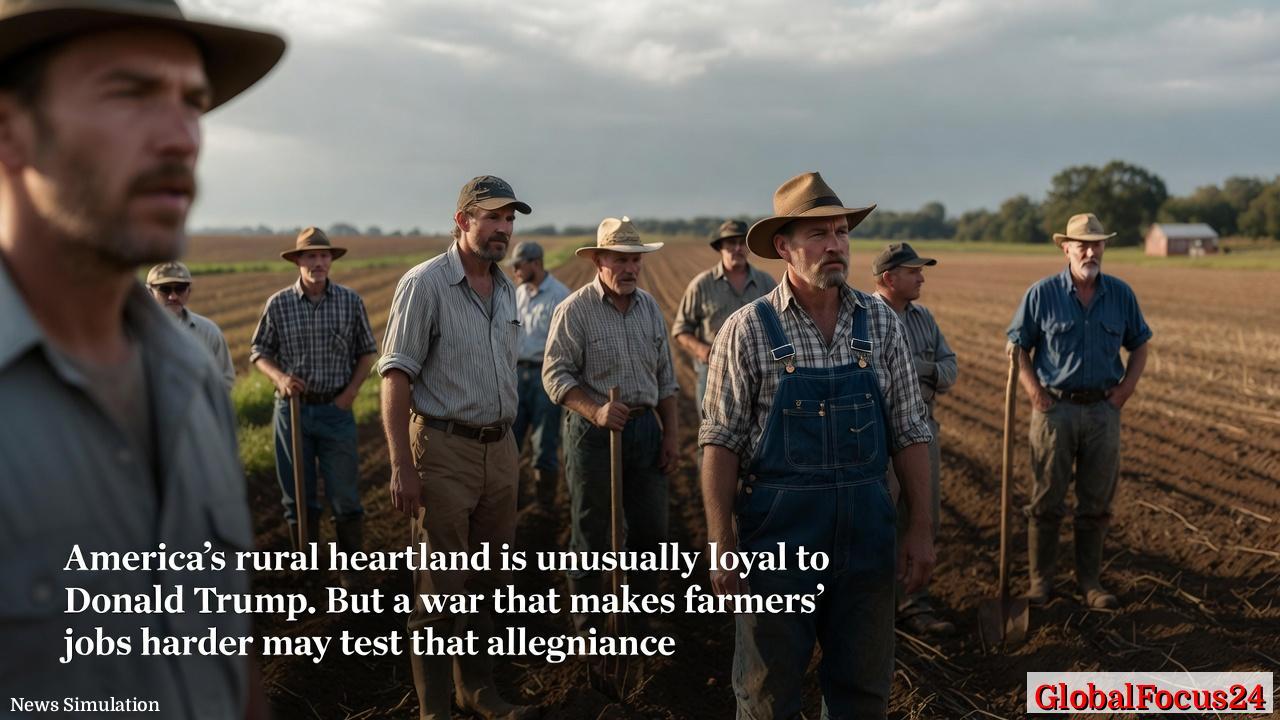
Fertilizer Price Surge Pressures U.S. Farmers as Global Conflict Disrupts Agricultural Economics
Rising Input Costs Strain America’s Farm Economy
American farmers are facing a new wave of financial pressure as fertilizer prices climb sharply, driven by prolonged geopolitical conflict that has disrupted global supply chains. The increase comes at a time when many agricultural producers were already contending with narrow profit margins, volatile commodity prices, and rising operational costs.
Fertilizer, a cornerstone of modern agriculture, has become significantly more expensive over the past year. Nitrogen, phosphate, and potash—key nutrients required for crop production—have all seen price spikes due to reduced exports from major producing regions affected by war and trade restrictions. For farmers in the United States, where large-scale crop production depends heavily on these inputs, the impact has been immediate and widespread.
The result is a growing financial squeeze across rural America, particularly in regions where farming accounts for a substantial share of local income. Producers are being forced to make difficult decisions about planting, fertilization rates, and long-term investment strategies.
Global Supply Disruptions Drive Fertilizer Costs
The fertilizer market is highly globalized, with a handful of countries dominating production and export. Conflict in key producing regions has disrupted shipments, limited access to raw materials, and driven up energy costs—an essential component in fertilizer manufacturing.
Natural gas, for example, is a primary input for nitrogen-based fertilizers. As energy markets tightened due to geopolitical instability, production costs surged. In turn, fertilizer manufacturers passed these increases along to distributors and farmers.
In addition, sanctions and export controls have further constrained supply. Countries that rely on imported fertilizers have scrambled to secure alternative sources, intensifying competition and pushing prices higher worldwide. The United States, while a major agricultural producer, still depends on imports for certain types of fertilizer, making it vulnerable to these global shocks.
Impact on Crop Production and Yields
Higher fertilizer prices are influencing planting decisions across the country. Farmers must balance the cost of inputs against expected crop prices, often adjusting acreage or switching crops to manage risk.
Corn, one of the most fertilizer-intensive crops, has been particularly affected. Many growers are reducing corn acreage in favor of soybeans, which require less nitrogen fertilizer. This shift has implications not only for individual farm profitability but also for national crop output and global food supply.
Reduced fertilizer application is another strategy being employed. While this may lower immediate costs, it can also lead to lower yields and reduced soil fertility over time. Agricultural economists warn that sustained underuse of fertilizer could have lasting effects on productivity.
Historical Context of Fertilizer Market Volatility
The current surge in fertilizer prices is not without precedent. Similar spikes occurred during previous periods of geopolitical tension and energy market disruption, including the 1970s oil crisis and more recent supply shocks in the early 2020s.
Historically, such price increases have led to shifts in agricultural practices, including greater efficiency in fertilizer use and increased adoption of precision agriculture technologies. However, these transitions often require time and capital investment, both of which may be in short supply for smaller or heavily leveraged farms.
In past cycles, government support programs and market adjustments eventually helped stabilize the sector. Whether similar relief will materialize in the current environment remains uncertain.
Regional Differences Across the United States
The impact of rising fertilizer costs varies significantly by region, depending on crop types, soil conditions, and access to resources.
- Midwest: The Corn Belt, including states like Iowa, Illinois, and Indiana, has been among the hardest hit due to its reliance on nitrogen-intensive crops. Farmers in this region are particularly sensitive to price fluctuations.
- Great Plains: Wheat producers face a different set of challenges, balancing fertilizer costs with global grain prices that can be highly volatile.
- Southeast: Farmers growing a mix of crops, including cotton and peanuts, are experiencing moderate impacts but still face rising input costs across the board.
- West Coast: Specialty crop growers, such as those producing fruits, vegetables, and nuts, are also affected, though their higher-value crops can sometimes absorb increased costs more effectively.
These regional differences highlight the uneven nature of the economic strain and the importance of localized strategies for managing risk.
Economic Ripple Effects in Rural Communities
The consequences of rising fertilizer prices extend beyond individual farms. Rural economies that depend heavily on agriculture are experiencing broader financial stress as farm incomes come under pressure.
Local businesses, including equipment dealers, seed suppliers, and service providers, are seeing reduced spending from farmers who are tightening budgets. This slowdown can ripple through communities, affecting employment and economic activity.
Banks and agricultural lenders are also monitoring the situation closely. Higher input costs increase the risk of loan defaults, particularly for farmers with limited financial reserves. While the sector remains relatively stable overall, prolonged cost pressures could lead to increased financial strain.
Technological Adaptation and Efficiency Measures
In response to rising costs, many farmers are turning to technology to improve efficiency and reduce fertilizer use. Precision agriculture tools, such as GPS-guided equipment and soil sensors, allow for more targeted application of nutrients, minimizing waste and optimizing yields.
These technologies can significantly reduce input costs over time, but they require upfront investment and technical expertise. Larger operations are often better positioned to adopt such innovations, potentially widening the gap between large and small farms.
Other strategies include:
- Soil testing to determine precise nutrient needs.
- Use of cover crops to enhance soil fertility naturally.
- Adoption of alternative fertilizers, including organic options where feasible.
While these approaches offer potential savings, they are not always sufficient to offset the scale of recent price increases.
International Comparisons Highlight Global Nature of Crisis
The challenges facing U.S. farmers are mirrored in agricultural sectors around the world. In Europe, farmers have staged protests over rising input costs and declining profitability. In developing countries, higher fertilizer prices have raised concerns about food security, as smallholder farmers struggle to afford essential inputs.
Compared to many other nations, U.S. farmers benefit from relatively advanced infrastructure, access to financing, and technological resources. However, the global nature of the fertilizer market means that no country is immune to price shocks.
In regions with fewer resources, reduced fertilizer use has already led to lower crop yields, contributing to rising food prices and increased volatility in global markets. These developments underscore the interconnectedness of agricultural systems and the far-reaching impact of supply disruptions.
Market Outlook and Uncertainty Ahead
Looking ahead, the trajectory of fertilizer prices will depend largely on geopolitical developments, energy markets, and global trade dynamics. Any easing of conflict or expansion of supply could help stabilize prices, but uncertainty remains high.
Farmers are likely to continue adjusting their strategies in response to evolving conditions. Crop diversification, cost management, and technological adoption will play key roles in navigating the current environment.
At the same time, policymakers and industry stakeholders are exploring ways to enhance domestic fertilizer production and reduce reliance on imports. Such efforts could improve resilience in the long term, though they are unlikely to provide immediate relief.
Balancing Costs and Long-Term Sustainability
The current surge in fertilizer prices is forcing a reassessment of agricultural practices across the United States. While the immediate focus is on managing costs and maintaining profitability, the situation also raises broader questions about sustainability and resilience.
Efforts to optimize fertilizer use, improve soil health, and invest in innovation may ultimately lead to a more efficient and adaptable agricultural system. However, the transition will require time, resources, and careful planning.
For now, farmers remain on the front lines of a complex and evolving challenge, navigating economic pressures that are as global as they are local.