Global Gold Demand Driven by Emerging Markets as Supply Chains Shift Across Continents
Emerging Markets Dominate Global Gold Consumption
Over the past decade, emerging markets have firmly established themselves as the driving force behind global gold demand, accounting for approximately 70% of total consumption. This sustained dominance reflects a combination of cultural traditions, economic growth, and evolving investment patterns across developing economies.
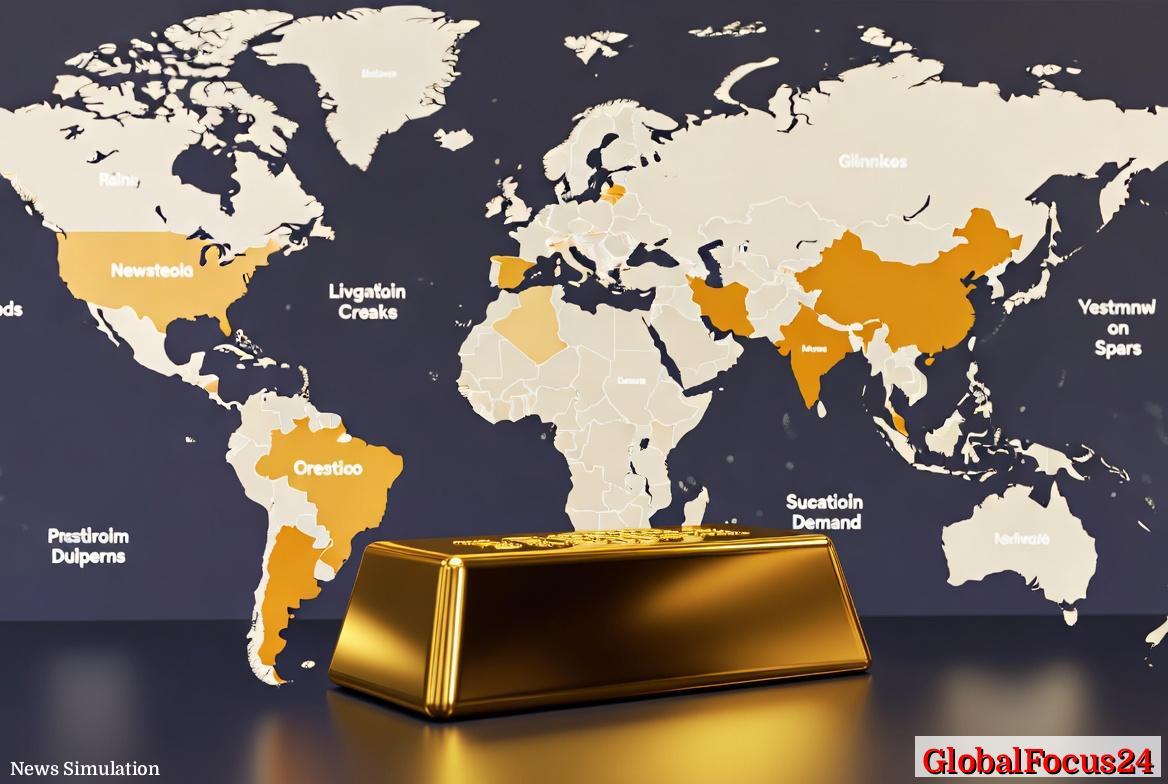
Greater China leads global demand with a 27% share, making it the single largest regional consumer of gold. Close behind is India, representing 21% of worldwide demand. Together, these two nations account for nearly half of all gold consumption globally, underscoring their central role in shaping market dynamics.
In contrast, developed regions contribute significantly smaller shares. North America accounts for 11% of global demand, while Europe, including Russia, contributes around 12%. This disparity highlights a structural shift in the gold market, where demand is increasingly concentrated in economies experiencing rapid expansion and rising middle-class wealth.
Cultural and Economic Drivers in Asia
The prominence of China and India in the gold market is rooted in both tradition and economic transformation. In India, gold has long been intertwined with cultural practices, particularly in weddings and religious ceremonies. Jewelry demand remains a cornerstone of consumption, often viewed as both adornment and a form of financial security.
China’s demand, while also influenced by cultural factors, has evolved alongside its economic growth. Rising incomes and urbanization have fueled increased purchases of gold jewelry, bars, and coins. Additionally, Chinese investors have turned to gold as a hedge against market volatility and currency fluctuations, particularly during periods of economic uncertainty.
The growing middle class in both countries continues to reinforce demand. As disposable incomes rise, gold remains a preferred store of value, especially in regions where alternative investment vehicles may be less accessible or perceived as riskier.
Investment Trends and Market Behavior
Beyond cultural consumption, gold’s role as a financial asset has gained prominence across emerging markets. Investors increasingly view gold as a safe haven during periods of inflation, currency depreciation, and geopolitical uncertainty.
In China, for example, retail investment in gold bars and coins has expanded significantly over the past decade. Similarly, in India, digital gold platforms and exchange-traded products have broadened access, attracting younger and more tech-savvy investors.
In developed markets, gold investment tends to be more closely tied to macroeconomic indicators such as interest rates and monetary policy. While demand in North America and Europe is comparatively lower, it often spikes during periods of financial stress, reflecting gold’s enduring reputation as a hedge asset.
Global Supply: Mining and Recycling Dynamics
On the supply side, global gold production is split between mining and recycling. Mine production accounts for approximately 74% of total supply, while recycled gold contributes the remaining 26%. This balance highlights the importance of both primary extraction and secondary recovery in meeting global demand.
Recycling plays a particularly critical role during periods of high prices, when individuals and institutions are more likely to sell existing gold holdings. This dynamic can help stabilize supply, especially when mining output faces constraints due to operational or environmental factors.
Africa Leads Global Gold Production
Africa has emerged as the largest source of gold supply, accounting for 26% of global mine production. The continent’s rich mineral reserves, particularly in countries such as South Africa, Ghana, and Mali, have positioned it as a key player in the global gold industry.
Mining operations across Africa vary widely in scale, from large industrial projects to small-scale artisanal mining. While the sector provides significant economic benefits, including employment and export revenue, it also faces challenges related to infrastructure, regulatory frameworks, and environmental sustainability.
Asia ranks as the second-largest producing region, contributing 19% of global supply. Major producers include China, Indonesia, and Uzbekistan, each leveraging domestic resources to support both local demand and international markets.
Regional Contributions Across the Americas and CIS
The Commonwealth of Independent States (CIS), along with Central America and South America, each account for approximately 15% of global gold supply. Russia, a leading producer within the CIS, has played a particularly significant role in recent years, supported by extensive reserves and state-backed mining initiatives.
In South America, countries such as Peru and Brazil are major contributors, while Central America’s output is driven by nations including Mexico. These regions benefit from abundant natural resources but often contend with regulatory and environmental challenges that can impact production levels.
North America, comprising the United States and Canada, contributes 14% of global gold supply. While smaller than Africa’s share, the region is known for its advanced mining technologies and strong regulatory oversight, which support efficient and sustainable operations.
Historical Context of Gold Demand and Supply
The current distribution of gold demand and supply reflects broader historical trends. For much of the 20th century, gold consumption was heavily concentrated in Western economies, particularly in Europe and North America. However, the late 20th and early 21st centuries saw a gradual shift toward Asia and other emerging markets.
This transition was driven by several factors, including economic liberalization, rising incomes, and the expansion of global trade. As countries like China and India integrated more deeply into the global economy, their influence on commodity markets, including gold, grew substantially.
On the supply side, advances in mining technology and exploration have expanded production in regions previously considered less accessible. At the same time, increased attention to environmental and social governance has reshaped industry practices, influencing both costs and output.
Economic Impact and Market Implications
The concentration of gold demand in emerging markets has significant implications for the global economy. For producing countries, gold exports represent a vital source of revenue, supporting national budgets and foreign exchange reserves.
In consuming countries, strong demand can influence trade balances and currency dynamics. For example, high levels of gold imports in India can contribute to current account deficits, prompting policy measures aimed at managing demand.
Globally, the interplay between supply and demand shapes gold prices, which in turn affect a wide range of industries, from jewelry and electronics to finance. Price fluctuations can have ripple effects across economies, influencing investment decisions and consumer behavior.
Regional Comparisons Highlight Structural Differences
Comparing regions reveals distinct patterns in both demand and supply. Asia’s dominance in consumption contrasts with Africa’s leadership in production, illustrating the geographic separation between where gold is mined and where it is ultimately used.
Developed markets, while smaller in terms of overall demand, play a critical role in financial markets, where gold is traded as an asset. This dual nature of gold—as both a commodity and a financial instrument—adds complexity to its global dynamics.
Emerging markets, meanwhile, continue to bridge these roles, combining strong physical demand with growing investment activity. This convergence is likely to shape the future trajectory of the gold market, as economic growth and financial development continue across these regions.
Outlook for the Global Gold Market
Looking ahead, several factors are expected to influence the global gold market. Continued economic growth in emerging markets will likely sustain high levels of demand, particularly in Asia. At the same time, technological advancements and regulatory developments may impact mining output and recycling rates.
Environmental considerations are also becoming increasingly important, with pressure on mining companies to adopt more sustainable practices. This could affect production costs and, by extension, global supply.
As the balance between emerging and developed markets evolves, gold’s role as both a cultural asset and a financial instrument is expected to remain central. The interplay between these factors will continue to define the global gold market, shaping its trajectory in the years to come.