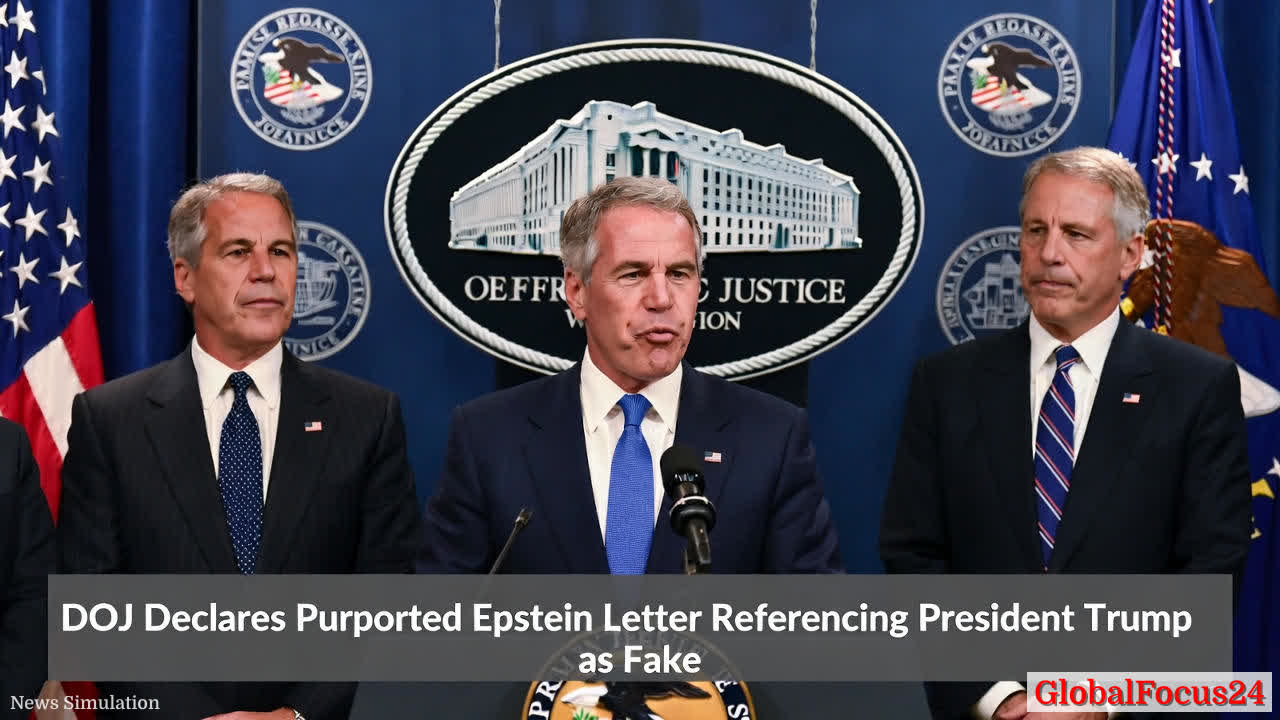
DOJ Declares Epstein Letter Referencing President Trump Fake, Citing Forensic and Contextual Discrepancies
A Department of Justice determination that a purported letter from Jeffrey Epstein referencing President Trump is fraudulent has reshaped conversations about long-standing conspiracy theories and public accountability surrounding high-profile criminal cases. The DOJ’s assessment, published after a careful review of handwriting analysis, metadata, and documentary provenance, confirms that the letter is not authentic. The development arrives amid broader public interest in how leaked documents influence perceptions of justice and national leadership.
Historical context and the timeline of discovery
Longstanding questions about Epstein’s private communications and their potential connections to other public figures have persisted since Epstein’s 2019 death in federal custody. In the years since, investigators and researchers have combed through thousands of documents released through court orders, victim advocacy groups, and journalistic investigations. A letter that appeared in a 2023 document release, allegedly written by Epstein to Larry Nassar, captured renewed attention due to its sensational claims and explicit references. The document’s provenance, however, has been contested from the outset, with questions about authorship, timing, and the context of its creation.
In this latest official assessment, the DOJ outlined several lines of inquiry that informed its conclusion of inauthenticity. Forensic handwriting analysis indicated inconsistencies with Epstein’s known handwriting patterns. Metadata associated with the letter did not align with Epstein’s typical document handling, and the returned address did not include Epstein’s inmate number, a detail consistent with his official identifiers. Perhaps most telling was a postmark dated three days after Epstein’s death at New York’s Metropolitan Correctional Center, a timing inconsistency that raises further questions about when and how the document was produced or circulated.
Economic and institutional impact
From an economic standpoint, the incident underscores the lasting importance of document integrity in national security, law enforcement, and public trust. Fraudulent or misattributed documents can influence market perceptions, affect reputational risk for institutions involved in processing or housing sensitive information, and complicate ongoing investigations. For agencies that routinely manage large volumes of critical evidence, even low-signal inconsistencies—such as an incorrect return address or postmark timing—can necessitate additional verification steps, potentially slowing the release of information that the public expects to be transparent.
Beyond the DOJ, legal and financial institutions closely watch the handling of such documents to preserve the integrity of case work, ensure due process, and maintain confidence in judicial processes. In addition, media organizations and information platforms face the challenge of weighing sensational content against verified sources, a dynamic that influences advertising ecosystems, audience trust, and the downstream diffusion of misinformation.
Regional comparisons and implications
While the Epstein case has national resonance, regional dynamics influence how communities interpret document authenticity. In jurisdictions with heightened concern about political influence, residents may scrutinize letter provenance more intensely, seeking independent forensic corroboration before drawing conclusions about ties between public figures and criminal activity. By contrast, regions with robust public-records practices and established fact-checking ecosystems may respond with measured caution, emphasizing verification methods and expert testimony.
The current ruling also has potential implications for regional legal archives and historical record-keeping. Courts, archives, and investigative bodies in different states could leverage this case as a benchmark for documenting the chain of custody, digitization processes, and the role of third-party disclosures in shaping the public record. Such standards help ensure that future document releases are accompanied by transparent methodologies, reducing room for misinterpretation or manipulation.
Public reaction and media literacy
Public reaction to the DOJ’s conclusion is likely to be mixed, reflecting broader debates about trust in institutions and the speed at which information spreads in the digital age. Some audiences may welcome the clarification as a reassurance that institutions are vigilant against forged materials. Others may view the episode as a cautionary tale about the ease with which fabricated content can surface in high-profile contexts, underscoring the need for stronger media literacy and critical evaluation of source material.
For journalists and researchers, the episode reinforces best practices in reporting on sensitive documents. Treating disputed material as unverified until authenticated, clearly communicating the limits of what is known, and avoiding definitive conclusions about individuals’ involvement without corroboration are essential steps. The DOJ’s emphasis that releasing documents does not certify their contents serves as a reminder that provenance, corroboration, and context are critical to responsible reporting.
Legal and ethical considerations
From a legal ethics perspective, the case highlights the tension between transparency and the risk of disseminating misleading information. While the public gains from the release of documents, there is an ethical obligation to avoid amplifying false or defamatory content. Legal professionals and policymakers may advocate for standardized disclosure practices that include independent forensic analysis and explicit caveats about the veracity of particular materials when published by public agencies.
In the broader landscape of accountability, the episode can be viewed as part of a continuous effort to strengthen verification frameworks surrounding sensitive communications. This includes reinforcing the chain of custody for digital and physical documents, improving metadata integrity, and ensuring that post-release analysis is accessible to researchers and the public in a way that promotes understanding rather than confusion.
What comes next
The DOJ’s determination prompts several practical steps for agencies and researchers. First, there is likely to be an emphasis on enhancing document authentication protocols, particularly for high-stakes materials that surface in public releases. Second, archivists and historians may advocate for clearer documentation about the origin and handling of contested items to reduce ambiguity in future releases. Third, media organizations might invest in cross-verification workflows that combine forensic analysis with independent expert reviews before publishing provocative materials.
For policymakers, the episode reinforces the importance of maintaining robust, transparent processes for document handling. This could involve codifying standards for post-release verification, enabling third-party audits, and promoting clear guidelines for communicating what can be concluded from released documents versus what remains uncertain.
Historical context for ongoing public trust
Over decades, the public’s trust in institutions has been shaped by the way information is produced, verified, and shared. Episodes involving forged or misattributed documents tend to heighten skepticism, but they can also catalyze improvements in practices and standards. By confronting forgery head-on and commissioning rigorous analyses, authorities demonstrate a commitment to accuracy, which can reinforce confidence in the long-run integrity of investigative processes.
Regional and international perspectives
Although the focal point is a U.S. federal matter, the issues at stake resonate globally. Many countries grapple with similar challenges around document authenticity, the ethics of disclosure, and the interplay between criminal investigations and public information. International benchmarks for forensic verification and archival standards provide a useful framework for comparative analysis, helping regions learn from each other’s successes and shortcomings in safeguarding the reliability of historical records.
Technical notes on the authentication process
The DOJ’s process typically involves multiple lines of evidence. Handwriting analysts compare stylistic features, letter shapes, pressure patterns, and spacing against authenticated samples. Metadata examinations verify document creation and modification timestamps, file paths, and origin. In addition, researchers review physical or digital signatures, return addresses, and postal marks to assess plausibility within the historical timeline of Epstein’s known incarceration. Discrepancies in any one area can undermine confidence in authenticity, and multiple independent lines of evidence strengthen the final determination.
Conclusion
The DOJ’s confirmation that a letter alleging a connection between Jeffrey Epstein and President Trump is fake serves as a clear reminder of the importance of rigorous document authentication in an era of rapid information exchange. While the public’s curiosity about the Epstein case and its possible implications continues to persist, the emphasis now is on methodical verification, transparent disclosure practices, and the preservation of public trust through precise, accurate reporting. As investigators and archivists refine their processes, stakeholders across regions and sectors can expect ongoing improvements in how contested materials are analyzed, presented, and contextualized for broad audiences.