Oil’s Round-the-Clock Gamble: Perpetual Futures on Crypto Exchanges Reshape Market Dynamics
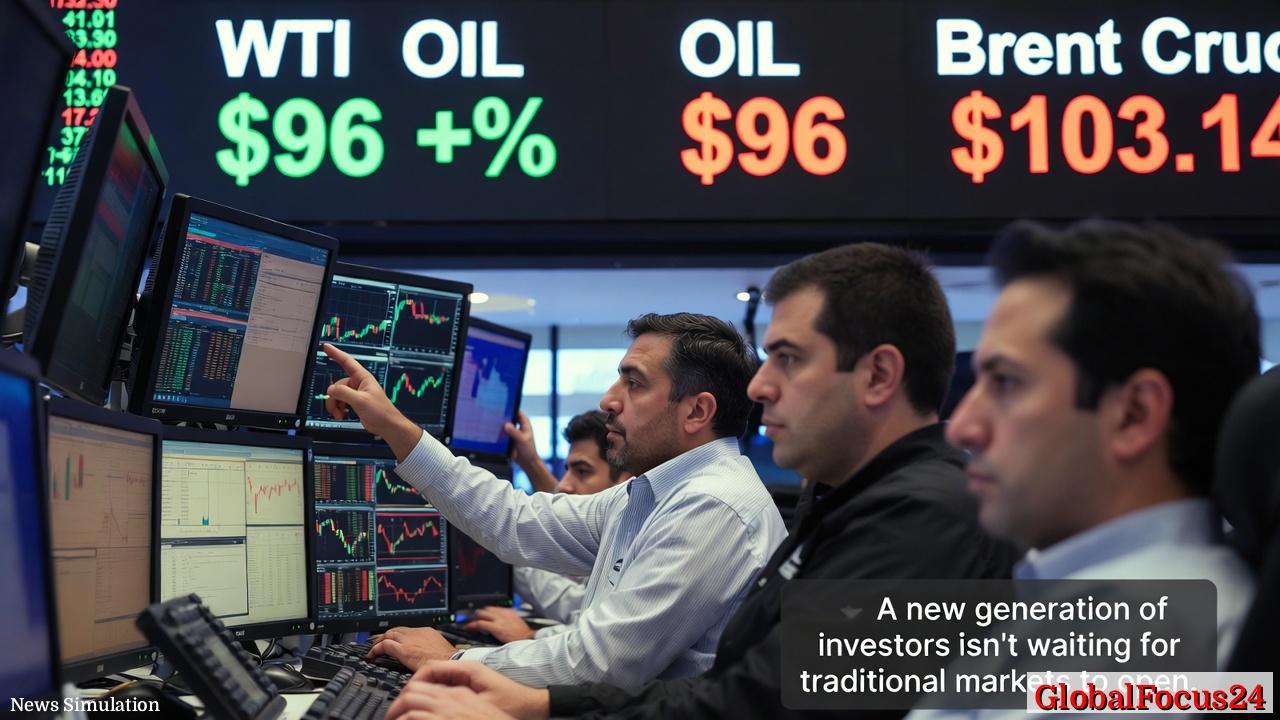
A new breed of investor is turning to perpetual futures contracts for oil and other commodities, trading around the clock on cryptocurrency exchanges. These contracts, which never expire and can offer extreme leverage, enable continuous betting on benchmarks such as West Texas Intermediate (WTI) and Brent crude. The shift signals a broader transformation in how markets respond to global events, with implications for liquidity, risk management, and regional trading patterns.
Historical context: futures, weekends, and the evolution of access Traditional commodity futures markets emerged to standardize delivery, price discovery, and risk management for producers, refiners, and end users. Standard futures contracts close on weekends and holidays, with settlement based on predefined dates. This structure gives hedgers a predictable framework, while speculators rely on liquidity and price signals that reflect a broad set of macro factors. Over time, electronic trading platforms and overnight access broadened participation, but physical delivery constraints and exchange hours still anchor the system.
The advent of perpetual contracts—first popularized in cryptocurrency trading—repurposes the core idea of a futures contract into a never-expiring vehicle. Rather than settling on a fixed date, perpetual futures use funding mechanisms to tether contract value to the underlying index, often adjusting positions through periodic payments between long and short traders. On crypto exchanges, these instruments can be accessed 24/7, with high leverage and rapid margin dynamics amplifying both gains and losses. The result is a market that can respond instantly to geopolitical developments, macro surprises, and sudden sentiment shifts.
Recent drivers: geopolitical shocks and rapid price signaling The latest wave of activity in oil perpetuals followed heightened geopolitical tensions and related news cycles. When regional events or conflicts intensify, traditional markets react as traders reassess supply risks, shipping routes, and refinery utilization. Perpetuals on crypto platforms capture that reaction in real time, offering traders the ability to position before, during, and after regular market hours.
On a representative platform, oil perpetual volume surged markedly within weeks, illustrating the appetite among crypto-native traders for commodity exposure and the ease of accessing highly levered bets. Prices for benchmarks such as WTI have shown notable moves in response to evolvings, with weekends often seeing sharp gaps as markets digest developments before official openings. The ability to trade around the clock can shorten the feedback loop between news and price, contributing to faster pricing signals in the short run.
Economic impact: liquidity, pricing, and risk Liquidity is a central feature of perpetual futures. The 24/7 access model can attract a broader base of participants, including global traders in Asia, Europe, and the Americas who operate on different time zones. When liquidity pools expand, bid-ask spreads can tighten, and price discovery may improve for certain segments of the curve. However, the same liquidity depth that aids rapid entry can disappear quickly if volatility spikes and funding rates shift, raising the risk of abrupt margin calls and forced liquidations for leveraged positions.
Leverage magnifies both opportunity and danger. Perpetual contracts routinely offer double- or triple-digit exposure relative to margin, enabling outsized gains on favorable price moves but exposing traders to rapid losses on adverse swings. For oil markets, a sudden supply disruption or a sharper-than-expected demand signal can trigger cascading liquidations as traders race to meet maintenance margins. This dynamic can introduce spillovers into correlated markets and, in extreme cases, influence volatility in related energy instruments and currencies.
Regional comparisons: where this trend resonates most
- North America: The United States, with its complex web of hedging needs and energy infrastructure, remains a dominant driver of oil demand and price signals. The presence of offshore and onshore production, refining capacity, and broad energy trading ecosystems makes North American pricing highly sensitive to geopolitical developments and OPEC+ messaging. Perpetual futures add another layer of immediacy to price discovery, particularly during weekends and holidays when traditional markets are closed.
- Europe: European traders often balance volatility in Brent crude with refinery margins and policy considerations. The nuance of storage constraints, regional supply routes, and cross-Atlantic risk appetites shapes how perpetuals are used for speculative bets versus hedging purposes. The 24/7 nature of these trades can complement or complicate existing risk management practices, depending on local liquidity and regulatory posture.
- Asia-Pacific: With growing energy demand and shifting supply chains, Asia-Pacific participants may lean into perpetuals to capture late-week or weekend price moves that might otherwise be missed in markets with shorter trading windows. Currency effects, regional refinery cycles, and demand fluctuations add layers of risk and opportunity for traders who use perpetuals to express directional views.
Risk management and governance considerations
- Monitoring and margins: The rapid pace of price moves in perpetual markets demands robust risk controls. Traders and institutions must maintain disciplined margin management to prevent cascading liquidations that can spill over into correlated assets.
- Funding dynamics: Periodic funding payments tie contract value to the underlying index but can create an ongoing cost of carry. Traders need to account for these payments, especially in highly volatile periods when funding rates swing rapidly.
- Market integrity: The emergence of perpetuals on crypto platforms raises questions about liquidity quality, platform risk, and regulatory oversight. Market participants should assess counterparty risk, platform security, and compliance frameworks before engaging in high-leverage trades.
Public reaction and market psychology Public sentiment around perpetual futures for commodities often blends intrigue with caution. Traders are drawn to the allure of continuous access and the potential for outsized returns, while risk-conscious observers point to the perils of high leverage and liquidity fragility. News cycles that highlight supply disruptions or geopolitical escalations tend to amplify volume as traders seek to reposition, while calmer periods can see a reversion to more measured speculative activity. The marketplace’s behavioral dynamics—rapid entry, aggressive sizing, and sudden capitulations—underscore the need for clear risk-awareness and prudent trading discipline.
Operational considerations for participants
- Platform selection: Investors weigh factors such as liquidity depth, funding costs, security measures, and regulatory compliance when choosing a venue for perpetual oil trades. A platform with transparent funding rates, auditable price feeds, and reliable risk controls tends to attract more institutional participation.
- Risk controls: Traders often implement stop-loss orders, position sizing limits, and diversification across multiple instruments to mitigate the risk of a single, highly leveraged bet going awry.
- Integration with traditional rails: Some market participants use perpetuals to complement core hedging strategies, viewing them as a tactical tool for short-term liquidity needs or event-driven positioning rather than a stand-alone risk management solution.
Broader implications for energy markets The ascent of perpetual futures on crypto exchanges reflects a broader movement toward tokenization and digital access to traditional assets. As blockchain-inspired trading models extend to commodities, they can reshape how investors price risk, respond to events, and allocate capital. Over time, traditional exchanges may adapt by enhancing after-hours liquidity, refining settlement processes, or integrating interoperability features that bridge digital and conventional markets. Regulators, in turn, may scrutinize leverage, transparency, and systemic risk to ensure that rapid, around-the-clock trading does not undermine market stability or consumer protection.
Conclusion: a evolving landscape for price discovery and risk The proliferation of perpetual oil futures on cryptocurrency platforms marks a notable evolution in the global trading ecosystem. By enabling round-the-clock exposure to benchmark oil prices with high leverage, these instruments provide a rapid-response mechanism for market participants during geopolitical events and macro surprises. The economic implications stretch beyond individual gains and losses, influencing liquidity dynamics, price formation, and regional trading patterns across North America, Europe, and Asia-Pacific. As markets continue to adapt to this hybrid model—where digital platforms intersect with traditional asset classes—participants should approach perpetual futures with a clear understanding of funding mechanics, risk-management practices, and the potential for rapid, significant volatility. In this rapidly shifting environment, informed decision-making and disciplined risk controls remain essential to navigate the opportunities and challenges that come with around-the-clock commodity trading.