CrowdStrike Sees Sharp Decline After New Code Security Launch Sparks Market Reassessment
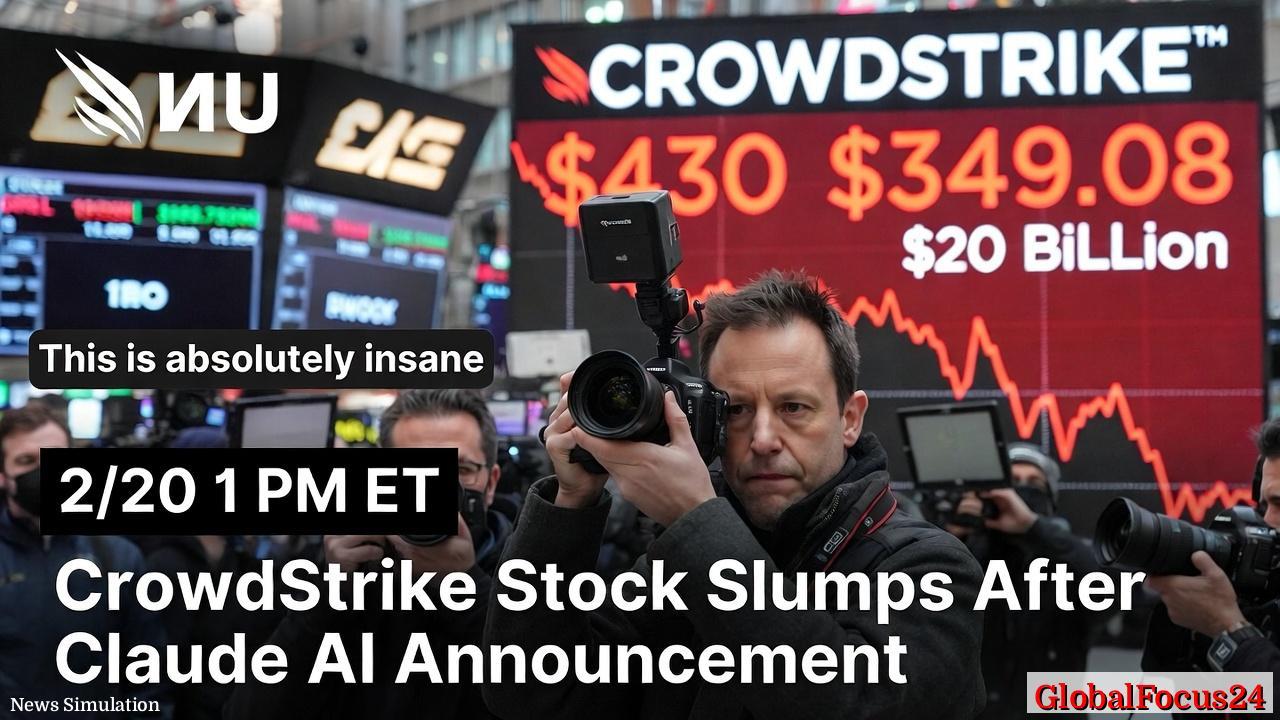
In a sell-off that underscored investor sensitivity to cybersecurity innovation announcements, CrowdStrike Holdings, Inc. ended trading at 349.08 dollars per share, down 2.03 dollars on the day—a decline of about 0.58 percent. The move followed a dramatic earlier drop that began on February 20, when the market reacted to the unveiling of Claude Code Security, a development that wiped roughly 20 billion dollars from CrowdStrike’s market capitalization in a single session. The stock’s trajectory since then has trended downward, slipping from the high four hundreds to its current price level, reflecting a combination of market recalibration, investor positioning, and the broader dynamics of software and security equities in a cautious environment.
Historical Context: From a Growth Narrative to Market Reevaluation
CrowdStrike has built a reputation as a leading provider of endpoint protection, threat intelligence, and cloud-based security services. Since its public listing, the company has been emblematic of the broader shift toward proactive, AI-enabled cybersecurity solutions. The rapid growth story in the 2010s and early 2020s was driven by an expanding attack surface, the proliferation of remote work, and the increasing complexity of enterprise IT ecosystems. As defense budgets rose and digital transformation accelerated, CrowdStrike positioned itself at the intersection of machine learning, cloud-native architecture, and real-time threat detection. The February 20 announcement, however, illustrates how the market weights announcements about next-generation capabilities against near-term profitability, integration challenges, and competitive dynamics in a crowded field that includes incumbents and nimble startups alike.
Economic Impacts: Investor Sentiment, Valuation Rollover, and Sector Trends
- Market capitalization dynamics: The instantaneous $20 billion decline tied to the Claude Code Security reveal highlights the volatility that can accompany frontier technology disclosures. In high-growth sectors, such adjustments are common as investors reprice future cash flows in light of new product capabilities and expected adoption timelines.
- Revenue and margin considerations: While innovations like Claude Code Security can signal competitive differentiation, investors also scrutinize how such offerings affect near-term margins, customer churn, and cross-sell potential across the company’s portfolio. The balance between expansive product development and disciplined cost management remains a central theme in assessing value creation.
- Competitive landscape: The cybersecurity landscape remains intensely competitive, with both established security platforms and emerging AI-driven startups vying for enterprise risk management budgets. The reception of new code-security features depends on perceived ease of deployment, compatibility with existing security stacks, and demonstrated return on investment.
Regional Context: Silicon Valley, California, and Global Implications
- Regional tech ecosystem: Santa Clara and the broader Silicon Valley region continue to serve as a hub for cybersecurity innovation, venture funding, and enterprise IT adoption. The rapid cycle of product announcements in this area often translates into heightened investor scrutiny and immediate market reactions, as seen in CrowdStrike’s recent experience.
- Cross-regional comparisons: Global peers in the cybersecurity space have also faced valuation swings around new product introductions, particularly when the innovations touch core platform capabilities. Regions with strong enterprise technology demand have tended to absorb short-term volatility more quickly if the long-run growth narrative remains intact.
- Economic ripple effects: When a flagship security provider experiences a sharp stock move tied to a single product reveal, suppliers, channel partners, and managed security service providers can also experience sentiment shifts. This can influence hiring plans, deployment timelines for customer projects, and regional technology spending patterns.
What the Claude Code Security Announcement Signals
- Product scope and capabilities: Claude Code Security appears to reflect integration of code analysis and security tooling within an AI-assisted security fabric. This aligns with broader industry moves toward shifting security left in the software development lifecycle, aiming to detect vulnerabilities earlier and automate remediation guidance.
- Adoption and ecosystem fit: The financial market’s focus remains on how quickly organizations can adopt such tools within complex environments. Factors such as compatibility with popular development frameworks, ease of integration with CI/CD pipelines, and the breadth of supported languages influence uptake.
- Security outcomes: Stakeholders are assessing whether the new offering demonstrably reduces time-to-detection, accelerates incident response, and lowers total cost of ownership. Proven metrics, customer case studies, and independent validations will shape credibility over time.
Operational and Strategic Considerations for Stakeholders
- For investors: Short-term volatility around major product announcements is common, but long-run performance will hinge on monetization, customer retention, and expansion into adjacent security domains. Ongoing communication about product roadmaps and customer wins can help stabilize expectations.
- For customers: Decision-makers weigh the trade-offs between adopting cutting-edge security features and maintaining continuity with existing tools. Clear evidence of interoperability, performance benchmarks, and total-cost-of-ownership analyses will influence procurement decisions.
- For developers and partners: A robust developer ecosystem and favorable integration pathways are critical for expanding the reach of new security capabilities. Collaboration with independent security researchers and third-party auditors can bolster confidence in product reliability.
Historical Performance Compared to Peers
In the broader market, cybersecurity equities have demonstrated both resilience and sensitivity to innovation narratives. Firms that successfully translate advanced AI capabilities into demonstrable security outcomes typically enjoy sustained demand, yet the pathway to profitability is uneven and often subject to the pace of enterprise digital transformation. Relative to peers with similar portfolios, CrowdStrike’s valuation reflects expectations for growth momentum, customer diversification, and the scalability of its cloud-native platform. When new features enter the market, investors compare anticipated cross-sell opportunities, renewal rates, and international expansion prospects to those of competitors, which can drive immediate re-pricing in share prices.
Public Reception and Market Psychology: Reassessing Risk
- Public reaction to breakthrough security features tends to be a mix of optimism and caution. Early enthusiasm can give way to prudence if customers question deployment timelines, integration costs, or measurable security outcomes. The current trading environment for cybersecurity stocks illustrates how quickly sentiment can swing based on new information.
- Risk disclosures remain a critical element for investors. Companies typically outline operational risks, including integration challenges, reliance on third-party infrastructure, and regulatory considerations. Clear articulation of risk management practices helps markets interpret the potential upside against possible hurdles.
- Media and analyst commentary often amplify market moves in the wake of high-profile product announcements. Whiles can spark initial reactions, sustained performance depends on real-world adoption, customer feedback, and execution discipline.
Sustainability and Long-Term Value Creation
- R&D investment: Sustained investment in research and development is essential for staying ahead in a fast-evolving security landscape. Companies that maintain a disciplined balance between innovation and profitability tend to deliver durable shareholder value over time.
- Customer-centric metrics: Net dollar retention, expansion revenue, and renewal rates are critical indicators of a platform’s stickiness. For CrowdStrike and similar providers, maintaining high retention while expanding into new use cases can offset volatility tied to single-event announcements.
- Environmental and governance considerations: As with many tech incumbents, governance standards and responsible innovation practices contribute to long-term reputation and investor confidence, particularly in markets emphasizing sustainable growth.
Conclusion: Navigating a Dynamic Security Market
The market’s reaction to Claude Code Security underscores the agile, competitive nature of the cybersecurity sector. For CrowdStrike, the decline in share price after a dramatic early-February announcement signals a period of recalibration as investors await tangible outcomes from new capabilities, customer wins, and incremental monetization milestones. In a region renowned for its innovation cycle, regional players remain closely watched by both domestic and global participants who seek to understand how next-generation security tools translate into real-world risk mitigation and cost efficiency. As enterprises continue to prioritize robust, scalable defenses in an increasingly complex digital environment, market participants will closely monitor not only product announcements but also adoption rates, customer success stories, and the broader trajectory of AI-driven security solutions. The coming quarters are likely to reveal whether the Claude Code Security initiative extends CrowdStrike’s advantage or prompts a reconfiguration of expectations across the cybersecurity landscape.
[Note: The above article presents a detailed, original analysis of recent market movements and product announcements involving CrowdStrike, with contextual context and forward-looking observations designed for a general audience.]