China’s “Nongchaoer”: Riding the Fire Horse Year’s High-Tech Wave Amid Slowing Growth
A Changing Economic Landscape
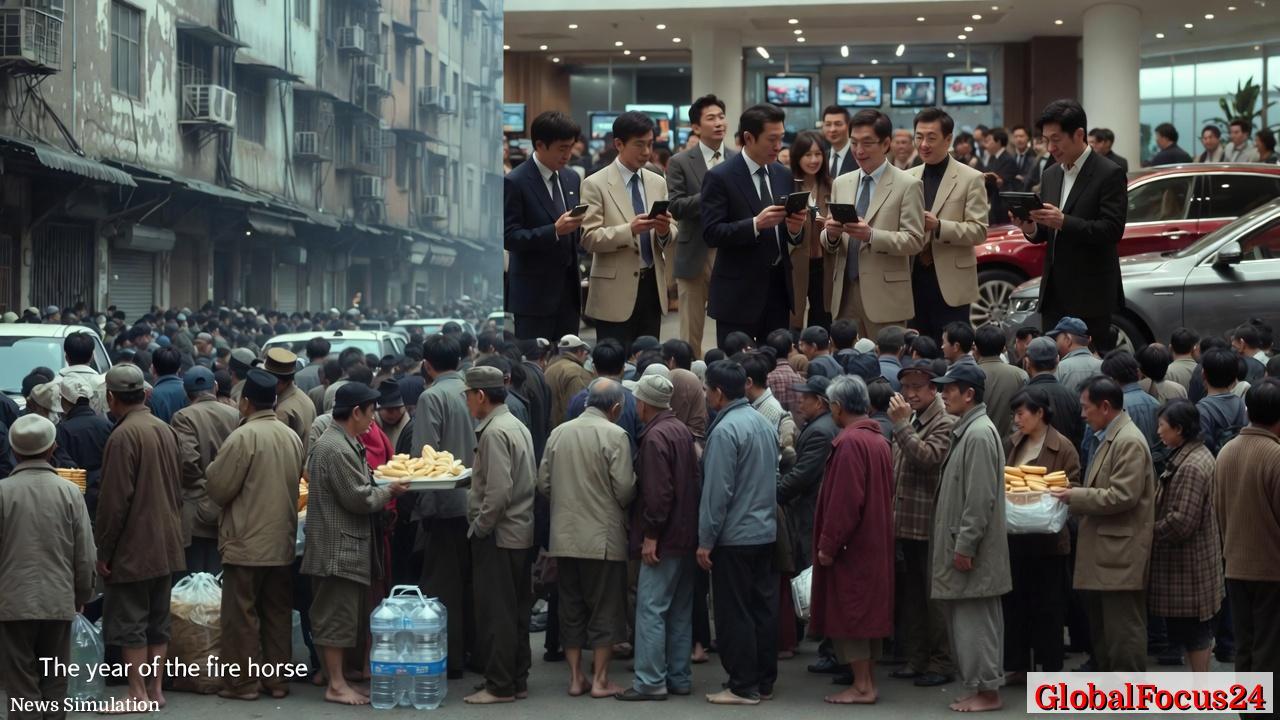
In the year of the fire horse, 2026 marks a moment of transition for China’s economy—one defined by both slowdown and transformation. For much of the population, opportunities have become scarcer, wages stagnant, and entrepreneurship increasingly difficult in a market facing tighter liquidity and global competition. Yet in this landscape of uncertainty, a new class of economic winners has emerged: the nongchaoer, literally those who “ride the tide.”
This small cohort—comprising entrepreneurs, investors, and highly skilled professionals—has found prosperity by positioning themselves at the forefront of China’s pivot toward advanced technologies. While much of the economy struggles with sluggish growth, the nongchaoer thrive in sectors such as artificial intelligence, clean energy, quantum computing, and semiconductor innovation. Their rise underscores China’s evolving economic identity: one shifting away from mass manufacturing toward high-value, innovation-driven industries.
Slower Growth, Sharper Divide
China’s GDP growth in 2026 continues to decelerate after years of extraordinary expansion. Following the property downturn and tightening credit that punctuated the early 2020s, household consumption remains weak and local governments remain burdened by debt. The national growth rate, hovering near 4 percent, is well below the double-digit averages of previous decades. This deceleration is most strongly felt in small cities and rural areas, where job creation has slowed dramatically.
The unevenness of China’s recovery has intensified social divisions. The nongchaoer—many based in vibrant urban centers such as Shenzhen, Hangzhou, and Shanghai—represent a narrow but influential segment of the population who have effectively anticipated policy shifts and market openings. They are the beneficiaries of a government strategy that promotes “new productive forces,” emphasizing robotics, automation, and digital innovation over traditional infrastructure-led expansion.
For those outside these elite circles, however, the new economy offers limited access. Wage earners in traditional manufacturing hubs like Guangdong and Jiangsu face a starkly different reality, as factories either automate or relocate to Southeast Asia. Meanwhile, university graduates entering an increasingly competitive job market encounter difficulties matching their education with the specialized skills demanded by high-tech employers.
Historical Parallels in Economic Transformation
The phenomenon of a privileged few succeeding amid broader economic turbulence is not new to China’s modern history. During the “reform and opening” era of the late 20th century, opportunity belonged to those who seized the moment in trade, export, and real estate. The nongchaoer of today mirror those early entrepreneurs, yet with a distinctly digital edge.
Decades ago, wealth flowed from low-cost manufacturing and exports. Now, it emerges from intellectual property, algorithmic innovation, and sustainability technologies. This structural shift echoes previous periods of transformation—such as the early 2000s Internet boom—but today’s innovators face much sharper global competition. The rise of the nongchaoer thus represents not only a continuation of China’s entrepreneurial spirit but its adaptation to a more technologically sophisticated and capital-intensive phase.
Innovation as a Lifeline
As global demand cools and traditional engines of growth sputter, China’s government has doubled down on innovation as a long-term solution. The nongchaoer embody this policy in action. Startups in renewable energy storage, smart manufacturing, and AI-generated content are flourishing despite the wider slowdown. Venture capital, though more selective than during previous investment waves, continues to pour into frontier fields, creating concentrated pockets of wealth and opportunity.
For example, semiconductor engineers in Shanghai and Suzhou command salaries rivaling those in Silicon Valley, while founders of machine-learning startups draw international funding and visibility. This concentration of expertise and capital has transformed certain districts into zones of relentless innovation—digital equivalents of earlier manufacturing clusters.
Yet this success also reveals a growing duality in the economy: the technological elite versus the traditional workforce. In a sense, China’s drive toward high-tech leadership has created an internal economic migration—one not of geography, but of opportunity. Those able to “ride the tide” of innovation soar ahead, while millions remain anchored in fading industries.
Economic Consequences and Social Implications
The widening gap between the nongchaoer and the general population poses a challenge to social balance. Income inequality, long a concern, now takes new form. Instead of disparities based merely on urban and rural divides, inequality increasingly follows lines of technological access and educational attainment.
Consumers in affluent urban areas continue to spend on luxury goods, experiential travel, and high-end electronics, fueled by earnings linked to high-tech ventures. In contrast, households dependent on the traditional economy exhibit cautious spending habits, reflecting uncertainty about income prospects. The difference has ripple effects across retail, services, and real estate, reinforcing the sense of “two economies” moving at different speeds within one nation.
At the policy level, authorities have attempted to temper these divides through investment in digital literacy programs and initiatives supporting small and medium-sized enterprises in tech adoption. However, the pace of transformation often outstrips the ability of institutions to keep up.
Regional Comparisons and Lessons
China’s high-tech transition and the emergence of the nongchaoer class draw interesting comparisons with other Asian economies. South Korea underwent a similar transformation during the late 20th and early 21st centuries, moving from heavy industry to electronics and innovation-led growth. Yet unlike South Korea’s chaebol-driven model, China’s nongchaoer ecosystem is more decentralized, characterized by flexible startups and independent innovators.
Japan’s experience during its economic resurgence of the 1980s also offers perspective. There, technological innovation created a new elite, but rapid asset inflation and unequal distribution of gains eventually contributed to stagnation. Observers note that China must balance its pursuit of high-tech excellence with policies that ensure broader inclusivity to avoid similar pitfalls.
Meanwhile, regional competitors such as India and Vietnam are capturing portions of the manufacturing exodus from China, emphasizing how China’s shift up the value chain could both elevate and isolate parts of its economy. While the nongchaoer are thriving, their success depends on maintaining global competitiveness in innovation—a far more volatile and uncertain undertaking than traditional manufacturing exports.
The Fire Horse Year’s Symbolism
In Chinese tradition, the fire horse year is known for its restless, dynamic energy—both a blessing and a warning. It symbolizes bold ambition, risk-taking, and transformation, qualities that align closely with the nongchaoer spirit. These individuals are defined by their willingness to act swiftly and decisively amid uncertainty, to sense the currents of change before others do, and to turn volatility into opportunity.
That symbolism resonates deeply in 2026, as China faces a decade likely to define its next stage of modernization. The nongchaoer may be the face of the country’s economic future, yet their rise also highlights the underlying tension between innovation-led growth and equitable development.
Balancing Prosperity and Progress
The question facing policymakers and society alike is how to ensure that the momentum created by the nongchaoer translates into shared prosperity, not just concentrated advantage. Sustained high-tech growth depends on an ecosystem of skilled labor, open collaboration, and accessible education. Without these foundations, innovation risks becoming an enclave economy benefiting only a select few.
Some economists advocate increased government support for retraining programs and pathways for workers in legacy industries to transition into digital roles. Others suggest deeper financial reforms to channel capital into smaller enterprises beyond the large tech clusters, encouraging regional diversification. Such measures could widen participation in the innovation economy while preserving social stability.
Looking Ahead
As 2026 progresses, the nongchaoer continue to define the spirit of the era—restless, inventive, and increasingly global in outlook. Their success captures both the promise and paradox of China’s evolving economy: extraordinary opportunities for some, persistent challenges for many.
In a year symbolized by movement and transformation, these “tide riders” stand as both beneficiaries and bellwethers of change. Their ascent underscores a fundamental truth about the nation’s economic journey—a shift from sheer scale to sophisticated speed, from mass production to creative reinvention.
Whether the nongchaoer herald a sustainable new chapter or simply the latest wave in China’s ongoing cycle of growth and inequality remains to be seen. But one thing is certain: in the year of the fire horse, those who can read the currents of innovation will continue to shape the tides of China’s future.