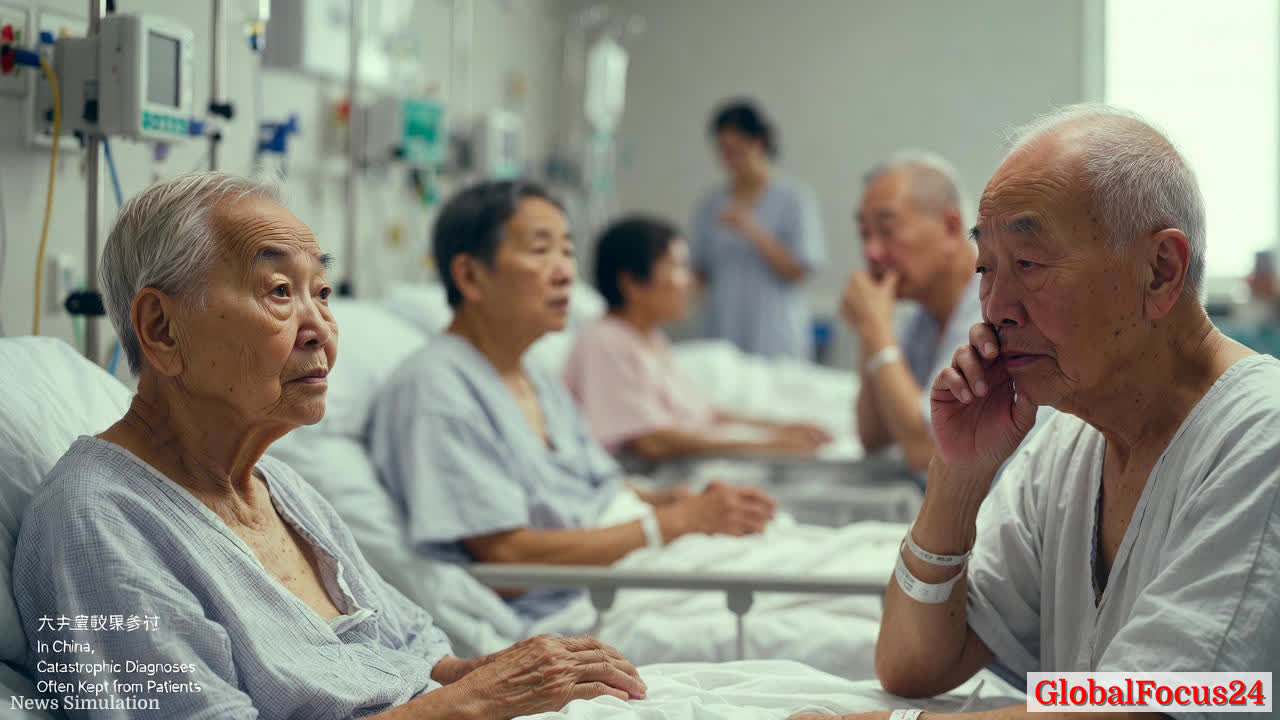
In China, Catastrophic Diagnoses Often Kept from Patients
The tension between medical capability and cultural expectation is shaping a quiet, persistent crisis in end-of-life care across China. As life expectancy rises and chronic diseases become more prevalent, a growing share of patients confront diagnoses—such as advanced cancer or neurodegenerative conditions—that carry profound physical and emotional burdens. Yet many of these patients, and their families, remain unaware or inadequately informed about their prognosis, treatment options, and the likely trajectory of illness. The result is a health system grappling with a dissonance: modern medical advances extend life, but the quality of that life, and the manner in which it ends, often fall short of what many patients would choose if fully informed.
Historical context and a foundation of tradition
China’s modern medical landscape has undergone a dramatic transformation over the past few decades. Public health campaigns, rapid urbanization, and the expansion of hospital networks have raised life expectancy and improved survival rates for a range of conditions. Yet the cultural underpinnings of medical decision-making—rooted in families’ central role in caregiving, filial piety, and a historically medicalized approach to suffering—continue to influence how information is shared at the bedside. The concept of truth-telling to patients, while increasingly accepted in many urban hospitals, can still be mediated or filtered by family members who fear eroding hope or causing distress. This dynamic often leads to a scenario in which patients are not the sole recipients of critical information about life-threatening diagnoses.
End-of-life care as a policy frontier
The Chinese government has acknowledged the need to improve end-of-life care as the population ages and the burden of chronic illnesses grows. State-subsidized pilots, hospital-led initiatives, and reforms aimed at palliative care delivery are part of a broader push to align medical practice with evolving patient expectations. These experiments are designed to test scalable models—ranging from early palliative involvement in oncology to community-based hospice services—that could standardize how prognosis is discussed, how pain and symptom management are prioritized, and how advance care planning is integrated into routine care. However, progress is uneven across regions, and many hospitals still operate with limited palliative care teams, constrained funding, and cultural barriers that hinder frank conversations about prognosis.
Economic impact and the cost of deferred clarity
The economic implications of withholding information about deteriorating health can be substantial. When patients and families are uncertain about the likely course of a disease, decisions around aggressive treatments versus comfort-focused care may be delayed or misaligned with patient preferences. This misalignment can lead to longer hospital stays, higher out-of-pocket costs, and increased utilization of intensive interventions that may offer limited benefit in advanced stages of illness. Conversely, earlier discussions about prognosis and goals of care have the potential to reduce unnecessary procedures, align treatment with patient values, and shift resource allocation toward home-based palliative support and community care, which can be more cost-effective in the long run.
Regional comparisons reveal divergent paths
Across Asia and other parts of the world, countries have taken different routes to address end-of-life care. In some neighboring economies, rapid development of hospice networks and standardized communication training for clinicians have improved transparency in prognosis discussions. In others, cultural barriers persist, and families continue to shield patients from bleak prognoses, sometimes with the unintended consequence of delayed palliative intervention. Within China, coastal metropolitan areas often report more robust palliative care services and greater acceptance of palliative medicine as a specialty, while rural and inland regions may struggle with workforce shortages, limited access to opioids for pain management, and fewer established protocols for discussing do-not-resuscitate orders or preferred place of death. Such disparities underscore the importance of scalable policies that address both clinical practice and social norms.
Clinical realities: symptoms, dignity, and decision-making
Prognosis discussions are inherently complex. Clinicians must balance honesty with empathy, accuracy with sensitivity, and clinical reality with patients’ need for hope. In many cases, patients experience a trajectory dominated by pain, fatigue, sleep disturbances, and loss of independence. Effective end-of-life care prioritizes symptom relief, psychosocial support, and the preservation of dignity. Pain management, early integration of palliative care, and clear communication about goals of care can improve patient and family satisfaction, reduce anxiety, and help shape decisions that reflect the patient’s values and preferences. When families are engaged in a transparent dialogue about prognosis, care plans tend to be more aligned with patient wishes, potentially reducing the moral distress experienced by caregivers and clinicians alike.
Public health strategies and education
A multi-pronged approach is essential to advance end-of-life care. Public health campaigns that normalize discussions about prognosis and dying, integrated into medical education and continuing professional development, can empower clinicians to have honest, compassionate conversations. Training programs that emphasize patient-centered communication, cultural competence, and ethical considerations around truth-telling can help clinicians navigate delicate conversations with sensitivity. Public education campaigns can also help families understand the benefits of clear prognostic information, advance directives, and the role of palliative care in improving quality of life in the final months of life.
Infrastructure and workforce development
Sustained progress requires building a robust palliative care workforce. This includes expanding specialist training, increasing the number of palliative care teams within tertiary hospitals, and establishing community-based programs that extend care beyond hospital walls. Telemedicine can play a critical role in extending access to palliative expertise, particularly in remote regions where specialists are scarce. Additionally, ensuring consistent access to analgesics and essential medicines for symptom control remains a key component of effective end-of-life care. Without reliable pharmacologic options, even well-intentioned prognostic discussions may fall short if patients experience uncontrolled pain or distress.
Societal implications and public reaction
The broader public's response to changes in end-of-life care varies. In urban centers, a rising awareness of patient rights and autonomy has contributed to stronger demand for transparent communication and dignified care at the end of life. In more traditional communities, there can be hesitancy to question medical authority or to pursue palliative options that change how families share responsibility for care. Media coverage, personal narratives, and advocacy by healthcare professionals and patient groups can influence attitudes toward prognosis discussions and palliative care, gradually shifting social norms toward a more patient-centered approach.
Case examples and human perspectives
Stories from hospitals across the country illustrate both challenges and progress. A patient diagnosed with advanced cancer may experience a long period of treatment attempts that delay discussions about goals of care, followed by a pivotal moment when clinicians, together with family members, pivot toward symptom relief and comfort-focused planning. In other cases, early involvement of palliative care teams leads to smoother transitions, with patients choosing to spend their final days at home surrounded by loved ones. These anecdotes highlight the human impact behind policy and practice, reminding stakeholders that end-of-life care is not merely a clinical issue but a deeply personal experience that touches families, communities, and generations.
Policy recommendations for roadmaps forward
To accelerate improvements in end-of-life care, several policy levers can be pursued:
- Expand and standardize prognosis communication training for clinicians, emphasizing cultural sensitivity and patient-centered dialogue.
- Invest in palliative care infrastructure, including hospital-based units, community programs, and home-based services that enable dignified care outside hospital settings.
- Promote advance care planning through public education and easy-to-use directives that reflect diverse values and beliefs.
- Improve access to essential medicines for symptom management and ensure equitable distribution across urban and rural regions.
- Encourage research into patient and family experiences, helping to identify best practices for explaining prognosis and aligning care with patient goals.
The urgency of humane end-of-life care
As demographic trends reinforce the reality of aging populations, the demand for compassionate, transparent, and practical end-of-life care will only grow. Treating prognosis conversations as a routine, high-quality component of care can reduce needless suffering and ensure that patients retain agency in the final chapters of their lives. While progress is uneven, the momentum toward better communication, more robust palliative services, and policies that place patient dignity at the center is gaining traction in many parts of the country. The question is not whether change will occur, but how quickly and how comprehensively it can be implemented to serve patients, families, clinicians, and society at large.
Conclusion: toward a more transparent end of life
The challenge of catastrophic diagnoses and the broader discourse around end-of-life care in China sits at the intersection of medicine, culture, and policy. It requires coordinated actions that respect family dynamics while affirming patient autonomy, integrate symptom-focused care with emotional and spiritual support, and ensure access to essential medications and trained professionals across regions. By prioritizing prognosis communication, expanding palliative care, and fostering public understanding, China can move toward a model of end-of-life care that honors the dignity of every patient while easing the burden on families and the healthcare system. In a rapidly aging nation, such reforms are not only a medical imperative but a moral one, with far-reaching implications for health equity, societal resilience, and the lived experience of millions facing life-limiting illness.