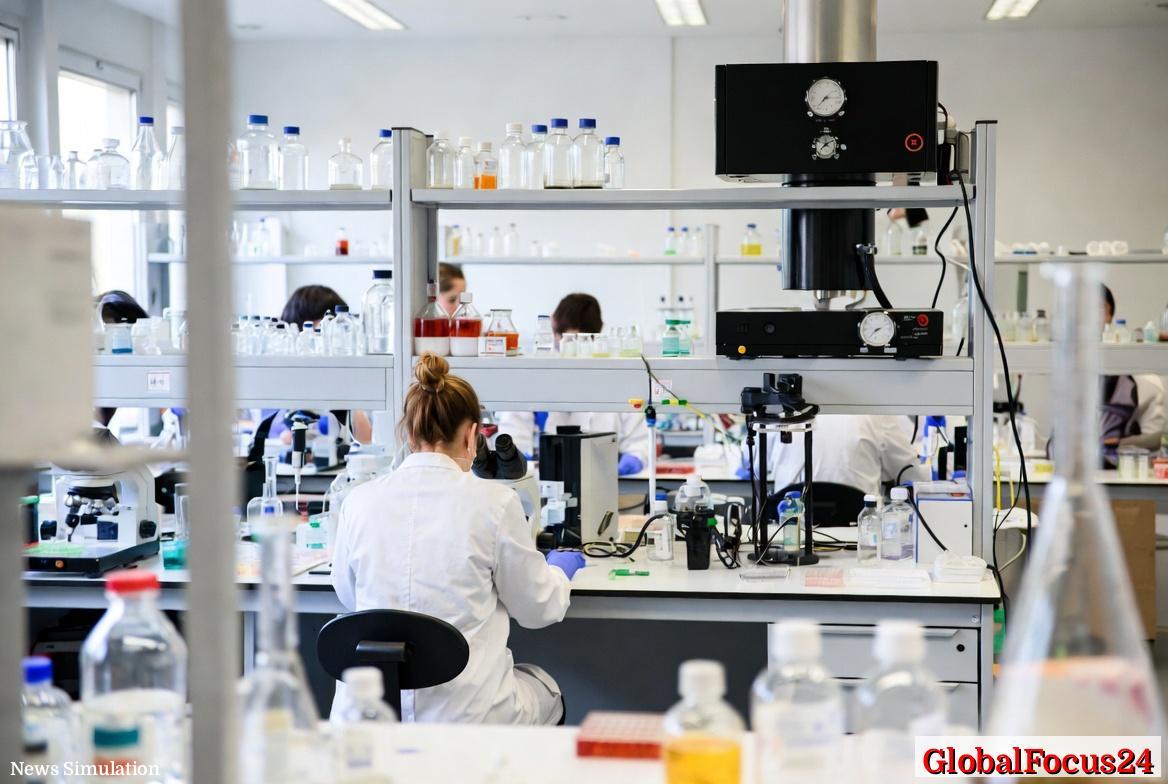
Scientists Begin First Human Trial Using Cellular Reprogramming to Reverse Aspects of Aging
A Milestone in Regenerative Medicine
In a landmark step toward human rejuvenation therapies, researchers have launched the first clinical trial testing whether partial cellular reprogramming can safely reverse certain aspects of aging. The experimental procedure aims to “turn back the clock” on cells damaged by age-related diseases, potentially restoring function to tissues once thought irreparably deteriorated.
This groundbreaking trial represents the culmination of nearly two decades of scientific advances in understanding how cells can be coaxed back into a more youthful state—without erasing their identity or introducing catastrophic risks such as tumor formation.
The Science Behind Reprogramming
At the heart of the new approach are three key genetic factors, collectively known as modified Yamanaka factors. These are derived from the set of four genes first identified in 2006 by Japanese scientist Shinya Yamanaka, whose discovery showed that mature cells could be reprogrammed into induced pluripotent stem cells (iPSCs). The four factors—OCT4, SOX2, KLF4, and c-MYC—can reset adult cells to an embryonic-like state, enabling them to develop into any type of tissue.
However, the inclusion of the factor c-MYC poses cancer risks because of its role in cell proliferation. The new trial omits this gene, focusing instead on a trio of factors—OCT4, SOX2, and KLF4—that can rejuvenate aging cells without pushing them all the way back to a pluripotent state. Researchers use a modified virus to deliver these genes temporarily into human cells, promoting cell repair and tissue function rather than total reprogramming.
From Mouse Models to Human Eyes
Preclinical studies produced striking results. In mice, short-term activation of the three genes improved tissue regeneration and extended lifespan without causing tumors—a major milestone that paved the way for human trials. Experiments conducted in several labs showed the treatment could enhance muscle recovery after injury, improve heart function, and rejuvenate nerve cells in the retina and brain.
The most influential data came from work by Yuancheng Ryan Lu, a biologist currently based at the Whitehead Institute in Cambridge, Massachusetts. Lu’s studies documented new growth in aging retinal neurons after viral delivery of the reprogramming genes. Treated animals regained visual responses that had declined with age, suggesting the restoration of nerve function rather than compensation by unused neuronal circuits. His findings formed the scientific foundation for the first human application.
The Glaucoma Trial
The newly launched trial is being led by Life Biosciences, a biotechnology firm headquartered in Boston. The focus is on glaucoma, a leading cause of irreversible blindness worldwide. Glaucoma damages the optic nerve through elevated pressure or other mechanisms, gradually killing retinal ganglion cells and robbing patients of vision.
Up to 12 participants with primary open-angle glaucoma will receive the viral treatment in one eye, with potential expansion to include six others suffering from a related subtype. The study’s primary endpoint is safety—ensuring that the therapy does not provoke harmful immune responses, disrupt normal cellular identity, or trigger uncontrolled growth.
If successful, secondary endpoints will evaluate signs of restored nerve communication between the eye and brain, assessed through imaging, electrophysiological measurements, and functional vision tests over several months.
Why Glaucoma Matters for Aging Research
Glaucoma offers a unique window into the promise and limits of partial cellular reprogramming. Unlike many degenerative conditions, the affected tissue—the retina—is relatively accessible for targeted delivery and monitoring. It provides measurable outcomes through established ophthalmic imaging technologies.
Moreover, glaucoma is strongly linked to age-related decline in cellular resilience. Restoring retinal ganglion cells that have lost function over time provides not only a potential vision-saving therapy but also a model for testing rejuvenation approaches in other organs. Success in the eye could spur efforts to rejuvenate neurons in the brain, cardiac cells in the heart, or muscle fibers throughout the body.
Historical Roots of the Field
The concept of cellular rejuvenation has evolved rapidly since Yamanaka’s discovery in 2006. Within years, scientists worldwide were exploring how to use iPSCs to model disease, grow tissues, and even regenerate damaged organs. Yet complete reprogramming raised profound safety and ethical issues, as cells reverting to a stem-like state could form teratomas—tumors containing multiple tissue types.
Researchers later realized that short, cyclic, or partial activation of the Yamanaka factors could rejuvenate cells at a more subtle level. In these experiments, cells regained youthful gene expression patterns, repaired DNA damage, improved mitochondrial activity, and enhanced tissue function—all without losing their identity. By 2020, several animal studies had shown extended lifespan and restored vitality in aging mice subjected to intermittent reprogramming treatments.
These developments turned the once-speculative idea of “age reversal” from science fiction to a contested but increasingly evidence-based branch of biomedicine.
The Players Behind the Revolution
Private industry has moved quickly to translate these breakthroughs into human therapies. Life Biosciences, leading the current glaucoma trial, was among the first companies explicitly founded to explore longevity and rejuvenation science. It is joined by a growing ecosystem of firms, including Altos Labs, founded with input from renowned biologist Juan Carlos Izpisúa Belmonte, and other ventures backed by prominent technology investors.
Billions of dollars have flowed into this sector in the past five years, signaling that longevity biotechnology is maturing from academic experimentation to commercial development. The companies share a common goal: to understand and slow the fundamental biological processes of aging through safe interventions that can be systematically controlled and verified.
The Economic and Healthcare Impact
If partial cellular reprogramming proves safe and effective, the economic implications could be transformative. Age-related diseases—from heart failure to cognitive decline—represent the largest share of healthcare spending in industrialized nations. The ability to restore tissue function could reduce long-term care costs, delay disease onset, and extend healthy lifespan.
Regenerative therapies that rejuvenate existing tissues, rather than replace them, might also alleviate organ transplant shortages and reshape how hospitals manage chronic conditions. Economists project that even a modest increase in average healthy lifespan could generate trillions of dollars in productivity and healthcare savings worldwide.
At the same time, such treatments would need equitable access frameworks. Without them, the technology could widen existing gaps in health outcomes between wealthy and lower-income populations, a challenge that policymakers and global health organizations are already beginning to discuss.
Global Race Toward Human Rejuvenation
The United States now leads in formal trials, but research in cellular reprogramming is accelerating internationally. Laboratories in Japan, Switzerland, and the United Kingdom have all launched programs to explore partial reprogramming methods for age-related decline. In Asia, several biotech firms are investigating similar gene-delivery strategies for liver and muscle regeneration.
Meanwhile, European regulators are preparing ethical frameworks to address lifespan-extension technologies, emphasizing long-term monitoring and post-trial commitments. The convergence of genetic science, data analytics, and AI-driven protein modeling has made such therapies more plausible—and potentially safer—than at any previous time in history.
Balancing Promise and Precaution
Despite strong enthusiasm, researchers stress the need for caution. Turning back cellular age too far risks disrupting essential biological programming, leading to loss of specialized cell functions or uncontrolled proliferation. Achieving precise control of gene activation—both in duration and intensity—remains the decisive technical challenge.
Unlike conventional drugs that wear off in hours or days, reprogramming factors alter gene expression at a fundamental level. Ensuring reversibility, containment, and tissue specificity is therefore critical. Scientists emphasize that this first trial’s modest scale is appropriate: its goal is not to promise rejuvenation but to confirm that partial cellular reprogramming can be done safely in human tissue.
A New Era for Medicine
This trial symbolizes more than a single experiment; it marks the beginning of a new era in regenerative medicine. The underlying vision is to treat aging itself as a modifiable condition—a biological process driven by reversible molecular changes rather than an inevitable decline.
If partial reprogramming succeeds in glaucoma, the same principles could be applied to conditions like Alzheimer’s disease, cardiac fibrosis, and sarcopenia. Each success would bring medicine closer to therapies that maintain tissue vitality across the human lifespan.
As Yuancheng Ryan Lu once described in a research briefing, “The goal is not immortality but restoration.” Within that distinction lies a revolution: using biology to preserve youthfulness at the cellular level. The coming years will reveal whether this audacious experiment represents a turning point in human health—or the first step in a longer, more careful journey toward rejuvenation.