China Faces Emergence of a Hereditary Elite as Wealth Transfers Accelerate Amid Slowing Economy
The Dawn of a New Wealth Era
China stands on the cusp of a profound social and economic shift as the country’s first generation of post-reform entrepreneurs begins handing down vast fortunes to their heirs. This transition, unfolding without inheritance taxes and amid sluggish economic growth, could mark the birth of a hereditary elite — a development with far-reaching implications for the world’s second-largest economy.
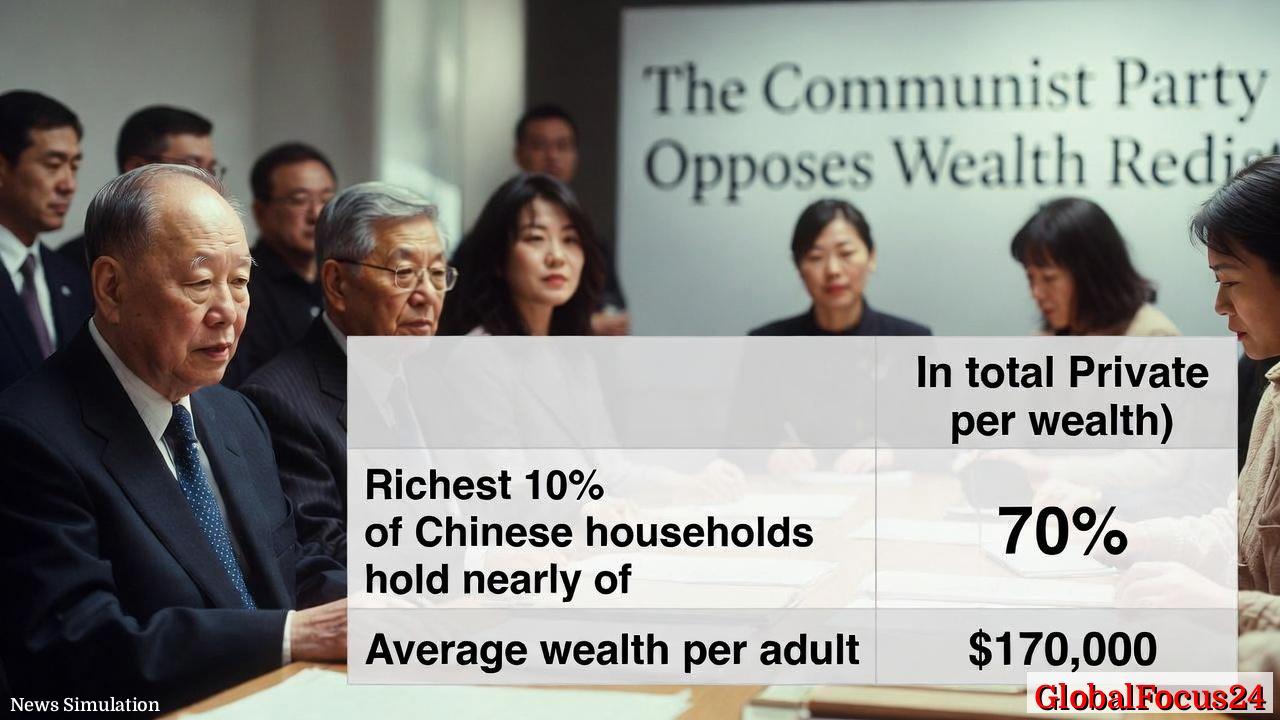
For half a century, China’s transformation from a largely agrarian society to a modern industrial powerhouse has generated staggering private wealth. Average adult wealth has soared roughly a hundred-fold in real terms since the late 1970s, reaching around $170,000 today. Yet, beneath this prosperity lies an uneven distribution: the richest 10% of Chinese households now control nearly 70% of total private wealth. That balance rivals the inequality of the United States and surpasses most developed nations, including Japan and several Western European countries.
As these fortunes begin to pass from aging founders to their children, economists warn of a structural divide taking shape — one that could stifle social mobility and intensify public frustration at a time when wages and job growth are faltering.
A Historical Reversal: From Revolutionary Equality to Private Fortunes
Barely four decades ago, private wealth ownership in China was all but nonexistent. Following the Communist Revolution of 1949, the government nationalized nearly all resources, businesses, and land, eradicating private property in pursuit of class equality. The sweeping changes of the Mao era dismantled centuries-old hierarchies but left the country impoverished.
It was only after Deng Xiaoping’s market-oriented reforms in the late 1970s and 1980s that individuals were once again allowed to accumulate and invest personal wealth. The rise of township enterprises, special economic zones, and the urban boom of the 1990s unleashed powerful new economic forces. Millions of entrepreneurs built businesses in real estate, manufacturing, and technology — sectors that would turn modest visionaries into billionaires within a generation.
Now, many of these early reform-era magnates are entering their 70s or 80s, raising questions about how their assets — from sprawling factory empires to luxury real estate portfolios — will shape the country’s economic and social hierarchy once inherited.
Inheritance Without Taxation
Unlike most advanced economies, China has no inheritance or estate tax. Successive governments have discussed such a measure for decades, but political considerations and administrative complexity have repeatedly delayed action. Since the early 1990s, policymakers have floated trial programs, citing the need for “common prosperity” and more equitable wealth distribution. Yet no law has materialized.
Without an inheritance tax, China’s next generation of heirs stands to receive hundreds of billions of dollars in unearned wealth over the coming decades. This transfer could rival the postwar wealth transitions seen in the United States and Europe — but without the redistributive mechanisms those nations employed to temper inequality.
The consequences of inaction may be profound. Analysts warn that inherited wealth tends to be more concentrated, less productive, and harder to tax once dispersed through complex family structures or offshore entities. In China’s case, this could entrench privilege and reduce economic dynamism at a moment when innovation and domestic demand are critical to sustaining growth.
The Inequality Challenge
Wealth gaps have widened sharply as China’s economy has matured. While hundreds of millions have joined the middle class since 1980, the pace of upward mobility has slowed since the 2010s. Rural residents, younger workers, and those outside top-tier cities face diminishing prospects for advancement.
The upper echelons of Chinese society — the so-called “New Rich” — command vast networks of influence. In major urban centers like Beijing, Shanghai, and Shenzhen, luxury property prices have soared far beyond what average households can afford. Access to elite education and international opportunities increasingly depends on family wealth, not merit or opportunity.
Comparatively, Japan, South Korea, and several Western European countries implemented inheritance and gift taxes decades earlier to moderate generational wealth transfer. In those societies, capital accumulation still occurs, but the compounding effect of taxation helps redistribute opportunity and sustain social cohesion. China’s resistance to such policies places it closer to the United States — where wealth concentration has fueled debates about fairness and long-term economic stability.
A Slowing Economy and the Next Generation’s Frustration
China’s younger generations now face a markedly different economic landscape than their parents. The decades-long boom that fueled meteoric property and stock market gains has cooled. Youth unemployment remains elevated, while wage growth stagnates. The promise that hard work guarantees prosperity feels increasingly out of reach for millions of young professionals.
This intergenerational contrast is starker than ever. The heirs of reform-era entrepreneurs inherit businesses, assets, and social capital that took their parents a lifetime to build. Meanwhile, many college graduates struggle to find stable employment or affordable housing in cities driving innovation and growth. The tension between inherited privilege and the meritocratic ideals that fueled China’s rise could become a defining social fault line.
Sociologists note growing resentment online toward the so-called “second-generation rich” — children of prosperous families often portrayed as detached, entitled, or immune from the economic difficulties faced by their peers. Viral controversies involving displays of wealth on social media underscore the depth of public sensitivity around inequality.
Government Rhetoric vs. Policy Reality
China’s leadership has repeatedly pledged to promote “common prosperity,” emphasizing that wealth creation should benefit all citizens rather than a select few. In speeches and policy directives, the theme has been invoked to justify regulatory crackdowns on tech monopolies, real estate speculation, and excessive executive compensation.
However, when it comes to direct redistribution — such as income or inheritance taxation — the government has remained cautious. Officials often cite the need to balance fairness with stability. Implementing an inheritance tax, they argue, could spark capital flight or discourage entrepreneurship, especially amid global economic uncertainty.
The result is a delicate paradox: even as the state publicly rails against inequality, the legal and fiscal framework continues to favor wealth preservation within established families. Experts suggest that without structural reform, the government’s equality rhetoric risks losing credibility.
Economic Implications of Entrenched Wealth
Intergenerational wealth transfer will likely influence China’s broader economic trajectory. On one hand, the influx of private capital into younger hands could fuel investment in emerging industries such as green technology, biotech, or digital finance — sectors the government seeks to promote.
On the other hand, concentrated inheritance often dampens innovation. Studies from other economies show that when wealth is inherited rather than earned, successors are less likely to take entrepreneurial risks, favoring wealth maintenance over wealth creation. This dynamic can slow productivity growth and widen income disparities.
Moreover, an aging population compounds the challenge. Analysts estimate that over the next 15 years, more than $15 trillion in private assets could change hands in China. If much of that wealth remains locked in real estate or unproductive holdings, it may do little to stimulate consumption or new business formation.
Looking Abroad: Lessons from Other Nations
Western Europe’s experience in the 20th century demonstrates how policy can shape generational equity. France, the United Kingdom, and Germany introduced inheritance taxes after World War II to prevent the return of prewar aristocracies. Today, inheritance tax revenues in those countries remain a modest share of GDP, but the system helps maintain broader mobility and trust in public institutions.
South Korea’s approach offers a regional benchmark. Facing similar concerns over chaebol family dominance, Seoul enforces one of the world’s highest inheritance tax rates. Though controversial, it has gradually reduced dynastic concentration of wealth and encouraged corporate transparency.
By contrast, China’s hesitation mirrors the debates unfolding in the United States, where inherited wealth increasingly drives inequality despite calls for reform. Both systems face the same core question: can economic vitality coexist with deep intergenerational privilege?
The Road Ahead
For China, the emerging era of inherited wealth presents both opportunity and risk. Properly managed, it could underpin philanthropy, cultural patronage, and sustainable investment. Mishandled, it could ossify class divisions, erode public confidence, and strain social cohesion.
The coming decade will reveal whether the state intervenes to moderate the rise of a hereditary elite or allows market forces to allocate resources unchecked. The debate cuts to the heart of China’s modern identity — a nation that rose from egalitarian revolution to capitalist dynamism, now confronting whether it can remain both prosperous and fair.
As the generation that built China’s wealth hands it to the next, the country’s future may depend not just on how much wealth exists, but on who controls it — and whether opportunity still feels attainable for those outside the inheritance line.