China Expands Gold Reserves as Central Bank Reports 8-Ton April Purchase
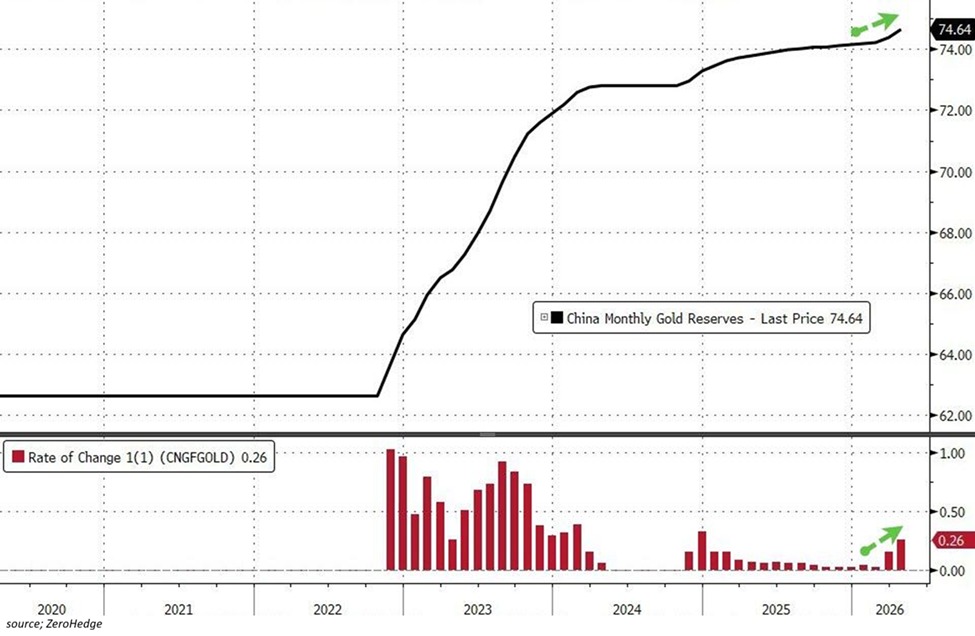
In a move that underscores its ongoing strategy to diversify reserves amid global economic uncertainty, China’s central bank announced an addition of more than 8 tonnes of gold to official holdings in April. The month’s purchase marks the largest single-month gain in gold reserves since December 2024 and continues a multi-year pattern of proactive accumulation that has drawn attention from markets, analysts, and policymakers around the world.
Historical context and precedent
China has pursued a gradual but steady expansion of its gold reserves for nearly a decade. The pattern traces back to a broader shift in many central banks from reliance on foreign exchange assets toward tangible storehouses of value. Gold, with its long-standing reputation as a safe-haven asset and a hedge against inflation, has become a cornerstone of China’s official balance sheet diversification. Since 2022, the accumulation has accelerated, adding about 372 tonnes to the reserves—an increase of roughly 19% over that period. This trajectory places China among the world’s major holders of gold, positioning it to navigate shifts in currency markets and external financial shocks with greater resilience.
April’s sizable addition follows a 5-tonne purchase in March, continuing a pattern of two consecutive months of substantial buying. The month-to-month cadence reflects a deliberate policy stance rather than a reaction to a single market development. By combining gradual accumulation with periodic larger adds, the People’s Bank of China (PBOC) signals a long-term objective: to solidify the credibility and robustness of its foreign reserve portfolio in an era of heightened macroeconomic uncertainty and potential monetary policy divergence across major economies.
Current totals and year-to-date status
With the April acquisition, official gold holdings rose to 2,322 tonnes, a record high for China’s reserve levels. This marks the 18th consecutive month of purchases, illustrating a sustained commitment to growing the tangible asset base. As of 2026 year-to-date, the central bank has accumulated about 15 tonnes of gold, reinforcing expectations that this could be among China’s strongest annual inflows since 2023. The accumulation continues a multi-year trend that has drawn attention not only for its scale but for its implications in global reserve dynamics.
Economic impact and macro considerations
- Diversification and risk management: The addition of gold enhances diversification within foreign exchange reserves, reducing exposure to risks associated with any single currency or asset class. In times of monetary policy divergence or geopolitical tension, a higher gold share can offer a stabilizing influence on reserve valuations.
- Inflation hedging and wealth preservation: Gold has historically served as a hedge against inflation and currency debasement. For a large economy, increasing physical gold reserves can contribute to confidence in the reserve framework and provide a buffer against potential shocks to domestic or international financial systems.
- Implications for currency markets: While central banks rarely alter exchange rates through gold purchases alone, significant changes in reserve composition can influence market perceptions of a country’s monetary strategy. A credible reserve buildup can affect gold pricing, currency hedging behavior, and cross-border investment flows as investors reassess risk and opportunity in relation to Chinese policy signals.
- Trade and capital flows context: Gold purchases by a major economy can interact with ongoing global trade patterns and investment decisions. The rise in official gold holdings may be viewed as part of a broader strategy to weather global financial volatility, maintain reserve credibility, and support long-term economic stability for an economy that plays a central role in global supply chains.
Regional comparisons and global context
- Global leadership in reserve diversification: Several major economies have pursued increased gold holdings in recent years, seeking to diversify away from the imbalances that can arise from heavy reliance on foreign currencies. China’s ongoing accumulation places it in close proximity to other central banks with substantial gold reserves, underscoring a shared emphasis on tangible asset diversification.
- Relative scale: The size of China’s reserve additions remains substantial when viewed in global terms. While the absolute tonnage added in a single month may be modest compared with some historical benchmarks across different countries, the consistency of monthly purchases—now spanning nearly two years—reflects a deliberate, long-run strategy that complements China’s broader macroeconomic objectives.
Operational and policy considerations
- Transparency and reporting: The PBOC’s regular disclosures about reserve changes help market participants gauge the trajectory of official holdings and assess how reserve composition evolves over time. Consistent reporting supports informed decision-making among investors, policymakers, and analysts monitoring currency stability and reserve adequacy.
- Physical vs. financial assets: Gold reserves are a physical asset, distinct from gold-backed financial instruments or paper claims. The balance between physical gold and other reserve assets can influence how a central bank responds to liquidity needs, price volatility, and external financial stress. China’s emphasis on accumulating physical gold signals a commitment to tangible wealth preservation alongside other reserve components.
- Long-term strategic framing: Central banks often pursue gold accumulation as part of a broader strategic framework that includes currency management, reserve adequacy, and financial sovereignty. In China’s case, the ongoing purchases align with a broader objective of sustaining financial autonomy while integrating with global markets, trade relationships, and investment flows.
Historical context of gold as a reserve asset
Gold’s role in official reserves has evolved over centuries, transitioning from a monetary standard to a modern hedge against macroeconomic risk. In today’s financial landscape, central banks hold gold for several reasons: liquidity, universality, and a long-standing track record as a store of value. For a rising economic power like China, augmenting gold reserves is both a confidence signal to international markets and a practical step toward enhancing resilience in the face of global financial volatility.
Industry and investor sentiment
- Market interpretation: Analysts view sustained gold accumulation by a large economy as a marker of cautious optimism about long-term stability rather than a reaction to near-term economic weakness. The behavior tends to support positive sentiment toward gold as a core component of central bank reserve portfolios and as a potential anchor during periods of market stress.
- Feedback into financial markets: Central bank purchases can interact with central bank policy expectations and influence investor behavior across commodities, currencies, and bond markets. When reserve managers communicate a steady approach to diversification, market participants adjust hedging strategies and asset allocations accordingly.
Public reaction and societal implications
- Public confidence and national narrative: In many countries, gold holdings symbolize economic sovereignty and long-term wealth preservation. In China, where economic growth has been rapid but not without volatility, resume-building on gold reserves can reinforce public confidence in the country’s financial foundations and strategic planning.
- Workforce and industry effects: Gold procurement and related logistics can influence domestic industries involved in mining, refining, and bullion distribution. In the broader economy, activity surrounding gold markets supports jobs and business activity within a highly specialized sector.
Global supply considerations
- Gold supply dynamics: The global supply of gold is influenced by mining output, recycling rates, and central bank demand. Central bank purchases, while a relatively small portion of annual global supply, contribute to the complexity of the market and can affect price trends when viewed in the context of multi-year accumulation patterns.
- Environmental and ethical dimensions: The gold supply chain carries considerations related to mining practices, environmental impact, and responsible sourcing. Investors and policymakers increasingly weigh these factors as part of a broader assessment of strategic asset allocation and sustainability goals.
Looking ahead: what the April figures suggest for 2026 and beyond
- Momentum potential: If the current pace of purchases persists, 2026 could rank among China’s strongest years for gold accumulation since the pace set in 2023. The consistency of monthly adds indicates a deliberate, measured approach rather than opportunistic timing.
- Reserve composition strategies: Analysts will monitor how the share of gold in total reserves evolves relative to other assets such as foreign currencies, government bonds, and diversified investment funds. A gradual shift toward higher gold exposure could reflect a strategic stance to mitigate external vulnerabilities and to diversify risk.
- Global coordination and market signals: As central banks around the world balance inflation, growth, and geopolitical risk, market participants will closely scrutinize reserve movements for clues about broader monetary strategy. China’s ongoing accumulation could influence global gold pricing expectations and liquidity considerations in bullion markets.
Conclusion
China’s April gold purchase, the latest in a sustained sequence of reserve additions, reinforces a deliberate strategy to strengthen the resilience of official holdings through physical assets. With reserves now at a record level and a clear year-to-date momentum, the move contributes to a broader narrative of caution and preparedness in a volatile global economy. The ongoing diversification of China’s reserves—anchored by tangible gold—signals a commitment to long-term financial stability and an intent to navigate evolving economic conditions with greater assurance. As markets react to these developments, observers will watch closely how the reserve mix evolves in the months ahead, and what this means for global gold markets, currency dynamics, and macroeconomic policy in the Asia-Pacific region and beyond.