7-Minute Workout Draws Attention as a Time-Efficient Fitness Option for Busy People
The modern workday rarely leaves room for long training sessions. Between commutes, school runs, demanding jobs, and household responsibilities, many people struggle to build a consistent exercise routine—especially one that requires equipment, dedicated gym time, or extended blocks of training. Against that backdrop, the 7-Minute Workout has emerged as a practical alternative: a fast, structured, high-intensity interval-style routine that people can complete in roughly the time it takes to answer a handful of messages or finish a short break.
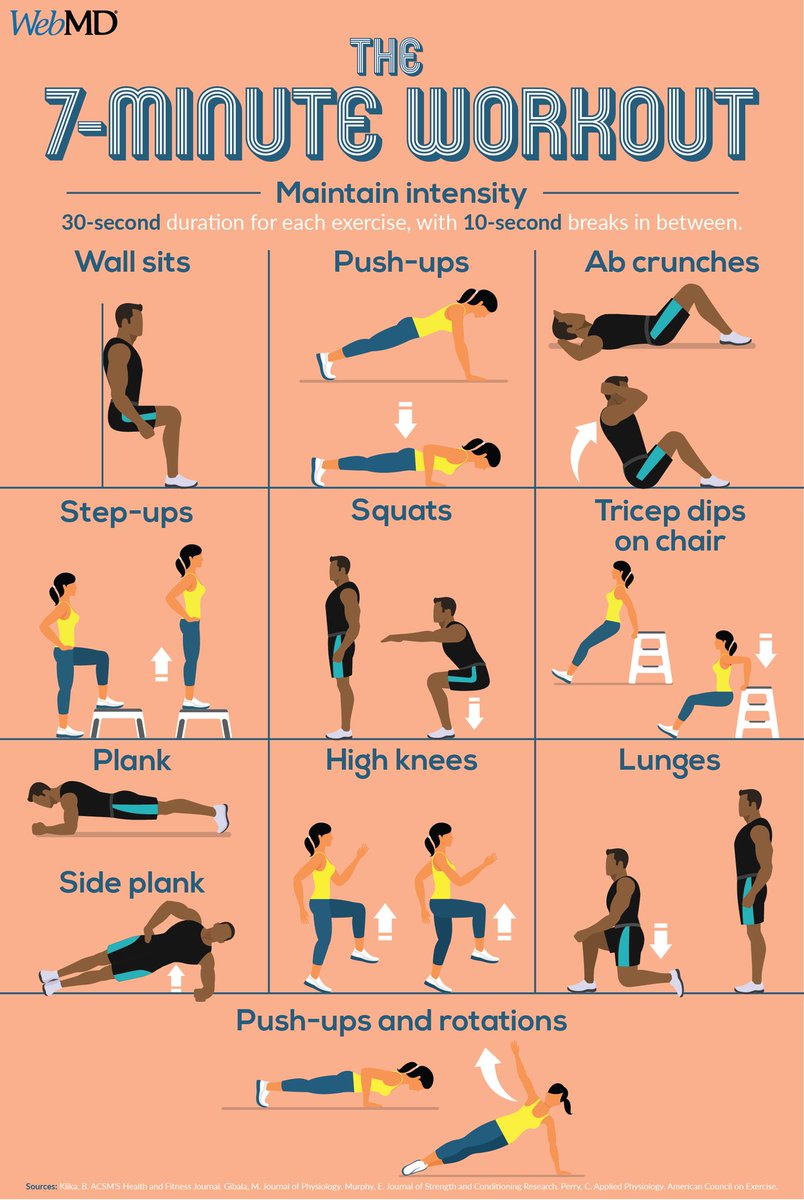
The program centers on a simple premise. It uses a sequence of 12 exercises performed for 30 seconds each, with 10 seconds of rest between movements. In total, the workout lasts about seven minutes, making it appealing to individuals who want measurable physical activity without sacrificing much of their day. With no equipment required, it can be done in a living room, office break space, hotel room, or outdoor area—any place where a few square feet of space are available.
A brief history of “time-efficient” exercise
The 7-Minute Workout did not appear out of nowhere. For decades, fitness researchers and trainers have pursued ways to make exercise more accessible—especially for people who struggle with adherence, the most common obstacle in maintaining long-term health habits. Traditional recommendations often emphasize 150 minutes per week of moderate-intensity activity or 75 minutes of vigorous activity, plus muscle-strengthening work. Those guidelines can be clear on paper, but in real life, the “when” and “where” problems frequently derail participation.
High-intensity interval training (HIIT) helped shift public thinking. Instead of long sessions at a steady pace, HIIT breaks effort into short bursts followed by brief recovery periods. Over time, evidence from sports science and exercise physiology began to support the idea that short, intense work can improve cardiovascular fitness, metabolic health indicators, and muscular endurance—particularly when performed consistently.
Historically, many fitness approaches relied on a “more is better” assumption—longer workouts, more equipment, more variety. The 7-Minute Workout challenges that notion with a method designed for adherence. Its structure is repetitive by design: the routine is standardized, easy to understand, and easy to repeat. For busy schedules, that clarity matters as much as the exercises themselves.
How the workout works in practice
The 7-Minute Workout’s appeal is partly logistical. It uses 12 bodyweight movements aimed at major muscle groups. While specific versions may vary slightly, the core selection typically includes exercises such as jumping jacks, wall sits, push-ups, abdominal crunches, step-ups on a stable surface, squats, triceps dips on a chair, planks, high knees, lunges, and side planks. Each segment is time-boxed: 30 seconds of work, 10 seconds of rest.
That format creates a built-in pace. People don’t need to decide what comes next, count complex sets, or estimate how long they “should” exercise. The interval timers remove uncertainty and reduce friction, turning a vague intention—“I should work out sometime today”—into a concrete plan that can be completed even on days when motivation runs low.
In addition, the routine’s no-equipment design lowers costs and removes barriers. Instead of investing in gym memberships, machines, or free weights, participants can use their body and whatever stable surface is available for step-ups or dips. For households where floor space is limited, the routine’s compact footprint makes it easier to integrate into daily life.
What benefits can people expect?
Short routines often raise a question: can seven minutes really produce meaningful change? The answer depends on consistency, baseline fitness, and how the routine is performed. While the 7-Minute Workout is brief, it is designed to be challenging enough to elevate heart rate and engage multiple muscle groups within a short time frame.
Cardiovascular fitness is a key target. HIIT-style work increases physiological demand, which can improve aerobic capacity when performed regularly. Muscular strength may not be the primary focus compared with longer resistance training sessions, but the exercises can support muscle endurance and functional conditioning—especially for beginners or people returning after a break.
Equally important, the workout can contribute to overall health markers such as insulin sensitivity and body composition when paired with sensible nutrition and consistent activity. Even if seven minutes does not replace every type of training, it can help people accumulate regular movement—a major factor for health outcomes in the real world. For individuals who currently do little exercise, “starting somewhere” often leads to better long-term habits than waiting for the perfect schedule to open.
The role of intensity and safe progression
The defining feature of the 7-Minute Workout is intensity. Participants are expected to work hard during each interval, which can be beneficial but also requires caution. People with cardiovascular conditions, uncontrolled hypertension, musculoskeletal issues, or other medical concerns should consult a clinician before starting a high-intensity routine. Even relatively simple movements—such as push-ups, lunges, or jump variations—can stress joints or aggravate injuries if performed without appropriate modifications.
A safe approach often means scaling. Beginners can replace jumping exercises with lower-impact alternatives, adjust push-ups to a higher surface, or shorten stride lengths on lunges. Those with knee or back limitations may benefit from slower tempo movements and a smaller range of motion. The goal is to keep effort high enough to create cardiovascular and muscular challenge without producing form breakdown or pain.
Form also matters because interval training compresses time. People may rush and lose technique when they feel winded. A disciplined pace—staying within proper mechanics for each exercise—reduces the risk of injury and improves the workout’s effectiveness.
Economic impact: why short workouts are gaining traction
The growth of time-efficient exercise reflects a broader economic reality. Many consumers are experiencing “time scarcity,” where work and life demands compress available leisure. That trend affects spending patterns: people increasingly seek low-cost, low-commitment solutions that fit into the day.
In fitness markets, a seven-minute routine changes the equation. It supports at-home exercise, reducing reliance on gyms and trainers for those who cannot afford frequent visits or find travel time hard to manage. For the health system, increased physical activity—even in shorter bursts—can potentially reduce long-term risks tied to inactivity, such as cardiovascular disease, type 2 diabetes, and obesity-related complications. While a brief workout is not a cure-all, widespread adoption of manageable fitness routines can shift public behavior in meaningful ways.
Regionally, similar time-saving trends can be observed across industrialized areas. In places where commuting time and work hours are high, people often adopt “micro-workout” strategies, including desk-friendly stretching, short cardio sessions, or interval-based routines that require minimal equipment. In North America, these changes are amplified by the growth of at-home fitness platforms and wearable technology that encourages quick check-ins of activity levels. Elsewhere, urban lifestyles and crowded living spaces also make compact routines more appealing. While the 7-Minute Workout is a specific program, it fits into a broader shift toward short, structured training blocks that people can sustain.
Cultural momentum and public reaction
The routine’s reputation has spread through fitness communities, online coaching, and social media. Its popularity rests on more than novelty. Many people have tried longer workouts and stopped due to scheduling constraints or lack of immediate results. A short routine offers a different psychological payoff: a complete session can fit into the day, and progress can be tracked without waiting weeks for a dramatic transformation.
Public reaction often emphasizes practicality. People describe completing the workout during breaks, squeezing it in before work, or using it as a warm-up on busier days. For parents, it can provide exercise without the long logistics of childcare arrangements or gym travel. For office workers, it can serve as a counterbalance to prolonged sitting, helping break up sedentary stretches and restoring energy.
There is also a learning advantage. Because the routine is standardized, participants can repeat it and focus on incremental improvements—higher quality reps, faster interval completion with consistent form, better pacing, or reduced rest time while maintaining safety.
Regional comparisons: what “busy schedules” look like
Comparing fitness habits across regions helps clarify why a routine like this resonates. In high-density urban environments, residents often have less space at home and less time between commitments. Work patterns in many developed economies also contribute to uneven schedules, including shift work, hybrid office days, and unpredictable workloads. These conditions can undermine consistent training plans that require a dedicated time block.
In regions where walking and cycling are more integrated into daily life, people may already accumulate moderate activity through commuting and errands. For them, the 7-Minute Workout can function as a strength and conditioning booster rather than a replacement for cardio. In car-dependent areas, where daily movement is often limited, a short structured routine can add a valuable layer of exercise beyond incidental activity.
The same principle applies across income brackets: when time is scarce, reducing “activation energy” increases the chance that people will start and keep going. The 7-Minute Workout’s fixed structure and minimal equipment make it easier to overcome the common barriers of uncertainty and preparation.
How to integrate it into a weekly routine
Most benefits come from regular practice. A single session can improve how you feel, but consistent training helps shape cardiovascular and muscular adaptations. Many people choose to repeat the routine several times a week—sometimes on non-consecutive days to allow for recovery, particularly if they are new to high-intensity training.
Common integration strategies include:
- Using the 7-Minute Workout as a stand-alone session on busy days, then adding longer workouts when time allows.
- Pairing it with a warm-up and cooldown to reduce stiffness and improve comfort.
- Treating it as a circuit for progression, increasing difficulty through modifications (for example, slower push-up tempo or more challenging variations) rather than simply sprinting through intervals.
- Combining it with low-impact movement such as walking on rest days to support overall activity levels.
For people who already exercise, the routine can still be useful. It can provide a quick “fitness maintenance” option when travel or a busy agenda interrupts regular training. It can also serve as a short conditioning block before other workouts, helping raise heart rate and prepare muscles.
Practical guidance for getting started
The simplest path is to begin with a realistic expectation. The first few sessions may feel more difficult than anticipated, especially if you are not used to working hard in short intervals. Instead of aiming for perfection, focus on consistency and technique.
A practical starting checklist often looks like this:
- Choose a clear space with enough room for lunges and planks.
- Wear comfortable footwear if your plan includes movements that involve impact.
- Keep a stable surface ready for step-ups or chair-based movements.
- Start with good form, then increase effort as you become more comfortable with each exercise.
- Stop if you experience sharp pain, dizziness, or unusual symptoms.
Over time, participants may find they can sustain a stronger effort level across all exercises, and that can make the routine feel less punishing while still delivering a meaningful workout.
The bigger picture: exercise that fits real life
The 7-Minute Workout’s impact lies in its alignment with how people actually live. It addresses a common problem: exercise plans often fail not because they are ineffective, but because they are hard to follow. By compressing a workout into a short interval-based circuit with minimal setup, the routine reduces barriers and encourages regular movement.
For busy schedules, the most important fitness strategy is often the one you can repeat. A seven-minute workout can provide that entry point. Over weeks and months, those brief sessions can build endurance, strengthen key muscle groups, and support a healthier lifestyle—especially when paired with daily activity and sound nutrition.
As demand continues to grow for convenient, home-based fitness solutions, time-efficient programs like the 7-Minute Workout are likely to remain popular. The underlying lesson is straightforward: exercise doesn’t have to wait for a perfect day. Sometimes the best start is a short, structured routine that you can complete immediately—and then return to tomorrow.