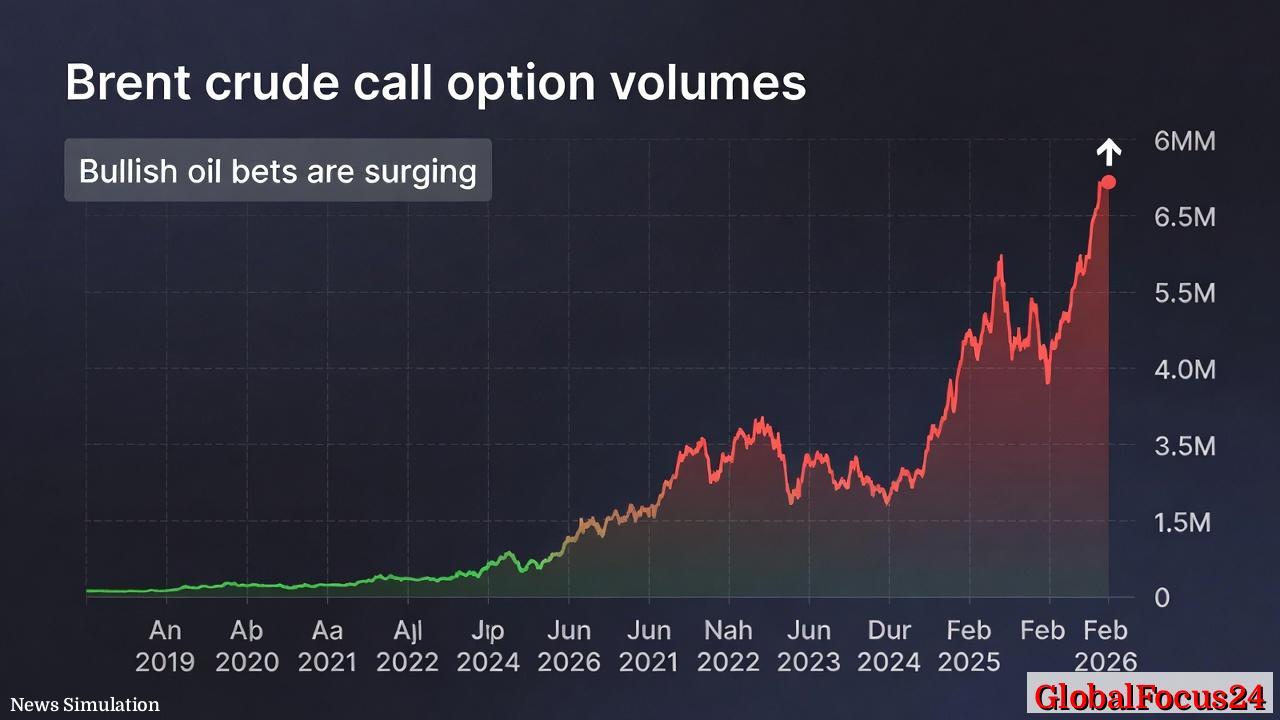
Brent Call Options Surge: Record Volumes Signal Shifting Oil Market Dynamics
The Brent crude oil market is experiencing a notable shift as institutional traders push Brent call option volumes to unprecedented levels, with January recording an all-time high and February continuing from that peak. This surge underscores a broad reallocation of risk and exposure within the energy complex, prompting analysts to reassess price discovery, hedging strategies, and the broader implications for global energy markets.
Historical Context: From Peak Volatility to Modern Hedging Trends Brent crude has long been a benchmark for pricing crude oil in Europe and many parts of Asia, reflecting a history shaped by geopolitical developments, supply disruptions, and macroeconomic cycles. The current spike in Brent call options arrives against a backdrop of multiple decades of evolving risk management practices. In the wake of major supply shocks, traders increasingly turned to complex derivatives to manage exposure, a trend that accelerated during periods of elevated volatility. The recent data points to a continuation of that trajectory, with market participants leveraging call options to express upside bets while simultaneously employing hedges to cap downside risk. The January all-time high reinforces the idea that traders view a range of potential future price paths as plausible, given evolving market fundamentals and geopolitical uncertainties. This context matters for long-term price discovery, as options activity can foreshadow shifts in open interest and implied volatility that ripple through the spot market over time.
Supply and Demand Signals: What the Options Spike May Indicate Options activity often serves as a lens into market expectations. A surge in Brent call volumes can reflect several intertwined dynamics:
- Price upside expectations: Traders may anticipate tighter supply or higher demand in the coming months, especially in scenarios where refinery utilization, seasonal demand, or disruptions pressurize prices.
- Hedging for producers and consumers: Oil producers seeking to lock in favorable price ranges and end-users seeking protective exposure can drive demand for call options as a strategic tool to participate in potential upside while maintaining downside protection.
- Volatility and risk management: Elevated option activity often correlates with rising implied volatility, which can influence funding costs, margin requirements, and the cost of carrying long or leveraged positions.
- Market structure shifts: Changes in exchange rules, clearing requirements, or the introduction of new option series can stimulate trading activity as market participants adjust to evolving instruments.
Regional Impacts: Implications for Europe, the Americas, and Asia The Brent benchmark’s global footprint means price signals reverberate across regions with distinct economic and energy mix profiles. In Europe, where Brent remains deeply intertwined with refining margins and transportation fuels, heightened call option activity could reflect preparations for seasonal demand peaks or anticipated refinery supply adjustments in the face of ongoing energy transition pressures. Across the Americas, traders may weigh Brent-linked hedges against competing benchmarks and domestic crude flows, with volatility in Western Hemisphere markets potentially amplifying risk premiums. In Asia, where energy demand growth has been a persistent theme, Brent-driven hedging activity can influence import costs, refining economics, and strategic fuel reserves planning. The current surge in options volumes signals a global dialogue among traders about potential price trajectories and the interplay between crude supply resilience and evolving demand patterns.
Economic Effects: How the Surge Shapes Hedging, Investment, and Markets The acceleration in Brent call option volumes has several tangible economic implications:
- Hedging costs and capital allocation: Higher volumes can lead to wider bid-ask spreads and increased margin requirements, affecting hedging budgets for oil majors, airlines, and industrial users. Companies may reallocate capital toward hedging programs or seek alternative risk transfer instruments.
- Price transparency and discovery: As more market participants actively engage in options markets, price signals can become more nuanced, contributing to a more robust view of potential price paths. This can influence investment decisions in exploration, production, and downstream activities.
- Derivatives market liquidity: Elevated activity tends to improve liquidity in some option series while potentially creating bottlenecks in others, depending on open interest distribution and market maker participation. Liquidity dynamics can, in turn, affect funding costs for hedgers and speculators alike.
- Financing and strategic planning: Energy companies often align capital expenditure plans with expected price ranges. A sustained uptick in upside option activity can influence strategic timing for project development, asset sales, or joint ventures, as firms react to the evolving risk landscape.
Comparisons: How Brent Derivatives Market Stacks Up Against Peers When contrasted with related commodities markets, the Brent options surge presents a distinct pattern:
- WTI vs. Brent: While both benchmarks reflect global crude dynamics, Brent’s liquidity and global pricing role often result in more active options markets in certain maturities, especially for European and Atlantic-facing participants. The current trend in Brent calls may signal a shift in regional hedging preferences or a reevaluation of crude price correlations across benchmarks.
- Brent options versus gasoline and distillate futures: Energy products tied to refining margins can experience different sensitivities to macroeconomics and supply chain shifts. Brent call volumes may be more influenced by global macro risk premia and geopolitical risk assessments, while refined products markets respond more directly to seasonal demand patterns and refinery outages.
- Energy equities and ETFs: Derivative activity in Brent can coincide with broader equity market moves in energy sectors and exchange-traded funds that track oil prices. A surge in options volumes might foreshadow increased volatility in energy equities as hedging needs and speculative positioning wax and wane.
Market Participants: The Spectrum of Players Driving Activity A diverse set of actors typically participates in Brent options markets:
- Institutional investors and commodity funds seeking directional exposure to crude prices.
- Energy producers and refiners hedging cash-flow risk amid fluctuating input costs and product prices.
- Airlines, freight companies, and manufacturers facing exposure to fuel costs as a component of operating expenses.
- Market makers providing liquidity and facilitating price discovery for a broad spectrum of maturities and strike levels.
- Central banks and sovereign wealth funds that may use energy derivatives as part of broader macro risk management strategies.
Technical Landscape: Decoding the Market Structure The Brent options market operates within a framework of standardized contract specifications, listing schedules, and settlement conventions. Traders monitor key metrics such as implied volatility, open interest, and the distribution of strike prices relative to the current futures price. A persistent rise in call volumes, especially if corroborated by rising open interest and higher implied volatility, can indicate building conviction about upside price scenarios over the relevant time horizons. Analysts watch for cross-market signals, including price action in futures curves, inventory reports, and macro indicators like global growth expectations and inflation trajectories, which collectively shape risk appetite and option pricing.
Public Reaction: Perceptions and Behavioral Shifts Public perception of rising Brent call volumes often interlaces with media narratives about energy security, geopolitical developments, and economic resilience. Industry stakeholders emphasize the importance of disciplined risk management, ensuring that hedging programs remain aligned with corporate goals and financial risk tolerance. In many markets, this wave of activity is viewed as a barometer of trader sentiment—reflecting cautious optimism about potential price appreciation while recognizing the uncertainties that can accompany energy markets in a shifting global landscape.
Future Trajectories: Outlook for Brent Options and the Energy Complex Looking ahead, several factors could influence the persistence or evolution of Brent call option volumes:
- Global supply dynamics: Any sustained disruption or efficiency gains in OPEC+ production, non-OPEC supply adjustments, or geopolitical events could reinforce upside hedging demand.
- Demand growth patterns: Recoveries or slowdowns in industrial activity, transportation, and aviation will shape risk premiums priced into Brent options.
- Regulatory and market structure changes: Adjustments to contract specifications, maturities, or clearing requirements could alter the attractiveness of different strategy profiles for market participants.
- Correlations with other assets: Movements in equities, currencies, and other commodities may modulate the attractiveness of Brent options as part of broader diversified portfolios.
Conclusion: A Landmark Moment for Brent Derivatives The latest surge in Brent call option volumes marks a pivotal moment for the oil derivatives landscape. As January set an all-time high and February continued to sustain elevated activity, traders and analysts alike are watching for how these signals will translate into actual price movements, hedging behavior, and broader market dynamics. With commodity markets increasingly influenced by complex risk management techniques and global demand uncertainties, the Brent options market stands at the nexus of speculation, hedging, and strategic planning—offering a window into how market participants anticipate, manage, and respond to the evolving energy world.