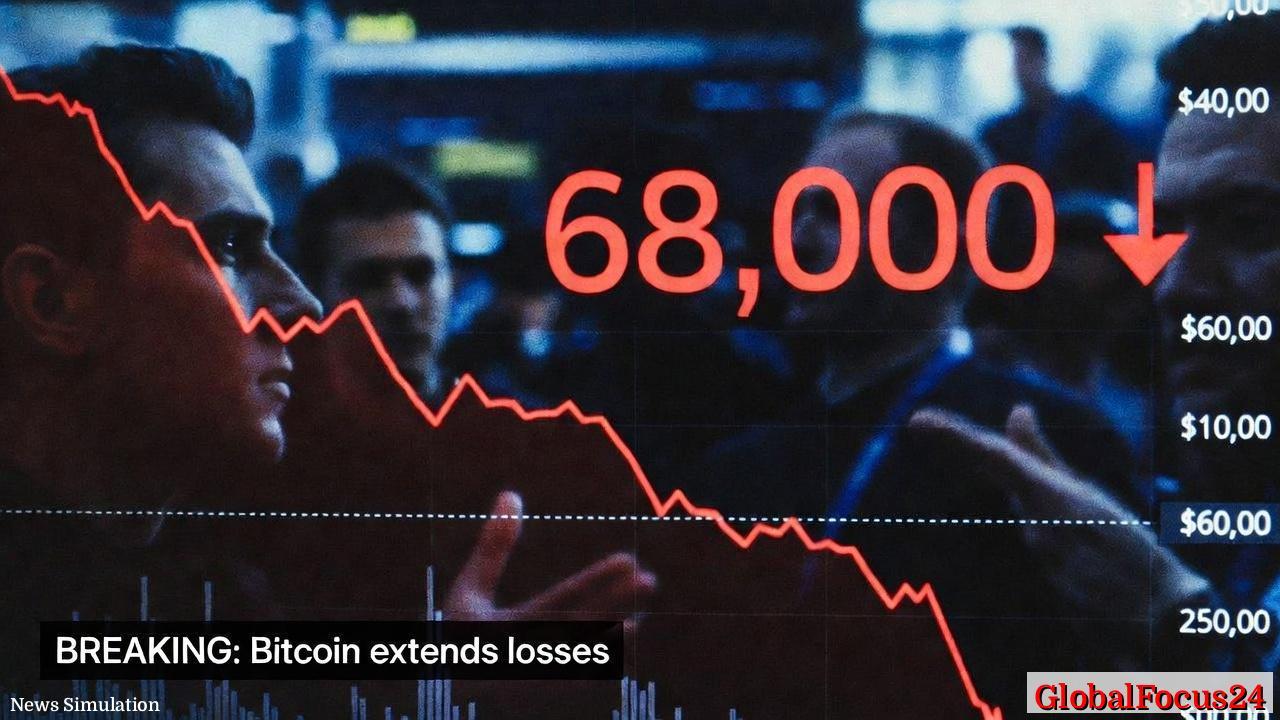
Bitcoin has extended its losses and slipped below $68,000 as traders digest a fast-moving geopolitical threat tied to the Strait of Hormuz deadline. The move has sharpened fears that energy markets, inflation expectations and broader risk appetite could all be jolted at once.
Bitcoin moved lower after a fresh wave of risk aversion swept through global markets, with the world’s largest cryptocurrency briefly trading beneath the closely watched $68,000 level. The decline comes at a moment when investors are also monitoring a tense standoff involving Iran and the Strait of Hormuz, one of the most important shipping corridors for global energy flows.
The latest drop matters because Bitcoin has become deeply intertwined with broader market sentiment, especially when traders are confronted with geopolitical shocks, rising oil prices and shifting expectations for interest rates. In that sense, the move below $68,000 is not just a technical break on a chart. It reflects a broader repricing of risk across financial markets, where digital assets often react quickly and sometimes sharply when macroeconomic conditions turn uncertain.
Market Pressure Builds
Bitcoin’s retreat below $68,000 adds to a broader pattern of weakness that has been visible in recent trading sessions. Market participants have been reducing leverage, trimming exposure and reassessing how much downside they are willing to tolerate if volatility accelerates further.
Round-number price levels often matter in crypto trading because they tend to attract dense clusters of buy and sell orders. A break below one of those levels can trigger additional selling, not necessarily because the underlying asset has changed dramatically, but because traders respond to the breach itself. That can create a self-reinforcing move, especially in a market where sentiment shifts quickly.
The current decline also fits a familiar pattern in Bitcoin’s history. The cryptocurrency has repeatedly gone through sharp corrections after strong rallies, often punctuated by sudden swings tied to macro news, regulatory shifts or liquidation waves. While long-term believers frequently view such declines as part of Bitcoin’s normal cycle, short-term traders tend to focus on whether the next support level can hold.
Strait of Hormuz Raises Stakes
The latest anxiety is tied to the Strait of Hormuz, a narrow but strategically vital waterway that handles a substantial share of global oil shipments. Any threat to traffic through the strait can ripple far beyond the Middle East, affecting energy prices, shipping costs, inflation forecasts and risk sentiment across asset classes.
That matters for Bitcoin because crypto often trades like a high-beta risk asset during periods of stress. When oil prices rise or the possibility of supply disruption increases, markets tend to worry about slower growth, stickier inflation and the possibility that interest rates stay elevated for longer than expected. Those conditions usually weigh on speculative assets, including cryptocurrencies.
The deadline pressure adds a sense of urgency that markets dislike. Traders do not need a full disruption to react; even the possibility of one can be enough to send oil futures, airline shares, transport stocks and digital assets lower. Bitcoin’s recent slide suggests investors are already adjusting for that possibility.
Why Bitcoin Reacts So Fast
Bitcoin is often described as a decentralized asset, but its price is heavily influenced by centralized market behavior. Large exchanges, perpetual futures, exchange-traded products and leveraged trading all play a role in short-term price discovery. When fear rises, those same structures can amplify downside pressure.
Liquidations are a major part of the story. If traders borrow money to increase their crypto exposure and prices fall quickly, exchanges may automatically close their positions. That forced selling can deepen the decline and create a cascade that pushes prices lower than many investors expected.
Bitcoin is also sensitive to changes in the dollar, Treasury yields and expectations for central bank policy. A geopolitical shock that pushes oil prices higher can feed inflation concerns, which in turn may keep monetary conditions tighter for longer. That chain of events is rarely friendly to speculative assets.
Historical Context Matters
Bitcoin has seen similar episodes before, though each one has its own trigger. During past geopolitical flare-ups, the cryptocurrency has sometimes behaved like a risk asset and sometimes like a detached alternative store of value, depending on the broader market environment. Over time, however, its correlation with equities and other growth-oriented assets has often increased during stress periods.
That history helps explain why investors are cautious now. Bitcoin’s long-term story has included dramatic rebounds after steep losses, but its path has also been marked by repeated drawdowns that shake out leveraged traders and weak hands. The current move below $68,000 will likely be judged through that same lens: is it a temporary washout, or the start of a deeper correction?
There is also a seasonal memory in crypto markets. Traders remember that sharp breakouts and breakdowns often cluster around major macros, central bank decisions and geopolitical flashpoints. When those factors converge, price action can become more volatile than fundamentals alone would suggest.
Economic Impact Spreads Wider
A disruption linked to the Strait of Hormuz would not stop with crypto markets. Energy prices are central to the global economy, and any sustained jump in crude oil can feed through to transport, manufacturing, food distribution and consumer prices. That makes the current situation relevant not just for Bitcoin traders, but for businesses and households far from the Middle East.
If oil costs rise sharply, the economic effect could be felt differently across regions. Europe, with its greater dependence on imported energy, tends to be more exposed to imported price shocks. Asia, especially economies that rely heavily on shipping through major maritime routes, can also face quick knock-on effects. In the United States, the transmission may be slower, but higher fuel and logistics costs can still pressure margins and consumer spending.
For Bitcoin, the link is indirect but meaningful. A stronger inflation outlook can alter expectations for interest rates and liquidity, and those shifts often hit risk assets first. In that environment, crypto investors may begin to favor cash, defensive positioning or lower-volatility assets while waiting for clarity.
Regional Comparisons In Focus
The market response to geopolitical stress often differs by region, and Bitcoin tends to reflect those differences in real time. In North America, traders typically focus on Fed policy, ETF flows and equity-market correlations. In Europe, the emphasis is often on energy security, currency pressure and the effect of oil on already fragile growth. In Asia, attention frequently turns to shipping disruption, export costs and the stability of regional risk assets.
Those regional lenses matter because Bitcoin trades around the clock and picks up influences from all of them. Athat starts as a Middle East security issue can quickly become a macro story in London, New York, Singapore and beyond. That global sensitivity is part of what makes Bitcoin both liquid and volatile.
In historical terms, this is one reason Bitcoin is often treated less like a single-country asset and more like a global barometer for risk appetite. It can rise when liquidity is abundant and traders are willing to embrace speculative assets. It can fall just as quickly when uncertainty broadens and capital moves toward safer ground.
What Traders Are Watching Next
The immediate focus is whether Bitcoin can stabilize above nearby support zones after the break below $68,000. Traders will be watching order-book depth, derivatives funding rates and whether forced liquidation activity continues. A quick rebound would suggest that dip buyers are still active, while a deeper slide could signal that the market is preparing for a longer period of consolidation.
The other key variable is the evolving situation around the Strait of Hormuz. If tensions cool, energy markets may ease and some of the pressure on risk assets could fade. If the situation escalates, Bitcoin could remain vulnerable to another leg lower as investors reprice global inflation and growth risks.
For now, the message from markets is clear: Bitcoin is no longer trading in isolation. Its latest drop below $68,000 shows how tightly the cryptocurrency is now linked to the same geopolitical and economic forces that move oil, stocks and bond yields. That connection gives Bitcoin broader relevance, but it also means that when the world grows more uncertain, the digital asset can lose altitude quickly.