Bitcoin Extends Steep Slide as Price Falls Below $63,000, Wiping Out More Than Half Its Peak Value
Bitcoin slumped below the closely watched 63,000‑dollar level on Tuesday, deepening a month‑long slide that has erased more than half of the cryptocurrency’s value from its all‑time high near 126,000 dollars reached in October 2025. The move places the world’s largest digital asset firmly in bear‑market territory and adds to mounting concerns that the current downturn could become the most severe since the 2022 “crypto winter.”
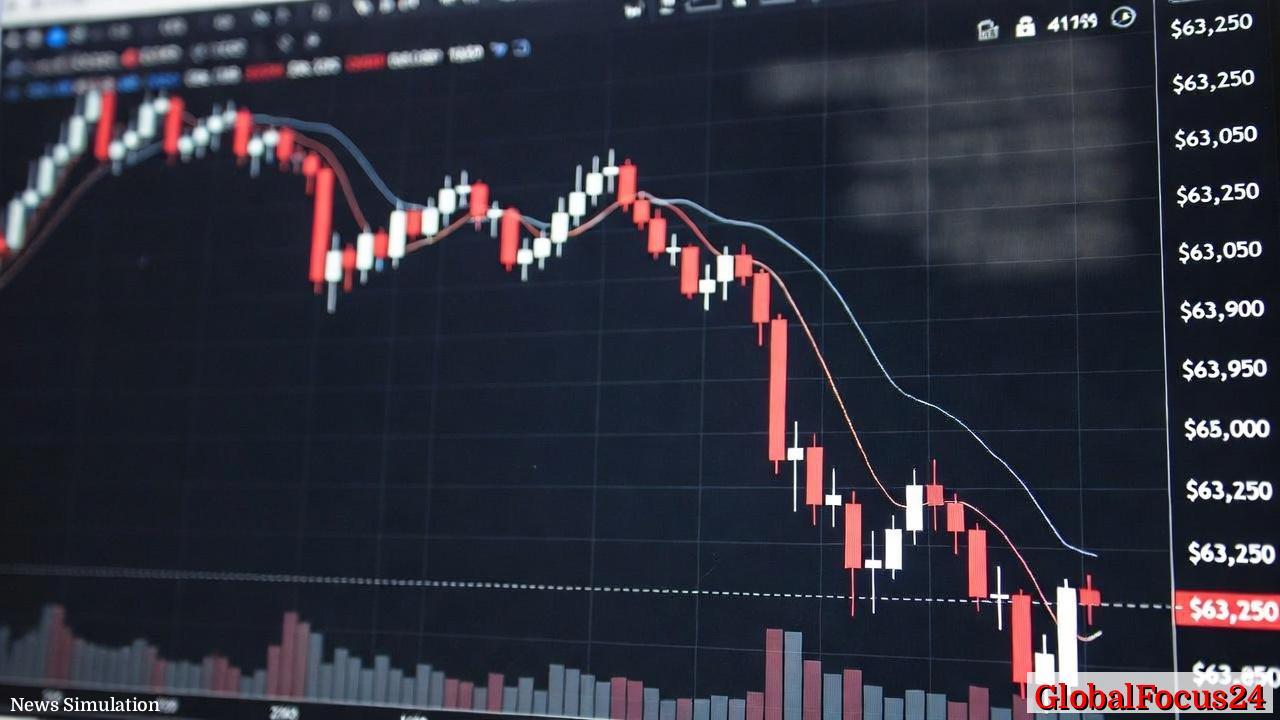
By late session, Bitcoin was recently changing hands around 63,327 dollars, down roughly 1,300 dollars or just over 2 percent for the day, after briefly tumbling to intraday lows below 63,000 dollars. A candlestick chart of the session showed a largely one‑way trade characterized by a series of red candles that sliced through near‑term support zones and left the token closing near the day’s lows around 63,250 dollars.
A Sharp Reversal From Record Highs
The latest leg lower extends a brutal drawdown that has seen Bitcoin fall more than 50 percent from its October 2025 record, when prices briefly touched roughly 126,300 dollars amid intense speculative enthusiasm and heavy inflows into crypto‑linked investment products. At the time, some market participants cast the rally as evidence that digital assets were entering a new, more mature phase, supported by institutional adoption and growing use cases.
Instead, the market has swung back into a familiar boom‑and‑bust pattern. Analysts now classify the decline as a full‑fledged bear market, with the drawdown approaching levels that have historically marked major cyclical downturns in Bitcoin’s four‑year halving‑cycle rhythm. Research tracking previous cycles shows that peak‑to‑trough falls have averaged around 75 percent, suggesting that, in a worst‑case scenario, the current decline may not yet have fully run its course.
The reversal has been particularly striking given the speed of the move. Just weeks ago, Bitcoin had been consolidating in the 64,000‑ to 66,000‑dollar range, with some traders expecting another test of recent highs. Instead, heavy selling pressure has driven the token steadily lower, accelerating as key technical levels gave way and leveraged positions were forced to unwind.
Intraday Selling Pressure and Technical Breakdown
Tuesday’s session added to that negative momentum. Market data showed persistent intraday selling, with a succession of red candlesticks on short‑term charts reflecting continuous downside pressure rather than sharp, quickly reversed spikes. Once Bitcoin slipped below short‑term support around 64,800 dollars, algorithmic and leveraged strategies amplified the move, pushing the price swiftly toward the 63,000‑dollar region and briefly beneath it.
Analysts note that the 60,000‑ to 63,000‑dollar band has acted as an important technical support area in recent months, corresponding with previous consolidation zones and longer‑term moving averages. A break below the upper end of that range has fueled speculation that the market could soon retest the psychological 60,000‑dollar threshold, which some chart watchers describe as the nearest major line in the sand for bulls.
Technical strategists also point to a developing head‑and‑shoulders pattern on multi‑hour price charts, with the formation’s neckline clustering around the 60,000‑dollar area. If that level were conclusively breached, they warn, it could open the way for a deeper slide toward lower support zones between 52,000 and 58,000 dollars, where longer‑term buyers previously stepped in during earlier phases of this cycle.
Macro Headwinds and Risk‑Off Sentiment
The latest downturn has unfolded against a backdrop of broader risk aversion in global markets. Equity benchmarks have come under pressure as investors react to persistent inflation, expectations of tighter financial conditions, and elevated geopolitical tensions, including escalating tariff disputes that have unsettled trade‑sensitive sectors.
Market strategists say Bitcoin’s drop below 63,000 dollars reflects this wider risk‑off mood rather than a single idiosyncratic shock to the crypto ecosystem. Wealth managers describe the move as a “tactical de‑risking” in which investors trim exposure to volatile assets, including cryptocurrencies, high‑growth technology stocks, and other speculative vehicles. In that environment, even relatively modest macros can trigger outsized swings in Bitcoin as traders recalibrate positions and reduce leverage.
Higher interest‑rate expectations have also weighed on sentiment. With yields remaining elevated, the appeal of non‑yielding, high‑volatility assets such as Bitcoin diminishes for some institutional portfolios, particularly those bound by strict risk‑management frameworks. The result has been a tightening of liquidity conditions, fewer inflows into crypto‑linked funds, and a general shift toward capital preservation among more cautious investors.
Structural Pressures: Miners, Derivatives, and Liquidations
Beyond macro forces, structural pressures within the crypto market are amplifying Bitcoin’s slide. Data from on‑chain and derivatives platforms indicate a pronounced period of miner “capitulation,” in which mining firms have been consistently net sellers of Bitcoin for more than six weeks as they seek to cover operational costs amid falling prices and squeezed margins. Analysts say this extended selling has added a steady stream of supply into a market already struggling to absorb outflows from speculative traders.
At the same time, futures open interest has dropped sharply, reflecting a reduction in leveraged bets after February’s volatility spike. One recent analysis estimated that Bitcoin futures open interest fell by more than 20 percent in notional terms over the past week, underscoring how aggressively traders have been forced to unwind positions.
Tuesday’s break below 63,000 dollars triggered another wave of long liquidations, as exchanges closed margin positions that could no longer meet collateral requirements. Within a span of just a few hours, roughly 60 billion dollars was wiped from the broader crypto market’s capitalization, while trading volumes surged amid the rush to exit. Market observers described the pattern as consistent with algorithm‑driven selling, with large red candles cascading through short‑term support levels and stop‑loss orders.
Historical Context: Echoes of 2018 and 2022
The current slide has revived memories of earlier Bitcoin downturns, notably the 2018 bear market and the 2022 crypto‑winter phase that followed the collapse of high‑profile projects and firms. In June 2022, Bitcoin posted one of its worst monthly performances on record following the implosion of the TerraUSD stablecoin and the subsequent failures of Three Arrows Capital and lender BlockFi.
February’s performance now risks surpassing that period. Bitcoin has fallen more than 19 percent so far this month, putting it on track for its steepest monthly loss since June 2022 and for a possible five‑month losing streak not seen since 2018. While the drivers differ—today’s decline has not been triggered by a single systemic collapse—the cumulative impact on investor confidence has been similarly severe, with sentiment gauges sliding into “extreme fear” territory.
Analysts caution, however, that the current drawdown, while painful, remains less dramatic than some past episodes in which the token lost more than 80 percent of its value from peak to trough. By that measure, the present cycle appears more moderate, though the possibility of further declines cannot be ruled out if macro conditions deteriorate or if new stress points emerge in the digital‑asset ecosystem.
Economic Impact and Investor Behavior
The economic impact of Bitcoin’s fall below 63,000 dollars is being felt across the broader digital‑asset industry and within adjacent financial sectors. Crypto exchanges, trading firms, and mining operations all face tighter margins as trading activity becomes more defensive and retail participation wanes. For companies with significant Bitcoin holdings on their balance sheets, the price decline translates into sizeable mark‑to‑market losses that can affect quarterly earnings and investor perceptions.
Retail investors, many of whom entered the market near last year’s highs, are confronting steep unrealized losses. Sentiment surveys and fear‑and‑greed indicators show a pronounced shift toward caution, with many smaller investors choosing to hold existing positions rather than add new exposure. Some are rotating into more established assets or cash, while others remain on the sidelines waiting for signs of stabilization or clearer direction from central banks and policymakers.
In the institutional space, the reaction has been more nuanced. While some hedge funds and proprietary trading shops have reduced risk or exited leveraged strategies, long‑term investors with diversified portfolios often treat Bitcoin’s volatility as part of a broader allocation to alternative assets. For them, the recent sell‑off may represent an opportunity to accumulate positions at lower prices, provided they are comfortable with the asset’s high‑risk profile and regulatory uncertainties.
Regional Comparisons and Global Market Dynamics
The effect of Bitcoin’s decline has varied across regions, reflecting differences in regulatory frameworks, investor profiles, and integration with local financial systems. In North America and parts of Europe, where institutional participation and regulated investment vehicles are more developed, trading flows have been heavily influenced by macroeconomic data releases, interest‑rate expectations, and shifts in equity markets. Here, Bitcoin has increasingly traded in tandem with other risk assets, reinforcing its perception as a high‑beta component of a broader portfolio rather than a standalone safe haven.
In parts of Asia, where retail participation remains robust and crypto adoption is often intertwined with speculative trading, the move below 63,000 dollars has sparked bouts of intense intraday volatility. Short‑term traders have reacted quickly to technical breaks and funding‑rate changes, amplifying price swings during local trading hours. Nonetheless, the region also hosts some of the largest exchanges and liquidity pools, which can help absorb selling pressure and facilitate rapid price discovery.
Emerging markets with higher levels of inflation or currency instability have seen a more complex response. In some countries, Bitcoin remains popular as a hedge against local currency depreciation, while in others, regulatory crackdowns and capital controls have limited mainstream adoption. The latest downturn may test the resilience of these user bases, particularly if prolonged weakness undermines the narrative of Bitcoin as a reliable store of value.
What Market Participants Are Watching Next
As Bitcoin consolidates around the 63,000‑dollar area after Tuesday’s slide, traders and long‑term investors are focused on a handful of key indicators. Foremost among them is the 60,000‑dollar support zone, which many see as a crucial threshold for near‑term sentiment. A decisive break below that level could prompt a reassessment of downside targets and raise the odds of a move toward the mid‑50,000s, where longer‑term technical supports cluster.
Market participants are also watching macroeconomic data releases, central‑bank commentary, and developments in trade tensions for clues about the trajectory of risk appetite across global markets. Any signs of easing financial conditions or a stabilization in equities could help stem outflows from digital assets, while renewed volatility in traditional markets might deepen the ongoing de‑risking.
Within the crypto ecosystem, flows into and out of exchange‑traded products, changes in futures positioning, and on‑chain data related to miner activity and large holders will remain under close scrutiny. For now, the break below 63,000 dollars underlines how quickly sentiment can shift in an asset class still defined by sharp rallies and sudden reversals, even as it becomes more entwined with the global financial system.