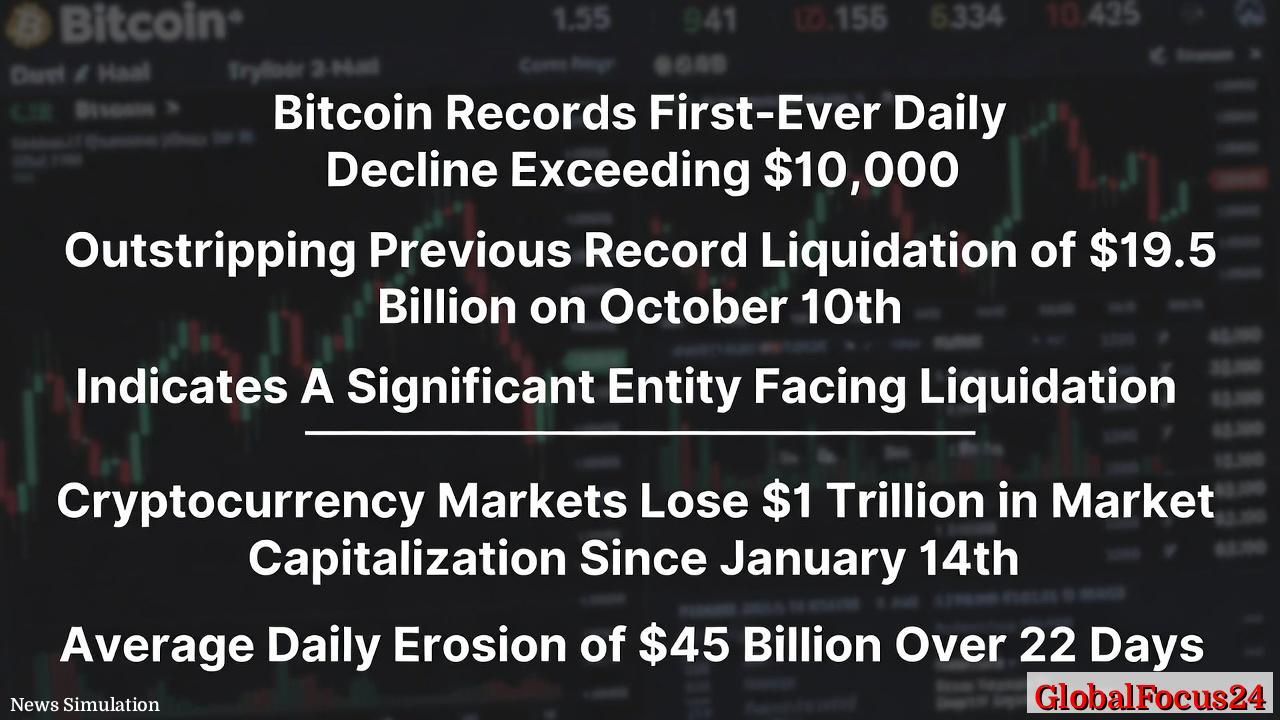
Bitcoin Records First-Ever Daily Decline Exceeding $10,000
Bitcoin fell for the first time in its history by more than $10,000 in a single 24-hour period, marking a historic move that reverberated across global cryptocurrency markets and prompted reevaluations of risk, liquidity, and investor sentiment. The abrupt price swing, occurring after a prolonged period of volatility, underscores the continuing challenges facing digital assets even as institutions, traders, and policymakers seek a clearer path to mainstream adoption.
Historical context and context for current dynamics
Bitcoin’s price trajectory has always been punctuated by dramatic episodes, but a daily decline of this magnitude signals a rare confluence of factors. Since the asset class’s emergence, investors have watchedBitcoin evolve from a niche store of value and payments experiment to a globally traded asset class that attracts participation from hedge funds, family offices, retail traders, and fintech platforms. Yet price movements remain highly sensitive to macroeconomic shifts, regulatory statements, and shifts in liquidity conditions on major exchange venues.
In the broader arc of market history, large daily price drops have often coincided with periods of heightened leverage, liquidity stress, or notable cascading liquidations. This latest decline follows a sequence ofs around liquidity constraints and risk management practices within crypto ecosystems. While the exact catalysts are complex and multifaceted, the event highlights how a single trading day can transform market perception and risk assessment across multiple geographies and asset classes.
Economic impact and market-wide implications
The immediate economic impact of a $10,000-plus intraday decline in Bitcoin is multifaceted. For individual holders, the episode compresses wealth, reshapes margin requirements on leveraged positions, and can trigger automatic liquidations on platforms with tight risk controls. For institutional participants, price stress can affect portfolio allocations, hedging strategies, and the perceived resilience of digital-asset exposures within broader investment mandates.
Liquidity dynamics come into sharper focus during such episodes. A rapid move of this scale often reveals how order book depth, market making capacity, and cross-exchange price convergence interact under stress. When liquidity temporarily dries up, even well-capitalized market participants may experience slippage and forced repositioning. The episode is a reminder that liquidity, not just price, is a critical dimension of market resilience in the crypto space.
From a macroeconomic standpoint, a significant one-day draw in Bitcoin can influence correlated markets and investment flows. While Bitcoin’s price is not fully tethered to traditional equity or commodity markets, it frequently reacts to broader risk sentiment, central-bank signals, and currency market volatility. As traders reassess risk-off versus risk-on environments, capital may shift between digital assets and other alternative investments, reshaping portfolio diversification strategies and risk budgeting across investor groups.
Regional comparisons and global ramifications
Different regions exhibit varied responses to sharp price moves in Bitcoin, reflecting differences in regulatory environments, tax treatment, and access to crypto infrastructure. In North America, institutional demand has grown through regulated venues, custodial services, and compliance-driven products. The incident prompts ongoing discussions about the balance between innovation and oversight, especially as financial market regulators continue to scrutinize crypto markets for transparency, disintermediation, and consumer protection.
In Europe, exchanges and custodians have emphasized robust risk controls and cross-border operational resilience. Periods of intense volatility test the effectiveness of settlements, funding mechanisms, and the capacity of centralized entities to withstand rapid liquidity shifts. The episode may influence policymakers to consider ways to harmonize standards across member states, supporting safer participation for professional and retail investors alike.
In Asia and the Pacific, markets remain a hotbed of trading activity and technical innovation, with local exchanges adapting rapidly to global price signals. Regulatory updates and enforcement actions in key markets can have outsized effects on global liquidity, given the interconnected nature of crypto trading and the prevalence of cross-border flows. The price move may accelerate ongoing conversations about oversight, consumer protection, and the maturation of crypto ecosystems in high-growth regions.
Impact on technology, infrastructure, and risk management
Price volatility of this magnitude has implications that extend beyond markets into the underlying infrastructure. Exchange operators, wallet providers, and liquidity aggregators must maintain robust systems to manage sudden surges in trading activity, margin calls, and risk exposures. The incident highlights the importance of resilient settlement rails, real-time risk monitoring, and transparent reporting to inform market participants about liquidity conditions and potential stress points.
From a technology perspective, this event underscores the continued need for scalable, secure, and auditable platforms. Public interest in blockchain-based financial services remains strong, but sustained growth depends on the ability of ecosystems to withstand stress without compromising security or customer protection. Innovations in areas such as cross-chain interoperability, layer-two solutions, and more sophisticated risk analytics are likely to intensify as market participants seek to better manage volatility.
Public reaction and media interpretation
Public reaction to a historic daily decline in Bitcoin typically blends concern, curiosity, and cautious optimism about the asset’s long-term role. Some investors view the move as a reminder of Bitcoin’s inherent volatility and risk, prompting renewed emphasis on prudent position sizing, diversification, and the prudent use of leverage. Others interpret the event as evidence of ongoing maturation—an inflection point that forces participants to revisit liquidity assumptions, risk controls, and the underlying narratives driving interest in digital assets.
Media coverage tends to mirror the complexity of the episode, balancing explanations of market mechanics with broader questions about crypto market structure and investor protection. The storyline often weaves together themes of innovation, risk, regulation, and the evolving relationship between traditional finance and decentralized technologies. In this context, the narrative around Bitcoin’s price behavior contributes to ongoing education for a broad audience of traders, researchers, and policymakers.
Policy and regulatory outlook
Regulators and policymakers continue to scrutinize the crypto sector for potential risks to financial stability, market integrity, and consumer protection. A single-day decline of this magnitude may intensify calls for enhanced disclosures, clearer margin requirements, and improved transparency around exchange liquidity and settlement processes. While the objective is not to stifle innovation, authorities often pursue standards that can reduce systemic risk and promote more predictable market behavior.
Industry groups and exchanges may respond with standardized risk-management practices, improvements in capital adequacy for trading venues, and better onboarding processes for participants. Collaboration among exchanges to share best practices and create consistent liquidity metrics can also help reduce fragmentation and improve resilience. As markets evolve, the balance between openness and protection remains a central theme for stakeholders across the crypto economy.
Historical price benchmarks and future outlook
Sizeable daily declines in Bitcoin have historically served as turning points in market perception, often triggering more cautious approaches among investors and considerations of defensive strategies. Looking ahead, market watchers will focus on several indicators: measures of liquidity depth on major exchanges, funding rates across perpetual futures markets, and the pace at which new participants enter or exit positions in volatile conditions. A sustained period of volatility can influence investor confidence and long-term adoption trajectories, even as the technology behind Bitcoin continues to mature.
In terms of demand drivers, the outlook hinges on macroeconomic conditions, institutional appetite for regulated exposures, and ongoing developments in financial infrastructure that support secure custody, reliable settlement, and transparent pricing. If liquidity improves and risk controls strengthen, confidence in Bitcoin and related digital assets could rise, potentially stabilizing prices or supporting gradual appreciation over time. Conversely, persistent stress in liquidity and levered positions could sustain volatility and prompt ongoing recalibration of risk models across market participants.
Conclusion and takeaways
The first-time occurrence of a daily Bitcoin decline exceeding $10,000 marks a significant moment in cryptocurrency history. It emphasizes the volatility that remains a defining characteristic of digital assets while also shedding light on the resilience and adaptability of the broader crypto ecosystem. As markets digest the ripple effects, investors, regulators, and infrastructure providers will continue to adapt, refining strategies to manage risk, improve transparency, and foster sustainable participation in this evolving market landscape.
For readers, the key takeaway is clear: volatility is an inherent feature of the digital-asset environment, but with mature risk management, robust infrastructure, and prudent exposure limits, market participants can navigate bursts of volatility with greater confidence. As the story unfolds, stakeholders across regions will be watching how liquidity, regulation, and technology converge to shape Bitcoin’s trajectory in a landscape where innovation and complexity move in tandem.